

 English
  русский
  Español
  عربى
عربى 
Vertical Storage-Friendly Clothing Brush for Efficient Garment Care
Date:Aug 30, 2026
Keeping clothing neat does not always require a complicated cleaning system. In many homes, wardrobes, laundry rooms, hotels, clothing shops, and retail display areas, a simple clothing brush can provide an effective way to remove loose lint, dust, hair, and everyday surface particles. The Vertical Storage-Friendly Clothing Brush for Closet is designed around this practical need. It combines a smooth grip, a useful brush surface, a compact vertical-friendly profile, and dependable everyday performance in one accessible garment-care tool.
Although clothing brushes are often viewed as basic household accessories, their design has a direct effect on comfort, cleaning efficiency, storage convenience, product durability, and purchasing value. A brush that is difficult to hold may cause hand fatigue during repeated use. A brush with an unsuitable surface may perform poorly on common fabrics. A brush with an inconvenient shape may be left loose in a drawer or placed where it becomes difficult to find. This product addresses these concerns through a straightforward design focused on handling, fabric care, and organized storage.
The product is suitable for individual consumers, supermarkets, household-goods distributors, hotel suppliers, clothing retailers, cleaning-supply wholesalers, and e-commerce sellers. It can be used before daily wear, before garments are placed into storage, during preparation for customer display, or as part of a regular wardrobe-maintenance routine. Its broad application makes it a practical addition to household cleaning supplies and clothing-care product ranges.
1. The Role of a Clothing Brush in Modern Garment Care
Clothing collects particles during normal use. Dust from indoor surfaces, outdoor air, upholstered furniture, public transportation, bedding, and storage spaces can settle on jackets, trousers, uniforms, sweaters, coats, skirts, and other garments. Hair and loose fibers may also become visible, especially on dark or textured fabrics. While washing is necessary for deeper cleaning, frequent washing is not always convenient or desirable for every garment.
A clothing brush provides a quick intermediate-care solution. It helps refresh a garment between washes and can improve its visual appearance before work, travel, meetings, social events, or retail presentation. By brushing the surface in a controlled direction, users can remove many visible particles without the time, water, detergent, and energy required for a full laundering cycle.
This type of product is especially valuable for garments that need careful routine maintenance. Outerwear, formal clothing, uniforms, wool-blend items, textured fabrics, and display garments may benefit from gentle surface brushing. The tool is also useful when a garment has been stored for a period and needs a quick refresh before use.
The Vertical Storage-Friendly Clothing Brush for Closet is positioned as a practical solution rather than a complicated specialty device. Its value comes from making a frequent household task easier. The product does not require batteries, charging, replacement adhesive sheets, or complicated operating instructions. It can be picked up, used, cleaned if necessary, and returned to its storage location with minimal effort.
2. Product Overview
The brush belongs to the Clothing Brush category and is included within a wider range of kitchen cleaning supplies, household cleaning supplies, indoor and outdoor cleaning supplies, baby products and cleaning supplies, and home storage containers. This positioning gives distributors flexibility when building a broader household-care assortment.
The product content emphasizes three primary characteristics: a smooth grip, a brush surface suitable for a wide range of common fabrics, and suitability for multiple use environments. These characteristics are important because effective garment care depends on more than the brush material alone. The user must be able to control the tool, apply an appropriate amount of pressure, and move it steadily across the garment.
The smooth grip supports steady handling during repeated use. This is useful in homes where several garments may be brushed during a single wardrobe routine, as well as in hotels, clothing shops, and professional environments where garments are prepared regularly. A comfortable hand position can also help users maintain consistent brushing strokes and reduce unnecessary pressure.
The brush surface is intended for common fabrics rather than one narrow garment category. Users may apply it to everyday clothing, uniforms, outerwear, and selected household textiles, while taking care to follow the care instructions of delicate materials. A multipurpose design improves product usefulness and reduces the need for separate brushes for different ordinary garment types.
The vertical storage-friendly concept addresses a frequently overlooked issue: where the product is kept after use. A cleaning accessory that can be placed upright or stored in a narrow closet area can help maintain order. It is suitable for wardrobes, laundry rooms, utility cabinets, hotel housekeeping stations, clothing stores, and other spaces where available storage is limited.

Vertical Storage-Friendly Clothing Brush for Closet
3. Main Advantages Over Ordinary Clothing Brushes
3.1 Smooth and Stable Grip
Handling comfort is one of the most important differences between a basic brush and a well-considered brush design. The smooth grip of this product supports controlled movement across a garment. A stable grip is particularly helpful when users need to brush long coats, trousers, uniforms, or multiple garments in succession.
Some competing products may have rough edges, awkward holding areas, or shapes that encourage the hand to slide during use. Such weaknesses can make the brushing process less comfortable and may cause the user to apply inconsistent pressure. The smooth grip of this model is designed to create a more pleasant hand contact area and support repeated use.
A steady grip also improves practical cleaning results. When the user can control the brush, it is easier to follow the direction of the fabric, work along seams, and reach larger surface areas. This makes the tool suitable for quick pre-wear grooming as well as more systematic garment maintenance.
3.2 Broad Use Across Common Fabrics
A clothing-care product must balance cleaning ability with fabric awareness. The brush surface is designed for a wide range of common fabrics, making the product useful for everyday wardrobes rather than limiting it to a single textile type. This broad suitability can be a competitive advantage for families, hospitality operators, retailers, and distributors that prefer versatile products.
Users should still apply appropriate care. Delicate fabrics, loosely woven materials, embellished garments, and items with special care instructions should be tested in an inconspicuous area first. The product is best understood as a practical brush for common garment-maintenance tasks, not as a replacement for professional textile-care equipment.
Compared with highly specialized brushes, a multipurpose clothing brush can provide greater value for general households. One tool can serve several family members and garment categories, reducing clutter and making the product easier to explain and merchandise.
3.3 Vertical-Friendly Storage
Storage convenience is a clear point of differentiation. The product title specifically highlights vertical storage friendliness, which is valuable in wardrobes, compact apartments, laundry areas, dormitories, and commercial back rooms. A brush that can be stored vertically takes advantage of unused height and can be kept near the garments it is intended to maintain.
This feature also supports better organization. Instead of being placed randomly inside a drawer, the brush may be kept in a dedicated upright position, helping users find it quickly. In retail and hotel environments, organized cleaning tools can support more efficient staff routines and reduce the time spent locating small accessories.
Many competing garment brushes focus only on the bristle surface and overlook the storage experience. By considering both use and placement, this product fits more naturally into modern household-organization habits.
3.4 Simple, Non-Electric Operation
The brush operates without batteries, cords, charging equipment, or replacement power components. This makes it ready for immediate use and suitable for locations where electrical access is limited. It is also convenient for travel, temporary accommodation, hotel rooms, dressing rooms, and retail counters.
Non-electric operation reduces long-term operating complexity. Consumers do not need to remember to charge the product, and commercial buyers do not need to manage battery replacement. The simple mechanical format also makes it easier to package, store, transport, and display alongside other household cleaning accessories.
3.5 Low-Complexity User Experience
A useful household product should not require extensive training. The operating method is intuitive: hold the grip, place the brush surface against the garment, and move it steadily over the area requiring attention. This straightforward use pattern is suitable for adults, older users, housekeeping staff, and retail workers.
Simple operation can be a competitive advantage in mass-market distribution. Products that are easy to understand need less shelf explanation and can be introduced to customers through concise packaging or basic product demonstrations. For online sellers, the concept is also easy to present through product photography and short usage videos.
3.6 Suitability for Multiple Channels
The brush is suitable for household retail, cleaning-supply distribution, hotel procurement, clothing-store supply, gift or organization assortments, and online marketplaces. Its compact category and broad use can support different sales strategies, including individual retail sales, multipacks, promotional bundles, and bulk purchasing.
For supermarkets, it can be placed in clothing-care, laundry, home organization, or household-cleaning sections. For e-commerce sellers, it can be grouped with lint-removal products, closet accessories, garment organizers, and travel-care products. For commercial buyers, it can be included in housekeeping supply programs.
4. Recommended Applications
4.1 Home Wardrobes
In a household wardrobe, the brush can be used before dressing, after returning from outdoor activities, or before storing clothing. It is especially useful for dark garments where lint and hair are highly visible. Keeping the brush close to the closet can encourage regular garment maintenance.
Families may use it for coats, school uniforms, office clothing, casual wear, and seasonal garments. The product can also help prepare clothing before folding or hanging. When garments are kept in good visible condition, wardrobes may appear more organized and clothing may be selected with greater confidence.
4.2 Laundry Rooms
A laundry room is a natural location for a clothing brush. After washing and drying, users can inspect garments and remove loose fibers or particles before placing them in the closet. The brush can also be kept with ironing and folding accessories as part of a broader garment-care station.
Its non-electric design means it does not compete for electrical outlets or add another charging device to the room. The vertical-friendly format may help keep the work area clear, especially in narrow utility rooms.
4.3 Hotels and Hospitality Operations
Hotels need practical tools that help maintain a professional appearance. Housekeeping teams may use clothing brushes when preparing uniforms, guest amenities, staff garments, or selected textile items. A compact brush is easy to place in housekeeping carts, linen areas, staff rooms, or wardrobe storage spaces.
Hospitality buyers often value products that are simple, durable in routine service, easy to replenish, and suitable for multiple departments. The product’s broad fabric application and comfortable grip support repeated handling during daily operations.
4.4 Clothing Shops and Showrooms
Garments on display can collect dust and loose fibers from handling, transportation, storage, or customer contact. A clothing brush allows store staff to refresh items before they are presented to customers or returned to the sales floor.
It can be used as part of opening and closing procedures, stock preparation, fitting-room maintenance, and visual merchandising. By helping clothing look neat, the brush supports the overall appearance of a shop without requiring complex equipment.
4.5 Travel and Temporary Accommodation
Travelers often need to refresh garments after packing, transportation, or extended wear. A simple manual brush is convenient in hotel rooms and temporary accommodation because it does not require charging or special accessories. It can be stored in luggage or placed vertically in a compact closet area.
Business travelers, sales representatives, performers, and service professionals may find a clothing brush useful before meetings, presentations, events, and customer visits. Its practical format supports quick appearance management away from home.
4.6 Household Organization and Seasonal Storage
Before clothing is placed into seasonal storage, users can brush away surface dust and loose particles. A garment-care routine can be combined with folding, hanging, labeling, and container organization. The vertical-friendly design makes the brush suitable for storage rooms, closets, and utility cabinets.
It should be noted that garments should be clean and completely dry before long-term storage. The brush supports surface maintenance but does not replace proper laundering, drying, pest prevention, or storage ventilation.
5. How to Use the Clothing Brush Effectively
For best results, place the garment on a hanger or another stable surface. This gives the fabric support and allows the user to apply controlled strokes. Begin with a light pass to identify the direction in which the brush works most effectively.
Move the brush in steady strokes rather than pressing aggressively. Work from larger areas toward collars, cuffs, seams, and pockets. These areas often collect visible particles and may require a second pass. When brushing structured garments, follow the garment’s shape to help preserve its appearance.
For textured or delicate fabrics, test a small hidden area before treating the entire garment. Avoid excessive force on loose knits, decorative surfaces, embroidery, fragile fibers, and materials with special care requirements. If the garment label provides specific cleaning guidance, those instructions should take priority.
After use, inspect the brush surface and remove accumulated lint or particles as appropriate. Store the product in a clean, dry location. Vertical storage can help keep the tool accessible and reduce contact with clutter, damp surfaces, or unsuitable storage areas.
These simple steps improve usability and help extend the service life of the product. They also provide useful content for product packaging, retailer instructions, customer education, and online product listings.

6. Manufacturing Strengths Behind the Product
The product is manufactured by Jinhua Jieqing Plastic Co., Ltd., an industry and trade enterprise founded in 2008 and specializing in the research, development, production, and sales of cleaning supplies. The company’s product range includes brooms, cleaning brushes, household and industrial brushes, and supporting plastic products.
This combination of research and development, production, and sales allows the supplier to coordinate product design with manufacturing requirements and market needs. Rather than treating the brush as an isolated item, the company can evaluate it as part of a wider cleaning-supply system.
6.1 Own Production Base
An own production base supports closer control over production scheduling, process coordination, quality inspection, and order communication. For buyers, this can simplify cooperation compared with sourcing through several unrelated factories.
Production-base ownership may also support more direct feedback between product development and manufacturing teams. If a buyer requests a change to the handle, surface, packaging, color, or specification, the supplier can evaluate the request within its own production structure.
6.2 Standardized Production Processes
Standardized production processes are important for a product that may be ordered repeatedly or distributed across multiple markets. Consistency in plastic forming, component preparation, surface finishing, assembly, inspection, and packing helps reduce variation from batch to batch.
For a clothing brush, process consistency affects the smoothness of the grip, the alignment and condition of the brush surface, the appearance of the finished item, and the reliability of packaging. Buyers need confidence that repeat orders will maintain the expected product profile.
Standardization does not mean that every order must be identical in every detail. It creates a stable production foundation while still allowing approved customization based on drawings, samples, and buyer requirements.
6.3 Research and Development Capability
The company’s research and development focus supports the creation and improvement of cleaning products for household and industrial applications. For this clothing brush, development considerations may include ease of handling, fabric suitability, storage convenience, manufacturing efficiency, and market presentation.
A product that appears simple still benefits from careful development. The handle must be comfortable without adding unnecessary material. The brush surface must be useful for common fabrics while remaining practical to manufacture. The overall shape must support use and storage. Packaging must protect the product and communicate its purpose.
Development experience across multiple cleaning categories can also help the supplier identify common user needs, such as durable construction, easy cleaning, comfortable handling, compact packaging, and reliable replenishment.
6.4 Complete Supply Chain
A complete supply chain can improve coordination among raw-material sourcing, component production, assembly, packaging, warehousing, and shipment. This is especially relevant for wholesale customers that require stable supply and predictable delivery planning.
When a supplier manages several connected stages, it may be easier to coordinate production quantities, packaging requirements, and export preparation. The result can be a more organized purchasing process for distributors, supermarkets, online sellers, and institutional buyers.
6.5 Stable Quality Control
Quality control is essential for a household product that must deliver consistent performance in ordinary use. Relevant inspection points may include appearance, grip condition, brush-surface integrity, assembly, cleanliness, packing accuracy, carton condition, and quantity verification.
For buyers, stable quality control supports fewer customer complaints, more predictable product reviews, and stronger confidence in repeat purchasing. It also helps protect the reputation of distributors that sell the product under their own channel or packaging program.
The exact inspection standards, sampling plans, and acceptance criteria should be confirmed during the purchasing process. Buyers may provide their own quality requirements or request pre-shipment inspection according to their market standards.
6.6 Export Experience
Extensive export experience is valuable when a cleaning product is sold across different regions. Export orders often involve specific requirements for carton marks, packaging languages, product labeling, documentation, container loading, and delivery coordination.
A supplier familiar with international purchasing can help buyers clarify product specifications before production begins. This reduces the risk of misunderstandings related to item numbers, carton quantities, packaging formats, and shipping arrangements.
6.7 Flexible Customization
The company offers customization based on customer drawings and samples. This creates opportunities for buyers that require private-label packaging, special colors, modified visual presentation, customized carton marks, or product adjustments within feasible manufacturing limits.
Customization should be managed through a clear approval process. Buyers should provide drawings, reference samples, target quantities, packaging requirements, and intended markets. The supplier can then assess tooling, material, production, inspection, and cost implications.
7. Production Process Considerations
Although the clothing brush has a straightforward appearance, reliable production requires coordination across several stages. The process generally begins with product specification confirmation. This includes the item number, shape, dimensions, color requirements, brush-surface expectations, packing format, carton quantity, and quality criteria.
7.1 Material Preparation
Plastic components require suitable material preparation before forming. Material selection may consider strength, surface finish, color stability, processing performance, and intended use. The appropriate material should be confirmed according to the final product specification and applicable market requirements.
Brush-surface materials also require controlled sourcing and preparation. The surface should be assembled or fixed in a way that supports consistent coverage and practical use. Material choices may vary according to the customer’s target market, price level, and performance expectations.
7.2 Forming and Component Production
The body or handle component is produced using a controlled forming process appropriate to the design. Correct process settings help support dimensional consistency, surface appearance, and structural integrity. Attention to edges and grip areas is particularly important because these parts directly affect user comfort.
Production personnel may inspect formed components for visible defects, incomplete areas, deformation, excessive flash, color variation, or other conditions that could affect the finished product. Early inspection helps prevent unsuitable parts from moving into later stages.
7.3 Brush-Surface Assembly
The brush surface must be positioned and secured correctly. Alignment, attachment strength, coverage, and cleanliness are important factors. A poorly positioned surface may reduce ease of use or produce an inconsistent brushing action.
Assembly procedures should be repeatable and supported by appropriate work instructions. Operators need clear standards for component placement, attachment, appearance, and final handling. This is particularly important when multiple versions or customized designs are produced.
7.4 Finishing and Inspection
After assembly, finished items may be inspected for appearance, grip smoothness, surface condition, attachment, and general usability. Products that do not meet the defined standard should be separated for correction or rejection according to the factory’s quality procedures.
Finishing may include removal of unwanted residues, visual cleaning, sorting, and preparation for packing. These steps help ensure that the product reaches customers in a presentable condition suitable for retail or commercial distribution.
7.5 Packing and Carton Management
Correct packing protects the brush during handling and transportation. The packaging format should be selected according to the sales channel, customer requirements, and shipping conditions. Retail packaging may emphasize product visibility and consumer information, while bulk packaging may prioritize efficient carton use and warehouse handling.
Carton quantities and carton dimensions should be checked before shipment. Accurate carton data supports container planning, freight calculation, warehouse receiving, and inventory management. The supplied information includes item-specific carton quantities and carton measurements, but buyers should confirm the units and final packing configuration with the supplier before placing an order.
8. Available Product and Carton Information
The provided product information includes two item numbers and associated carton data. Because the source table does not label measurement units or identify every line with a complete product description, the figures should be treated as preliminary logistics information pending confirmation. This is a normal and important step in professional purchasing.
| Item No. | Carton Qty | Carton Length | Carton Width | Carton Height | G.W. | Volume |
|---|---|---|---|---|---|---|
| 820 | 160 | 55 | 29 | 72 | Not provided | Not provided |
| 144 | 59 | 34 | 42 | 12.7 | 0.084 | Not separately provided |
Before mass production, buyers should verify whether the dimensions are expressed in centimeters, millimeters, or another unit; whether the listed gross weight is complete; whether the volume refers to a carton or shipment unit; and whether each item number represents a different color, size, design, or packing format.
Clear confirmation of this information helps prevent errors in purchase orders, shipping documents, warehouse planning, and online wholesale listings. It also allows buyers to calculate estimated freight costs and compare packaging efficiency with competing products.
9. Why Manufacturing Experience Matters to Buyers
For a low-complexity product, manufacturing experience can still make a major difference. Buyers are not only purchasing a brush; they are purchasing a supply relationship. The supplier’s ability to develop, produce, inspect, pack, customize, and export the product affects the total value of the order.
A supplier with a broad product portfolio can often provide complementary items. A distributor may source clothing brushes together with cleaning brushes, brooms, plastic household accessories, or other storage-related products. Consolidated purchasing can simplify communication and may improve container utilization.
Stable production is also important for promotions and seasonal demand. Household cleaning products may experience increased sales during spring cleaning periods, back-to-school seasons, moving periods, holidays, or annual wardrobe changes. A supplier with organized production capabilities can help buyers plan replenishment more effectively.
Customization capability gives buyers an additional route to differentiation. Instead of competing only on price with identical products, a distributor may use customized packaging, coordinated colors, product bundles, or market-specific instructions to create a clearer retail identity.
Professional buyers should evaluate the supplier through samples, specification sheets, quality requirements, production timelines, packaging approvals, and communication performance. These steps help turn a promising product concept into a reliable commercial program.

10. Positioning Against Competing Products
The clothing-brush market includes many simple tools, but products can differ significantly in usability and commercial value. Some alternatives rely on adhesive sheets, which require replacement rolls and create ongoing consumable waste. Others may use rigid handles that are uncomfortable during repeated strokes. Some are designed for a narrow use case and provide limited versatility.
This product offers a reusable mechanical format with a smooth grip and broad everyday fabric suitability. It does not depend on disposable adhesive refills, which may appeal to consumers seeking a simpler and more economical routine. Its vertical-friendly storage concept adds an organizational benefit that is not always emphasized by competing designs.
Compared with very small travel brushes, this model may provide a more substantial grip and more practical handling for routine wardrobe care. Compared with highly specialized garment tools, it may be easier to merchandise as a general household product. Compared with electric fabric-care devices, it offers a lower-complexity and lower-maintenance experience.
Competitive performance should not be judged only by cleaning action. Buyers should also consider packaging, product consistency, storage, ease of use, reorder convenience, customization options, and supplier support. These factors influence the total commercial performance of a product in the market.
11. Quality, Safety, and Care Recommendations
Users should inspect the garment’s care label before brushing. If the fabric is delicate, highly textured, loosely knitted, decorated, or prone to surface damage, testing should begin in a hidden area. The brush should be used with moderate pressure and controlled strokes.
The product should not be used as a substitute for stain removal, deep washing, chemical cleaning, or professional restoration. Its primary role is surface garment maintenance. Stubborn stains and contamination requiring specialized treatment should be handled according to textile-care guidance.
The brush should be kept dry and clean when not in use. It should not be stored in standing water, near excessive heat, or in a location where heavy objects may deform it. Proper storage supports long-term appearance and usability.
For commercial operations, staff can be trained to use separate brushes for different departments or garment categories when necessary. Regular inspection can identify accumulated fibers, damaged components, or products that need replacement.
12. Purchasing and Customization Guidance
Buyers interested in this product should first confirm the exact item number and product version. They should request a sample for evaluation on their target fabrics and assess grip comfort, brush-surface performance, appearance, packaging, and storage suitability.
For private-label or customized orders, the buyer should provide branding requirements separately from the product specification. Packaging artwork, language requirements, barcode information, carton marks, color references, and compliance details should be approved before production.
Order quantities can affect tooling, packaging, material purchasing, production scheduling, and unit cost. Buyers should discuss minimum order quantities, sample charges, lead times, payment terms, inspection procedures, and shipping arrangements in advance.
It is also advisable to confirm whether the product can be supplied in mixed colors or mixed item numbers within one order. This may be useful for distributors testing several markets or retailers building a coordinated household-care display.
Product information should be reviewed before publication on catalogs or e-commerce platforms. The title, item number, dimensions, carton quantity, material information, usage instructions, and care guidance should match the final approved sample and packaging.
13. Commercial Benefits for Distributors and Retailers
A clothing brush is easy for consumers to understand and can be sold through several departments. This flexibility helps retailers use existing shelf space efficiently. The product may be displayed near laundry items, closet organizers, lint removers, ironing accessories, cleaning tools, or seasonal clothing.
Its practical price positioning can support impulse purchases and add-on sales. Customers purchasing storage boxes, hangers, garment bags, or laundry supplies may also recognize the value of a clothing brush. Retailers can create bundled promotions around wardrobe organization and seasonal cleaning.
For online sellers, the product offers several content angles: garment refreshment, closet organization, hotel-style clothing care, travel convenience, and reusable household cleaning. Clear photographs showing the grip, brush surface, and storage position can help customers understand the product quickly.
Wholesale buyers may benefit from ordering alongside other cleaning products from the same supplier. The company’s broader range of brooms, household brushes, industrial brushes, and supporting plastic products can help create a more complete purchasing program.
14. Sustainability and Reusability Considerations
The product’s reusable manual format can reduce dependence on disposable adhesive sheets and replacement cartridges. A durable everyday tool may remain in service through repeated use, provided that it is handled and stored appropriately.
Responsible product communication should avoid exaggerated environmental claims. Buyers should evaluate the actual materials, packaging, service life, recycling options, and logistics profile before making sustainability statements. Where appropriate, packaging can explain that the brush is reusable and does not require batteries or electrical power.
Efficient carton planning may also help reduce unnecessary transport volume. Accurate carton dimensions and quantities allow buyers to optimize warehouse space and shipping arrangements. These practical logistics considerations contribute to more efficient product distribution.
15. Frequently Asked Questions
Q1: What is the main purpose of this clothing brush?
The main purpose is to help remove loose dust, lint, hair, and other visible surface particles from common garments. It is intended for quick garment refreshment before daily wear, display, or storage.
Q2: Can it be used on all fabrics?
The brush surface is suitable for a wide range of common fabrics. However, delicate, decorated, loosely woven, or special-care materials should be tested in an inconspicuous area first, and users should follow the garment’s care label.
Q3: What does vertical storage-friendly mean?
It means the product is designed to fit conveniently into upright or narrow storage spaces such as closets, laundry rooms, utility cabinets, hotel housekeeping areas, and retail back rooms.
Q4: Does the brush require batteries or electricity?
No. It is a manual cleaning tool and does not require batteries, charging, cords, or electrical accessories.
Q5: Is the grip comfortable for repeated use?
The product features a smooth grip intended to support steady handling during repeated brushing. Actual comfort may vary according to the user’s hand size and preferred handling method.
Q6: Can hotels and clothing stores use this product?
Yes. The product is suitable for hotels, clothing shops, showrooms, wardrobe areas, housekeeping stations, and other commercial environments where garments need to look neat.
Q7: Can the product be customized?
Customization is available based on customer drawings and samples, subject to production feasibility. Buyers should discuss colors, packaging, labels, carton marks, and other requirements with the supplier.
Q8: What information should be confirmed before ordering?
Buyers should confirm the item number, product version, material details, dimensions, carton quantity, carton measurements, gross weight, volume, packaging format, quality standards, delivery schedule, and any customization requirements.
Q9: Are the listed carton dimensions final?
The supplied figures should be confirmed with the supplier before ordering because the source information does not identify measurement units and does not fully clarify every logistics field. Final carton data should match the approved packing configuration.
Q10: How should the brush be stored?
Store it in a clean, dry location. Vertical storage is recommended where suitable because it helps keep the product accessible and supports organized closet or laundry-room storage.
Q11: Can it replace washing or dry cleaning?
No. The brush is intended for surface maintenance and quick refreshment. It does not replace laundering, stain removal, dry cleaning, or professional textile treatment.
Q12: Why choose a supplier with its own production base?
An own production base can support closer coordination of development, manufacturing, quality control, packaging, customization, and export arrangements. This may provide buyers with a more direct and organized supply relationship.
Q13: Is the product suitable for private-label sales?
It may be suitable for private-label programs when packaging and product requirements are approved in advance. Buyers should provide artwork and specifications for review before mass production.
Q14: Can this item be purchased with other cleaning products?
The manufacturer offers a broader product range including brooms, cleaning brushes, household and industrial brushes, and supporting plastic products. Buyers can discuss combined sourcing opportunities with the supplier.
16. Supplier Profile and Contact Information
Jinhua Jieqing Plastic Co., Ltd. was founded in 2008 and specializes in the research, development, production, and sales of cleaning supplies. Its product portfolio covers household and industrial cleaning tools, brooms, brushes, and related plastic products.
The company presents itself as an industry and trade enterprise with its own production base, complete supply chain, standardized production processes, stable quality control, export experience, and flexible customization services. These capabilities are intended to support supermarkets, cross-border e-commerce businesses, industrial procurement, and other markets requiring reliable cleaning-product supply.
Company address: No. 1388 Cuntong Road, Jinhua City.
Telephone: +86-0579-81534043.
Email: wangjinhua1@zjjqsj.com.
Buyers should use direct communication to confirm current product availability, item numbers, samples, pricing, minimum order quantities, packaging, lead times, inspection arrangements, and shipping information.
17. Conclusion
The Vertical Storage-Friendly Clothing Brush for Closet is a practical garment-care tool built around everyday convenience. Its smooth grip supports steady handling, its brush surface is suitable for a broad range of common fabrics, and its vertical-friendly profile helps users maintain an organized storage area. These features make it useful in homes, wardrobes, laundry rooms, hotels, clothing shops, retail displays, and travel situations.
Its advantages over less-developed alternatives include comfortable handling, reusable manual operation, broad household usefulness, simple maintenance, and storage-conscious design. These benefits can support both consumer satisfaction and commercial versatility.
The product is backed by a supplier with experience in cleaning-supply research and development, production, sales, customization, quality control, and export. An own production base and complete supply chain provide a foundation for stable manufacturing and coordinated wholesale service. For buyers seeking a practical clothing-care item that can fit into a broader household-cleaning assortment, this brush offers a clear and adaptable sourcing option.
Successful purchasing should begin with sample evaluation and specification confirmation. Once the item number, packaging, carton information, quality requirements, and customization details are approved, the product can be developed into a dependable retail, hospitality, or wholesale offering.
References
1. Product information supplied for the Vertical Storage-Friendly Clothing Brush for Closet, including title, category, product description, item numbers, and carton data.
2. Company information supplied for Jinhua Jieqing Plastic Co., Ltd., including company history, production capabilities, product range, customization services, and export experience.
3. General household garment-care practices concerning surface brushing, fabric testing, storage preparation, and care-label compliance.
4. General purchasing and logistics principles concerning carton quantity verification, packaging approval, product sampling, quality inspection, and shipment planning.
5. General retail and hospitality supply practices concerning garment presentation, wardrobe maintenance, housekeeping tools, and household-cleaning product merchandising.
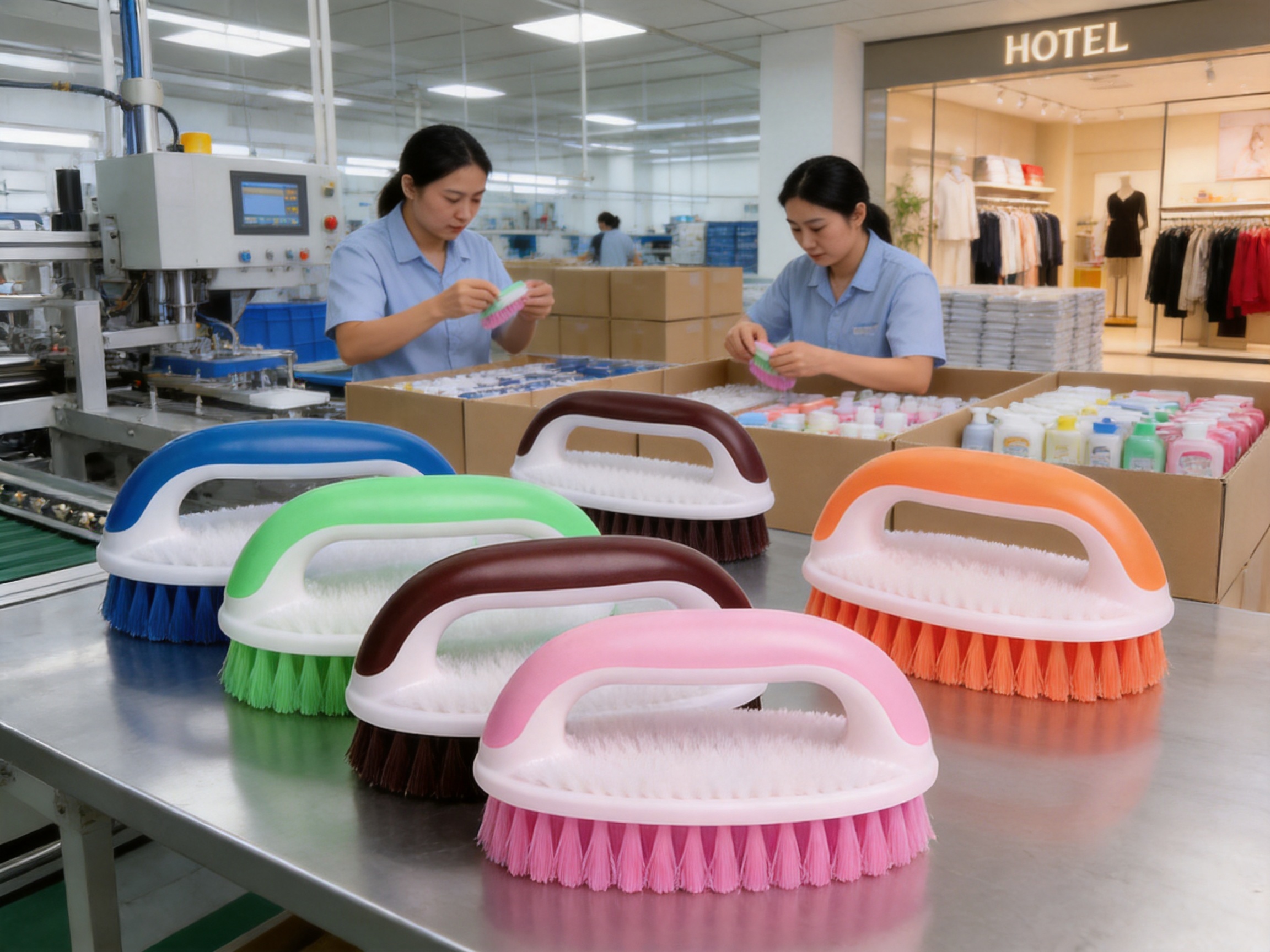
Product: Vertical Storage-Friendly Clothing Brush for Closet

 CONTACT US
- CONTACT DETAILS
- Address : No. 1388 Cuntong Road, Jinhua City
- Tel: +86-0579-81534043
- Email:wangjinhua1@zjjqsj.com
- PRODUCTS
- Kitchen Cleaning Supplies
- Household Cleaning Supplies
- Indoor & Outdoor Cleaning Supplies
- Baby Products & Cleaning Supplies
- Home Storage Containers
- QUICK LINK
- Company Profile
- Plant equipment
- Certifications
- FAQ
- NEWS CENTER
- Company News
- Industry News
- MOBILE TERMINAL

