

 English
  русский
  Español
  عربى
عربى 
PP Handle Kitchen Cleaning Pot Brush: Practical Performance for Everyday and Bulk Cleaning Needs
Date:Sep 01, 2026
A dependable pot brush is one of the most useful tools in a kitchen cleaning collection. It must remove food residue, grease, and light stains efficiently while remaining comfortable to hold, easy to rinse, and gentle enough for commonly used cookware. The PP Handle Kitchen Cleaning Pot Brush is designed around these practical requirements. Its lightweight construction, moisture-resistant handle, compact profile, and suitable bristle arrangement make it an effective option for daily household cleaning, hospitality operations, retail distribution, and bulk procurement.
Unlike oversized cleaning tools that can be difficult to control, this pot brush is shaped for close contact with cookware. Its handle provides a practical extension between the user’s hand and the cleaning head, helping users reach into pots, pans, bowls, corners, and other areas where food particles may collect. The brush can be used on non-stick, stainless steel, and ceramic surfaces for general cleaning, helping loosen residue without relying on excessive pressure.
The product is available in several item configurations, including PP-only and PP+TPR versions. These options allow buyers to select a model according to their preferred grip, weight, dimensions, and purchasing requirements. With multiple sizes and packaging specifications, the range can serve supermarkets, online retailers, distributors, commercial cleaning suppliers, and buyers seeking private-label or customized cleaning products.
The manufacturer behind this product has experience in the research, development, production, and sales of cleaning supplies and plastic products. Its manufacturing and supply capabilities support consistent production, quality control, customization, and export-oriented order fulfillment. As a result, this pot brush is not only a simple household accessory but also part of a broader professional supply solution for buyers who value stable quality and dependable delivery.

PP Handle Kitchen Cleaning Pot Brush
Product Overview and Intended Use
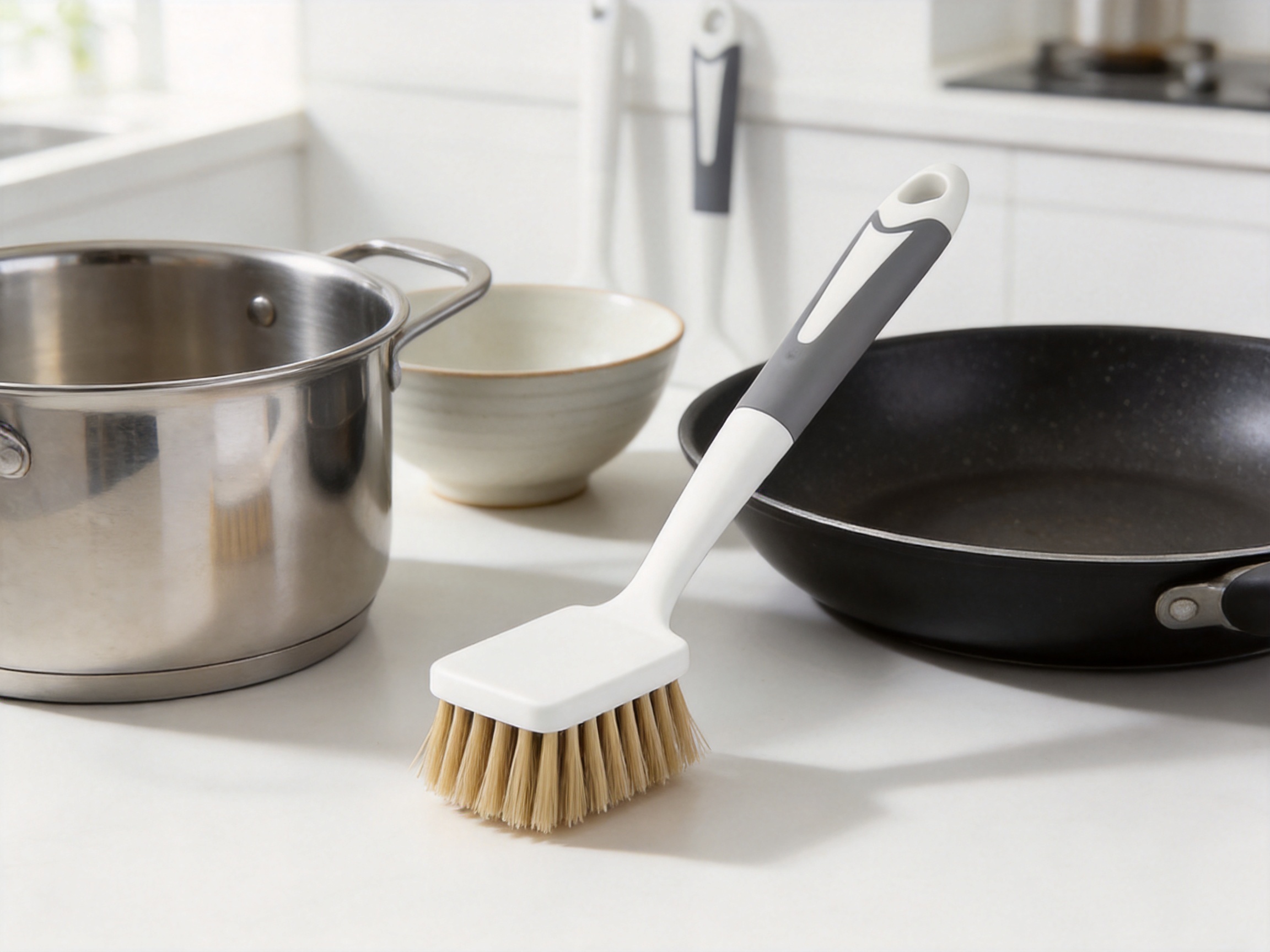
The PP Handle Kitchen Cleaning Pot Brush is a compact hand-operated brush developed for common kitchen cleaning tasks. It is suitable for removing food particles, light stains, and general residue from cookware and kitchen surfaces. The product’s long handle helps keep the user’s hand away from wet or dirty areas, while the brush head is shaped to support practical contact with the surface being cleaned.
The brush is particularly appropriate for washing pots, pans, bowls, dishes, baking accessories, and other household items. Its compact design can also be useful when cleaning around edges, along seams, near handles, and inside narrow areas. Because the product does not require batteries, electrical connections, or complicated components, it can be used immediately and maintained with minimal effort.
The polypropylene handle contributes to a lightweight feel and helps the product withstand regular exposure to water. Polypropylene is widely used in household cleaning products because it offers useful moisture resistance, reasonable durability, and compatibility with many common cleaning agents. In the available PP+TPR versions, thermoplastic rubber can add a softer or more comfortable contact area, supporting grip security during repeated cleaning.
The brush is intended for general cleaning rather than highly abrasive industrial scrubbing. Users should select an appropriate amount of pressure according to the surface material. On non-stick cookware, gentle cleaning practices are recommended to help protect the coating. On stainless steel, ceramic, glass, and other hard kitchen surfaces, the brush can help loosen ordinary residue and light stains during routine washing.
Key Product Advantages
Lightweight Construction for Comfortable Handling
At approximately 60 to 85 grams depending on the selected model, the brush is light enough for regular kitchen use. A lightweight tool can reduce fatigue during repeated washing, particularly when a user is cleaning several pots, pans, or containers at one time. It is also easier to control than a heavier brush, allowing the user to direct pressure toward specific areas instead of scrubbing an entire surface with unnecessary force.
Weight is an important factor in both domestic and commercial environments. In a home, a lighter brush is convenient for quick cleaning after meals. In restaurants, food preparation areas, cleaning services, and hospitality facilities, staff may use brushes many times throughout a working shift. A practical weight helps support efficient movement and may make routine cleaning tasks less tiring.
Moisture-Resistant PP Handle
The handle is made from PP in the PP-only model and from PP combined with TPR in selected versions. Polypropylene is well suited to wet environments because it does not readily absorb water. This helps the handle remain practical during repeated rinsing and storage in kitchens, utility rooms, janitorial areas, and other damp locations.
A moisture-resistant handle is also easier to wipe and rinse after use. Unlike absorbent materials that may retain water, plastic can be cleaned quickly and allowed to dry. This supports better daily maintenance and helps the product remain ready for its next use. The handle also resists wear from ordinary handling and common cleaning agents, contributing to a longer practical service life when the brush is used and stored correctly.
Secure Grip and Controlled Cleaning
A cleaning brush must provide more than bristles. The handle affects how effectively the user can apply pressure, reach difficult areas, and maintain control. The PP Handle Kitchen Cleaning Pot Brush is designed to offer a secure grip during use. The PP+TPR versions provide an additional material choice for customers who prefer a more comfortable grip area.
Good control is especially important when cleaning cookware with different surface characteristics. A user may need to apply moderate pressure to remove dried food from a stainless steel pot, then reduce pressure when cleaning a non-stick pan. A manageable handle allows these adjustments to be made more naturally. The design also supports short, targeted strokes around edges and corners instead of broad, uncontrolled movement.
Bristles for General Kitchen Cleaning
The bristles are suitable for everyday cleaning on non-stick, stainless steel, and ceramic surfaces. They are intended to help remove food residue and light stains without scratching when the brush is used appropriately. This balance between cleaning effectiveness and surface care is important because modern kitchens contain cookware made from a wide variety of materials.
For non-stick cookware, users should avoid excessive force and should inspect the brush periodically for trapped particles that could affect the surface. For stainless steel and ceramic items, the brush can be used to work across areas where food residue has collected. As with any cleaning tool, performance depends on the residue, water temperature, cleaning solution, and amount of pressure applied.
Compact Shape for Edges and Tight Areas
The product’s compact structure is an important advantage over large, inflexible scrubbers. Pots and pans often have curves, rims, corners, handles, and narrow transitions where residue can remain after ordinary rinsing. A compact pot brush can be guided into these areas more easily, helping users clean details that may be difficult to reach with a sponge or oversized brush.
The available product sizes range from approximately 23.5 centimeters to 31 centimeters in length, with listed widths or profiles between 4 and 8 centimeters depending on the item. These dimensions provide useful reach while keeping the brush easy to store. The longer versions can be convenient for deeper pots or users who prefer additional hand-to-surface distance, while the shorter formats may be suitable for compact kitchens and retail cleaning sets.
Simple Structure and Easy Maintenance
The brush has a straightforward construction without unnecessary mechanisms. This simplicity supports quick rinsing after use and reduces the number of components that require attention. A simple hand brush is also easy for retailers and distributors to explain to customers because its purpose is immediately clear.
After cleaning, users can rinse the bristles and handle with clean water, shake off excess moisture, and place the brush in a ventilated location. Regular rinsing helps remove detergent and food particles. Proper storage can help preserve the bristles and reduce odor caused by prolonged dampness. The product’s plastic construction is suitable for routine washing and ordinary household cleaning conditions.
Comparison with Common Alternative Cleaning Tools
Compared with Ordinary Sponges
Sponges are useful for wiping broad, smooth surfaces, but they may be less effective in corners, around rims, and on heavier food residue. A sponge can also retain water and organic particles if it is not rinsed and dried carefully. The pot brush offers a more directed cleaning action, allowing the bristles to work into small areas and loosen residue with repeated strokes.
The best cleaning setup may include both a sponge and a brush. The sponge can handle broad surface wiping, while the pot brush can focus on stuck particles, edges, grooves, and difficult areas. For buyers assembling a kitchen cleaning range, the brush complements rather than replaces other tools, adding a specialized option for cookware maintenance.
Compared with Short-Handled Scrubbers
Short-handled scrubbers bring the user’s hand closer to the cleaning surface. This may provide direct pressure, but it can also expose the hand to hot water, detergent, grease, and food residue. A longer handled pot brush offers additional separation between the hand and the cookware, which can make washing more comfortable and convenient.
The handle also supports cleaning inside deeper pots and containers. Users can maintain a more upright posture and reach the bottom of a vessel without placing the hand directly inside. This is particularly useful when the item is wet, greasy, or difficult to hold securely.
Compared with Heavy-Duty Abrasive Brushes
Highly abrasive brushes may remove stubborn deposits quickly, but they can be unsuitable for delicate or coated surfaces. They may also require more effort and may not be appropriate for everyday cleaning of general household cookware. The PP Handle Kitchen Cleaning Pot Brush is positioned for routine cleaning, offering a practical balance between residue removal and surface friendliness.
This makes it more versatile for mixed household use. A family may use one brush for stainless steel pots, ceramic dishes, non-stick pans, and general kitchen accessories. A retailer can present the product as a multipurpose kitchen cleaning tool rather than a specialized abrasive implement limited to one type of material.
Compared with Low-Quality Plastic Brushes
Some low-cost brushes are designed with little attention to grip, material consistency, or product durability. Problems may include uncomfortable handles, weak bristle attachment, poor moisture resistance, and inconsistent dimensions. A professionally manufactured PP brush can offer stronger consistency through standardized production, material selection, process control, and inspection.
For bulk buyers, consistency is particularly important. Products that vary significantly from one batch to another can create customer complaints, packaging problems, and increased return rates. A supplier with established production processes and quality management experience can help reduce these risks by maintaining clearer specifications for materials, dimensions, packaging, and order quantities.
Available Models and Specifications
The product family includes six listed item numbers. They share the general purpose of kitchen pot cleaning but differ in material combinations, weight, and dimensions. The 3015 model uses PP, while the other listed models use PP+TPR. This provides buyers with a choice between a straightforward polypropylene construction and versions that incorporate thermoplastic rubber.
| Item No. | Weight | Material | Product Size | Quantity per Carton | Packing Method | Carton Size |
|---|---|---|---|---|---|---|
| 3005 | 65 g | PP+TPR | 23.5 × 6 × 4 cm | 100 pieces | OPP bags | 46 × 29 × 28 cm |
| 3015 | 65 g | PP | 23.5 × 6 × 4 cm | 100 pieces | OPP bags | 46 × 29 × 28 cm |
| T3022 | 75 g | PP+TPR | 25 × 6 × 5 cm | 100 pieces | OPP bags | 46 × 29 × 28 cm |
| 3022 | 60 g | PP+TPR | 25 × 6 × 5 cm | 100 pieces | OPP bags | 46 × 29 × 28 cm |
| 3027 | 70 g | PP+TPR | 31 × 8 cm | 100 pieces | OPP bags | 50 × 40 × 30 cm |
| T3027 | 85 g | PP+TPR | 31 × 8 cm | 100 pieces | OPP bags | 50 × 40 × 30 cm |
The specification range gives buyers flexibility when developing different sales channels. Compact 23.5-centimeter models may be suitable for general household retail packs. The 25-centimeter versions provide a slightly different body profile while retaining a manageable size. The 31-centimeter versions offer longer reach and may be attractive for buyers targeting larger cookware, commercial kitchens, or consumers who prefer a longer handle.
Weight differences also help buyers develop product assortments. The 60-gram version emphasizes light handling, while the 75-gram and 85-gram options may provide a more substantial feel. These differences can be used to create good-better-best product selections or to match the requirements of different distributors and retail markets.
Materials and Functional Design
Polypropylene as the Main Handle Material
Polypropylene is a practical material for cleaning tool handles because it combines low weight with useful resistance to water and everyday chemical exposure. It can be molded into ergonomic forms and produced in consistent dimensions. The material is also widely recognized in household product manufacturing, which makes it familiar to suppliers, distributors, and product developers.
For a kitchen brush, the handle must remain stable during wet use. A material that absorbs water or becomes difficult to clean would be less suitable. PP supports a smooth, washable exterior that can be rinsed after each use. It also allows the manufacturer to create a handle shape with appropriate length, thickness, and transitions for comfortable operation.
TPR for Selected Grip Configurations
Several models combine PP with TPR. Thermoplastic rubber is often used in consumer products where a softer tactile area or additional grip support is desirable. Its inclusion gives buyers an alternative to the all-PP model and may improve the perceived comfort of the brush during longer cleaning sessions.
The PP and TPR combination also demonstrates the manufacturer’s ability to work with more than one plastic material in a product range. For customers seeking differentiated product lines, the material options can support variations in appearance, grip feel, and market positioning while preserving the basic cleaning function.
Practical Bristle Performance
The brush bristles are selected for general cookware cleaning. Their purpose is to agitate and lift food residue while avoiding unnecessarily harsh contact. The bristles work with water and cleaning solution to loosen particles, allowing the user to rinse them away more easily.
Performance can be improved by soaking heavily soiled cookware before scrubbing. Warm water can help soften dried food, while a suitable detergent can assist in breaking down grease. Once the residue has been loosened, the brush can be used with controlled strokes. This approach helps users obtain better results without applying excessive force to the cookware or the brush itself.
Manufacturing Capabilities and Quality Strengths
The supplier is an industry and trade enterprise founded in 2008 and specializing in cleaning supplies, household and industrial brushes, brooms, and supporting plastic products. This combination of manufacturing and trade experience is valuable to buyers who need both product production and export coordination. Rather than treating the brush as an isolated item, the company can support broader cleaning product programs and related plastic product requirements.
Research, Development, and Product Improvement
Research and development are important in a product category that may appear simple but has many practical design variables. Handle length, grip shape, bristle stiffness, product weight, material selection, packaging, and storage all affect customer satisfaction. A supplier with product development experience can evaluate these factors and adjust designs for different markets.
The company’s stated ability to customize products according to customer drawings and samples provides an additional advantage. Buyers may require specific dimensions, colors, branding arrangements, packaging formats, or structural details. Working from drawings and samples allows product discussions to become more precise and helps align the final product with a buyer’s sales strategy or existing product range.
Own Production Base
An own production base provides greater control over manufacturing schedules, process coordination, and quality monitoring. It can also make communication more direct when buyers request changes or need technical clarification. For repeat orders, production familiarity may help support more stable results across different batches.
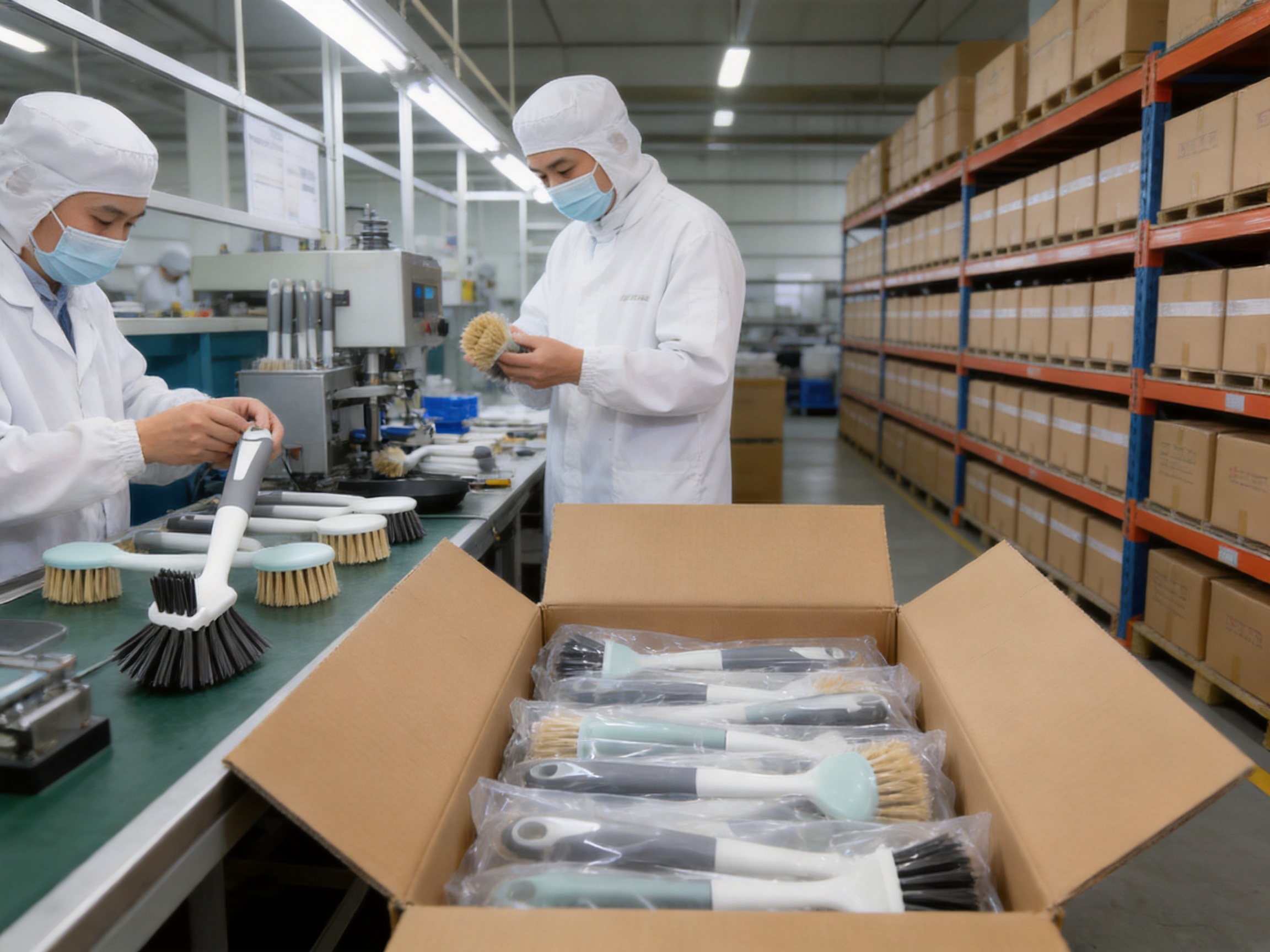
Control of production is particularly important for plastic cleaning tools. The manufacturer must manage molding conditions, material preparation, component fit, trimming, assembly, bristle installation, inspection, and packing. When these activities are coordinated through a standardized production system, the risk of inconsistent product appearance or dimensions can be reduced.
Standardized Production Processes
Standardized production processes help transform a basic product design into a repeatable commercial item. In the case of a pot brush, standardization can cover raw material specifications, mold settings, handle dimensions, bristle arrangement, assembly requirements, weight tolerance, appearance inspection, and packaging quantity.
A repeatable process is beneficial for importers and distributors because product information can be used more confidently in catalogs, online listings, quotations, and purchase agreements. Consistent dimensions also help buyers plan shelf displays, carton storage, shipping calculations, and retail packaging.
Stable Quality Control
Quality control is relevant at several stages of production. Incoming materials can be checked for suitability. Molded components can be reviewed for shape, surface finish, and defects. Assembled brushes can be checked for fit, handle integrity, bristle placement, and general appearance. Finished cartons can be checked for quantity and packing condition.
For a bulk order, quality is not limited to whether one sample performs well. Buyers need confidence that the full shipment will meet the agreed specification. Stable inspection practices help support this expectation and provide a clearer basis for communication between the manufacturer and the purchasing organization.
Complete Supply Chain Support
The company describes a complete supply chain and a comprehensive product range. This is useful for buyers who want to combine pot brushes with other household cleaning products, industrial brushes, brooms, plastic accessories, or storage-related items. Consolidating several product categories with one experienced supplier can simplify communication, product development, quality coordination, and shipment planning.
A broader product portfolio may also help distributors build themed collections. For example, a household cleaning assortment could include pot brushes, dish brushes, floor brooms, utility brushes, and storage products. A commercial buyer could combine kitchen cleaning tools with industrial brushes and facility maintenance items. The pot brush can therefore serve as one component in a wider procurement program.
Applications Across Different Markets
Household Kitchens
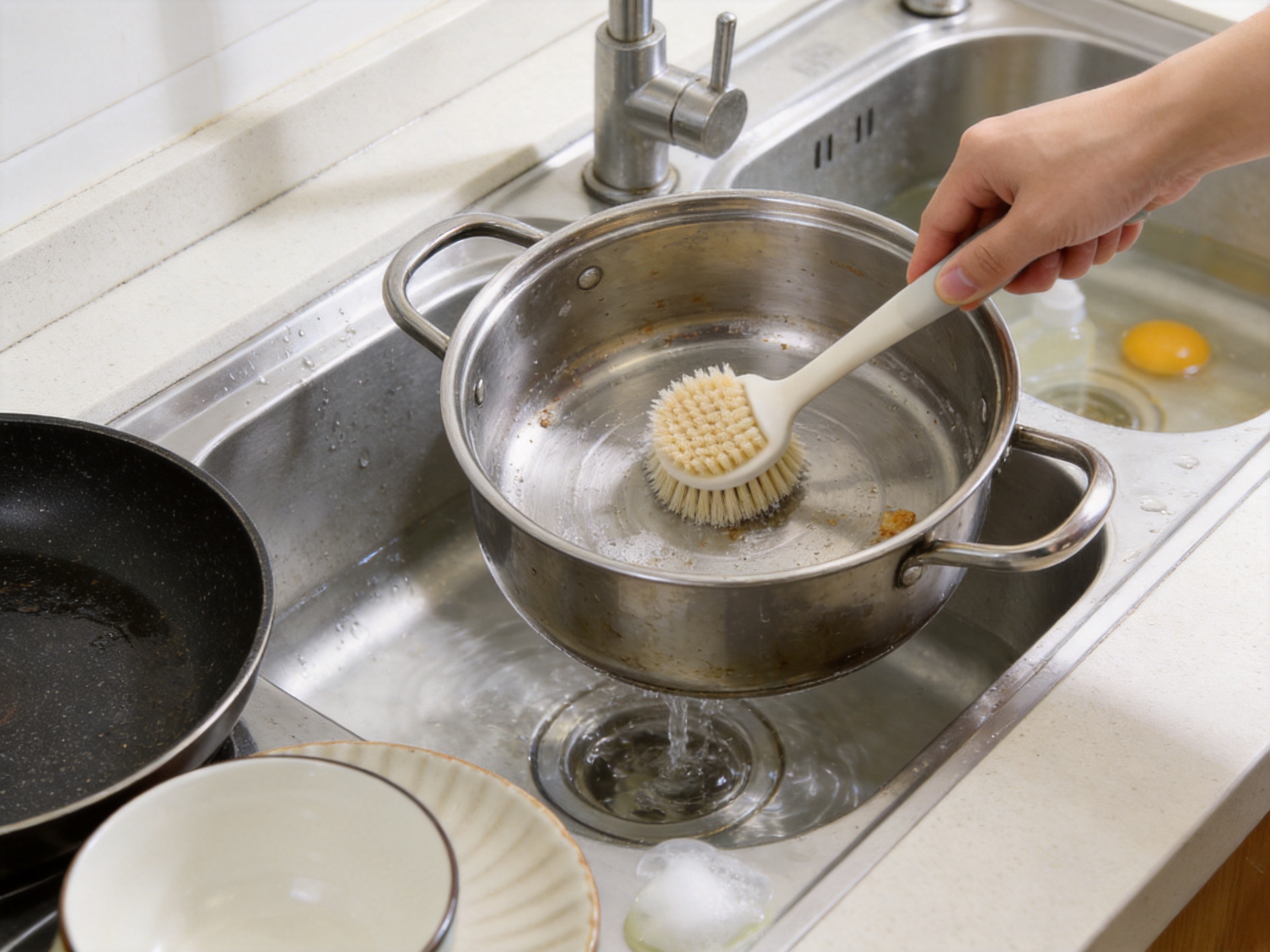
For home users, the brush is suitable for daily washing of pots, pans, dishes, bowls, and kitchen accessories. Its lightweight body makes it convenient to keep near a sink, while its compact form supports cleaning around corners and edges. The PP handle can be rinsed quickly, making the tool suitable for frequent use.
Families may also use the brush for cleaning items that are inconvenient to wash with a cloth. Baking trays, deep cookware, grill accessories, and containers with narrow transitions can benefit from a brush with a practical handle and directed bristle contact.
Restaurants and Food Service Operations
Food service businesses need cleaning tools that are straightforward, economical, and easy to replace or replenish. A pot brush can support routine washing in preparation areas, dishwashing stations, staff kitchens, and catering operations. Multiple size options allow a buyer to select a model suitable for the establishment’s cookware and cleaning workflow.
Because the brush is supplied in cartons of 100 pieces, it can be considered for bulk purchasing and stock management. Businesses can maintain reserve inventory for regular replacement, seasonal demand, new branch openings, or high-use cleaning stations.
Hotels and Hospitality Facilities
Hotels, guesthouses, dormitories, and serviced apartments often require practical cleaning products for kitchens, dining areas, staff facilities, and maintenance rooms. A lightweight pot brush can be included in housekeeping supplies or kitchen equipment packages. Its simple construction allows staff members to use it without specialized training.
Retail and E-Commerce
The clear function of the product makes it suitable for supermarket shelves, household goods stores, cleaning supply outlets, and online marketplaces. Retailers can position it as a general kitchen brush, cookware scrubber, or multipurpose household cleaning accessory, provided that product claims accurately reflect its intended use.
Different models can be allocated to different price points or customer groups. PP-only models may appeal to buyers seeking a simple and economical option. PP+TPR models may be positioned as upgraded versions with a more comfortable grip. Longer models can be marketed toward users who clean deep cookware or prefer additional reach.
Industrial and Facility Procurement
Although the product is designed primarily for kitchen cleaning, its supplier’s experience with household and industrial brushes creates opportunities for broader procurement discussions. Facility managers, cleaning contractors, workshops, and institutional buyers may use similar brush formats for suitable general cleaning tasks, subject to their own material and hygiene requirements.
Packaging, Carton Planning, and Bulk Orders
Each listed model is packed in OPP bags, with 100 pieces per carton. Individual bag packing can help keep products separated during handling, storage, and distribution. It may also support straightforward counting and allocation when cartons are opened for retail or institutional fulfillment.
The listed carton sizes are 46 × 29 × 28 centimeters for the 3005, 3015, T3022, and 3022 models, and 50 × 40 × 30 centimeters for the 3027 and T3027 models. These dimensions should be considered when planning warehouse space, pallet arrangements, container loading, and freight quotations.
Bulk buyers should confirm all order details before production, including item number, material, color, product dimensions, packaging, carton markings, quantity, inspection requirements, and delivery schedule. Clear specification confirmation helps prevent confusion when several similar models are purchased at the same time.
For retailers, the OPP bag format can be combined with additional labels, inserts, barcode stickers, or outer packaging if required. Customers seeking customized presentation should discuss artwork, printing, labeling, and packing requirements with the supplier before placing an order.
Customization and Private-Label Possibilities
Cleaning brushes are often purchased as part of a brand assortment rather than as isolated generic products. Buyers may want a specific color system, handle appearance, packaging style, or product combination. The manufacturer’s stated customization service based on customer drawings and samples can support these requirements.
Customization may involve adjusting the handle design, selecting a particular material combination, modifying the product color, or developing packaging that matches a retailer’s visual identity. The exact feasibility of each request depends on tooling, order volume, materials, production scheduling, and approval of samples.
For private-label projects, it is useful to prepare a complete product brief. The brief may include target market, expected retail price, preferred dimensions, grip requirements, bristle performance, color references, packaging details, carton quantities, inspection standards, and estimated annual volume. A detailed brief gives the manufacturer a clearer basis for quotation and sample development.
Customer drawings and samples can also help when the buyer wants a product that fits an existing merchandising system. For example, the handle may need to match other brushes in a product family, or the retail packaging may need to fit a specific hanging display. Early technical communication can reduce revisions later in the process.
Recommended Use and Care
Preparation Before Scrubbing
For best results, users should remove large food particles before applying the brush. Heavily dried residue can be softened with warm water and detergent. Allowing a pot or pan to soak for several minutes may reduce the force required during cleaning.
Using Appropriate Pressure
The brush should be used with controlled pressure suited to the cookware. Non-stick surfaces should be cleaned gently, while harder surfaces may tolerate firmer strokes. Excessive force is generally unnecessary and may reduce the service life of any cleaning brush.
Rinsing After Use
After cleaning, rinse the bristles and handle thoroughly to remove food particles and detergent. Trapped residue can affect future cleaning performance and may create unpleasant odors. A quick rinse immediately after use is easier than allowing residue to dry inside the bristle area.
Drying and Storage
Store the brush in a clean, ventilated location where excess water can drain away. Avoid leaving it submerged for long periods. Proper drying helps maintain a fresher condition and supports the long-term usability of the handle and bristles.
Routine Inspection
Users should inspect the brush periodically for worn bristles, trapped particles, cracks, or other visible changes. A brush that has reached the end of its useful life should be replaced. Commercial operations may establish a regular replacement schedule based on frequency of use and hygiene procedures.
Why Supplier Capability Matters to Buyers
Choosing a cleaning brush supplier involves more than comparing the unit price of one item. Buyers must also consider material consistency, production capacity, packaging accuracy, communication, customization support, export experience, and after-sales coordination. A low-cost product that arrives with inconsistent dimensions or weak assembly may create higher costs through returns, sorting, relabeling, and customer complaints.
The manufacturer’s experience since 2008 provides a foundation for serving both domestic and international customers. Its industry and trade structure combines production knowledge with market and export support. This can be valuable for overseas buyers who need assistance with product selection, quotation preparation, sample confirmation, packing arrangements, and shipment coordination.
The company’s own production base and standardized processes are also relevant to repeat procurement. Once a buyer approves a model, consistent production helps maintain continuity across replenishment orders. This is especially important for retailers that want customers to find the same product again or for distributors that supply a network of stores.
Customization capability adds another level of value. Instead of selecting only from an existing catalog, buyers may discuss product improvements or product-family development based on drawings and samples. This creates opportunities to differentiate the brush from competing generic items through grip design, color, packaging, or coordinated assortment planning.
Purchasing Checklist for Importers and Distributors
Before ordering, buyers should identify the preferred item number and confirm whether the required construction is PP or PP+TPR. The chosen material can affect grip feel, product positioning, and cost. Buyers should also confirm the intended use and ensure that the selected bristles are appropriate for the surfaces their customers commonly clean.
Dimensions and weight should be checked against retail packaging, shelf displays, and shipping plans. A longer model may be more attractive to some users but may require a larger hanging pack or carton arrangement. A compact model may be easier to merchandise in small stores or online multipacks.
Packaging should be discussed in detail. The standard information lists OPP bags and 100 pieces per carton, but buyers may need specific labels, inner cartons, barcode systems, carton marks, or customized retail packaging. Any change from standard packaging should be confirmed before the purchase order is finalized.
Quality requirements should be documented clearly. Buyers may specify appearance standards, acceptable weight variation, bristle attachment expectations, dimensional tolerances, packaging counts, and inspection procedures. A reference sample approved by both parties can be helpful for future repeat orders.
Finally, buyers should confirm production lead time, minimum order quantity, shipping terms, payment arrangements, sample policy, and documentation requirements. Clear commercial communication supports a smoother transaction and helps the supplier plan production accurately.
Frequently Asked Questions
What is the main purpose of this pot brush?
The brush is designed for general kitchen cleaning, including removing food residue and light stains from pots, pans, bowls, dishes, and other cookware. It is especially useful for edges, corners, and areas that are difficult to clean with a flat sponge.
Is the handle made entirely from polypropylene?
The 3015 model is listed as PP, while the other listed models use PP+TPR. Buyers can select the construction that best matches their grip, product positioning, and purchasing requirements.
Can the brush be used on non-stick cookware?
Yes, the bristles are described as suitable for general cleaning on non-stick surfaces. Users should apply gentle pressure, avoid aggressive scraping, and keep the brush free from trapped hard particles that could affect delicate coatings.
Can it clean stainless steel and ceramic surfaces?
Yes. The brush is suitable for general cleaning on stainless steel and ceramic surfaces. It can help loosen ordinary food residue and light stains when used with water, detergent, and appropriate pressure.
How much does each brush weigh?
The listed models weigh between 60 and 85 grams. The exact weight depends on the item number selected. Buyers should refer to the product specification table when calculating shipping weight or developing retail product information.
What are the available product sizes?
The listed sizes include 23.5 × 6 × 4 centimeters, 25 × 6 × 5 centimeters, and 31 × 8 centimeters. These options provide different reach and profile choices for household, commercial, and retail applications.
How are the products packed?
The standard packing method is OPP bags. The listed quantity is 100 pieces per carton. Buyers requiring customized packaging, labels, or carton markings should discuss those requirements with the supplier before ordering.
Are samples available for customized projects?
The manufacturer states that customization can be developed based on customer drawings and samples. Buyers should provide their requirements and confirm sample procedures, tooling considerations, costs, and approval steps with the supplier.
Can the supplier provide other cleaning products?
Yes. The company offers brooms, cleaning brushes, household and industrial brushes, and supporting plastic products. This broader range may help buyers consolidate related products into one procurement program.
Is this brush suitable for industrial use?
The product is primarily presented as a kitchen cleaning brush. It may be suitable for selected general cleaning tasks in commercial or facility environments, but buyers should evaluate the bristle performance, hygiene requirements, chemical exposure, and operating conditions of their specific application.
How should the brush be maintained?
Rinse the brush after use, remove trapped particles, shake off excess water, and store it in a ventilated place. Avoid prolonged soaking and replace the brush when the bristles or handle show significant wear.
What makes this product different from a basic scrubber?
Its advantages include a lightweight handle, moisture-resistant PP construction, available PP+TPR grip configurations, multiple sizes, compact access to edges and corners, and support from a manufacturer with standardized production, quality control, customization, and export experience.
Conclusion
The PP Handle Kitchen Cleaning Pot Brush is a practical solution for users who need a lightweight, controllable, and easy-to-maintain tool for everyday cookware cleaning. Its polypropylene handle supports use in wet kitchen environments, while selected PP+TPR models offer additional material flexibility for buyers seeking a different grip experience. The bristles are intended for general use on non-stick, stainless steel, and ceramic surfaces, helping remove food residue and light stains without unnecessary scratching when used correctly.
Its compact structure, available lengths, straightforward maintenance, and standard OPP bag packaging make the brush suitable for homes, restaurants, hotels, retailers, distributors, online sellers, and institutional buyers. The six listed configurations allow procurement teams to compare weight, material, dimensions, and carton requirements before selecting the most appropriate model.
The product is further supported by a supplier with experience in cleaning supplies, plastic products, household brushes, and industrial brushes. An own production base, standardized manufacturing processes, stable quality control, complete supply chain, export experience, and customization service provide meaningful advantages over anonymous low-cost alternatives. For buyers seeking a dependable cleaning brush program rather than a one-time generic purchase, this combination of product practicality and manufacturing capability offers a strong foundation for long-term cooperation.
References
1. Product specification sheet for PP Handle Kitchen Cleaning Pot Brush, including item numbers, material options, dimensions, weights, quantities, packaging methods, and carton sizes.
2. Manufacturer-provided product description covering handle construction, bristle suitability, surface compatibility, compact design, and daily kitchen cleaning use.
3. Manufacturer company profile describing production experience, cleaning supply categories, plastic product capabilities, customization services, supply chain resources, and export support.
4. General principles of household cookware cleaning, including the use of suitable pressure, rinsing, drying, and surface-specific care practices.
5. General material information regarding polypropylene and thermoplastic rubber in household cleaning product applications.
Product: PP Handle Kitchen Cleaning Pot Brush

 CONTACT US
- CONTACT DETAILS
- Address : No. 1388 Cuntong Road, Jinhua City
- Tel: +86-0579-81534043
- Email:wangjinhua1@zjjqsj.com
- PRODUCTS
- Kitchen Cleaning Supplies
- Household Cleaning Supplies
- Indoor & Outdoor Cleaning Supplies
- Baby Products & Cleaning Supplies
- Home Storage Containers
- QUICK LINK
- Company Profile
- Plant equipment
- Certifications
- FAQ
- NEWS CENTER
- Company News
- Industry News
- MOBILE TERMINAL

