

 English
  русский
  Español
  عربى
عربى 
One Brush, Many Surfaces: Does Multi Functional Cleaning Really Work
Date:Oct 02, 2026
Kitchen counters, bathroom tiles, glass panels, grout lines, sinks, floors and furniture surfaces do not all require the cleaning. Still new multi‑function cleaning brushes try to cover tasks by swapping heads using different bristle types and adjusting handles. The practical question arises: can one cleaning system truly work on surfaces while using the same brush head everywhere?
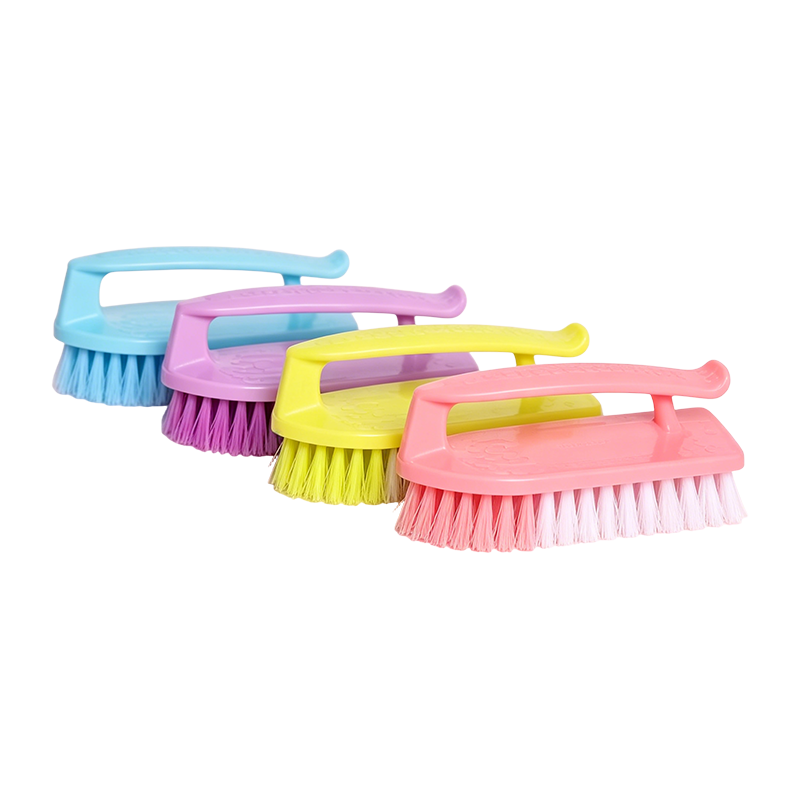
1. Multi‑Function Starts With Contact Surfaces
Using the same bristle set on every home surface can cause limits. Hard grout needs pressure while glass and shiny surfaces usually need softer touch.
- Stiff bristle head: Made for grout textured floors, joints and stubborn buildup.
- Soft brush head: Better for surfaces that need lighter mechanical contact.
- Microfiber head: Good for wiping and finishing than hard scrubbing.
- Narrow detail head: Focuses contact, inside seams, corners and tight spaces.
Current multi‑function cleaning systems already combine brushes, sponge pads, microfiber pads and V‑shaped grout brushes to meet different cleaning tasks.
2. Head Shape Can Be More Important Than Head Count
Adding several attachments does not automatically make a cleaning tool versatile. Each attachment needs a clear geometric purpose. A broad circular head can cover an open floor, while a pointed or V-shaped head can concentrate pressure along narrow joints.
A multi functional cleaning brush becomes more practical once head geometry corresponds with actual surface shapes.
- Round heads: Cover broad areas and curved surfaces.
- Flat heads: Maintain broad contact against floors, walls, and panels.
- Corner heads: Direct cleaning action into edges and tight angles.
- Pointed heads: Concentrate bristles around narrow gaps and grout lines.
3. Bristle Hardness Determines Surface Compatibility
Surface compatibility remains a key test of multifunctional design. A brush suitable for textured tile may be unsuitable for glass, while a soft sponge may struggle against hardened residue.
Manufacturers can adjust fiber diameter, bristle density, cut length, and material to create different cleaning characteristics. Nylon and polypropylene fibers, for example, can be configured into different stiffness levels rather than treated as a single brush material.
This distinction matters because a multi functional cleaning brush should provide several cleaning modes instead of simply applying the same scrubbing action to every surface.
4. Replaceable Heads Expand the Meaning of “One Brush”
Many multifunction systems use a common handle or motor unit with interchangeable cleaning heads. Current products range from three-head systems to configurations containing eight or more attachments.
This structure creates a useful separation between the power or handle section and the working attachment. The same handle can support a broad floor brush during one task, then accept a narrow detail brush for corners.
- Common handle or power unit
- Quick-release attachment structure
- Multiple head shapes
- Different bristle densities
- Optional sponge or microfiber attachments
5. Adjustable Handles Add Another Layer of Versatility
Surface variation is not limited to material. Cleaning height and distance can change considerably between floors, walls, sinks, bathtubs, counters, and high corners.
Telescopic handles can provide different working lengths, while detachable shafts allow the same tool to switch between handheld and extended applications. Current multifunctional products commonly offer multiple handle positions, with some systems extending from roughly 30 cm to more than 120 cm.
Such adjustment gives the multi functional cleaning brush another dimension of adaptability without requiring a completely separate handle for every task.
6. Multi-Functional Does Not Mean Universal
There is an important difference between “multi-functional” and “universal.” A multifunction cleaning system can cover several applications through specialized attachments, but a single brush head rarely performs equally well across every surface.
Grout lines need concentrated bristle contact. Glass may require a softer cleaning element. Large floors benefit from wider heads, while corners need narrower profiles. Current cleaning guides similarly distinguish broad tile brushes from dedicated grout brushes because head dimensions and bristle structures serve different purposes.
Can One Cleaning System Really Handle Many Surfaces?
Yes, provided the product is designed as a system rather than simply marketed as a universal brush. Interchangeable heads, differentiated bristle stiffness, varied head geometry, adjustable handles, and secure attachment points can give one platform several distinct cleaning functions.
The real value of a multi functional cleaning brush therefore comes from purposeful specialization. One handle can support several cleaning heads, but each head should have a defined role. Such a structure allows manufacturers to combine versatility with surface-specific cleaning rather than relying on a single brush configuration for every household task.
 CONTACT US
- CONTACT DETAILS
- Address : No. 1388 Cuntong Road, Jinhua City
- Tel: +86-0579-81534043
- Email:wangjinhua1@zjjqsj.com
- PRODUCTS
- Kitchen Cleaning Supplies
- Household Cleaning Supplies
- Indoor & Outdoor Cleaning Supplies
- Baby Products & Cleaning Supplies
- Home Storage Containers
- QUICK LINK
- Company Profile
- Plant equipment
- Certifications
- FAQ
- NEWS CENTER
- Company News
- Industry News
- MOBILE TERMINAL

