

 English
  русский
  Español
  عربى
عربى 
Silicone Car Squeegee: A Practical Solution for Faster, Cleaner Vehicle Drying
Date:Sep 05, 2026
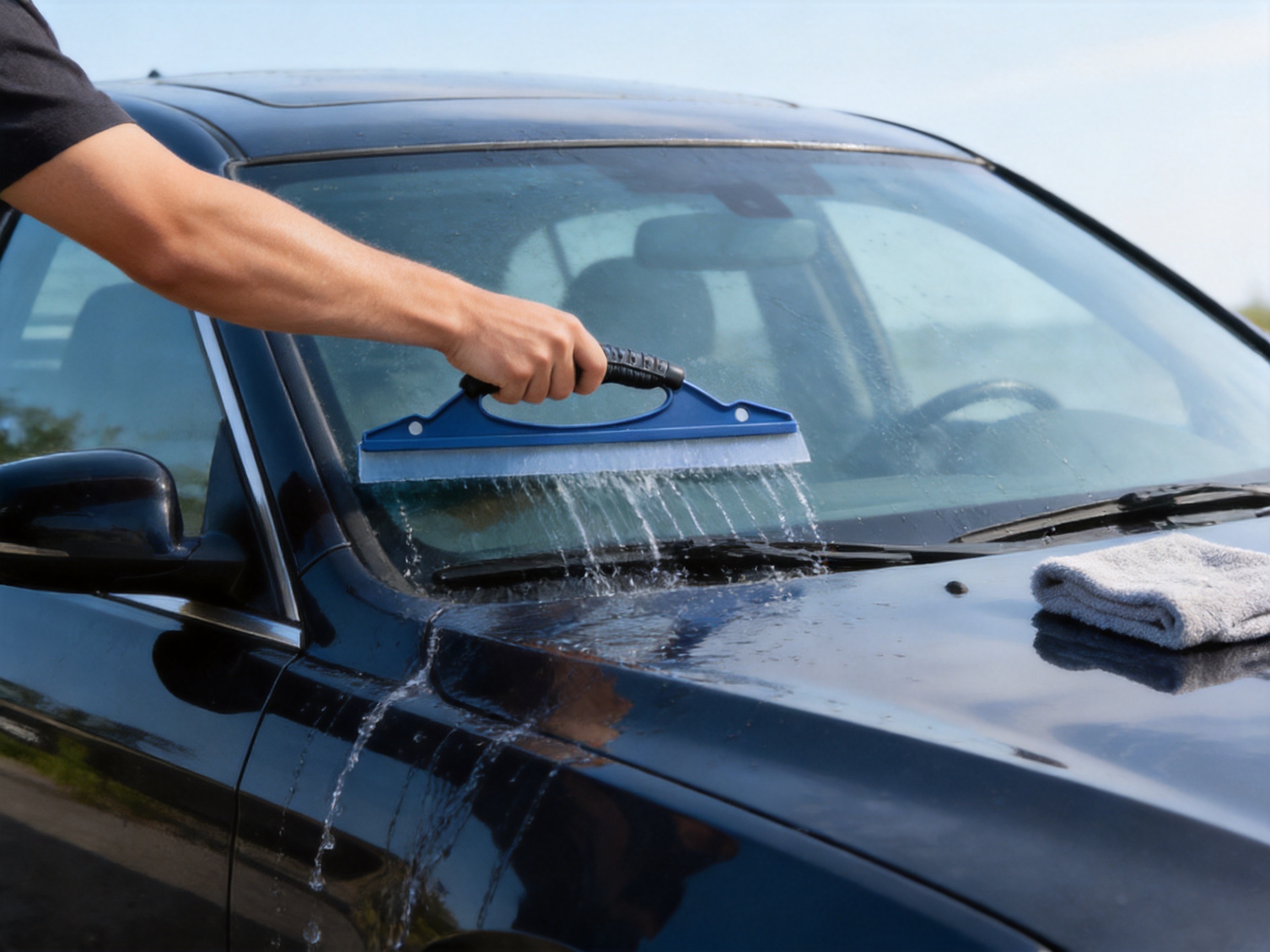
Keeping a vehicle clean involves more than removing visible dirt. After rinsing, a large amount of water remains on the windshield, side windows, rear glass, mirrors, roof, hood, doors, and other smooth surfaces. If this water is left to evaporate naturally, it may create water spots, mineral marks, and uneven streaks. Traditional towels can remove the moisture, but using a cloth alone often requires repeated wiping and may spread water from one area to another. A silicone car squeegee offers a simple way to move excess water away before the final towel-drying stage.
The Silicone Car Squeegee is designed to guide water across smooth vehicle surfaces in controlled passes. Its flexible silicone blade can follow curved glass and slightly uneven panels, helping users remove water efficiently without relying entirely on absorbent towels. It can be used on windshields, side windows, rear glass, painted panels, mirrors, shower panels, bathroom glass, and other smooth surfaces where quick water removal is useful.
Although the product is classified as a car brush, its working principle is closer to a compact water-removal tool. Instead of using bristles to scrub dirt, it uses a soft blade to collect and direct water. This makes it especially useful after washing, when the main task is not aggressive cleaning but reducing the amount of water left behind.
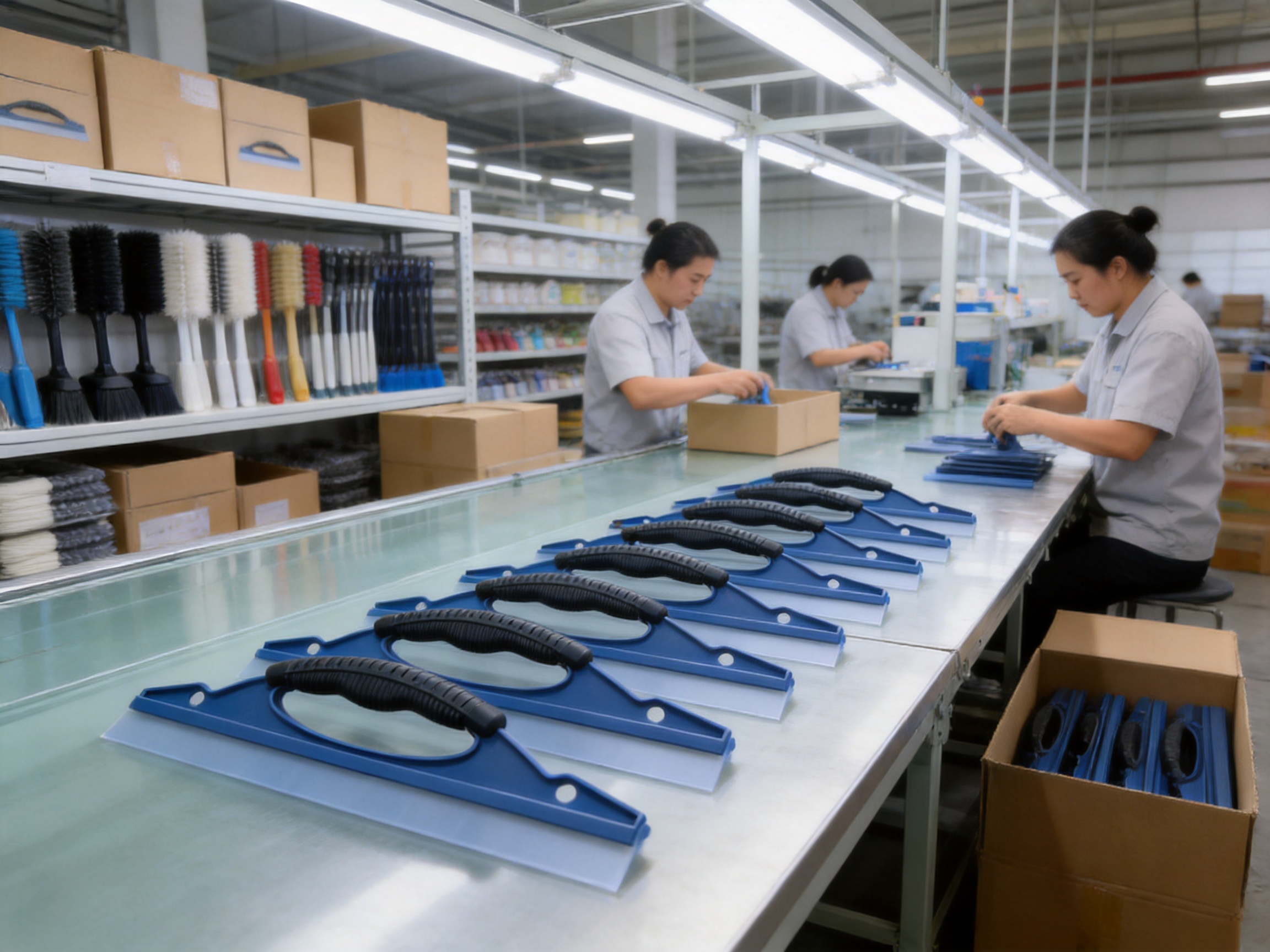
Manufactured by Jinhua Jieqing Plastic Co., Ltd., the product reflects the company’s broader experience in cleaning supplies, household brushes, industrial brushes, and supporting plastic products. The company was founded in 2008 and operates as an industry and trade enterprise with its own production base, standardized production processes, quality-control practices, and customization capabilities. These strengths support the production of practical cleaning tools for supermarkets, distributors, cross-border e-commerce sellers, professional users, and industrial procurement customers.
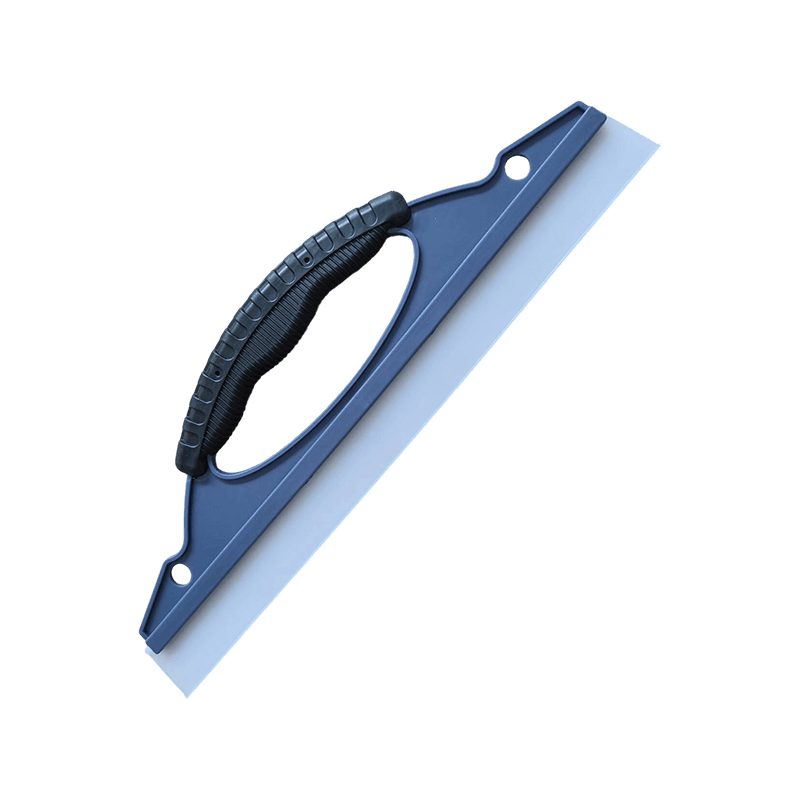
Silicone Car Squeegee
Why Water Removal Matters After Car Washing
Rinsing is an essential part of vehicle cleaning, but it also leaves a large quantity of water on the exterior. Water collects in window edges, around mirrors, beneath door handles, along roof rails, at the base of the windshield, and in the gaps between body panels. Even when the vehicle appears clean, these remaining droplets can create problems as the surface dries.
Water often contains minerals and other dissolved substances. When a droplet evaporates, those materials may remain on the surface as a visible ring or spot. The effect can be more noticeable under direct sunlight or on dark-colored vehicles. Repeated exposure to mineral deposits may make glass look dull and can increase the time required for later cleaning.
Air drying also has practical disadvantages. Wind may move water across the surface unevenly, while warm weather can cause droplets to dry before the user has an opportunity to wipe them. A towel used too late may need to absorb both large pools of water and small dried marks. This can increase effort, consume more towels, and make the process less consistent.
A squeegee addresses this stage by removing much of the loose water while it is still present in a continuous film. The operator can begin at the top of a panel and guide water downward or toward an edge. The remaining moisture can then be collected with a microfiber towel. This two-step method separates bulk water removal from final detailing.
The approach is useful for both occasional and routine cleaning. A homeowner washing a car in a driveway can reduce drying time, while a professional detailer can move more efficiently from one vehicle to the next. In either situation, the tool helps create a more organized workflow.
How a Silicone Car Squeegee Works
The central component is the silicone blade. When the blade is placed against a wet surface and moved with light, even pressure, it gathers water along its edge. The water is then pushed into a thin stream that travels toward the bottom or side of the panel. Instead of absorbing water, the tool redirects it away from the working area.
Silicone is well suited to this type of application because it combines flexibility with a smooth surface. A rigid plastic edge may not follow a curved windshield evenly, while a soft cloth may absorb water but require repeated passes. The flexible blade can adapt to common vehicle contours and maintain contact across a broader section of glass or paint.
The tool is not intended to replace every other washing accessory. It is most effective when used after the vehicle has been thoroughly rinsed and when loose grit has already been removed. A towel or microfiber cloth remains useful for final droplets, seams, corners, and areas that the blade cannot fully reach.
Correct technique is straightforward. The user should begin with a clean blade and a surface that has been rinsed properly. The squeegee can be drawn in overlapping passes, using moderate pressure rather than force. After each pass, the blade may be checked for trapped particles or dirt. If debris is visible, rinsing or cleaning the blade helps reduce the chance of dragging contaminants across the finish.
On large panels, it is usually more efficient to work in sections. The operator can start with the roof, continue to the windows, and then move down to the hood, trunk, and side panels. This prevents water from remaining on a completed area while another section is being washed.
Key Product Advantages
Flexible Silicone Contact Edge
The flexible silicone blade is the defining feature of the product. It can move along curved glass, slightly uneven panels, and other smooth contours without behaving like a hard, inflexible scraper. This flexibility supports a smoother pass and helps the tool maintain contact across a vehicle surface.
On a windshield, for example, the blade can follow the general curve from one side toward the other. On a side window, it can work around the shape of the glass while directing water toward the lower edge. On painted panels, its flexibility helps the user move water without needing to apply excessive pressure.
The blade’s softness also contributes to a controlled user experience. A rigid edge may feel abrupt when it reaches a change in surface angle. A flexible silicone edge is more capable of adapting to that transition, which makes it suitable for users who want a simple drying tool rather than a complicated professional device.
Efficient Bulk Water Removal
A cloth absorbs water, but a squeegee moves it. This difference is important when a vehicle is heavily wet after rinsing. Instead of saturating a towel immediately, the user can remove the majority of surface water with several passes and then use a towel for the final finish.
This can reduce the number of towels needed during a wash. It may also reduce wringing and repeated towel changes. For businesses that clean multiple vehicles, the ability to move bulk water efficiently can improve the consistency of the workflow and reduce unnecessary handling.
For household users, the benefit is mainly convenience. Drying a car can feel like the longest part of washing, particularly when the vehicle has a large windshield, panoramic roof, broad side panels, or deep body contours. A compact squeegee helps make the initial drying stage faster and more manageable.
Useful on Glass and Painted Panels
Many water-removal tools are designed primarily for glass. The Silicone Car Squeegee can also be used on suitable painted exterior panels, provided the surface has been rinsed properly and the blade is kept clean. This allows one tool to support a wider range of vehicle-care tasks.
The product can be used on windshields, rear windows, side windows, mirrors, hoods, roofs, trunks, and doors. The most suitable areas are smooth surfaces where water forms a continuous layer or gathers in visible droplets. Textured trim, heavily contaminated areas, deep gaps, and rough surfaces may require different tools.
Using the same tool across several exterior surfaces simplifies storage and purchasing. Retailers can present it as a multi-purpose vehicle-drying accessory, while consumers can keep it with their regular car-washing equipment.
Compact and Easy to Store
The handle and blade design are generally simple and space-efficient. The tool can be placed in a wash bucket, stored with brushes and microfiber cloths, or hung near other cleaning supplies. Its compact form also makes it practical to keep in a vehicle trunk for travel, roadside cleaning, or routine maintenance.
Storage convenience is valuable for both individual users and commercial operators. A tool that occupies little space is easier to organize in a garage, wash bay, service vehicle, retail package, or warehouse. It can also be included in larger car-care sets without significantly increasing storage requirements.
Comfortable Handling with Wet Hands
Car washing is a wet activity, and a handle that is difficult to control can reduce the value of the blade. The product’s simple handle design focuses on grip stability during routine use. Users can hold it while their hands are wet or slippery and guide it across a panel with a controlled motion.
Good handling does not require complicated mechanisms. A practical handle should be easy to understand, quick to pick up, and suitable for repeated passes. This straightforward design makes the product accessible to household users, car wash staff, detailers, and retailers seeking an easy-to-explain cleaning accessory.
Multi-Purpose Household Use
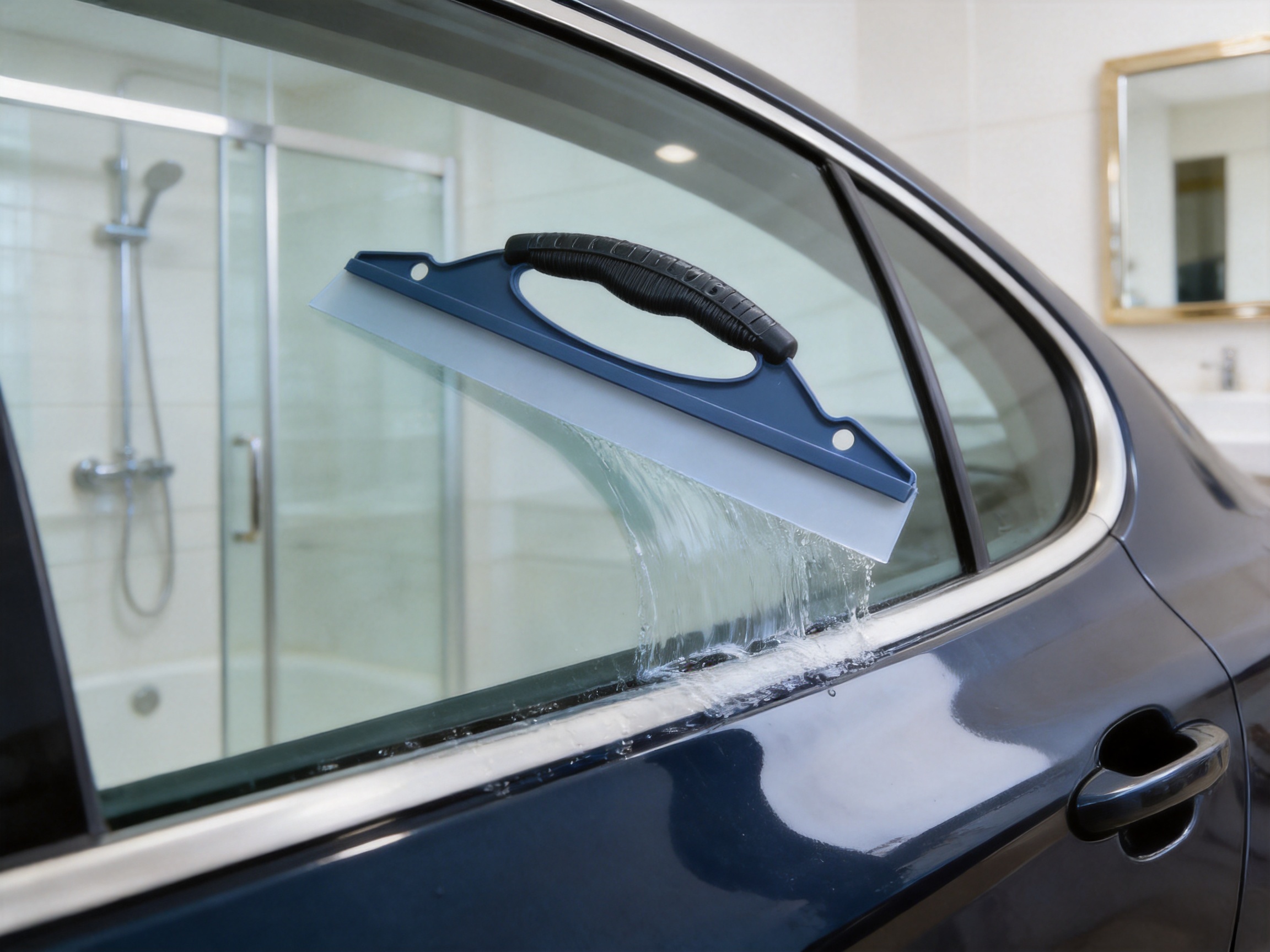
Although intended primarily for vehicle drying, the tool can also be used on bathroom glass, mirrors, shower doors, and shower panels. These surfaces have a similar requirement: excess water should be removed quickly to reduce streaks, droplets, and mineral residue.
This expanded use increases the product’s value in the home. A consumer may purchase it for car care and later use it in the bathroom. A retailer can place it within automotive, household cleaning, bathroom accessory, or general cleaning categories. The multi-purpose nature also supports the company’s wider product positioning across kitchen cleaning supplies, household cleaning supplies, indoor and outdoor cleaning supplies, baby-related cleaning supplies, and home storage products.
Comparison with Common Drying Methods
| Drying Method | Main Function | Strengths | Limitations |
|---|---|---|---|
| Silicone car squeegee | Moves bulk water from smooth surfaces | Fast water removal, flexible contact edge, compact storage, useful on glass and panels | Requires a clean blade and a final towel for remaining droplets |
| Microfiber towel | Absorbs water and completes final drying | Useful for edges, corners, details, and residual moisture | Can become saturated quickly when used on a fully wet vehicle |
| Chamois-style cloth | Absorbs surface water | Traditional and familiar drying method | May require frequent wringing and careful maintenance |
| Air blower | Uses moving air to push water away | Helpful for seams, mirrors, grilles, and difficult gaps | Requires an appropriate power source and may not remove broad surface water as efficiently |
| Household rubber wiper | Removes water from flat surfaces | Simple operating principle | May be less suitable for vehicle contours, storage, or controlled automotive use |
The comparison shows why a squeegee is best understood as part of a drying system rather than as a complete replacement for every accessory. Its main advantage is the removal of loose water from broad, smooth areas. A towel remains useful for finishing, and an air blower may be helpful in seams or hard-to-reach cavities.
Compared with using a towel alone, the squeegee can reduce the amount of water that must be absorbed. Compared with a rigid household wiper, the silicone blade is better suited to curved automotive glass and changing panel shapes. Compared with an air blower, it does not require electricity or batteries and can be used immediately at a self-service wash area or outdoor location.
Advantages over Competing Product Types
More Adaptable Than Rigid Edges
Rigid edges can be effective on perfectly flat surfaces, but vehicle exteriors rarely consist only of flat planes. Windshields curve, hoods slope, side windows change angle, and body panels contain subtle contours. A flexible silicone blade is more adaptable to these conditions than a hard plastic edge.
This adaptability can make the user’s movement more natural. Rather than repeatedly lifting and repositioning the tool to follow a surface, the operator can make longer passes. Longer passes may improve productivity and create a more uniform drying pattern.
Less Dependent on Absorbent Materials
Towels and cloths are important, but relying on them for all stages of drying may be inefficient. A fully wet vehicle can quickly saturate a towel, especially when the user is working under warm conditions. The squeegee removes water without becoming waterlogged, allowing the towel to be reserved for finishing work.
This may lower ongoing consumable use in professional settings. For households, it may reduce laundry and make the car-washing routine easier to manage. The user still needs to clean and maintain the squeegee, but the main water-removal action does not depend on absorbing material.
More Portable Than Powered Equipment
Powered drying equipment can be useful, but it is not always convenient. An air blower may need a power outlet, a charged battery, or additional storage space. The Silicone Car Squeegee is manually operated and can be used wherever washing takes place.
This portability is especially useful for apartment residents, travelers, mobile detailers, outdoor enthusiasts, and drivers who keep a compact cleaning kit in the trunk. It also makes the product suitable for areas where electrical equipment is unavailable or inconvenient.
More Versatile Than Single-Use Accessories
Some automotive tools serve only one narrow function. A squeegee can support vehicle drying and household water removal. This broader usefulness improves the product’s appeal to consumers who prefer practical items with multiple applications.
For distributors, versatility can support several sales channels. The product may be marketed through automotive-care departments, household-cleaning sections, e-commerce stores, car-wash supply catalogs, and facility-maintenance channels. Its use on mirrors and bathroom glass also gives it relevance beyond the automotive market.
Recommended Use Procedure
Step One: Rinse the Vehicle Thoroughly
Before using the squeegee, rinse away loose dirt, dust, and grit. This is especially important on lower doors, wheel areas, bumpers, and other locations that collect road contamination. The squeegee is designed to move water, not to scrub heavily soiled surfaces.
A clean surface reduces the risk that particles will become trapped beneath the blade. Users should not drag the tool across dry dirt or a visibly contaminated area. Proper pre-rinsing is a basic part of responsible vehicle care.
Step Two: Inspect the Blade
Check that the silicone edge is clean and free from visible particles. If necessary, rinse the blade before beginning. A clean blade helps maintain smooth contact and supports a more consistent result.
The handle should also be checked for secure handling. Although the product has a simple construction, a stable grip helps the user guide the blade evenly across the surface.
Step Three: Begin with Large Smooth Areas
Start with the roof, windshield, hood, trunk, or large side panels. These areas hold a significant amount of water and provide an efficient opportunity to reduce bulk moisture. Work in sections instead of trying to dry the entire vehicle with one continuous movement.
Use overlapping passes so that water is directed consistently toward an edge. The user should avoid excessive force. The blade needs enough contact to gather water, but pressing too hard may make movement less comfortable and does not necessarily improve the result.
Step Four: Follow the Shape of the Surface
Allow the silicone blade to follow the natural contour of the glass or panel. On curved windows, a steady movement is generally more effective than rapid changes in direction. On painted panels, guide the water toward the lower edge or another convenient collection point.
Pay attention to areas where water may flow back onto a completed section. For example, water from a roof can run onto the windows or upper doors. Planning the order of work from higher surfaces to lower surfaces helps reduce repeated drying.
Step Five: Finish with a Towel
After the majority of water has been removed, use a clean microfiber towel to collect remaining droplets. Focus on edges, trim, mirrors, door handles, panel gaps, and other locations where water naturally gathers.
This combined process is usually more practical than choosing between a squeegee and a towel. The squeegee handles broad water movement, while the towel provides detailed finishing. Together, they can make the drying stage faster and more controlled.
Step Six: Clean and Store the Tool
Rinse the blade after use and remove any visible residue. Allow the tool to dry or store it in a clean location. Keeping the blade free from dirt helps prepare it for the next washing session.
Because the tool is compact, it can be stored in a wash bucket, cleaning cabinet, garage organizer, or vehicle trunk. Hanging it near other cleaning supplies may make it easier to remember during routine maintenance.
Using the Squeegee on Different Vehicle Surfaces
Windshields
The windshield is one of the most suitable applications. It is broad, smooth, and often retains a visible layer of water after rinsing. Start near the upper portion and guide water downward in controlled passes. The flexible blade can follow the general curvature of the glass.
Extra attention may be needed near the bottom edge, where water can collect around the wiper area. A towel can be used after the squeegee to remove remaining moisture from the lower corners and surrounding trim.
Side Windows
Side windows are smaller than the windshield but can still hold droplets along the lower seals and edges. Use shorter passes that match the shape of the glass. Since side windows are close to painted doors, directing water downward can help prevent it from flowing back across already-dried glass.
Rear Glass
Rear windows often have curved profiles and may include defroster lines or other built-in features. Apply light, controlled pressure and allow the blade to move smoothly over the surface. The goal is to remove surface water without forcing the tool into trim or edges.
Painted Panels
Hoods, roofs, trunks, and doors can be dried with the same general technique. These surfaces may have subtle curves that make a flexible blade useful. Work from higher sections toward lower sections and use a towel to finish around emblems, handles, seams, and panel gaps.
As with any drying tool, surface cleanliness matters. The squeegee should be used after proper washing and rinsing rather than as a substitute for removing heavy contamination. Users should also follow their preferred vehicle-care practices for delicate finishes, protective coatings, and specialty surfaces.
Mirrors and Trim Areas
Mirrors can retain water around their edges and behind their housings. A short, careful pass may remove water from the broad mirror face, while a cloth can handle the perimeter. Textured trim and deep recesses are generally better finished with a towel or another detailing accessory.
Household and Facility Applications
The same water-removal principle applies to household surfaces. Bathroom glass, shower doors, mirrors, and shower panels can collect water after use. Removing water promptly may help reduce visible droplets and simplify later cleaning.
In a bathroom, users can guide the tool from the top of a glass panel downward. The flexible blade can follow the surface without requiring repeated towel wiping. For best results, the tool should be rinsed regularly and kept free from soap residue, hair, and other particles.
The product may also be useful in shared facilities such as gyms, hotels, dormitories, locker rooms, and cleaning-service operations. Facility workers often need compact tools that are easy to store and quick to use. A multi-purpose squeegee can support routine maintenance across vehicle areas, washrooms, and other smooth-surface environments.
Its household relevance also supports placement within general cleaning-supply categories. Customers who are not specifically shopping for automotive equipment may still recognize its usefulness when presented as a tool for glass, mirrors, showers, and vehicles.
Manufacturing Strengths Behind the Product
The performance of a cleaning tool depends not only on its visible shape but also on the consistency of its manufacturing. A blade that varies in flexibility, a handle that is not properly formed, or an assembly that lacks stability can affect user confidence. For this reason, production capability is an important part of product value.
Jinhua Jieqing Plastic Co., Ltd. was founded in 2008 and specializes in the research, development, production, and sales of cleaning supplies. Its product range includes brooms, cleaning brushes, household brushes, industrial brushes, and supporting plastic products. This category experience provides a foundation for understanding practical cleaning applications and the demands of different markets.
Own Production Base
The company operates its own production base. This supports closer coordination between product development, manufacturing, inspection, packaging, and order fulfillment. Direct control over the production environment can make it easier to manage product consistency and respond to customer requirements.
An own production base is also valuable for buyers seeking stable supply. Retailers, distributors, and procurement teams often need repeat orders with consistent product characteristics. A controlled production structure can support planning for recurring programs, seasonal demand, and larger-volume purchasing.
Standardized Production Processes
Standardized production processes help ensure that each stage follows an established method. For a product such as a silicone car squeegee, this may include material preparation, component forming, handle production, assembly, visual inspection, functional checks, and packaging.
Standardization reduces avoidable variation and supports repeatability. It also provides a framework for identifying process problems and improving production efficiency. For buyers, the benefit is a product that is easier to specify, compare, stock, and reorder.
Quality-Control Practices
Stable quality control is especially important for cleaning tools because users expect the blade, handle, and overall construction to function reliably during wet use. Inspection practices can help identify visible defects, incomplete forming, poor assembly, or inconsistent appearance before products reach the market.
Quality control also supports export requirements and customer confidence. Different markets may have different packaging, labeling, and product expectations. A systematic approach helps the company coordinate production with buyer specifications and order documentation.
Integrated Industry and Trade Experience
As an industry and trade enterprise, the company combines manufacturing capabilities with sales and export experience. This is useful for international buyers who need more than a factory quotation. They may require assistance with product selection, customization, packaging, order coordination, shipping preparation, and communication across different markets.
The company’s experience serving supermarkets, cross-border e-commerce, industrial procurement, and other channels allows it to understand that the same product may need different packaging, positioning, or order quantities depending on the sales environment.
Flexible Customization
The company offers customization based on customer drawings and samples. This capability can be valuable for buyers who want to develop a private-label cleaning tool, coordinate a product with an existing range, or request changes for a particular market.
Potential customization discussions may involve color, handle appearance, packaging format, labeling, logo presentation, set combinations, carton arrangements, and other commercial requirements. Exact feasibility depends on the customer’s drawings, samples, order quantity, and production evaluation.
Complete Supply Chain and Product Range
A broad product range and supporting supply chain can simplify procurement. Buyers who need multiple cleaning products may be able to coordinate several items through one supplier rather than managing separate sources for brushes, brooms, plastic accessories, and related household tools.
This one-stop approach may reduce communication complexity and help buyers build coordinated product collections. For a distributor, the Silicone Car Squeegee can be combined with car-washing brushes, microfiber cloths, buckets, household cleaning tools, or storage accessories to create a broader catalog.
Product Positioning for Different Buyers
Retailers and Supermarkets
Retailers can position the product as a practical, easy-to-understand accessory for car washing and household glass care. Its compact size makes it suitable for shelf display, hanging display, bundled promotions, or seasonal vehicle-care campaigns.
The multi-purpose application can help the product appeal to more than one customer group. A shopper looking for a car-washing accessory may buy it, while another shopper seeking a shower-glass wiper may find the same product useful.
Cross-Border E-Commerce Sellers
For e-commerce sellers, the product offers clear visual and functional benefits. Demonstrations can show water being moved from a windshield or shower panel, making the purpose immediately understandable. Its simple operation also reduces the need for lengthy user training.
Online sellers may choose to package it individually or combine it with towels, brushes, wash mitts, buckets, or other vehicle-care accessories. Custom packaging and product presentation can help sellers create a consistent store identity when purchasing in bulk.
Professional Detailers and Car Washes
Professional cleaning businesses can use the squeegee as an initial drying tool before final detailing. It can help remove bulk water from large smooth sections while towels are reserved for finishing and touch-up work.
Because workflow speed and consistency are important in professional environments, a tool that is quick to pick up and easy to use can become part of a standard wash process. Businesses should establish their own procedures for blade inspection, cleaning, storage, and safe use on different finishes.
Industrial and Facility Procurement
Facility managers may find the product useful wherever water must be removed from smooth surfaces. Possible settings include vehicle fleets, maintenance departments, building service operations, shared bathrooms, workshops, and cleaning contractors.
Bulk buyers may benefit from the company’s production capacity, standardized processes, customization support, and export experience. Procurement discussions can address required quantities, packaging, delivery schedules, inspection standards, and product combinations.
Care, Handling, and Practical Limitations
Like any surface-care tool, the Silicone Car Squeegee works best when used for its intended purpose. It is designed to move water across smooth surfaces after rinsing. It is not a replacement for a wash mitt, brush, clay treatment, polishing tool, or heavy-duty scraper.
Users should avoid dragging the blade across visibly gritty or heavily contaminated surfaces. They should also avoid using it as a forceful scraper on dried mud, ice, adhesive residue, or hard deposits. Such applications may reduce performance and create unnecessary surface risk.
The blade should be kept clean between uses. If sand, grit, or other particles become attached, rinse the tool before continuing. Storing it with dirty brushes or loose debris may make it less suitable for delicate surfaces during the next use.
For painted panels, users should follow their normal vehicle-care procedures and test unfamiliar surfaces in a discreet area if they have concerns. Vehicles may have different coatings, wraps, finishes, or surface conditions. A controlled technique, clean blade, and properly rinsed panel are important for responsible use.
The squeegee is also not intended to remove every drop from every recess. Water may remain in badges, seams, mirrors, trim, wiper wells, door gaps, and other complex areas. A microfiber towel or air blower can complete those areas. Recognizing this limitation helps users achieve better results without expecting one tool to perform every drying task.
Why the Product Is a Strong Commercial Choice
The Silicone Car Squeegee combines a clear practical function with a broad application range. It helps users remove water from vehicles, mirrors, bathroom glass, and shower panels. It is compact, manually operated, easy to explain, and suitable for both direct consumer sales and professional use.
Its flexible silicone blade gives it an advantage over rigid water-removal tools, while its bulk-water movement gives it an advantage over using towels alone. Its portability makes it easier to store and transport than powered drying equipment. Its multi-purpose nature gives retailers more opportunities for product placement and bundling.
From a sourcing perspective, the product is supported by a manufacturer with experience in cleaning supplies, plastic products, standardized production, quality control, export markets, and customization. This combination is important for buyers who want a functional product as well as dependable supply support.
The company can provide a broader one-stop sourcing approach for buyers who are developing a cleaning-products range. In addition to the silicone car squeegee, its capabilities cover brooms, cleaning brushes, household and industrial brushes, and other supporting plastic products. This may help customers coordinate product families, packaging styles, and procurement schedules.
For a basic cleaning accessory, the product offers a strong balance of function and commercial flexibility. It addresses a common problem—excess water after washing—without requiring complicated equipment. At the same time, its use across automotive and household environments gives it relevance in multiple sales channels.
Frequently Asked Questions
What is a silicone car squeegee used for?
It is used to push excess water from smooth vehicle surfaces after rinsing. Common applications include windshields, side windows, rear glass, mirrors, roofs, hoods, trunks, doors, and other suitable painted panels.
Can it replace a microfiber towel?
It is better used together with a microfiber towel. The squeegee removes bulk water, while the towel collects remaining droplets and dries edges, seams, corners, trim, and other areas the blade may not reach completely.
Is the blade suitable for curved glass?
The flexible silicone blade is designed to follow common curved and slightly uneven surfaces. Users should apply controlled pressure and allow the blade to follow the contour rather than forcing it across the glass.
Can it be used on painted car panels?
Yes, it can be used on suitable smooth painted panels after the vehicle has been properly washed and rinsed. The blade should be clean, and users should avoid dragging it across dry dirt, sand, or heavy contamination.
Can the tool be used in the bathroom?
Yes. It can be used on shower doors, bathroom glass, mirrors, and shower panels to move away excess water. The blade should be rinsed and kept clean, particularly when used in areas with soap residue or mineral deposits.
How does it compare with a household rubber wiper?
The silicone car squeegee is designed with vehicle use in mind. Its flexible blade and compact handle are better suited to curved automotive glass and changing panel shapes than many rigid household wipers.
Does it require electricity or batteries?
No. It is manually operated, so it can be used at home, outdoors, at a self-service washing area, or during travel without a power source.
How should the squeegee be used to reduce streaks?
Use it on a properly rinsed surface with a clean blade. Make controlled, overlapping passes with moderate pressure, and finish with a clean towel to remove remaining droplets.
What surfaces should be avoided?
Users should avoid rough, heavily contaminated, dry, or abrasive surfaces unless the tool is specifically confirmed as suitable for them. It is intended primarily for smooth surfaces and water removal rather than scraping or aggressive cleaning.
How should the tool be stored?
It can be kept in a wash bucket, cleaning cabinet, garage organizer, or vehicle trunk. Store it in a clean location after rinsing the blade so that dirt does not collect on the working edge.
Can buyers request customization?
Jinhua Jieqing Plastic Co., Ltd. offers customization based on customer drawings and samples. Buyers can discuss product appearance, packaging, labeling, color, set combinations, and other requirements with the company for evaluation.
What types of customers can purchase the product?
The product is suitable for retailers, supermarkets, e-commerce sellers, car washes, professional detailers, vehicle fleets, cleaning contractors, facility managers, distributors, and industrial procurement customers.
What other products does the manufacturer supply?
The company supplies brooms, cleaning brushes, household brushes, industrial brushes, and supporting plastic products. Its broader range allows buyers to explore related cleaning and storage products through one supply partner.
Why is manufacturing experience important for this product?
Consistent blade forming, handle production, assembly, inspection, packaging, and delivery all affect the customer experience. A manufacturer with standardized processes, quality-control practices, an established production base, and export experience can better support repeat orders and bulk procurement.
Conclusion
The Silicone Car Squeegee is a practical tool for removing excess water after vehicle washing. Its flexible silicone blade follows smooth contours, guides water into manageable streams, and reduces the amount of moisture that must be absorbed by towels. It can be used on windshields, windows, mirrors, roofs, hoods, trunks, doors, and suitable painted panels.
Compared with rigid edges, it offers greater adaptability to curved automotive surfaces. Compared with towel-only drying, it removes bulk water more efficiently. Compared with powered equipment, it is portable, manually operated, and easy to store. Its use on bathroom glass, mirrors, shower doors, and shower panels further increases its household value.
The product is supported by Jinhua Jieqing Plastic Co., Ltd., a cleaning-supplies manufacturer founded in 2008. The company brings together product development, its own production base, standardized manufacturing processes, stable quality control, export experience, a broad product range, and customization based on drawings and samples.
For consumers, the squeegee can make regular washing and drying more convenient. For professional users, it can improve the organization of the drying workflow. For retailers, distributors, and procurement teams, it provides a versatile product suitable for automotive, household, indoor, outdoor, and facility-cleaning channels.
As part of a complete cleaning routine, the tool is simple but effective: rinse thoroughly, remove bulk water with the clean silicone blade, finish with a microfiber towel, and store the product properly. This straightforward process helps make vehicle and glass care faster, more controlled, and easier to repeat.
References
1. Product information supplied for the Silicone Car Squeegee, including application areas, silicone blade characteristics, handling guidance, storage use, and household applications.
2. Company information supplied for Jinhua Jieqing Plastic Co., Ltd., including company history, production capabilities, product categories, quality-control practices, export experience, and customization services.
3. General principles of automotive washing and drying, including pre-rinsing, bulk-water removal, microfiber finishing, and contamination control.
4. General cleaning-equipment design principles concerning flexible blades, surface contact, manual water removal, ergonomic handling, and multi-purpose use.
5. General facility-maintenance practices for water removal from glass, mirrors, shower panels, vehicle surfaces, and other smooth materials.
Product: Silicone Car Squeegee

 CONTACT US
- CONTACT DETAILS
- Address : No. 1388 Cuntong Road, Jinhua City
- Tel: +86-0579-81534043
- Email:wangjinhua1@zjjqsj.com
- PRODUCTS
- Kitchen Cleaning Supplies
- Household Cleaning Supplies
- Indoor & Outdoor Cleaning Supplies
- Baby Products & Cleaning Supplies
- Home Storage Containers
- QUICK LINK
- Company Profile
- Plant equipment
- Certifications
- FAQ
- NEWS CENTER
- Company News
- Industry News
- MOBILE TERMINAL

