

 English
  русский
  Español
  عربى
عربى 
High-Pressure TPR Plunger for Targeted Toilet and Drain Cleaning
Date:Sep 07, 2026
Reliable drain-cleaning equipment is essential in homes, commercial buildings, maintenance departments, property-management operations, and professional sanitation services. When a toilet or S-trap becomes blocked, users need a tool that can create a dependable seal, concentrate pressure efficiently, withstand repeated compression, and remain comfortable to operate. The High-Pressure TPR Plunger is designed around these practical requirements. It combines a flexible thermoplastic rubber cup, a concentrated 16 cm plunging diameter, an ergonomic handle, and a design intended for narrow or difficult-to-reach openings.
Unlike a basic household plunger that may lose pressure around a wide toilet opening, this model is engineered to focus force into a smaller area. Its narrower, deeper sealing profile is particularly suitable for bowls with compact openings, low-flow toilet designs, and S-traps where ordinary plungers may not establish an effective seal. By directing water pressure toward the obstruction rather than allowing pressure to escape around the rim, the tool helps users address persistent blockages with controlled, rapid strokes.
The product is supplied by Jinhua Jieqing Plastic Co., Ltd., an industry and trade enterprise founded in 2008 and focused on cleaning supplies, household brushes, industrial brushes, brooms, and related plastic products. The company combines product development, manufacturing, quality control, supply-chain coordination, export experience, and customization services. This manufacturing background supports the plunger’s practical construction and makes the product suitable for supermarkets, distributors, professional cleaning suppliers, cross-border e-commerce sellers, facility-management procurement, and bulk purchasing programs.
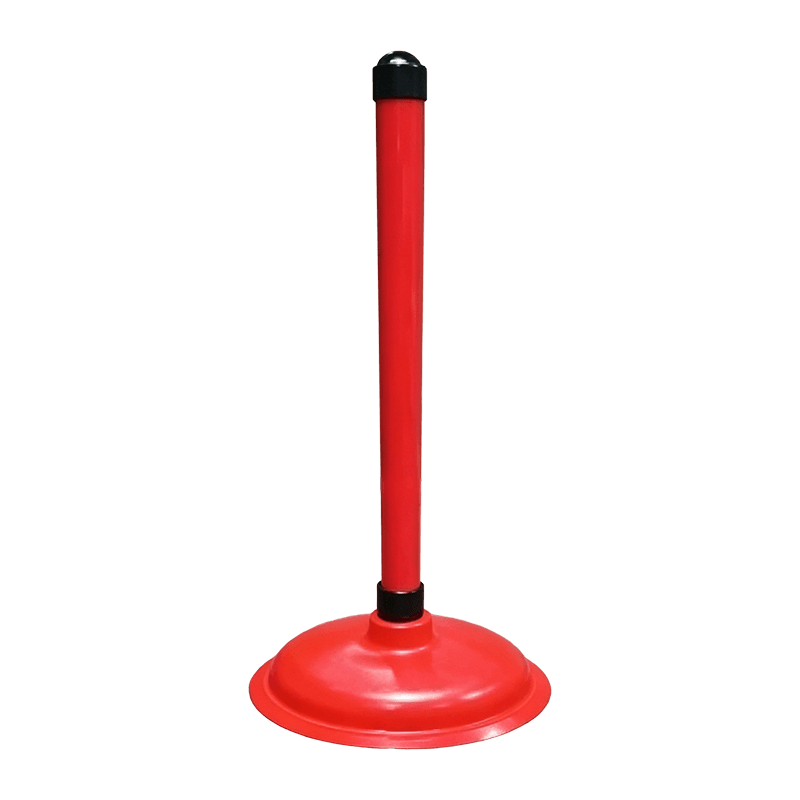
High Pressure TPR Plunger(50x32x33cm)
Why High-Pressure Plunging Matters
A blocked toilet or drain is not simply an inconvenience. It can interrupt household routines, affect public facilities, create sanitation concerns, and increase maintenance costs. A plunger is often the first response because it can be used immediately without chemicals, electrical power, or complex disassembly. However, not every plunger produces the same results. Seal quality, cup flexibility, handle control, opening size, and pressure concentration all influence performance.
The basic operating principle is straightforward. A plunger forms a seal over or inside the drain opening. When the user pushes the handle downward, water and air within the sealed area are compressed. When the user pulls upward, suction is created. Repeated push-and-pull movement transfers pressure through the water column and can loosen or move the obstruction. The effectiveness of this process depends heavily on how well the cup maintains contact with the surface.
If the cup is too rigid, it may not conform to an uneven ceramic surface. If it is too soft or poorly supported, it may collapse without transmitting sufficient force. If the opening is too wide for the toilet design, pressure can escape around the edges. The High-Pressure TPR Plunger addresses these challenges through a flexible TPR cup and a narrower, deeper profile intended to maintain a concentrated seal.
The product is therefore more than a simple rubber cup attached to a handle. It is a targeted pressure tool designed for applications where a conventional household model may be less effective. Its construction supports direct force transfer, repeated use, and controlled operation in confined toilet and drainage areas.
Product Overview
| Specification | Details |
|---|---|
| Product name | High-Pressure TPR Plunger |
| Product category | Toilet Cleaning Supplies |
| Primary material | TPR, or thermoplastic rubber |
| Calibre | 16 cm |
| Listed dimensions | 50 × 32 × 33 cm |
| Item number | 19 |
| Quantity per listed unit | 50 pieces |
| Listed net weight | 9 |
| Main application | Toilet bowls, S-traps, narrow openings, and difficult blockages |
| Handle design | Ergonomic grip for repeated plunging strokes |
The specification information identifies the plunger as item number 19, with a 16 cm calibre and TPR material. It also lists 50 × 32 × 33 cm and a quantity of 50 pieces, which can be used by purchasing teams when reviewing packaging, shipping, storage, or bulk-order requirements. The stated net weight is 9, although buyers should confirm the applicable weight unit and packing interpretation with the supplier before final logistics planning.
The 16 cm calibre is a central design feature. It provides a more focused working area than many broad, general-purpose plungers. A concentrated diameter can be especially useful when the toilet opening is relatively small or when the obstruction is located deeper within the trap. Rather than spreading pressure over a large surface, the cup concentrates the user’s effort where it is needed.
The product’s overall listed dimensions also make it relevant for commercial procurement. Retailers and importers can use the packing information to plan shelf allocation, carton configuration, warehouse capacity, and shipping volume. For bulk buyers, accurate confirmation of carton dimensions, gross weight, and unit packing before shipment remains recommended.
TPR Material and Its Practical Advantages
TPR is a thermoplastic rubber material that combines rubber-like flexibility with the processing advantages of thermoplastic manufacturing. In a plunger cup, this combination is valuable because the material must bend, compress, recover, and maintain contact with a smooth or slightly irregular toilet surface.
A rigid plastic cup would be more likely to leave small gaps around the opening. A conventional low-quality rubber cup may become brittle, lose elasticity, or deform after repeated use. TPR provides a practical balance between flexibility and resilience. It can be formed into a controlled shape while retaining enough elasticity for compression and recovery.
The High-Pressure TPR Plunger is described as resilient and flexible under repeated compression. This is important in real maintenance conditions, where one or two strokes may not be enough to clear a blockage. The user may need to establish the seal, make several controlled strokes, pause to assess water movement, and repeat the process. A cup that recovers its shape between strokes can continue to deliver consistent contact during this sequence.
TPR also supports practical product design. Manufacturers can control the cup geometry, wall thickness, rim shape, and connection area through appropriate tooling and processing. This allows the product to be developed for a targeted use rather than as a generic one-size-fits-all item.
For buyers, the material offers several commercial benefits:
• Flexible contact with ceramic and other smooth drainage surfaces.
• Resilience during repeated compression and release.
• A balance between soft sealing behavior and structural support.
• Suitability for molded cleaning tools with consistent dimensions.
• Compatibility with high-volume production and repeat purchasing.
Material performance still depends on formulation, processing conditions, storage, and use. Users should follow normal hygiene and maintenance procedures, avoid sharp objects that could cut the cup, and store the product away from excessive heat or damaging chemicals.
Concentrated Pressure for Difficult Blockages
The central advantage of the product is its ability to direct pressure into a concentrated area. When a plunger cup is placed over a drain opening, the quality of the seal determines how much of the user’s effort reaches the blockage. A broad cup may be useful for some large openings, but it can be inefficient in a toilet with a smaller entrance or a deeper trap.
The 16 cm TPR cup is designed for targeted plunging. Its narrower, deeper sealing profile can help reduce pressure loss around the rim. This is especially relevant for low-flow toilets, compact bowls, and toilets with internal geometry that makes it difficult to position a wide cup correctly.
Concentrated pressure does not mean that the user should apply uncontrolled force. Effective plunging is normally based on a firm seal and steady strokes. The first downward movement should be controlled so that water does not splash. Once the seal is established, the user can increase the stroke speed while keeping the cup aligned with the opening. The goal is to move water through the obstruction, not to damage the toilet or surrounding fittings.
The design is also suitable for S-traps. S-traps contain curved passages where blockages may remain beyond the visible bowl opening. A tool that can maintain a deeper, focused seal may transfer pressure more effectively into the curved section than a shallow, wide cup. Results naturally depend on the nature and location of the blockage, but the product’s geometry is intended for this type of demanding application.
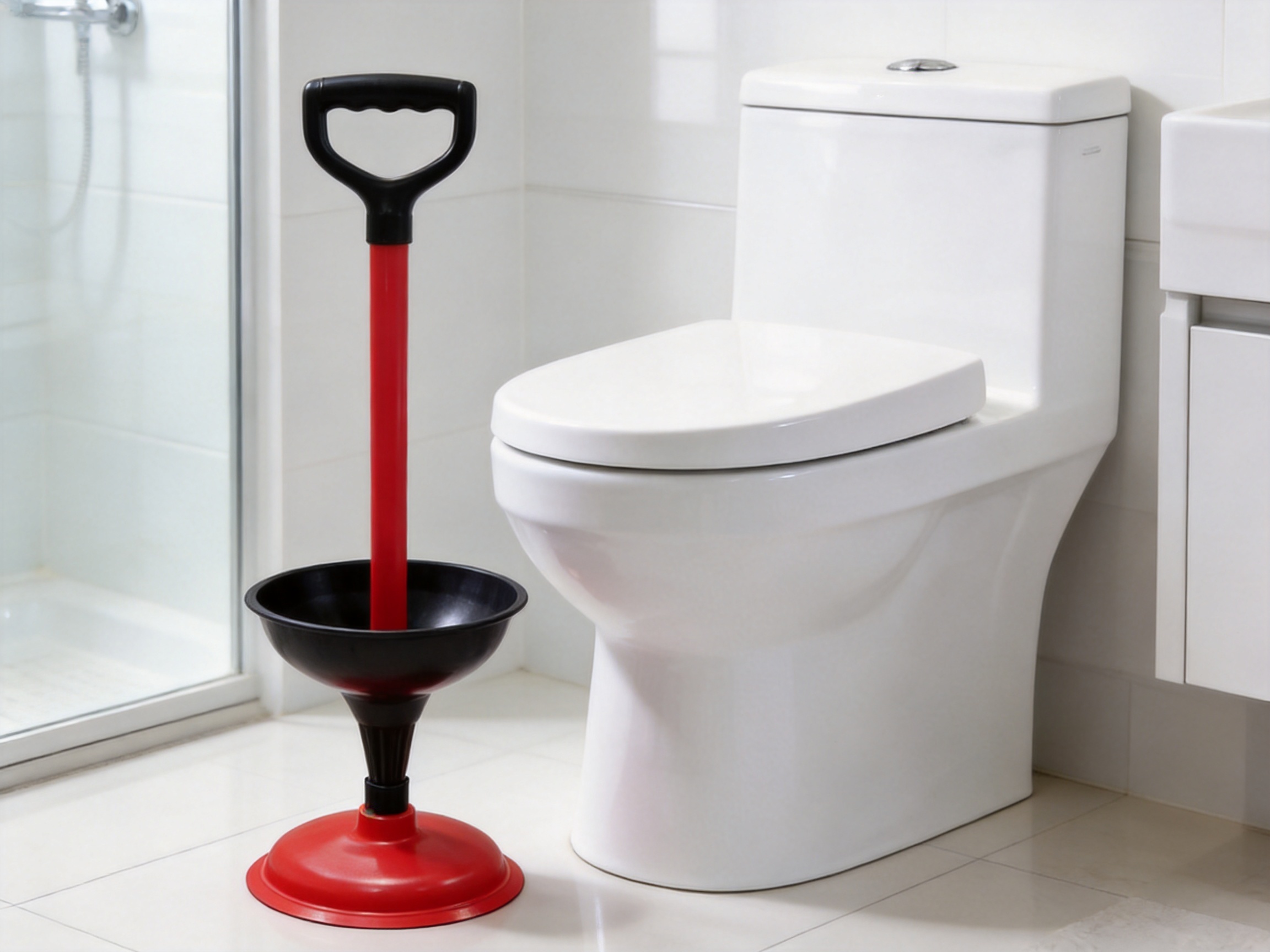
Comparison with Conventional Plungers
Traditional plungers remain useful for many basic tasks, but they are not always optimized for narrow or difficult openings. A flat-cup model may work well on a simple drain surface while performing less effectively on a toilet bowl that requires a deeper seal. The High-Pressure TPR Plunger differentiates itself through its targeted profile and material selection.
| Feature | Basic flat-cup plunger | High-Pressure TPR Plunger |
|---|---|---|
| Sealing approach | Broad, relatively shallow contact | Narrower and deeper targeted seal |
| Material focus | May vary from rigid plastic to basic rubber | Flexible and resilient TPR |
| Best suited to | General surface drains and simple blockages | Toilets, S-traps, low-flow bowls, and difficult openings |
| Pressure behavior | Can disperse force over a wider area | Concentrates pressure through a 16 cm cup |
| Repeated use | Depends on material and construction quality | Designed for repeated compression and recovery |
| Handling | May have a basic straight grip | Ergonomic handle for controlled strokes |
This comparison does not mean that one shape is suitable for every drainage situation. Different blockages and fixtures require different tools. The advantage of this model is specialization. It is intended to perform strongly in the situations where focused pressure and a reliable seal matter more than broad surface coverage.
The product may also offer a better user experience than an undersized or poorly balanced plunger. A controlled handle helps the operator maintain alignment and reduce unnecessary wrist movement. Because plunging can require multiple strokes, an ergonomic grip may reduce discomfort and make the process more manageable for household users and maintenance personnel.
For retailers, the product provides a clear selling proposition: a high-pressure toilet plunger made for hard-to-reach clogs and narrow openings. For professional buyers, it can complement other drain-cleaning tools and be assigned to routine response kits, janitorial closets, service vehicles, and facility-maintenance stations.
Ergonomic Handle and Operator Control
A plunger’s performance depends on both its cup and its handle. Even a well-designed cup may be difficult to use if the handle is uncomfortable, slippery, or too weak for repeated movement. The High-Pressure TPR Plunger includes an ergonomic grip handle intended to support confident and rapid strokes.
Ergonomics is particularly important in commercial settings. Maintenance personnel may need to use cleaning tools repeatedly throughout a shift. A handle that supports a natural grip can make it easier to maintain a vertical position, apply consistent downward pressure, and pull upward without losing alignment.
Good technique begins with positioning. The user should place the cup over the opening or into the relevant toilet outlet, depending on the bowl design. The cup should contain enough water to form a hydraulic connection, while excessive water should be removed to reduce splashing. The handle should be held firmly but not excessively tightly.
The user can then begin with slow strokes. A slow first compression helps confirm that the seal is stable. Once the seal is established, repeated strokes can be applied. If the water level begins to fall, that may indicate that the obstruction is loosening. The user should continue cautiously and flush only after confirming that the water can move freely.
Because the product is designed for pressure concentration, forcing the handle at an extreme angle is unnecessary. Straight, controlled movement is normally more effective than irregular or sideways thrusts. A stable handle and flexible cup work together to improve the transfer of force.
Applications in Homes and Professional Facilities
The High-Pressure TPR Plunger is suitable for residential bathrooms, apartment buildings, hotels, restaurants, schools, hospitals, offices, public facilities, retail properties, factories, and service contractors. Any location with toilets or drainage fixtures can benefit from keeping a dependable plunger available.
Residential Use
Homeowners often need a compact and accessible solution for toilet blockages. The product can be stored in a bathroom cabinet, utility area, or maintenance cupboard. Its targeted design is useful for toilets with smaller openings, modern low-flow configurations, and recurring issues caused by paper accumulation or other removable obstructions.
A dedicated high-pressure plunger can also reduce reliance on harsh chemical drain cleaners. Chemical products may be unsuitable for certain plumbing materials, septic systems, or households with children and pets. Mechanical plunging is a direct first response and can be attempted before more invasive methods are considered.
Property Management
Apartment managers, landlords, and building operators need tools that can be issued quickly when residents report blocked toilets. A durable, easy-to-understand plunger can be included in maintenance carts or stored in multiple locations throughout a property. The product’s bulk-quantity availability is useful for standardizing equipment across units and reducing the need to purchase miscellaneous models.
Hospitality and Food Service
Hotels, restaurants, cafes, and event venues cannot afford prolonged restroom closures. A plunger kept near service areas allows staff or maintenance workers to respond promptly. The product is not a substitute for professional plumbing repair, but it can help address ordinary stoppages before they become larger operational problems.
Industrial and Institutional Facilities
Factories, warehouses, schools, and healthcare facilities often manage multiple restrooms and utility areas. Their purchasing teams typically look for products that are simple, durable, repeatable, and easy to distribute. The TPR construction and ergonomic handle support regular maintenance use, while the item number and bulk configuration assist with procurement management.
Correct Operating Method
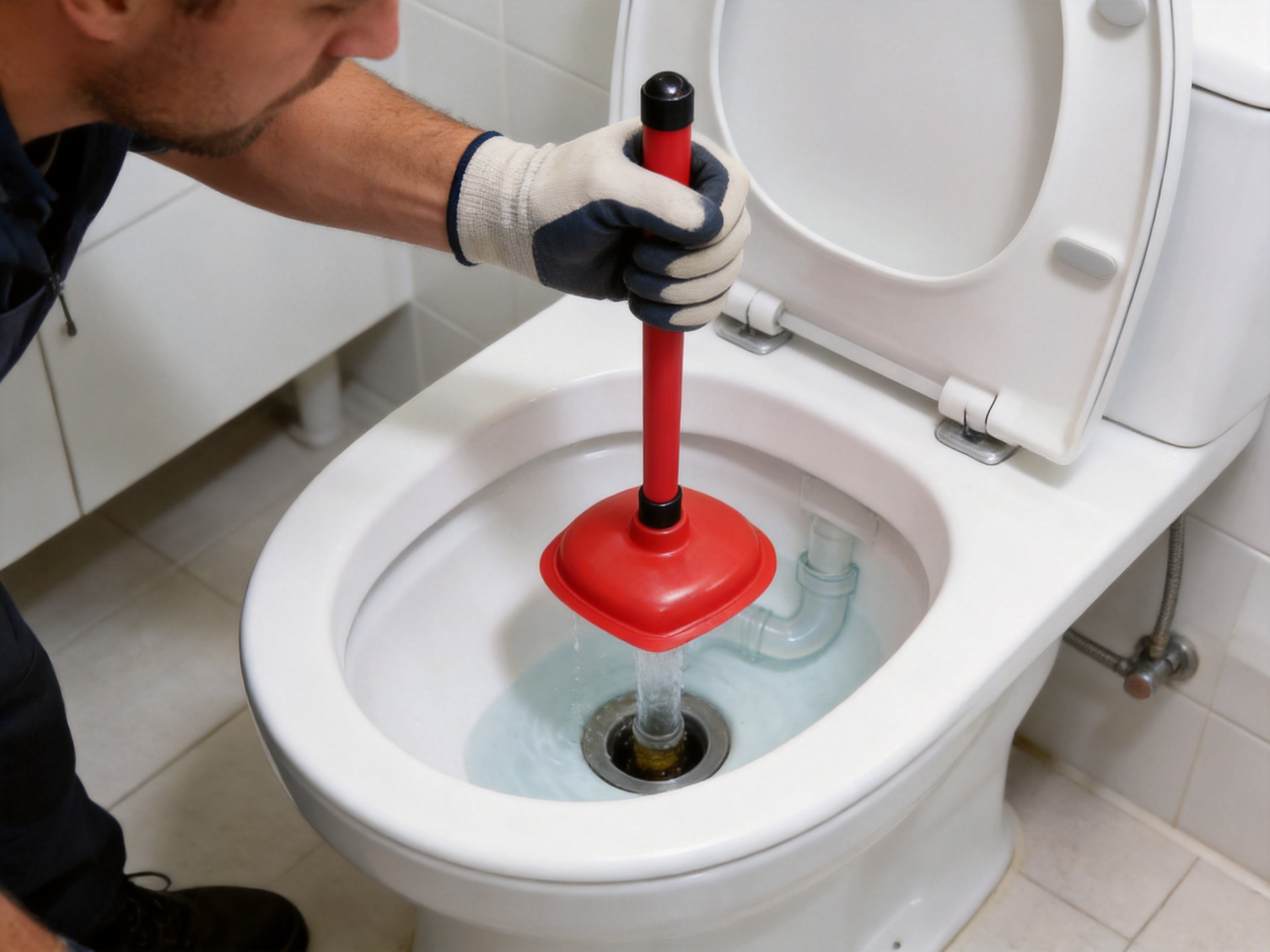
Using the plunger correctly improves results and helps protect the fixture. Before starting, inspect the cup and handle for cuts, cracks, loose connections, or visible contamination. Wear suitable protective gloves and, where appropriate, eye protection. Keep the surrounding floor as dry as possible to reduce slipping.
First, reduce the water level if the bowl is close to overflowing. The cup needs enough water to create a hydraulic seal, but too much water can spill during operation. If the bowl is nearly empty, add a moderate amount of water so that the cup is covered and air is minimized.
Next, position the 16 cm cup over the opening. The cup should sit squarely rather than at a sharp angle. Press gently at first to remove trapped air and establish contact. The TPR material should conform to the surface and create a seal.
Apply several controlled downward and upward strokes. The movement should be firm but not violent. Maintain the seal throughout the cycle whenever possible. If the water level changes or begins to drain, pause and observe the result. A partial improvement may indicate that the blockage is moving.
Repeat the process if necessary. If there is no improvement after several attempts, stop and investigate other possible causes. A solid object, structural pipe problem, collapsed drain, or severe blockage may require a drain snake, inspection equipment, or a licensed plumbing professional.
After the blockage is cleared, flush cautiously. Observe whether the water drains at a normal speed and whether the bowl returns to its normal level. Clean and disinfect the plunger according to the facility’s hygiene procedures. Store it vertically or in a ventilated holder where the cup can dry.
Safety and Maintenance Guidance
The product is a mechanical cleaning tool, but safe use remains important. Never combine chemical drain cleaners with plunging unless the chemical manufacturer specifically permits it and appropriate protective measures are followed. Residual chemicals can splash onto skin or into the eyes during pressure movement.
Do not use the plunger to handle sharp objects, broken glass, metal fragments, or materials that could cut the TPR cup. Avoid using excessive force against fixtures that are visibly damaged, loose, or cracked. A blockage caused by a foreign object may need to be removed by another method.
After use, rinse the cup with clean water and apply an approved disinfecting procedure when the product is used in a commercial or shared environment. Do not store the plunger in standing contaminated water. Drying helps control odor and supports better hygiene between uses.
Inspect the TPR cup periodically. The cup should remain flexible, intact, and capable of forming a seal. Replace the product if it develops deep cuts, permanent deformation, severe hardening, or a loose handle connection. Regular inspection is especially important for property-management teams that maintain multiple units.
Storage conditions also matter. Keep the product away from direct sunlight, extreme heat, sharp tools, and incompatible chemicals. Proper storage can help preserve the material’s flexibility and extend useful service life.
Manufacturing Strengths Behind the Product
Product performance begins with manufacturing control. Jinhua Jieqing Plastic Co., Ltd. has operated since 2008 as an industry and trade enterprise specializing in cleaning supplies. Its product range includes brooms, cleaning brushes, household brushes, industrial brushes, and supporting plastic products. This category experience is relevant because cleaning tools require practical design, repeatable molding, material consistency, and dependable assembly.
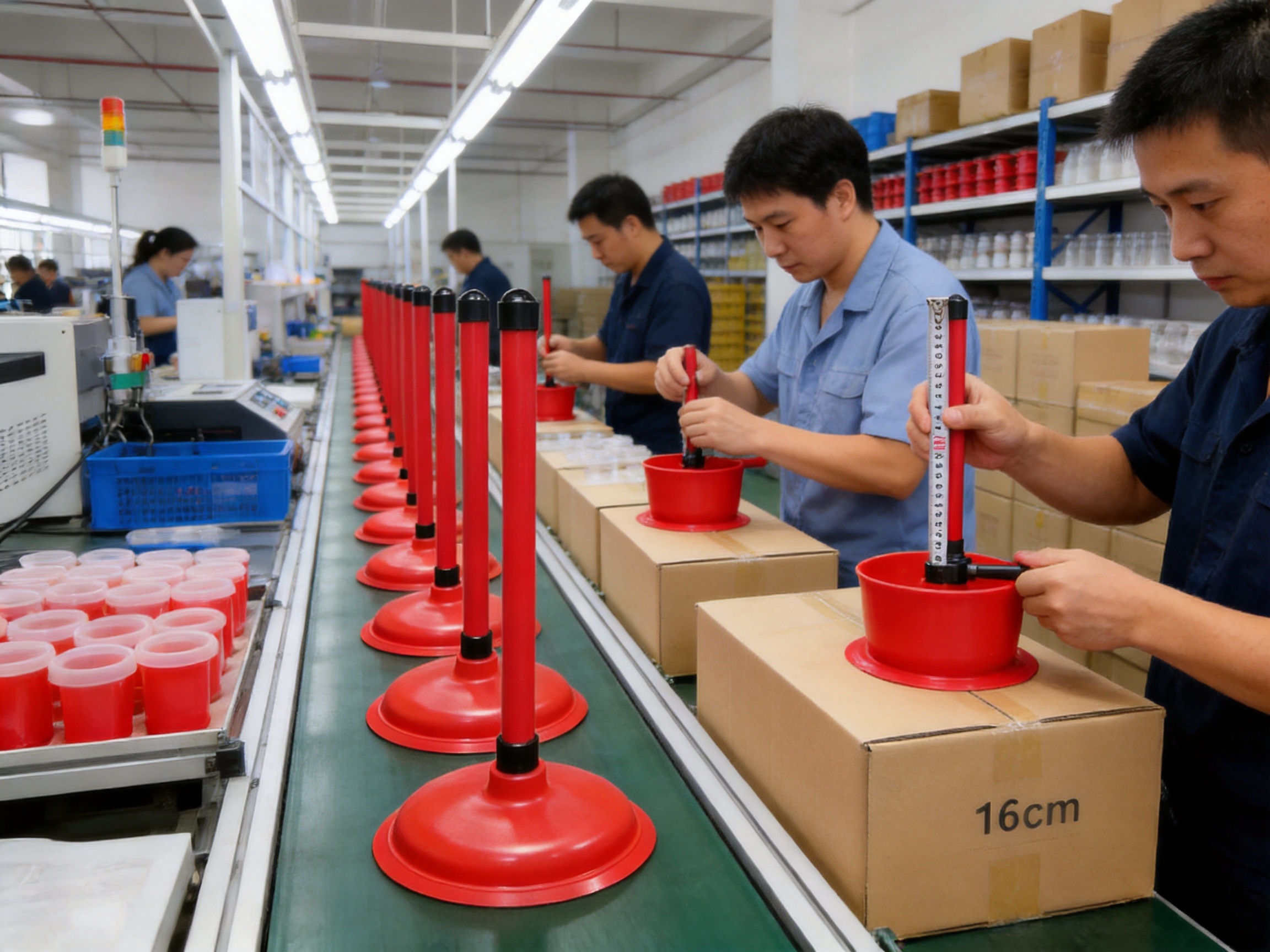
The company maintains its own production base and describes its manufacturing system as supported by a complete supply chain, standardized production processes, and stable quality control. These capabilities are important for buyers who require consistent product dimensions and repeat orders. A plunger’s cup geometry, handle fit, wall thickness, and surface quality should remain as consistent as possible from one production batch to another.
In-house or closely coordinated production can also improve communication between product development and manufacturing. When a customer requests a change to the cup profile, handle configuration, packaging, color, or labeling, the supplier can evaluate the requirement through its existing production structure. This is particularly useful for distributors and private-label buyers who need a product adapted to a regional market.
The company’s research, development, production, and sales capabilities support a product-development approach rather than simple commodity trading. The High-Pressure TPR Plunger reflects this approach through its application-specific dimensions, material choice, pressure-focused design, and ergonomic handling features.
Standardized Production
Standardized production helps control critical characteristics such as cup diameter, shape, flexibility, handle dimensions, and assembly alignment. For a pressure tool, these details influence the seal and the user’s ability to apply force. Standardization also makes it easier for importers and retailers to maintain consistent product descriptions and reduce variation between replenishment orders.
Quality Control
Stable quality control is essential for cleaning tools because customers expect them to work immediately when needed. Quality checks may include visual inspection, dimensional verification, material assessment, handle connection checks, and functional sealing tests. The exact inspection plan should be confirmed with the supplier for each order, but the company’s stated quality-control focus provides a foundation for repeatable procurement.
Supply-Chain Coordination
A complete supply chain supports reliable sourcing of TPR material, plastic components, packaging materials, labels, and related accessories. Better coordination can reduce delays, improve production planning, and support the company’s ability to manage larger or customized orders. This is valuable for distributors that need regular replenishment instead of occasional spot purchases.
Export Experience
The company has extensive export experience and serves markets including supermarkets, cross-border e-commerce, industrial procurement, and other channels. Export experience involves more than producing the item. It also requires attention to packaging, documentation, communication, shipping arrangements, product information, and buyer requirements.
Customization and Private-Label Potential
Jinhua Jieqing Plastic Co., Ltd. offers customization based on customer drawings and samples. This capability can benefit importers, wholesalers, retailers, facility-supply companies, and brands seeking differentiated cleaning tools.
Possible customization areas may include color, handle appearance, product marking, packaging design, carton information, language-specific instructions, and order configuration. Any proposed modification should be reviewed for tooling, minimum order quantity, lead time, material availability, testing, and packaging implications.
Customization is especially useful when a buyer wants to position the item for a specific application. For example, a distributor serving hospitality customers may require packaging that emphasizes commercial restroom maintenance. A hardware retailer may need shelf-ready labeling and consumer-oriented instructions. A professional janitorial supplier may want bulk cartons with clear item identification and simplified handling information.
Drawings and samples can help align expectations before production. The buyer can communicate cup dimensions, handle requirements, packaging structure, color references, and branding specifications. The manufacturer can then assess feasibility and provide a production proposal. This process reduces the risk of misunderstanding and helps transform a general product into a market-specific solution.
Bulk Procurement and Logistics Considerations
The listed order information identifies a quantity of 50 pieces and dimensions of 50 × 32 × 33 cm. These figures are useful starting points for wholesale planning, but buyers should confirm whether the dimensions refer to an inner carton, outer carton, pallet unit, or another packaging level. Net weight should also be verified together with gross weight, carton count, and packing method.
For larger orders, procurement teams should request a complete packing specification. This may include pieces per carton, cartons per pallet, carton dimensions, gross weight, net weight, loading quantity, protective packaging, and shipping marks. Accurate information helps calculate freight costs and warehouse capacity.
Retailers should also consider display and storage. Plungers have an elongated form and may require hooks, floor stands, or vertical storage. A handle hole or suitable packaging design may support hanging display, although this feature should be confirmed before ordering. Commercial customers may prefer bulk cartons that can be opened and distributed directly to maintenance departments.
Inventory planning should account for seasonal demand, property-management contracts, hospitality occupancy, and promotional campaigns. Because plungers are replacement and emergency-use products, buyers may maintain safety stock to avoid shortages during periods of increased maintenance activity.
Merchandising and Market Positioning
The product can be marketed around several clear benefits: concentrated high-pressure plunging, flexible TPR construction, a 16 cm targeted cup, ergonomic handling, suitability for narrow openings, and use in toilets and S-traps. These points distinguish it from an undifferentiated basic plunger.
Product descriptions should remain accurate and practical. Retail listings can explain that the plunger is designed to create a focused seal and assist with difficult blockages. They should avoid guaranteeing that every blockage will be cleared, since results depend on the obstruction, plumbing condition, water level, and user technique.
Packaging communication may include the product name, calibre, material, recommended applications, operating guidance, hygiene instructions, and warnings against chemical misuse. Clear instructions help consumers use the tool effectively and can reduce returns caused by misunderstanding.
For industrial and professional buyers, the marketing emphasis can shift toward repeatable supply, bulk availability, customization, quality control, export capability, and one-stop sourcing. The manufacturer’s broader range of cleaning brushes, brooms, and plastic products may allow customers to consolidate multiple cleaning-tool categories with one supplier.
Why Choose a Specialized Cleaning-Supply Manufacturer?
A specialized cleaning-supply manufacturer understands that tools must work in real environments rather than simply appear acceptable in a catalog. The design must account for how users grip, position, compress, clean, store, and replace the product. Experience with household and industrial cleaning products helps connect material selection with practical use.
A supplier with a broad product portfolio can also identify opportunities for coordinated procurement. A buyer sourcing toilet plungers may also require toilet brushes, floor brushes, brooms, dustpans, storage products, or industrial cleaning accessories. Working with a manufacturer that already produces related items can simplify communication and support more consistent packaging and supply management.
Jinhua Jieqing Plastic Co., Ltd. presents itself as a one-stop cleaning-supply partner with research and development, production, sales, customization, quality control, and export support. This combination is valuable for customers that need more than a single shipment. It supports long-term product programs, replenishment planning, private-label development, and multi-category purchasing.
The company’s location in Jinhua City, together with its stated production base and supply-chain resources, supports organized manufacturing and commercial distribution. Buyers should still conduct their own evaluation, request samples, confirm specifications, and agree on inspection standards before placing a large order. The manufacturer’s capabilities provide a strong starting point for that process.
Quality Evaluation Checklist for Buyers
Before approving a purchase, buyers can evaluate the product through a structured checklist. Confirm that the TPR cup has the agreed dimensions and shape. Check whether the rim is smooth and continuous. Inspect the cup for bubbles, tears, sharp edges, or molding defects. Verify that the handle is securely connected and comfortable to grip.
Functional testing should be carried out on representative toilet or drain fixtures. The cup should form a stable seal without excessive leakage. The handle should remain aligned during repeated strokes. The TPR should recover after compression and should not show immediate cracking or permanent collapse.
Packaging should protect the cup from deformation during transport. If the product is packed tightly, buyers should confirm that storage and unpacking procedures allow the cup to recover its intended shape. Carton markings should match the purchase order, and quantities should be checked during receiving.
For customized orders, the approved sample should be retained as a reference. Color, dimensions, logo placement, packaging artwork, and material feel should be compared against the production goods. Written specifications and inspection criteria can help both parties manage future orders.
Frequently Asked Questions
What is the main purpose of this plunger?
The High-Pressure TPR Plunger is designed to create a concentrated seal and pressure zone for clearing toilet and drain blockages. It is particularly intended for toilets, S-traps, narrow openings, low-flow bowls, and difficult clogs where a conventional flat-cup plunger may be less effective.
What does TPR mean?
TPR means thermoplastic rubber. It is a flexible material that can be processed like a thermoplastic while providing rubber-like elasticity. In this product, TPR supports cup flexibility, surface contact, repeated compression, and shape recovery.
What is the cup calibre?
The listed calibre is 16 cm. This focused size is intended to support targeted plunging and a deeper seal in toilet bowls or openings that may not suit a very wide plunger.
Can it be used with S-traps?
Yes. The product is described as suitable for S-traps and hard-to-reach clogs. Its narrower, deeper sealing profile is intended to help transfer pressure into curved drainage passages. Actual performance depends on the type, size, and position of the blockage.
Is it suitable for low-flow toilets?
Yes. The product is specifically described as suitable for low-flow toilets. Its concentrated cup is designed to help establish a seal in toilet bowls where a traditional wide plunger may not fit or seal effectively.
How should the plunger be used?
Adjust the water level so the cup can remain covered without causing overflow. Position the cup squarely over the opening, press gently to establish a seal, and then use controlled push-and-pull strokes. Repeat as needed and flush cautiously only after water movement has improved.
Can it replace a professional plumber?
No. It is a first-response mechanical cleaning tool. It may help with ordinary removable blockages, but severe obstructions, foreign objects, damaged pipes, recurring backups, or structural plumbing problems may require professional equipment and service.
How should the product be cleaned?
Rinse the cup after use and follow the hygiene procedure required by the household or facility. In shared or commercial environments, use an appropriate disinfecting process. Allow the product to dry before storage and avoid leaving it in contaminated standing water.
What information is listed for bulk orders?
The available product information lists item number 19, a quantity of 50 pieces, dimensions of 50 × 32 × 33 cm, and a net weight of 9. Buyers should confirm the unit of weight and determine whether the dimensions refer to product packaging, a carton, or another logistics unit.
Does the manufacturer provide customization?
Yes. The company states that customization is available based on customer drawings and samples. Buyers can discuss product appearance, packaging, labeling, colors, and other requirements with the manufacturer before production.
What types of customers can purchase this product?
The product can serve homeowners, hardware retailers, supermarkets, janitorial suppliers, property managers, hospitality businesses, facility-management companies, industrial procurement teams, importers, distributors, and cross-border e-commerce sellers.
What makes this model different from a basic plunger?
Its main differentiators are the 16 cm targeted TPR cup, narrower and deeper sealing profile, focus on concentrated pressure, ergonomic grip, and suitability for difficult openings and S-traps. These features give it a more specialized role than a general flat-cup model.
Conclusion
The High-Pressure TPR Plunger is a purpose-designed toilet cleaning tool for users who need more focused pressure than a basic plunger can provide. Its 16 cm TPR cup is intended to create a narrower, deeper seal, helping direct force toward stubborn blockages in toilets, low-flow bowls, S-traps, and other difficult openings. Flexible TPR supports contact and resilience, while the ergonomic handle improves control during repeated strokes.
Its advantages are practical rather than complicated: concentrated pressure, targeted geometry, flexible material, comfortable operation, and suitability for challenging maintenance situations. These characteristics make the product relevant to households as well as commercial and professional cleaning programs.
The product is also supported by a manufacturer with experience in cleaning supplies, plastic products, product development, standardized production, quality control, customization, supply-chain management, and export sales. Jinhua Jieqing Plastic Co., Ltd. can support buyers seeking a single plunger order, recurring wholesale supply, customized packaging, private-label development, or broader cleaning-product sourcing.
For best results, users should operate the plunger with a proper seal, controlled strokes, suitable hygiene practices, and realistic expectations. Buyers should confirm packaging, weight units, carton dimensions, customization requirements, and inspection standards before placing commercial orders. With these points addressed, the High-Pressure TPR Plunger can serve as a dependable part of residential, institutional, commercial, and industrial maintenance equipment.
References
1. Product specification and application information supplied for the High-Pressure TPR Plunger, including calibre, material, dimensions, quantity, and intended use.
2. Manufacturer information supplied for Jinhua Jieqing Plastic Co., Ltd., including company history, production capabilities, product categories, customization services, and export experience.
3. General principles of manual plunger operation, pressure transfer, hydraulic sealing, and routine drain-maintenance practice.
4. General material background on thermoplastic rubber, including flexibility, resilience, molding suitability, and repeated-compression behavior.
5. General facility-maintenance guidance concerning cleaning-tool hygiene, safe mechanical blockage removal, storage, inspection, and replacement.
Product: High Pressure TPR Plunger(50x32x33cm)

 CONTACT US
- CONTACT DETAILS
- Address : No. 1388 Cuntong Road, Jinhua City
- Tel: +86-0579-81534043
- Email:wangjinhua1@zjjqsj.com
- PRODUCTS
- Kitchen Cleaning Supplies
- Household Cleaning Supplies
- Indoor & Outdoor Cleaning Supplies
- Baby Products & Cleaning Supplies
- Home Storage Containers
- QUICK LINK
- Company Profile
- Plant equipment
- Certifications
- FAQ
- NEWS CENTER
- Company News
- Industry News
- MOBILE TERMINAL

