

 English
  русский
  Español
  عربى
عربى 
Long-Handle Plastic Clothing Brush: Practical Garment Care for Homes, Retailers, and Bulk Buyers
Date:Sep 27, 2026
Keeping clothing clean between washes is an important part of everyday household maintenance. Dust, lint, hair, loose fibers, and light surface particles can quickly collect on coats, trousers, uniforms, jackets, dresses, curtains, and other textile items. A practical clothing brush offers a simple way to refresh garments without using water, electricity, or complicated equipment. The Long Handle Plastic Clothing Brush is designed for this purpose, combining a lightweight plastic body, an extended gripping area, durable brush construction, and convenient hanging storage.
Unlike a short-handled clothing brush that requires the user to place a hand close to the bristle area, this long-handle design provides greater reach and improved separation between the hand and the garment surface. That difference is useful when cleaning large coats, long trousers, hanging uniforms, fabric furniture, or clothing placed on a rack. It also supports a more comfortable brushing position during repeated daily use.
The product is suitable for household cleaning supplies, kitchen and home maintenance product ranges, laundry accessories, wardrobe organization lines, and general indoor cleaning collections. Its compact dimensions make it easy to display, pack, store, and ship, while its simple structure supports efficient production and reliable inventory management for wholesale customers.
This article examines the product’s structure, cleaning performance, user benefits, competitive advantages, manufacturing considerations, quality strengths, packaging suitability, and possible applications. It also explains why a practical garment brush remains a valuable product for supermarkets, importers, e-commerce sellers, professional laundries, hotels, dormitories, uniform departments, and facility-management suppliers.
Product Overview
The Long Handle Plastic Clothing Brush is a garment-care tool developed for routine dust removal and light surface cleaning. The product has an item number of 3008, a listed weight of 41 grams, and a product size of approximately 20 × 3.5 × 2.5 centimeters. It uses PP and TPR materials, combining a lightweight plastic structure with a softer, more comfortable grip element.
The extended form is one of the product’s defining characteristics. A longer handle allows the user to reach a broader section of fabric without bending the wrist as sharply or placing the hand directly beside the brushing surface. This can be especially useful when cleaning long garments, hanging clothes, sleeves, trouser legs, coats, or clothing stored on a high rail.
The brush is intended for dust and light surface particles rather than deeply embedded stains. Its role is preventive and maintenance-oriented. Regular brushing can help garments look fresher between full washes, reduce visible lint, and remove loose particles before they become pressed into the textile surface. This makes the product a useful companion to washing, drying, ironing, steaming, and wardrobe storage routines.
The plastic construction also contributes to ease of handling. At only 41 grams, the brush can be used repeatedly without creating the heavy sensation associated with larger cleaning tools. A lightweight brush is easier to place in a drawer, laundry basket, travel bag, housekeeping cart, or retail package. It is also less demanding for users who prefer simple, low-effort cleaning tools.
A hanging hole is integrated into the design for convenient storage. Instead of leaving the brush loose on a shelf, users can hang it on a hook, peg, utility rail, closet organizer, laundry-room wall, or storage cabinet. This feature supports tidy organization and helps keep the brush available at the point of use.
Why Long-Handle Design Matters
Handle length directly influences how a cleaning tool feels and performs. A compact brush may be suitable for small areas, but it can require frequent repositioning when used on larger clothing. It may also bring the user’s fingers close to dust, fibers, or the fabric being cleaned. A long-handle clothing brush addresses these limitations with a more accessible working reach.
When brushing a coat, the user can move from the shoulder area toward the lower hem with fewer changes in hand position. When cleaning trousers, the longer handle helps cover the leg while the garment remains hanging. For dresses, uniforms, robes, and other extended fabrics, the additional reach makes routine brushing more convenient and efficient.
The handle can also encourage a more natural sweeping movement. Rather than pressing the wrist into a tight angle, the user can hold the tool farther from the brush head and guide it across the material with a smoother motion. This can be helpful in commercial settings where a number of garments must be checked and refreshed during a working shift.
Longer reach does not mean the product must be large or difficult to store. The 20-centimeter overall length remains compact enough for household storage and retail display. This balance between reach and compactness is an important advantage over oversized garment-care tools that require more shelf space or special packaging.
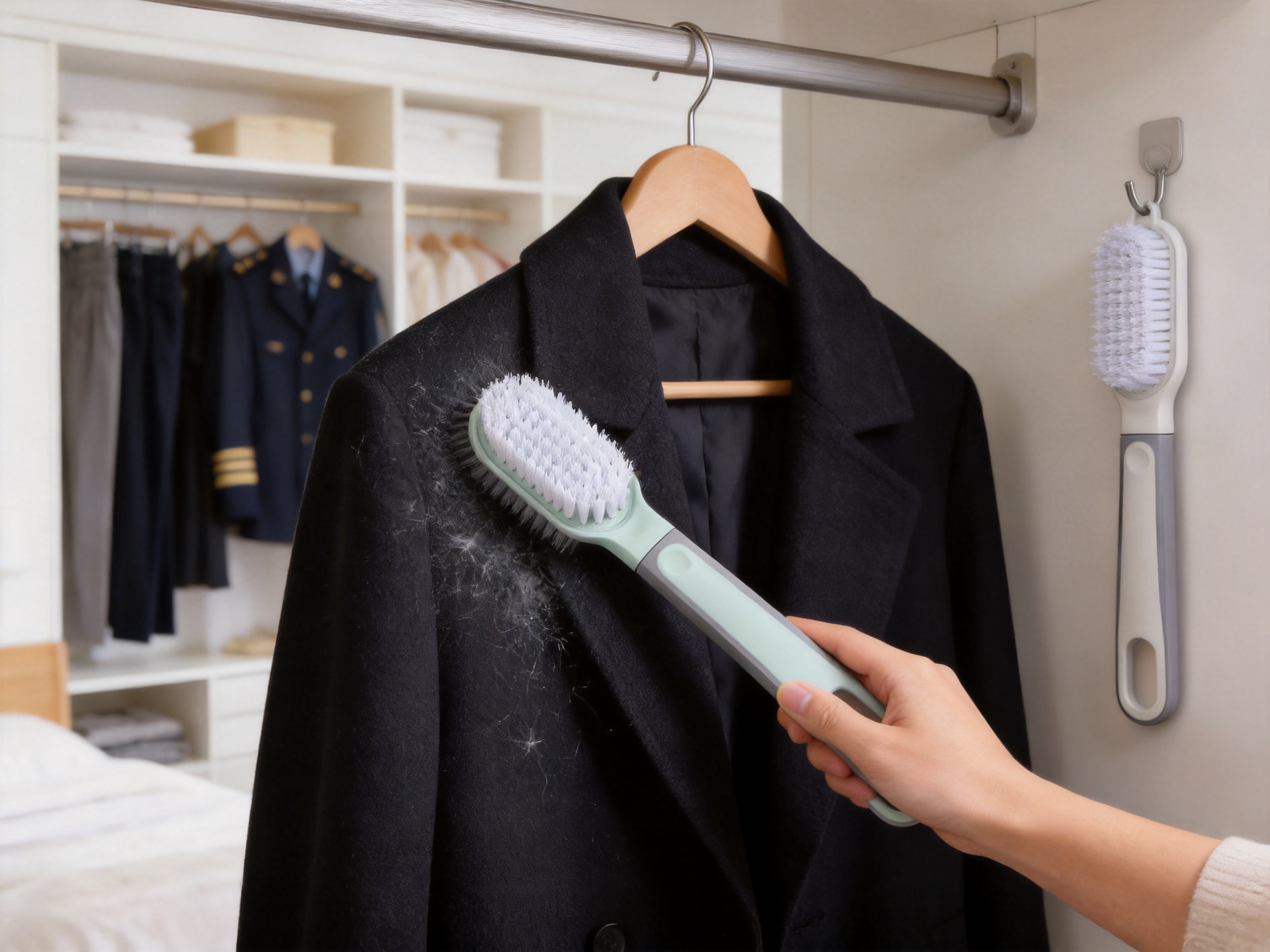
The long handle is also useful when garments are placed on a clothing rack, door hook, wardrobe rail, or mannequin. Users can brush the surface while the item remains suspended, reducing the need to place the garment on a table or bed. That can make garment-care routines faster and reduce unnecessary contact with household surfaces.
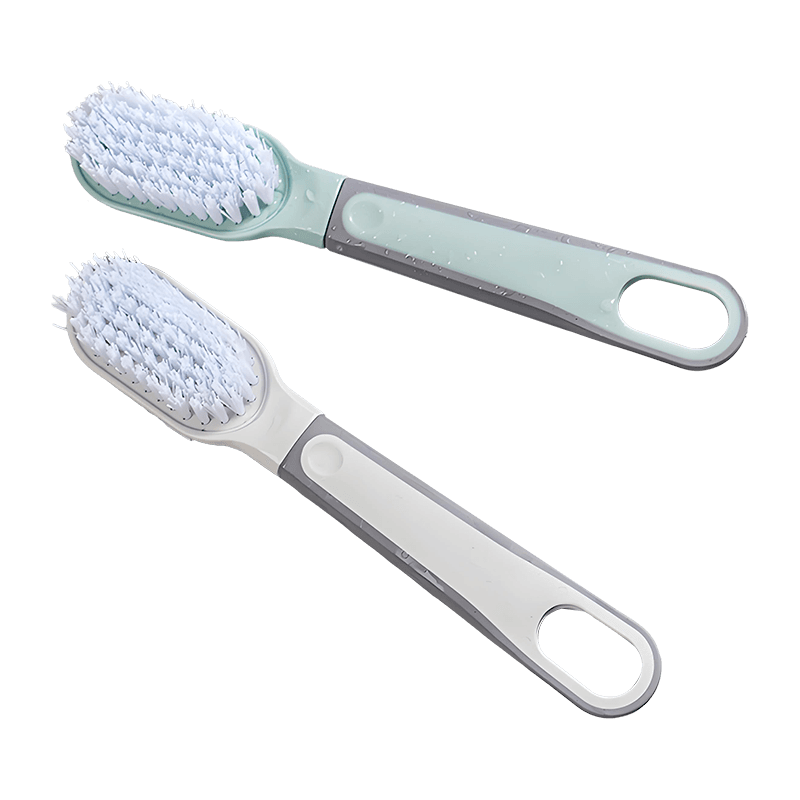
Long Handle Plastic Clothing Brush
Material Selection: PP and TPR
The product uses a combination of PP and TPR materials. Polypropylene, commonly identified as PP, is widely used in household products because it is lightweight, practical, and suitable for forming into consistent shapes. Its low weight supports comfortable handling and reduces transportation weight. These characteristics are especially valuable for a compact cleaning accessory intended for repeated use.
Thermoplastic rubber, commonly identified as TPR, can provide a softer tactile area or a more comfortable contact surface. In a handled product, a TPR component may help improve grip and reduce the hard, slippery feeling that can occur with a completely rigid plastic surface. The result is a more user-friendly tool for routine garment maintenance.
The combination of rigid and flexible plastic materials allows the product to balance structure with handling comfort. The PP portion can support the brush body and overall shape, while the TPR portion can contribute to a more pleasant grip. This material pairing is practical for a product that must remain lightweight but still feel stable in the hand.
Material selection also affects production efficiency. PP and TPR are suitable for controlled molding processes that can produce repeated units with consistent dimensions. Consistency is important for wholesale supply because retailers and distributors expect each product in a shipment to have a similar shape, weight, finish, and handling experience.
For buyers, the material combination can make product positioning easier. The brush can be presented as a lightweight, durable-feeling, easy-care household accessory rather than a disposable item. Its plastic construction supports quick rinsing after use, helping users maintain the brush itself as part of a regular cleaning routine.
Everyday Cleaning Performance
The Long Handle Plastic Clothing Brush is designed to remove dust and light surface particles from fabrics. Typical particles may include household dust, loose fibers, hair, lint, and other dry debris that rests on the outer surface of a garment. The brushing action helps gather or release these particles so that clothing appears cleaner and more presentable.
The brush is particularly useful before leaving home, after returning from travel, before entering a meeting, or when preparing uniforms for work. It can be kept near a wardrobe or entryway so that a garment can be refreshed quickly. This makes it a practical alternative to more time-consuming cleaning methods when only surface maintenance is needed.
Routine brushing can also help reduce the visual impact of light debris on dark clothing. Black, navy, gray, and other deep colors often show lint and hair clearly. A quick pass with a clothing brush can improve appearance without requiring a complete wash or the use of electrical equipment.
The tool can be used on coats, trousers, jackets, workwear, school uniforms, skirts, dresses, and many other garments. As with any brush, users should consider the sensitivity of the fabric and apply an appropriate amount of pressure. Delicate textiles should be tested in a less visible area before broader use.
The product is not intended to replace washing, stain treatment, dry cleaning, or specialized fabric-care procedures. Its value lies in fast surface maintenance. By helping users manage small amounts of visible dust and loose particles promptly, it supports a broader garment-care system and may help clothing remain presentable between full cleaning cycles.
Suitable Garment Applications
Coats and jackets are natural applications because their larger surfaces can collect dust during commuting and outdoor use. The long handle helps the user cover the front, back, sleeves, shoulders, and lower sections of these garments while they are hanging.
Trousers and uniform pants can also benefit from regular brushing. Users can brush along the leg from the waist toward the cuff, helping remove loose surface material before storage or wear. The longer format reduces the need to crouch or repeatedly adjust the garment.
Dresses, robes, and long skirts may be easier to maintain when suspended from a hook or hanger. The brush can move along the garment in broad strokes, supporting a neat appearance with limited effort.
Household textiles such as fabric covers, selected curtains, and upholstered surfaces may also be suitable for light surface brushing, provided the material is compatible with the brush. Testing is recommended for delicate, loosely woven, coated, or highly textured fabrics.
Comfort and Handling Advantages
A cleaning product’s usefulness depends not only on its cleaning action but also on how comfortable it is to use. The Long Handle Plastic Clothing Brush is designed with repeated handling in mind. Its low weight reduces fatigue, while the extended structure provides useful reach during garment care.
The PP and TPR combination supports a practical balance between firmness and comfort. A rigid plastic body helps the brush retain its shape, while a softer grip area can improve hand contact. This is important for users who perform several brushing movements in succession or who want a tool that feels more secure than a plain, smooth plastic handle.
The overall size is compact enough for both adult household use and professional cleaning environments. It can be placed in a laundry room, wardrobe, closet, hotel housekeeping cart, uniform cabinet, or retail demonstration area without requiring substantial storage space.
Because the brush weighs only 41 grams, it is also convenient for mobile use. A user can place it in a suitcase, garment bag, dormitory storage box, or travel organizer. Professionals can keep multiple units in different rooms or work areas without adding significant weight to their equipment inventory.
The hanging hole adds another handling advantage after cleaning is complete. A brush that has a designated storage position is less likely to become buried under other items or left on the floor. Easy access encourages consistent use, which supports better wardrobe maintenance over time.
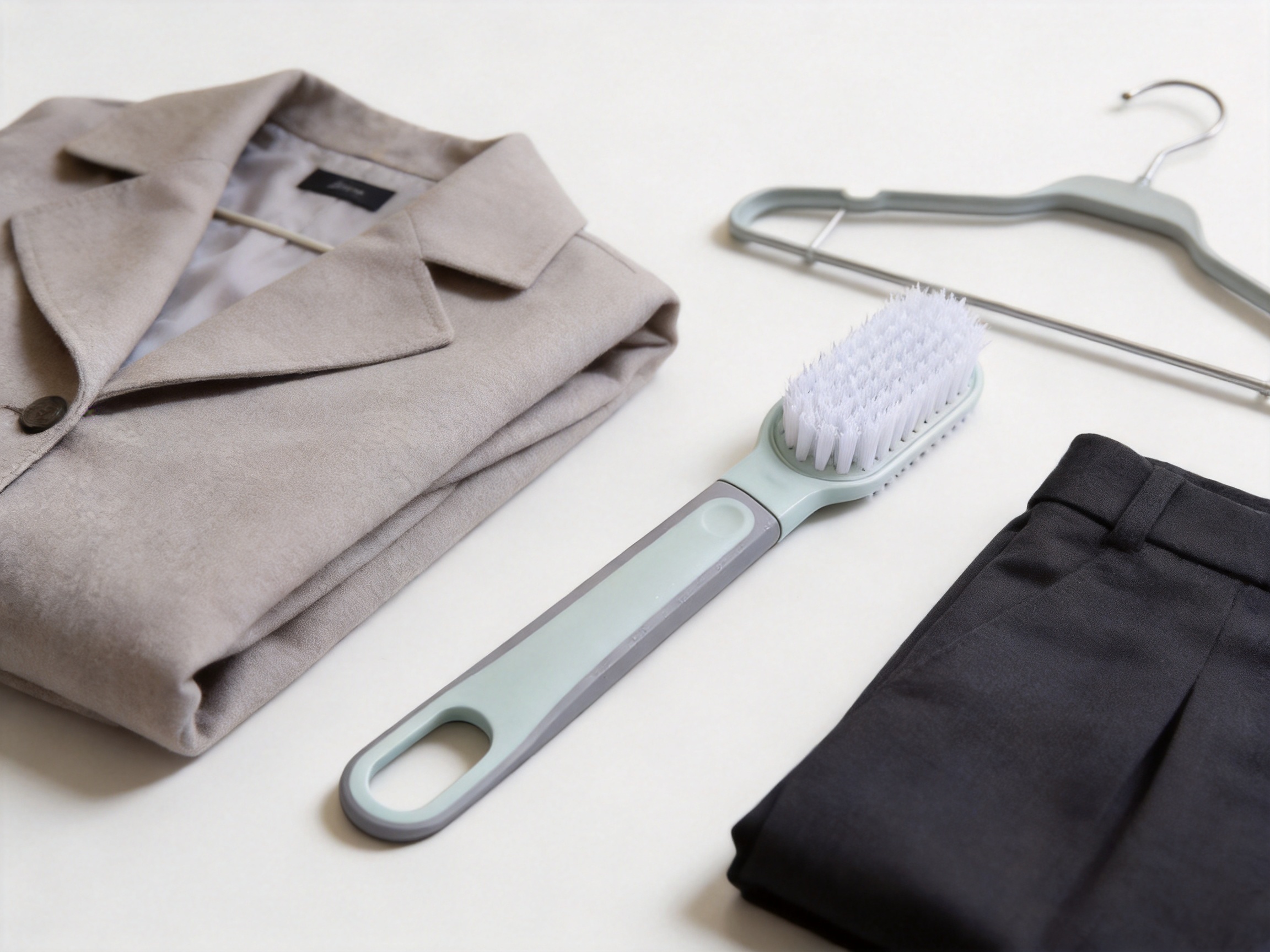
Comparison with Common Alternatives
Garment care products come in many forms, including adhesive lint rollers, short-handled brushes, electric fabric shavers, disposable dusters, and specialized textile tools. Each has a different function. The Long Handle Plastic Clothing Brush occupies a practical position between basic hand cleaning and more specialized equipment.
Compared with an adhesive lint roller, the brush does not depend on replacement sheets. This can make it more economical for repeated use and can reduce the need to store or purchase refill rolls. A reusable brush is also convenient when the primary concern is dust or loose particles rather than strongly attached lint.
Compared with a short-handled clothing brush, the long-handle format provides greater reach. Users can cover larger garments with fewer repositioning movements and can keep the hand farther from the clothing surface. This is a meaningful advantage for coats, long trousers, dresses, and hanging uniforms.
Compared with an electric fabric shaver, the brush is simpler and requires no battery, charging cable, motor, or replacement blade. It is therefore easier to maintain, quieter during use, and suitable for quick surface cleaning. A fabric shaver may be more appropriate for pills and fuzz, while the clothing brush is better suited to loose dust and light debris.
Compared with disposable dusting products, the plastic clothing brush is intended for repeated use. Its rinsable construction supports a longer service routine and helps reduce dependence on single-use cleaning materials.
Compared with oversized commercial brushes, the compact 20-centimeter length is easier to package and store. It can fit into standard retail displays, shipping cartons, household drawers, and housekeeping supply cabinets. This creates advantages not only for users but also for distributors managing shelf space and logistics.
| Product Feature | Long Handle Plastic Clothing Brush | Typical Short Brush | Adhesive Lint Roller | Electric Fabric Shaver |
| Primary Use | Dust and light surface particle removal | Localized garment brushing | Loose lint and hair collection | Pill and fuzz reduction |
| Handle Reach | Extended reach for hanging and larger garments | Limited reach | Moderate reach depending on design | Usually compact |
| Power Requirement | None | None | None | Battery or charging required |
| Refill Requirement | No adhesive refill required | No refill required | Replacement sheets or rolls may be needed | Blades or maintenance parts may be needed |
| Storage | Hanging hole supports organized storage | Depends on design | Usually stored in a drawer or holder | Requires protected equipment storage |
| Product Weight | 41 grams | Varies by design | Varies by design | Generally heavier |
| Recommended Positioning | Everyday household and professional garment maintenance | Small-area garment care | Quick lint pickup | Specialized fabric-surface treatment |
Design Benefits for Household Use
Households often prefer cleaning products that are straightforward, compact, and easy to keep available. The Long Handle Plastic Clothing Brush meets these expectations through a simple structure that does not require assembly or technical knowledge. Users can pick up the tool and begin brushing immediately.
The product is appropriate for bedrooms, dressing areas, laundry rooms, entryways, and storage closets. Its hanging hole allows it to be placed near clothing rather than hidden inside a general cleaning cabinet. This proximity makes it easier to include brushing in a daily routine.
Families may use the brush for school uniforms, work clothing, outerwear, and seasonal garments. In homes with pets, a garment brush can also be useful for dealing with loose hair on compatible textile surfaces. Users should apply reasonable pressure and select a suitable brushing direction according to the fabric structure.
The brush can be rinsed quickly after use, helping remove accumulated dust and particles from the cleaning surface. After rinsing, it should be allowed to dry appropriately before storage. This simple care routine helps preserve cleanliness and keeps the tool ready for its next use.
Its compact size is also convenient for homes with limited storage. Apartment residents, dormitory occupants, and small households can keep the brush in a narrow cabinet, on a wall hook, or beside a wardrobe without sacrificing valuable space.
Commercial and Professional Applications
The product has applications beyond ordinary household use. Hotels, guesthouses, hostels, dormitories, uniform departments, laundry services, clothing stores, costume departments, and facility-management teams can use garment brushes as part of routine appearance maintenance.
In hospitality settings, a brush may be provided in guest rooms, dressing areas, staff changing rooms, or housekeeping supply stations. A lightweight design is useful when housekeeping personnel need to carry several accessories on a cart or between rooms.
Uniformed organizations can place brushes near changing areas so employees can refresh workwear before a shift. This is useful in hospitality, retail, transportation, security, education, healthcare support services, and other environments where clothing presentation matters.
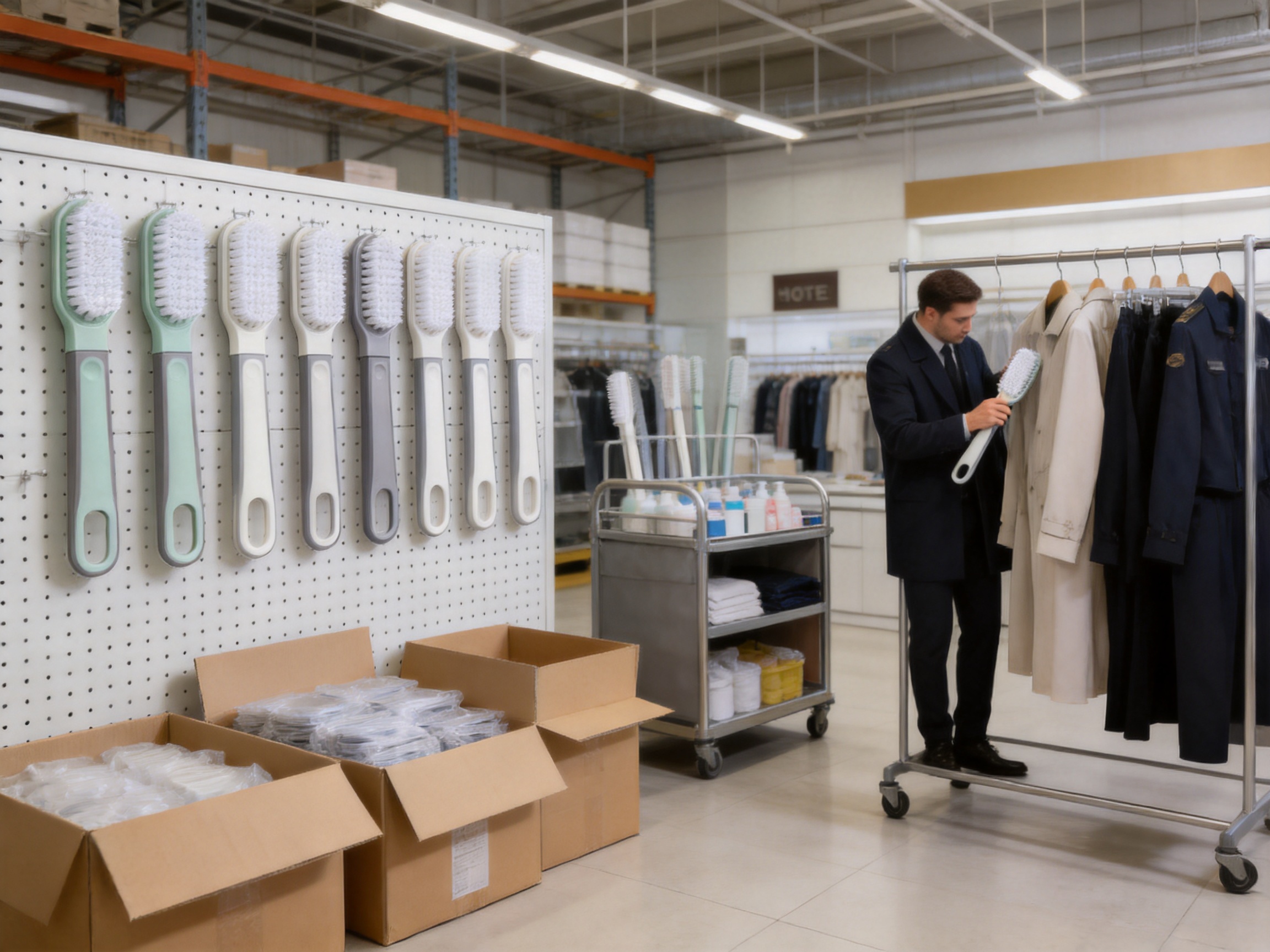
Clothing retailers may use the brush to maintain garments on display racks. Dust and loose fibers can become visible under bright store lighting, so a quick brushing routine can help keep merchandise looking orderly. The long handle is convenient when items remain on hangers or are displayed at different heights.
Costume departments and event-service companies may also find the product useful for basic backstage garment maintenance. It is compact enough to keep with wardrobe supplies and does not require electrical access. For organizations buying in volume, the product’s standardized dimensions and simple material structure can support consistent distribution across multiple work areas.
Wholesale buyers can position the product as a low-cost, practical add-on for laundry, home organization, cleaning, and personal-care product lines. Its broad application range may help retailers introduce it to customers who need a small solution for a common household task.
Manufacturing Strengths and Production Capability
The manufacturer is an industry and trade enterprise founded in 2008 and specializing in the research, development, production, and sales of cleaning supplies. Its product scope includes brooms, cleaning brushes, household brushes, industrial brushes, and supporting plastic products. This specialization gives the company experience across multiple cleaning-product categories rather than a narrow focus on a single item.
For a plastic clothing brush, manufacturing quality begins with product development and mold planning. A well-considered design must account for the handle profile, brush-body structure, material compatibility, grip area, hanging hole, overall balance, and packing requirements. Attention to these details helps create a product that is comfortable to use and practical to manufacture at volume.
The company offers customization based on customer drawings and samples. This capability is valuable for buyers who require a particular color, logo treatment, packaging format, shape adjustment, or product combination. Custom development can help distributors align the brush with an existing household cleaning range or private-label strategy.
Its own production base provides greater control over manufacturing arrangements and production coordination. In-house or closely managed production can support more direct communication between development, molding, assembly, inspection, and packing functions. This is particularly important when customers require stable specifications over repeated orders.
Standardized production processes are another stated strength. Standardization helps reduce variation in dimensions, material use, assembly quality, and appearance. For a product with a listed size of 20 × 3.5 × 2.5 centimeters and a weight of 41 grams, consistent control is useful for packaging calculations, retail presentation, and shipping documentation.
A complete supply chain can also improve order coordination. Cleaning-product buyers often need multiple related items rather than one isolated brush. A supplier with a broad product range may be able to support mixed procurement involving household brushes, brooms, plastic accessories, storage products, and other cleaning tools.
Research and Development Support
Research and development contribute to more than the appearance of a product. In this category, development work may address user reach, grip comfort, brush effectiveness, material selection, hanging convenience, production efficiency, and packaging protection. These factors must work together for the final item to be commercially successful.
Customer drawings and physical samples can provide a starting point for product modification. Buyers may request a different handle length, a new color combination, an adjusted hanging feature, alternative packaging, or a coordinated range of products. A supplier with development experience can review these requirements and translate them into a manufacturable design.
Customization is especially relevant for supermarkets, cross-border e-commerce sellers, importers, promotional-product distributors, and professional procurement departments. These customers may have specific retail dimensions, brand guidelines, carton requirements, or regional preferences that differ from standard stock products.
Quality Control and Process Stability
Stable quality control is essential for a high-volume household product. Customers expect every unit to have a consistent handle, secure material connection, usable brush surface, clean appearance, and accurate packing quantity. Quality management should therefore extend from incoming materials through molding, assembly, inspection, and final carton packing.
For this product, practical inspection points may include overall dimensions, weight range, handle integrity, TPR placement, plastic surface quality, hanging-hole formation, brush-body condition, and packaging count. These checks help ensure that the goods received by distributors match the agreed product specification.
Process stability also reduces the likelihood of avoidable problems such as uneven surfaces, incomplete molding, loose components, damaged edges, inconsistent colors, or carton quantity errors. A standardized production approach supports repeat orders and gives buyers greater confidence when planning inventory.
The company’s export experience is another relevant strength. International buyers often require clear product information, reliable packing, coordinated shipment preparation, and communication across different time zones and business practices. Experience with export markets can help support these requirements during the purchasing process.
Packaging and Bulk Supply Considerations
The listed quantity is 400 pieces, with a carton size of approximately 56 × 33.5 × 48.5 centimeters. This information is important for distributors, importers, and logistics planners. Knowing the unit count and carton dimensions helps buyers estimate warehouse space, shipment volume, container utilization, and landed cost.
The 41-gram unit weight supports efficient bulk movement. Although the final shipping weight will include packaging materials and cartons, the low product weight can help keep transportation practical when larger quantities are ordered. Lightweight products are also easier for retail staff to unpack, stock, and replenish.
Packaging can be adapted according to the target market and sales channel. Options may include individual packaging, multi-piece packaging, barcode labeling, instruction inserts, color packaging, export cartons, or mixed cartons with related cleaning products. The appropriate format depends on whether the product is intended for supermarkets, e-commerce fulfillment, wholesale distribution, institutional procurement, or promotional use.
For e-commerce sellers, compact packaging can help control parcel dimensions and reduce storage pressure. For supermarket buyers, an attractive hanging card or clear package may improve shelf visibility. For institutional customers, simplified bulk packaging may be more economical and easier to distribute internally.
Before confirming a large order, buyers should verify the final packaging method, carton quantity, gross and net weight, labeling requirements, product color, sample approval, and shipment documentation. Clear confirmation of these details helps prevent avoidable misunderstandings during production and delivery.
Product Positioning for Retail and E-Commerce
The product can be positioned as a practical garment-care tool rather than as a specialized or complicated appliance. Its key selling points are easy to communicate: extended reach, lightweight PP and TPR construction, suitability for dust and light particles, quick rinsing, and hanging storage.
Retail descriptions should explain the intended use clearly. Consumers should understand that the brush is designed for surface maintenance, not stain removal or heavy-duty textile repair. Accurate communication helps build trust and reduces inappropriate expectations.
Product photographs and demonstrations can show the brush being used on a hanging coat, a pair of trousers, a uniform, or another suitable garment. A visual demonstration of the long handle can make the main advantage immediately understandable. Packaging can also highlight the hanging hole and lightweight construction.
For e-commerce listings, useful specification information includes the item number, product size, material, unit weight, cleaning application, storage feature, and available packing method. Buyers may also need carton information for wholesale orders. Presenting these details in a structured format improves product evaluation and supports purchasing decisions.
The product can be included in several category systems, including clothing care, laundry accessories, household cleaning, home organization, dormitory supplies, hotel amenities, and general plastic household products. Its broad relevance gives retailers flexibility when building collections and promotional campaigns.
Care and Use Recommendations
To use the brush, place the garment on a hanger or another stable surface and guide the brush across the fabric with light, even strokes. Begin with a less visible area when using the product on a new or delicate textile. Follow the natural direction of the fabric where appropriate and avoid excessive pressure.
For coats and jackets, brush from the upper sections toward the lower hem, paying attention to shoulders, sleeves, lapels, and areas exposed to outdoor dust. For trousers, work along the legs in long strokes. For uniforms and dresses, inspect the front, back, sleeves, and lower sections before storage or wear.
After use, inspect the brush surface and remove any collected material. The brush can be rinsed quickly when necessary. Allow it to dry properly before placing it in a cabinet or hanging it in a storage area. Keeping the tool dry and clean supports convenient repeated use.
Do not treat the brush as a substitute for washing, stain removal, or professional textile treatment. Avoid aggressive brushing on fragile, loosely woven, heavily embellished, or specially coated materials unless the fabric-care instructions permit it.
Advantages for Buyers and Distributors
For buyers, the product offers a straightforward combination of marketability, practical use, and manageable logistics. It addresses a familiar household need without requiring a large explanation or a complicated demonstration. This can make it suitable for both planned purchases and impulse additions to a cleaning-products order.
The product’s broad application range supports multiple sales channels. A distributor can offer it to household customers, commercial cleaning suppliers, hotel procurement teams, clothing retailers, dormitory managers, and institutional buyers. This diversity may reduce dependence on one narrow customer segment.
Its compact dimensions and lightweight construction can simplify warehousing. Retail staff can handle cartons more easily, while e-commerce operators can store inventory in smaller spaces. The hanging hole may also support pegboard, hook, or hanging-card merchandising in physical stores.
The company’s customization services create additional opportunities for private-label and coordinated product programs. Buyers may request product colors that match a household cleaning range or packaging that aligns with a retail brand’s visual identity. Customization can help differentiate a simple cleaning accessory in a competitive marketplace.
The manufacturer’s broad experience in cleaning supplies can support product-line expansion. A buyer starting with the clothing brush may later source other household or industrial brush products from the same supply network. Consolidating related products with one experienced supplier may simplify communication, quality coordination, and order management.
How the Product Supports Sustainable Daily Habits
A reusable clothing brush encourages maintenance before replacement or intensive cleaning. By helping users remove loose dust and particles from garments, it supports a habit of caring for clothing between washes. This does not eliminate the need for laundering, but it can complement a more measured and organized garment-care routine.
The absence of batteries, charging equipment, adhesive refills, or electrical components keeps the product simple. Users can operate it whenever needed without preparing a power source. For many basic cleaning tasks, this simplicity is a practical advantage.
The lightweight construction also reduces material and transportation demands compared with larger powered devices. Product sustainability depends on many factors, including service life, material management, packaging, and end-of-life handling, but a compact reusable tool can offer a straightforward alternative for light surface cleaning.
Suppliers and buyers should communicate responsible use accurately. The brush is a durable household accessory intended for repeated cleaning, and users should follow local guidance for disposal or recycling when the product eventually reaches the end of its useful life.
Quality Expectations for Wholesale Orders
Wholesale buyers should define the product specification before mass production begins. Important points include the approved sample, PP and TPR material requirements, color, dimensions, weight tolerance, brush performance, surface finish, hanging-hole shape, packaging method, carton quantity, and labeling.
Sample approval is especially useful for products with customized colors or packaging. It gives the buyer and manufacturer a shared reference for production. If the order is intended for multiple markets, buyers should also confirm language requirements, barcode placement, safety statements, and carton markings.
Inspection arrangements can be agreed according to the buyer’s procurement system. Some customers use pre-shipment inspection, while others rely on supplier quality records, random sampling, or third-party verification. The appropriate approach depends on order value, market requirements, and the buyer’s internal standards.
Clear communication about delivery schedules is also important. Production timing may depend on raw materials, mold preparation, packaging printing, customization, and order quantity. Early confirmation allows the manufacturer to coordinate these steps more effectively.
Frequently Asked Questions
What is the main purpose of the Long Handle Plastic Clothing Brush?
The brush is designed to remove dust, loose fibers, hair, lint, and light surface particles from garments and suitable textile surfaces. It is intended for everyday garment maintenance rather than stain removal, washing, or specialized fabric repair.
Why does the brush have a long handle?
The extended handle helps users reach larger garments and areas that are harder to clean directly by hand. It is useful for coats, trousers, hanging uniforms, dresses, jackets, and other clothing with a larger or longer surface.
What materials are used?
The listed materials are PP and TPR. PP provides a lightweight plastic structure, while TPR can contribute to a softer and more comfortable grip area.
How much does one brush weigh?
The listed unit weight is 41 grams. This lightweight construction makes the brush easy to use, store, pack, and transport.
What are the product dimensions?
The listed product size is approximately 20 × 3.5 × 2.5 centimeters. This provides useful reach while keeping the brush compact enough for household storage and retail display.
Can the brush be used on all fabrics?
The brush is suitable for routine surface cleaning on compatible fabrics, but delicate, loosely woven, embellished, or specially treated textiles should be tested in an inconspicuous area first. Users should follow the care instructions for the garment and avoid applying excessive pressure.
Can the brush be rinsed?
Yes. The plastic construction allows the brush to be rinsed quickly after use when necessary. It should be allowed to dry appropriately before storage.
Does the product require batteries or electricity?
No. The brush is manually operated and does not require batteries, charging, motors, or electrical connections.
Does the brush include a storage feature?
Yes. A hanging hole allows the brush to be placed on a hook, peg, rail, or other suitable storage point. This helps keep the brush organized and accessible.
Is the product suitable for commercial use?
Yes. It can be used in hotels, guesthouses, dormitories, uniform rooms, clothing stores, housekeeping departments, laundry areas, and other professional settings where basic garment maintenance is needed.
What is the listed bulk quantity?
The listed quantity is 400 pieces. Buyers should confirm the final packing method, carton quantity, and shipment specifications before placing an order.
What is the carton size?
The listed carton size is approximately 56 × 33.5 × 48.5 centimeters. Buyers should verify whether these dimensions refer to the final approved packing method and whether gross and net weights are required for logistics planning.
Can the product be customized?
The manufacturer provides customization based on customer drawings and samples. Buyers can discuss possible adjustments such as color, packaging, product coordination, and other requirements during the development and quotation process.
What makes this brush different from a lint roller?
The brush is reusable and does not depend on adhesive sheets or replacement rolls. It is designed for dust and light surface particles, while a lint roller may be preferred for strongly attached lint or hair.
What makes it different from an electric fabric shaver?
The clothing brush is simpler, quieter, and manually operated. It does not require charging or blade replacement. An electric fabric shaver is intended for a different task, such as reducing fabric pills and fuzz.
How can retailers present the product?
Retailers can position it as a lightweight, long-reach garment-care accessory for coats, trousers, uniforms, and hanging clothes. Product packaging can highlight the PP and TPR materials, 20-centimeter length, 41-gram weight, rinsable construction, and hanging-hole storage feature.
Conclusion
The Long Handle Plastic Clothing Brush is a practical solution for routine garment maintenance. Its extended handle improves reach across coats, trousers, uniforms, dresses, and other larger or hanging garments. Its lightweight PP and TPR construction supports comfortable handling, while the compact 20 × 3.5 × 2.5-centimeter size makes it convenient for storage, retail display, and bulk shipment.
The product is designed for removing dust and light surface particles, making it a useful addition to wardrobes, laundry rooms, hotels, clothing stores, dormitories, and professional cleaning systems. A hanging hole supports organized storage, and the plastic construction allows quick rinsing after use. Compared with adhesive rollers, short-handled brushes, and powered fabric-care devices, it offers a simple reusable format with no batteries or adhesive refills.
For wholesale customers, the listed 41-gram unit weight, 400-piece quantity, and carton dimensions provide a practical basis for logistics planning. The manufacturer’s experience in cleaning supplies, own production base, standardized processes, research and development capability, quality-control approach, export experience, complete supply chain, and customization services further support the product’s commercial potential.
Whether sold as an individual household accessory, included in a laundry-care range, supplied to commercial facilities, or developed as part of a customized private-label program, the Long Handle Plastic Clothing Brush offers a balanced combination of usability, compact design, manufacturing practicality, and broad market application.
References
1. Product specification information for Long Handle Plastic Clothing Brush, Item No. 3008.
2. Manufacturer-provided material information identifying PP and TPR construction.
3. Manufacturer-provided product dimensions, unit weight, quantity, packing data, and carton measurements.
4. General household cleaning and garment-maintenance principles concerning dust removal, surface care, storage, and reusable cleaning tools.
5. General product-development considerations for molded plastic household accessories, including material selection, dimensional consistency, packaging, and quality inspection.
6. General wholesale procurement practices relating to sample approval, customization, carton planning, export preparation, and repeat-order quality control.
Product: Long Handle Plastic Clothing Brush

 CONTACT US
- CONTACT DETAILS
- Address : No. 1388 Cuntong Road, Jinhua City
- Tel: +86-0579-81534043
- Email:wangjinhua1@zjjqsj.com
- PRODUCTS
- Kitchen Cleaning Supplies
- Household Cleaning Supplies
- Indoor & Outdoor Cleaning Supplies
- Baby Products & Cleaning Supplies
- Home Storage Containers
- QUICK LINK
- Company Profile
- Plant equipment
- Certifications
- FAQ
- NEWS CENTER
- Company News
- Industry News
- MOBILE TERMINAL

