

 English
  русский
  Español
  عربى
عربى 
Standard TPR Plunger 15 cm: A Practical Solution for Toilets, Drains, and Everyday Cleaning
Date:Sep 29, 2026
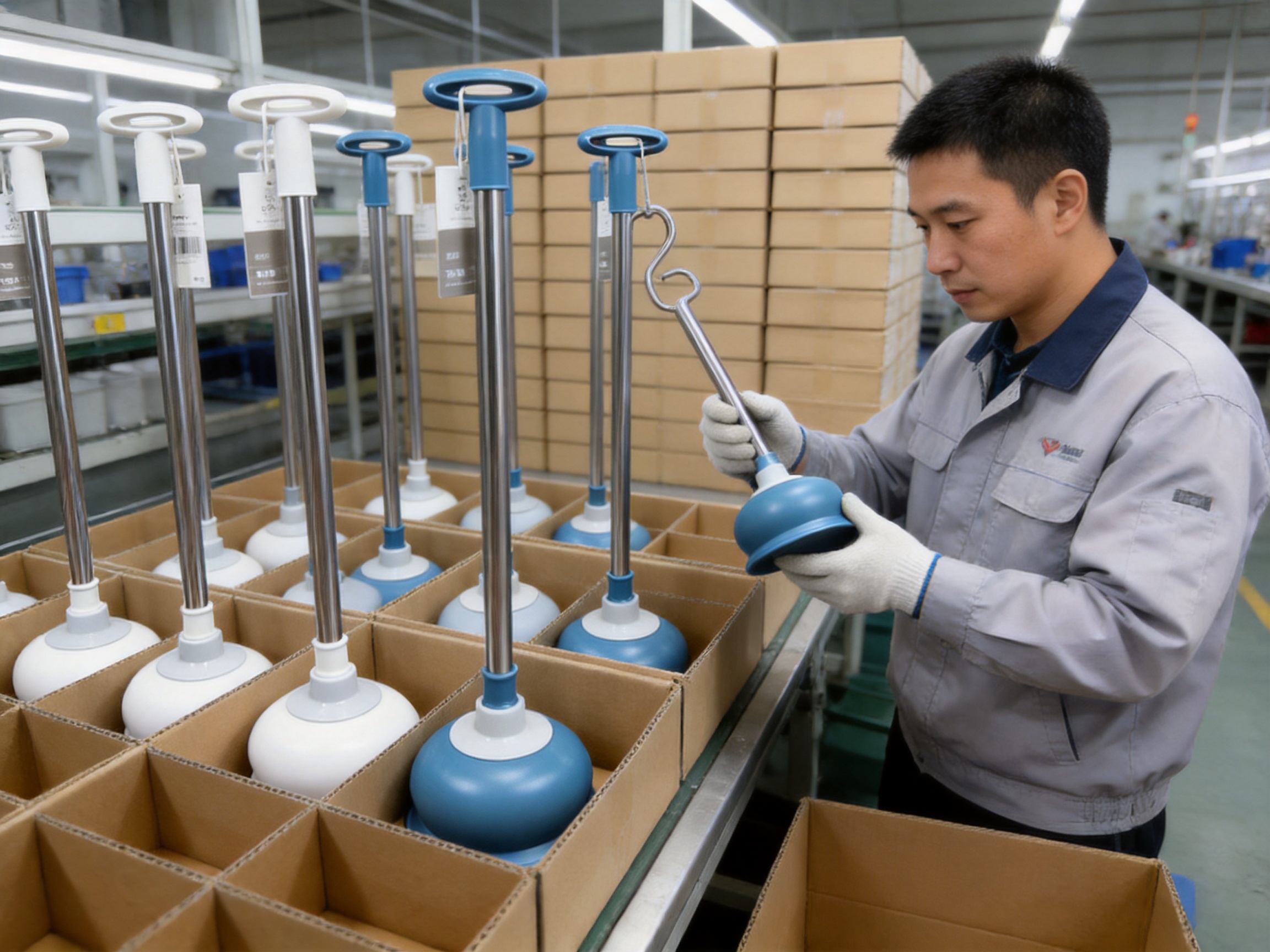
Reliable cleaning tools do not always need complicated mechanisms or oversized designs. In many homes, rental properties, commercial facilities, and maintenance programs, the most valuable tool is one that is easy to understand, simple to use, durable enough for repeated tasks, and economical to replace. The Standard T-9548 TPR Plunger 15 cm is designed around these practical requirements. With a classic cup shape, a 15 cm working diameter, a useful hang hook, and a pack size suitable for bulk purchasing, it provides a dependable solution for routine drain and toilet maintenance.
This model is manufactured by Jinhua Jieqing Plastic Co., Ltd., an industry and trade enterprise specializing in cleaning supplies, plastic products, household brushes, industrial brushes, brooms, and related products. The company combines product development, production, quality control, supply-chain coordination, export experience, and customization services. These capabilities are important for buyers who need more than a single household tool. Retailers, landlords, hospitality businesses, property managers, facility operators, distributors, and procurement departments often require stable specifications, consistent packaging, and dependable replenishment.
The T-9548 is positioned as a standard model for universal use in homes and light commercial environments. It is suitable for toilets, shower drains, laundry tubs, and other fixtures where a manual suction tool can help clear minor blockages or improve drainage. The TPR cup is formed in a classic style intended to work with a broad range of common fixtures. Its simple construction also supports easy cleaning, straightforward storage, and practical replacement.
Rather than competing through unnecessary complexity, the product emphasizes functional value. It delivers a recognizable plunger format, a replaceable and familiar working concept, convenient storage, and bulk-pack efficiency. For businesses that need a consistent cleaning tool across multiple properties or sales channels, these features can be more valuable than specialized designs intended for only one fixture.
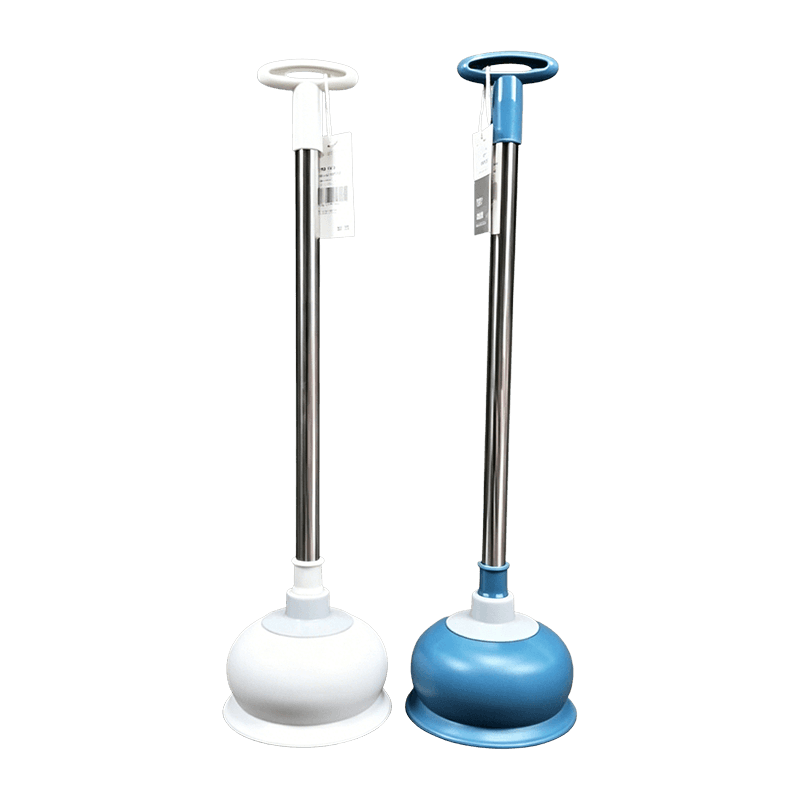
Standard T-9548 TPR Plunger 15cm (64x46x38cm)
Product Overview and Main Specifications
The Standard T-9548 uses a thermoplastic rubber, commonly abbreviated as TPR, cup with a 15 cm calibre. The cup is the active part of the tool. When pressed against a drain opening and operated correctly, it helps create pressure and suction that may loosen or move common soft obstructions. The classic cup profile is intended for general-purpose use rather than a narrow application.
The supplied product information lists the item number as T-9548, the calibre as 15 cm, the material as TPR, the package or dimensional information as 64 × 46 × 38 cm, the quantity as 60 units, and the net weight as 12 kg. The product description also identifies a 60-piece carton configuration. These details provide buyers with the basic information required for purchasing, warehousing, shipping, catalog creation, and distribution planning.
| Specification | Details |
|---|---|
| Item number | T-9548 |
| Product type | Standard TPR plunger |
| Working cup size | 15 cm |
| Main material | TPR, or thermoplastic rubber |
| Listed dimensions or volume data | 64 × 46 × 38 cm |
| Quantity per carton | 60 pieces |
| Net weight per listed package | 12 kg |
| Recommended application | Toilets, shower drains, laundry tubs, homes, and light commercial settings |
| Storage feature | Handle with hang hook |
The combination of a standard working size and high carton quantity makes this model particularly relevant to business buyers. A retailer can use the same item for shelf sales, online listings, or multipack programs. A landlord or property service company can keep replacement units available for different locations. A distributor can offer a widely understandable product without requiring extensive user education.
Because the product is a manual tool, it does not require batteries, electrical connections, charging, specialized replacement cartridges, or complicated maintenance. This reduces the ownership burden for users and simplifies the inventory requirements of suppliers. It can be stored in a maintenance cupboard, utility room, janitorial cabinet, service vehicle, or warehouse without the infrastructure needed by powered equipment.
Why a Standard 15 cm Plunger Remains Valuable
Plumbing fixtures vary in shape, size, and accessibility, but many ordinary cleaning tasks can be handled with a basic cup-style plunger. A 15 cm cup represents a practical middle ground. It is large enough to cover many common household and utility drain openings while remaining compact enough to store and handle comfortably.
A larger professional plunger may provide more surface area, but it can be inconvenient for small bathrooms, apartment utility rooms, or household storage. A highly specialized toilet auger may be appropriate for certain deep or difficult obstructions, but it is not always necessary for routine maintenance. The T-9548 fills the space between these alternatives by providing a familiar general-purpose tool for everyday use.
The classic shape also supports user recognition. Customers generally understand how a cup plunger works without extensive instructions. This is useful in retail environments because the product can be explained through a short description and basic packaging information. It is equally useful in rental properties and facilities where different users may need to operate the tool without formal training.
A standard model can also simplify purchasing. When a buyer manages many apartments, hotel rooms, offices, schools, or commercial units, consistent replacement is important. The same model can be reordered as needed, helping reduce variation in maintenance cupboards and making it easier for staff to identify the correct replacement item.
General-purpose compatibility
The TPR cup is intended for use on toilets, shower drains, and laundry tubs. These applications cover several common areas where minor drainage problems occur. In a home, a user may keep the tool in a bathroom or laundry area. In a rental property, it can be provided as part of a basic maintenance kit. In a light commercial setting, it can support routine janitorial work.
The product should be understood as a manual clearing aid, not as a substitute for professional plumbing equipment in every situation. It is most appropriate for ordinary blockages or slow drains that respond to controlled pressure and suction. If a blockage is caused by structural damage, a solid object, severe pipe buildup, or a deeper system failure, professional assessment may be required.
Simple operation and low training requirements
The plunger format is straightforward. The user positions the cup over the drain or opening, creates a seal as effectively as the fixture allows, and applies controlled vertical movement. The action can generate alternating pressure and suction to help disturb a blockage. Correct technique depends on the fixture, the water level, and the type of obstruction, but the basic principle is easy to understand.
For business users, simplicity creates operational benefits. Training time is limited, instructions can be concise, and staff can identify the tool quickly. A facility team does not need to maintain a charging schedule or learn a complicated control system. A retailer does not need to explain multiple operating modes. A property manager can supply the tool to tenants as part of an emergency household-care package.
TPR Material and Practical Performance
TPR combines characteristics associated with rubber-like flexibility and thermoplastic processing. In a plunger, the material needs to maintain a flexible cup shape while allowing the product to be manufactured in a repeatable way. The cup must be capable of conforming to a surface sufficiently for manual pressure and suction to be useful.
The use of TPR is a key product feature because the working cup is central to performance. A rigid cup may have difficulty adapting to uneven or differently shaped fixture surfaces. A properly formed flexible cup can provide a more practical contact area during use. The exact performance will depend on the fixture, the drain opening, the water level, the condition of the cup, and the user’s technique, but the material selection supports the general-purpose design objective.
TPR can also support product consistency during large-scale production. Thermoplastic materials are suitable for controlled molding processes, allowing manufacturers to reproduce a specified shape across multiple production batches. Consistent cup dimensions are important for a standardized model because buyers expect replacement units to have the same basic fit and operating characteristics.
Compared with extremely low-cost products made from inconsistent or overly rigid materials, a TPR model may offer a better balance of flexibility, usability, and repeatability. The advantage is not simply the name of the material. It comes from the interaction between material selection, cup geometry, production control, and inspection. For a business purchaser, that combination can reduce the risk of receiving mixed-quality units within one carton.
Flexibility for different fixtures
The T-9548 is described as a universal-use model. In practical terms, universal use means that the design is intended to address a range of ordinary fixtures rather than only one specialized drain. Toilets, shower drains, and laundry tubs can have different shapes and working conditions. A classic cup is therefore useful because it provides a broadly applicable contact surface.
Users should choose the correct positioning for each fixture. The cup should be centered as well as possible over the opening, and the tool should be operated with controlled movements rather than excessive force. On a shower drain or laundry tub, the surrounding water can help form a seal. On a toilet, the bowl shape and water level may affect the contact. Good technique helps users obtain more value from a simple tool.
Durability expectations
Durability in a plunger depends on material quality, molding consistency, storage conditions, cleaning practices, and frequency of use. A TPR cup is designed to tolerate repeated manual operation, but it should not be exposed unnecessarily to sharp objects, extreme heat, corrosive chemicals, or rough surfaces. After use, the product should be rinsed or cleaned as appropriate and stored in a dry, ventilated location.
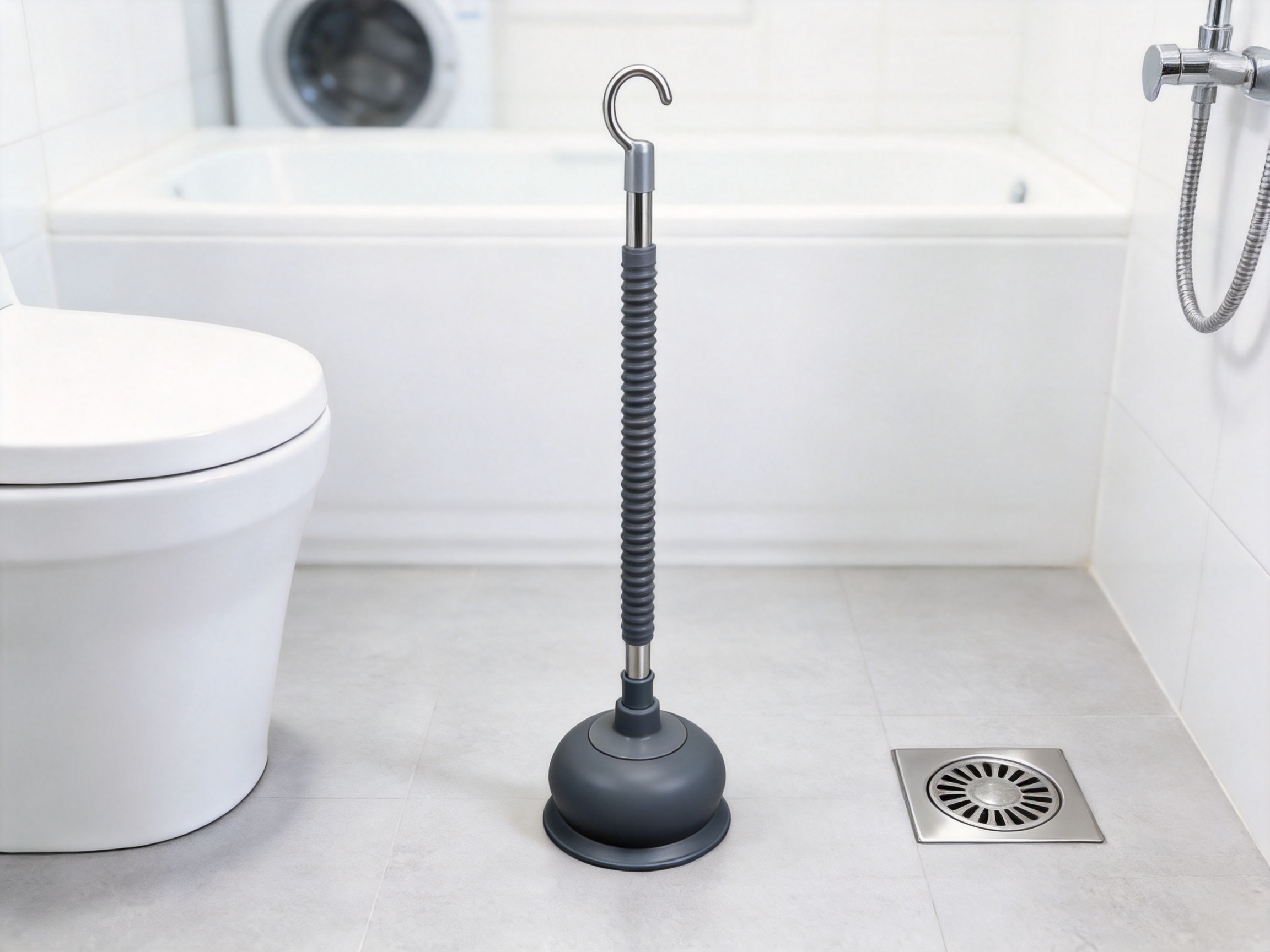
The handle and hang hook also contribute to useful product life. A hang hook allows the tool to be stored vertically or suspended from a suitable peg. This can reduce contact with dirty floors, improve access, and help the cup dry. In shared maintenance areas, organized storage makes it easier to see whether the tool is available and reduces the chance that it will be misplaced.
Advantages Over Generic or Poorly Matched Alternatives
The T-9548 should be compared with products according to application, material, consistency, packaging, and supply support. A generic low-cost plunger may look similar at first glance, but differences can emerge in cup flexibility, dimensions, molding quality, handle construction, storage features, carton organization, and order reliability.
Balanced design instead of excessive specialization
Some competing products focus on a single fixture or use unusual shapes that may perform well in one situation but poorly in another. The T-9548 takes a broader approach. Its standard cup and 15 cm size are intended to cover routine needs across toilets, shower drains, and laundry tubs. This reduces the number of different models a buyer may need to stock.
For retailers, a broadly applicable model can be easier to position in the household cleaning category. For facility operators, it can reduce the risk of issuing the wrong tool to a site. For property managers, it offers a practical item that can serve multiple types of rental units. Standardization can improve purchasing efficiency even when the individual unit price is only one part of the total cost.
TPR cup construction
Material choice distinguishes the product from basic plungers that may use harder, less adaptable plastics or inconsistent rubber compounds. A TPR cup is intended to provide the flexibility needed for practical contact with common fixture surfaces. This does not make the product suitable for every plumbing problem, but it supports reliable use in the ordinary applications identified for the model.
A consistent TPR cup can also contribute to a more predictable customer experience. If a retailer sells a product described as a general-use plunger, the physical cup should reasonably reflect that promise. Standardized molding and inspection help align the finished item with the product description.
Convenient storage through the hang hook
The hang hook is a small feature with practical value. Cleaning tools are often stored in spaces where floor area is limited. A hanging option can keep the product off the floor, improve hygiene, and make the tool easier to locate. It also supports more organized stockrooms and service closets.
Many low-cost cleaning tools focus only on the working end and overlook storage. For households, an easy-to-store tool is more likely to remain accessible. For commercial users, a tool that can be hung in a designated location is easier to manage during inspections and routine cleaning operations.
Bulk carton efficiency
The 60-piece carton configuration is suitable for wholesale and institutional purchasing. Bulk packaging can reduce repeated ordering, simplify warehouse handling, and support distribution to multiple locations. The listed net weight of 12 kg helps buyers estimate handling requirements and plan storage or shipment arrangements.
A carton quantity of 60 also gives flexibility. A distributor can break down the shipment for resale, while a property services company can allocate units across multiple buildings. The quantity is large enough for business use but still manageable for standard warehouse operations.
Clear identification and repeat ordering
The item number T-9548 provides an unambiguous reference for purchasing and inventory systems. When a business manages several cleaning products, a model number reduces confusion between similar tools. It can be included on purchase orders, internal stock lists, sales catalogs, warehouse labels, and replenishment records.
Repeat ordering is especially important for landlords, cleaning contractors, hospitality operators, and distributors. A consistent item reference helps buyers reorder the same specification rather than relying only on a general product name. This supports better inventory control and reduces the risk of receiving an unsuitable size.
Applications in Homes and Light Commercial Environments
The product is suitable for a range of routine cleaning and maintenance contexts. Its value comes from being available when a minor drainage problem occurs, not from replacing all professional plumbing equipment.
Household bathrooms
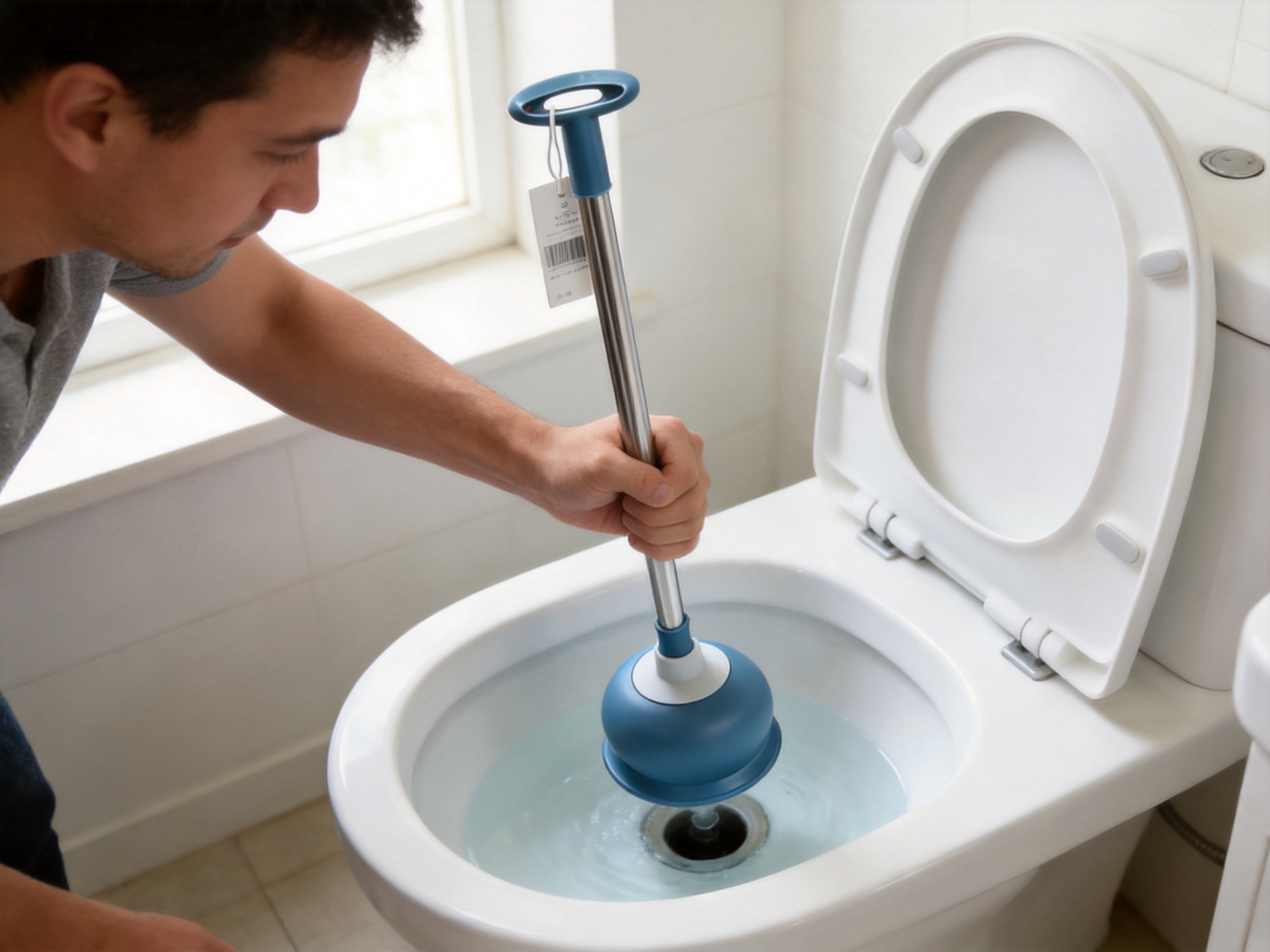
In a household bathroom, the T-9548 can be stored near the toilet or in a utility cabinet. It may be used for minor toilet blockages or to assist with slow drainage where the obstruction is accessible and responds to manual action. The 15 cm cup offers a practical size for ordinary domestic use without taking up excessive storage space.
Home users should avoid using the plunger immediately after applying aggressive chemical drain cleaners unless the product instructions specifically permit it and suitable protective measures are followed. Chemical residues can create safety risks. Mechanical clearing should be performed carefully, and the tool should be cleaned after use.
Shower drains
Shower drains can accumulate hair, soap residue, and other soft materials. A cup plunger may help disturb a partial blockage, especially when enough water is present to support contact between the cup and the surrounding surface. For best results, users should remove visible debris where possible and avoid forcing the tool against delicate components.
The standard cup format is useful because shower drain shapes can vary. It may not form a perfect seal in every shower design, but its general-purpose construction makes it a sensible first-response tool for many ordinary bathroom drainage situations.
Laundry tubs and utility sinks
Laundry tubs may collect lint, dirt, detergent residue, and other materials. A plunger can help address slow flow when the problem is near the drain and has not developed into a deeper plumbing failure. The tool can be kept with other laundry and household cleaning supplies, where the hang hook supports tidy storage.
Rental properties
Landlords and property managers often need simple maintenance tools that tenants can understand and use safely. Supplying a standard plunger can reduce the need for immediate service calls for minor issues. It can also be included in move-in kits, maintenance cabinets, or emergency household-care packages.
The product is particularly suitable for property portfolios because its standard specification can be applied across multiple apartments or houses. A manager can order a consistent model in bulk, maintain a central stock, and distribute replacements as required. This is often more efficient than purchasing different tools from different sources for each property.
Hotels, dormitories, and serviced accommodation
Accommodation facilities need cleaning tools that can be stored and replaced efficiently. A 60-piece carton allows purchasing departments to maintain an organized reserve. Housekeeping or maintenance personnel can use the product in guest-room service areas, staff facilities, or utility rooms.
Because the tool is manual and does not require power, it can be placed in locations where electrical equipment is inconvenient. The hang hook also supports orderly storage in housekeeping closets, where space and hygiene are important considerations.
Offices, schools, and small commercial facilities
Offices, schools, workshops, and small commercial premises may experience occasional drainage problems but may not require specialized plumbing equipment on site. A standard plunger can form part of a basic facilities maintenance kit. It is relatively easy to identify, operate, and replace.
Facility managers should establish appropriate hygiene procedures when tools are used in different areas. Separate storage or labeling may be appropriate for bathroom tools and general utility tools. Cleaning and inspection after use can help preserve the product and maintain a better working environment.
Manufacturing Strengths Behind the Product
The performance of a simple cleaning tool depends on more than its visible shape. Reliable supply requires a manufacturing system capable of controlling materials, molding, assembly, inspection, packing, and shipment. Jinhua Jieqing Plastic Co., Ltd. has been engaged in cleaning-supply research, development, production, and sales since its founding in 2008.
The company is described as an industry and trade enterprise with its own production base, complete supply chain, standardized production processes, stable quality control, extensive export experience, flexible customization services, and a broad product range. These strengths are relevant to buyers who require consistent products at scale.
Product research and development
Research and development in cleaning supplies is closely connected to practical use. Product developers need to consider fixture compatibility, user handling, material selection, storage, packing, appearance, and production feasibility. For the T-9548, the result is a straightforward standard model with a 15 cm TPR cup, a familiar shape, and a hang hook.
A product development process also helps manufacturers respond to buyer requirements. Different markets may request alternative sizes, colors, handles, packaging formats, labeling, or carton quantities. The company’s stated ability to customize according to customer drawings and samples creates an opportunity for buyers to develop products that fit particular sales channels or procurement programs.
Own production base
An own production base can provide greater control over manufacturing coordination than a purely trading-based supply model. It may help the company organize production schedules, manage process standards, monitor output, and respond to quality issues more directly. For buyers, this can support clearer communication about specifications and order requirements.
Production ownership is especially useful for standardized items. When a buyer reorders the same plunger, consistent molding and packing are important. A controlled production environment can help maintain the stated cup size, material selection, quantity per carton, and overall product format.
Standardized production processes
Standardized processes are essential for repeatability. In a TPR plunger, process control may involve material preparation, mold setup, forming, cooling, trimming, inspection, handle integration, finishing, and packing. The precise internal process depends on the manufacturer’s equipment and production methods, but the principle is clear: each stage should be organized so that the finished product corresponds to the approved specification.
Standardization also supports production efficiency. Workers can follow established procedures, inspection points can be defined, and packaging teams can use consistent carton instructions. This is valuable for bulk orders because a purchaser expects the units within a shipment to be substantially uniform.
Quality control
Quality control for a product such as the T-9548 should address both appearance and function. Visual checks can identify incomplete molding, surface defects, contamination, deformation, or damage. Dimensional checks can confirm that the cup is close to the specified 15 cm calibre. Assembly checks can verify the connection between the working cup and handle. Packing checks can confirm carton quantity and labeling.
Quality control should also consider handling and storage. Cartons need to protect the product during warehouse movement and transportation. A well-organized packing process helps reduce shortages, mixed quantities, and avoidable damage. Stable quality control is therefore connected not only to product performance but also to customer confidence and order accuracy.
Complete supply-chain coordination
A complete supply chain helps manufacturers manage raw materials, production inputs, packaging materials, warehousing, and shipment scheduling. Cleaning products may contain several components or require coordinated packing operations. Reliable supply-chain planning helps reduce delays and supports the replenishment needs of distributors and institutional buyers.
For the T-9548, buyers may need regular access to a standard carton quantity rather than a one-time sample. A coordinated supply chain can help the manufacturer maintain continuity across production cycles. It can also support different order sizes, from distributor cartons to larger procurement programs.
Export experience
Export experience can be valuable because international buyers often require clear specifications, consistent documentation, export-friendly packing, and communication across different time zones and business practices. A company accustomed to export markets is more likely to understand the importance of product descriptions, carton data, order confirmation, inspection expectations, and shipment coordination.
For a product sold through supermarkets, cross-border e-commerce, wholesalers, or industrial procurement channels, accurate information is essential. The item number, cup size, material, quantity, net weight, and dimensions can be used to prepare catalogs, purchasing systems, warehouse records, and sales content.
Production Process Considerations for a TPR Plunger
Although the product is uncomplicated in appearance, a controlled production process helps ensure that the final units are suitable for repeated commercial use. The following stages describe the general manufacturing considerations relevant to a molded TPR cleaning tool.
Material preparation
The process begins with suitable TPR material selected for the intended cup characteristics. Material preparation should support consistent forming and minimize contamination. Proper storage before processing is also important because raw materials can be affected by moisture, dust, temperature, or unsuitable handling.
Material consistency influences the flexibility, surface quality, and dimensional stability of the finished cup. A manufacturer with established sourcing and quality-control practices can better manage the relationship between material supply and finished-product performance.
Mold and shape control
The cup shape must be reproduced consistently so that the tool maintains its intended general-purpose profile. Mold condition, setup, temperature control, forming parameters, and cooling can all influence the result. If the cup is distorted or inconsistent, its ability to contact a fixture may be reduced.
Standardized mold management helps support repeat orders. A buyer who orders the T-9548 at different times should receive a product that remains recognizable and compatible with the original specification. This is one of the practical benefits of using an established manufacturing process.
Trimming and finishing
After forming, molded products may require finishing operations to remove excess material or improve the edge. The cup rim is particularly important because it is the portion that contacts the fixture. A clean, even edge can support better handling and more predictable use.
Finishing also affects appearance. Retail customers often judge a simple household tool by its visible quality. Smooth surfaces, clean edges, and an orderly connection between the cup and handle can make the product appear more dependable and professional.
Assembly and handle integration
The handle must be securely integrated with the cup so that normal manual operation does not separate the components. Assembly checks should confirm that the product can withstand ordinary pushing and pulling forces. The handle should also be comfortable enough for repeated use and should retain the hang hook as part of the storage design.
For bulk production, assembly consistency is important. A carton containing units with different handle connections or missing hooks would create avoidable quality problems. A defined assembly procedure and inspection stage can help reduce such variation.
Inspection and carton packing
Inspection can be performed at different points in the production process. Early checks may identify material or molding issues, while final checks can confirm appearance, assembly, quantity, and carton condition. Packing teams should verify the 60-piece carton configuration and the relevant product identification.
Carton packing should balance protection, storage efficiency, and handling convenience. The listed 64 × 46 × 38 cm dimensional information and 12 kg net weight provide useful planning data for buyers. Final shipping arrangements may also involve gross weight, outer-carton materials, and destination-specific requirements, which can be confirmed during order communication.
Customization and Procurement Support
Not every buyer needs the same commercial presentation. A supermarket may require retail-ready packaging, while a distributor may prefer plain bulk cartons. A cross-border e-commerce seller may need product images, translated information, barcode placement, or a particular package format. An industrial purchaser may prioritize carton labeling and internal stock codes.
The company’s stated customization capability based on customer drawings and samples can support these different requirements. Customization may involve product appearance, packaging, labeling, dimensions, colors, or related cleaning-tool configurations, subject to technical evaluation and order conditions.
Customization should begin with a clear specification. Buyers should identify the intended application, target market, required material, cup size, handle requirements, packaging format, quantity per carton, labeling language, inspection expectations, and delivery schedule. Drawings or physical samples can help reduce misunderstandings during product development.
A structured approval process is useful. The buyer and manufacturer can confirm the sample, review the appearance and function, agree on packaging, and establish the production reference. Once the specification is approved, it can be used for future repeat orders. This approach helps turn a general cleaning tool into a controlled private-label or procurement item.
| Buyer requirement | Relevant consideration for the T-9548 |
|---|---|
| General household sales | Clear product name, 15 cm cup size, simple use instructions, and compact storage message |
| Property management | Consistent item number, bulk carton, replacement availability, and practical fixture coverage |
| Retail distribution | Retail packaging, barcode or label requirements, product images, and shelf-friendly presentation |
| Cross-border e-commerce | Accurate dimensions, material information, carton data, multilingual content, and shipment planning |
| Facility procurement | Standardized specifications, inspection expectations, carton quantity, and replenishment schedule |
| Custom programs | Approved samples, customer drawings, packaging instructions, and documented production references |
Safe and Effective Use
A plunger works best when used with patience and controlled pressure. The user should first assess the fixture and remove any visible material that can be safely reached. The cup should then be positioned over the opening as centrally as possible. Adding or retaining an appropriate amount of water can help create contact, although the correct level depends on the fixture.
The handle should be held securely, and the user should apply steady strokes rather than violent force. Excessive force can damage the fixture, splash contaminated water, or place unnecessary stress on the tool. If the obstruction does not respond after reasonable attempts, the user should stop and consider whether professional assistance is needed.
The T-9548 should not be treated as a tool for every type of blockage. Sharp objects, large solid items, structural pipe failures, and severe accumulations may require specialized equipment. Users should also be cautious with chemical drain cleaners. Mixing chemicals, splashing residues, or applying mechanical force to chemically treated water can create hazards.
After use, the plunger should be rinsed or cleaned according to the conditions of use. It should be allowed to dry as practical and stored using the hang hook or another hygienic method. In commercial facilities, cleaning staff should follow the site’s sanitation procedures and avoid transferring a tool between incompatible areas without proper cleaning.
Value for Different Buyer Groups
For landlords and property managers
The T-9548 offers a straightforward way to standardize a basic maintenance item across multiple properties. The 60-piece carton can provide a reserve for move-ins, service calls, and replacements. The standard cup is suitable for several common fixtures, while the model number simplifies reordering.
Landlords can also include the product in tenant information materials. Clear instructions can encourage residents to address minor drainage issues responsibly before contacting maintenance staff. This does not eliminate the need for professional plumbing service, but it can help distinguish simple problems from more serious ones.
For cleaning contractors
Cleaning contractors often carry several tools for different parts of a building. A compact, standard plunger can be included in bathroom and utility-area kits. The hang hook supports storage in janitorial closets or service vehicles, while the TPR cup offers a practical general-purpose format.
Contractors may value consistent replenishment because tools can be misplaced, worn, or assigned to particular sites. A stable item number and carton configuration make purchasing more predictable.
For wholesalers and distributors
Wholesalers need products that can be described clearly and sold across multiple customer segments. The T-9548 has a familiar application, a defined size, a recognizable material, and a bulk carton quantity. These characteristics can simplify cataloging and customer communication.
The broad application also allows distributors to serve household, facility, property-management, and light commercial buyers with one standard model. A distributor can choose to sell individual units, inner quantities where available, or carton quantities according to its market strategy.
For supermarkets and retail channels
Retail buyers generally prefer products that customers understand quickly. A standard plunger has an obvious category position and a clear use case. Packaging can emphasize the 15 cm cup, TPR construction, multi-fixture application, hang hook, and practical household value.
Retail presentation should remain accurate. The product should not be promoted as a solution for severe plumbing failures or as a replacement for professional equipment. Honest positioning can support customer satisfaction and reduce inappropriate use.
For industrial and institutional procurement
Industrial and institutional buyers may purchase cleaning tools for workshops, factories, schools, healthcare support areas, offices, warehouses, or commercial buildings. The T-9548 can serve as part of a broader maintenance and sanitation inventory, particularly where ordinary toilets, floor drains, and utility tubs are present.
These buyers may also require supplier documentation, packing specifications, inspection standards, and delivery coordination. The manufacturer’s production base, supply-chain capabilities, export experience, and customization services provide a foundation for discussing such requirements.
Environmental and Operational Considerations
A manual plunger has a low operational energy requirement because it does not use electricity, batteries, fuel, or charging equipment. This can make it an efficient first-response tool for simple drainage problems. Its use may also help avoid immediately deploying powered equipment for minor issues.
Product life is influenced by responsible use and storage. A plunger that is protected from sharp objects, excessive heat, harsh chemicals, and unnecessary mechanical abuse may remain useful for a longer period. The hang hook supports storage practices that can reduce floor contact and improve drying.
Packaging efficiency is also relevant to bulk distribution. A 60-piece carton allows many units to be consolidated for shipment and warehouse handling. Buyers should still evaluate carton materials, transport distances, storage conditions, and local recycling practices as part of their overall procurement policy.
Where applicable, businesses can establish internal procedures for cleaning, reuse, replacement, and disposal. A simple tool can contribute to more organized maintenance when it is included in a defined inventory system rather than purchased randomly only after a problem occurs.
How to Evaluate a Supplier for This Product
Buyers should evaluate more than the sample appearance. A reliable supplier should be able to confirm the product specification, material, cup size, carton quantity, net weight, dimensions, packaging method, production lead time, and quality-control process. The supplier should also communicate clearly about customization and approval procedures.
Manufacturing capability is important for repeat orders. A supplier with an own production base and standardized processes may be better positioned to maintain continuity than a source that changes factories or specifications without notice. Buyers should ask how approved samples are recorded and how production is checked against them.
Quality-control communication should cover both product and packing. Relevant questions may include how cup dimensions are verified, how material consistency is managed, how handle attachment is inspected, how carton quantities are checked, and how damaged or nonconforming units are handled.
Export experience can be another useful indicator for international buyers. The supplier should be familiar with shipment coordination, carton information, product documentation, and the practical requirements of cross-border transactions. Clear communication before production can prevent delays later.
Frequently Asked Questions
What is the main use of the Standard T-9548?
The main use is to help address minor blockages or slow drainage in toilets, shower drains, laundry tubs, and similar household or light commercial fixtures. It is a manual cup-style plunger designed for general-purpose cleaning and maintenance.
What material is used for the cup?
The cup is made from TPR, or thermoplastic rubber. This material is selected for its rubber-like flexibility and suitability for controlled molded production.
What is the cup size?
The listed calibre is 15 cm. This provides a practical general-purpose size for many common household and light commercial fixtures.
Can this model be used only on toilets?
No. The product is described for universal use and can also be used on shower drains and laundry tubs. Results depend on the fixture shape, water level, blockage type, and user technique.
Is the product suitable for professional plumbing work?
It is suitable for routine use in homes and light commercial settings. It should not be considered a complete replacement for professional plumbing tools when dealing with severe, deep, structural, or complicated blockages.
How many units are packed in one carton?
The listed carton quantity is 60 pieces.
What is the listed net weight?
The listed net weight is 12 kg. Buyers should confirm whether additional shipping information, including gross weight, is required for a particular order.
What are the listed dimensions?
The product information lists 64 × 46 × 38 cm. The purchasing department should confirm how these dimensions are applied to the shipment or carton when preparing freight calculations.
Does the handle have a storage feature?
Yes. The handle features a hang hook, allowing the tool to be suspended from a suitable storage point.
What makes the TPR cup useful?
TPR provides a flexible cup structure that can help the plunger adapt to common fixture surfaces. The material also supports repeatable molded production when processed under controlled manufacturing conditions.
Who can purchase this product?
The product can serve households, landlords, property managers, cleaning contractors, supermarkets, wholesalers, distributors, facility operators, and institutional procurement teams.
Can the product be customized?
The manufacturer states that customization is available based on customer drawings and samples. Specific options, minimum quantities, packaging, and technical feasibility should be confirmed during order discussions.
How should the plunger be stored?
It should be cleaned as appropriate after use and stored in a dry, ventilated, and organized location. The hang hook can be used to keep it off the floor and make it easier to locate.
What should users do if the blockage does not clear?
Users should avoid excessive force and consider professional plumbing assistance. Persistent blockages may be caused by deeper obstructions, damaged pipes, solid objects, or conditions that a manual cup plunger cannot resolve.
Conclusion
The Standard T-9548 TPR Plunger 15 cm is a practical cleaning and maintenance tool designed for broad everyday use. Its 15 cm TPR cup, classic shape, hang hook, 60-piece carton, and clearly defined item number make it suitable for both household users and professional purchasers. It can be used on toilets, shower drains, and laundry tubs in homes, rental properties, hospitality environments, offices, schools, and light commercial facilities.
Its strongest advantage is balanced practicality. Instead of relying on complicated mechanisms or highly specialized construction, the product offers a familiar format with a flexible TPR cup and a storage-friendly handle. Compared with poorly matched or inconsistent generic alternatives, it can provide a more organized purchasing option, especially when buyers need the same specification across multiple locations.
The product is supported by a manufacturer with experience in cleaning supplies, plastic products, household and industrial brushes, brooms, research and development, production, export, and customization. The company’s own production base, standardized processes, supply-chain coordination, and quality-control approach are important strengths for customers seeking repeatable supply rather than a one-time purchase.
For distributors, the T-9548 offers a clear product category and useful bulk packaging. For landlords and facility managers, it provides a consistent replacement tool. For retailers, it represents an easily understood household maintenance item. For custom procurement programs, the manufacturer’s stated ability to work from drawings and samples creates additional flexibility.
When used correctly and within its intended application, the Standard T-9548 is a dependable first-response tool for routine drainage maintenance. Its value lies in straightforward operation, broad compatibility, convenient storage, practical material selection, and supply support built around standardized manufacturing.
References
1. Product specification information for Standard T-9548 TPR Plunger 15 cm, including item number, material, cup size, carton quantity, dimensions, and net weight.
2. Manufacturer-provided company information concerning cleaning-supply research and development, production, sales, customization, quality control, supply-chain capability, and export experience.
3. General maintenance principles for manual cup plungers, including fixture positioning, controlled pressure, cleaning, storage, and appropriate limits of use.
4. General materials reference information concerning thermoplastic rubber properties and molded-product manufacturing considerations.
Product: Standard T-9548 TPR Plunger 15cm (64x46x38cm)

 CONTACT US
- CONTACT DETAILS
- Address : No. 1388 Cuntong Road, Jinhua City
- Tel: +86-0579-81534043
- Email:wangjinhua1@zjjqsj.com
- PRODUCTS
- Kitchen Cleaning Supplies
- Household Cleaning Supplies
- Indoor & Outdoor Cleaning Supplies
- Baby Products & Cleaning Supplies
- Home Storage Containers
- QUICK LINK
- Company Profile
- Plant equipment
- Certifications
- FAQ
- NEWS CENTER
- Company News
- Industry News
- MOBILE TERMINAL

