

 English
  русский
  Español
  عربى
عربى 
Long-Handle Nylon Pipe Cleaning Brush for Deep, Demanding Cleaning Tasks
Date:Oct 05, 2026
Cleaning the inside of a long pipe, narrow drain, water feature, or large aquarium can be difficult when ordinary brushes cannot reach far enough. Short handles may leave inaccessible areas untreated, while weak bristles can bend, flatten, or lose their effectiveness after only a few uses. The Two-Tone Nylon Long-Handle Pipe Cleaning Brush is designed to solve these problems with an extended structure, durable nylon bristles, controlled flexibility, and a practical design for household, commercial, and industrial cleaning applications.
With a 71-centimeter handle and a 50-centimeter bristle section, this pipe brush provides a total working length of approximately 123 centimeters, based on the listed product dimensions of 71+2+50 centimeters. This extended reach allows users to clean deep sections of pipes and channels without placing their hands near contaminated water, sludge, residue, or deposits. The design is suitable for drainage pipes, water features, large aquariums, plumbing maintenance, workshop cleaning, and other areas where depth and internal access are important.
The brush combines a colored ergonomic handle with two-tone nylon bristles. The handle supports controlled rotation and directional movement, while the bristle section is designed to remove hair, sludge, mineral buildup, and other common deposits. Nylon offers an effective balance between scrubbing performance and surface protection, making the brush useful for cleaning applications that require strength without excessive abrasion.
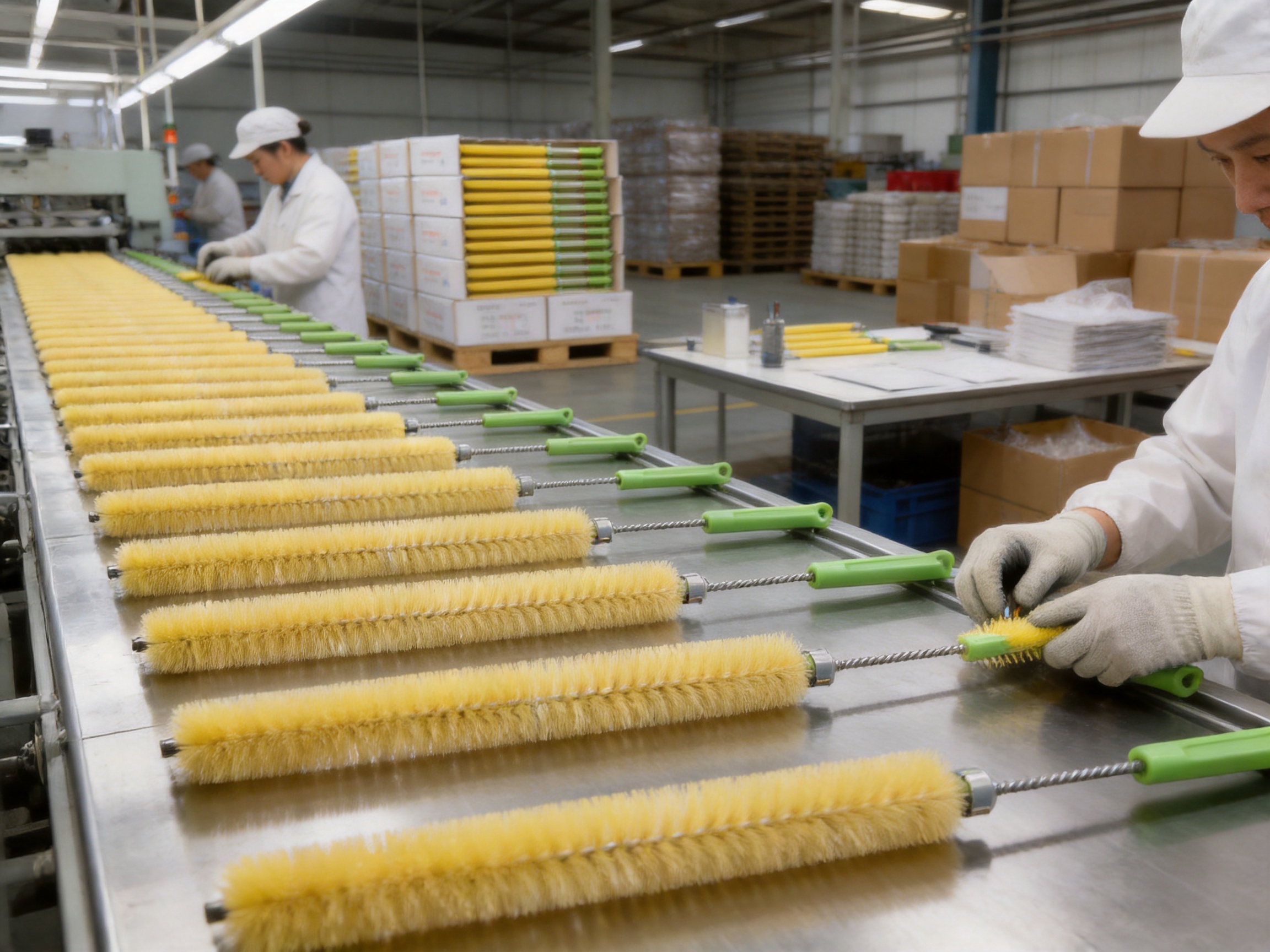
Manufactured by Jinhua Jieqing Plastic Co., Ltd., this product reflects the company’s wider experience in cleaning supplies, household brushes, industrial brushes, brooms, and supporting plastic products. The company operates as an industry and trade enterprise with its own production base, standardized processes, quality control procedures, and customization capabilities. These strengths allow the brush to serve both routine buyers and bulk procurement customers seeking reliable product consistency.
Why Deep Pipe Cleaning Requires the Right Brush
Internal pipe cleaning is different from cleaning an open, flat surface. A floor, countertop, or sink basin can usually be reached from several directions. A pipe cannot. Its narrow opening, enclosed structure, bends, moisture, and accumulated residue all make cleaning more complicated. A tool must enter deeply, remain stable while being pushed and pulled, and maintain contact with the inner wall throughout the cleaning movement.
Hair is one of the most common causes of drain obstruction. It often combines with soap residue, grease, lint, and mineral deposits to form a compact mass. In larger pipes, the buildup may not be visible from the opening. A brush that reaches only a short distance may remove surface debris without addressing the deeper obstruction. The extended structure of this pipe cleaning brush helps users work farther inside the pipe and target deposits that conventional household brushes may leave behind.
Water features and aquariums create another cleaning challenge. Algae, organic residue, mineral scale, and sediment can accumulate in channels, pipes, outlets, and enclosed circulation areas. These locations may be too deep or narrow for a hand sponge. A long-handled brush allows the user to clean internal surfaces while maintaining a greater distance from the water and the material being removed.
In workshops, maintenance departments, and facility operations, pipes may carry water, process residue, dust, or other non-hazardous deposits. Regular brushing can support preventive maintenance by reducing the accumulation that contributes to poor flow and unpleasant odors. The brush is not a replacement for specialized equipment in every industrial environment, but it provides a practical manual cleaning option for many routine tasks.
Product Overview
| Product | Two-Tone Nylon Long-Handle Pipe Cleaning Brush |
| Product Category | Pipe Brush |
| Item Number | CC-3263 |
| Handle Material | Colored handle |
| Bristle Material | Nylon |
| Listed Length | 71+2+50 centimeters |
| Approximate Overall Working Length | 123 centimeters |
| Carton Quantity | 300 pieces |
| Primary Uses | Long drainage pipes, water features, large aquariums, plumbing, household and facility cleaning |
| Key Design Features | Extended reach, two-tone bristles, ergonomic colored handle, shape retention, quick drying, mold resistance |
The listed dimensions indicate a 71-centimeter handle, a 2-centimeter connecting or structural section, and a 50-centimeter bristle section. This configuration provides a long cleaning path while preserving a dedicated grip area. Rather than relying on a short brush head attached to a small handle, the product is engineered for deep access and repeated movement inside extended pipe sections.
The two-tone appearance is both practical and visually distinctive. Color differentiation can help users identify the brush quickly in a cleaning equipment area, especially where several tools are stored together. The colored handle also gives the product a clear professional appearance for retail, janitorial, maintenance, and industrial supply channels.
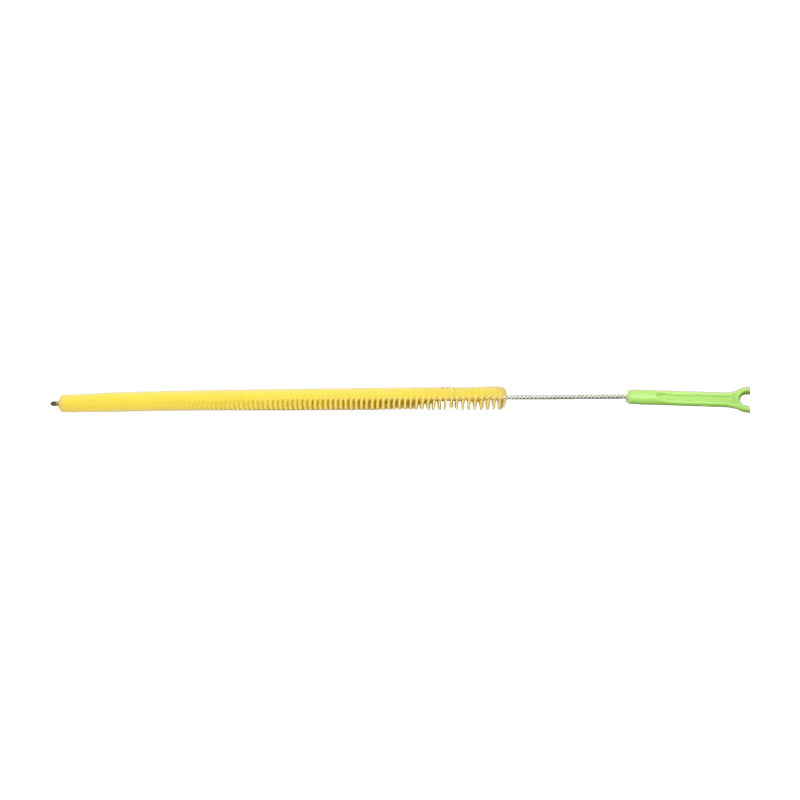
Two-Tone Nylon Long-Handle Pipe Cleaning Brush
Extended Reach for Difficult Internal Areas
The principal advantage of this pipe brush is its reach. A 71-centimeter handle allows the operator to insert the bristle section well beyond the opening of a drain or pipe. The additional 50-centimeter bristle area contributes substantial cleaning coverage, helping the brush contact a longer internal section during each insertion and withdrawal movement.
Extended reach improves cleaning efficiency in several ways. First, it reduces the need to use improvised tools or connect multiple short brushes. Second, it allows the operator to clean farther from the opening, where buildup often remains undisturbed. Third, it helps maintain a safer and more comfortable working position by keeping the user’s hands away from dirty water, sludge, and residues.
A long brush is particularly useful in large aquariums and water features, where internal pipes may be positioned below the waterline or behind structural components. The user can guide the bristle section into a pipe or channel while keeping the handle outside the immediate cleaning area. This makes the tool more convenient for routine maintenance and spot cleaning.
The extended structure also supports cleaning in commercial properties, public facilities, workshops, and large homes. Drainage and circulation systems in these locations can be deeper or wider than those found in small residential fixtures. A pipe brush with professional dimensions is better suited to these applications than a compact brush designed only for short household tubes.
Nylon Bristles for Balanced Cleaning Performance
Nylon is widely used in cleaning brush production because it combines flexibility, resilience, and resistance to ordinary moisture exposure. The bristles can bend to follow the internal shape of a pipe while maintaining sufficient contact with the surface. This is important because cleaning performance depends not only on hardness, but also on the ability of the bristles to reach uneven areas and remain engaged during movement.
The two-tone nylon bristle arrangement provides a combination of scrubbing power and surface protection. The bristles are intended to loosen hair, sludge, mineral buildup, and similar deposits without relying on overly aggressive materials. For many plumbing and water-related applications, this balance is preferable to metal bristles, which can scratch certain surfaces, leave particles behind, or cause unnecessary damage when used incorrectly.
Nylon bristles are also practical for repeated use. The product description specifies that the bristles maintain their shape and resist flattening. This property is important for a long brush because the bristle section may be pushed against internal walls, rotated in restricted spaces, and pulled through compacted residue. Bristles that flatten quickly lose contact pressure and become less effective. Shape retention helps the brush remain useful over a longer service period when it is properly selected and maintained.
The bristles are described as mold-resistant and quick-drying. These characteristics are valuable for a tool that may be used in drains, wet pipes, aquariums, and water features. Faster drying can help reduce the time that moisture remains trapped in the brush, while mold resistance supports better hygiene and storage. Users should still rinse the brush after use, remove visible debris, and store it in a ventilated area.
Ergonomic Handle for Controlled Rotation
Pipe cleaning often requires more than a straight pushing motion. Deposits can adhere to the inner surface, gather around joints, or form uneven patches. Rotation helps the bristles contact more of the pipe circumference. The colored ergonomic handle is designed to provide better control during this action, allowing the user to push, pull, and rotate the brush with greater confidence.
A controlled grip is particularly useful when the bristle section encounters resistance. Without adequate handle control, the brush may twist suddenly, slip backward, or fail to maintain contact with the buildup. A practical handle helps the operator apply steady pressure and adjust the cleaning angle as the brush moves through the pipe.
The handle also contributes to user comfort during repeated maintenance. Pipe cleaning can require several insertion and withdrawal cycles, especially when deposits are compacted. A handle that is easy to hold can reduce unnecessary strain compared with gripping a thin rod or an improvised cleaning tool. For facilities that perform cleaning regularly, ergonomic handling can contribute to more consistent work practices.
Color is another useful feature for tool identification. In commercial cleaning operations, equipment may be assigned to different areas or tasks. A colored brush can be recognized quickly on a storage rack or in a maintenance cart. Organizations may also use color-based systems to separate tools used for plumbing, food service, sanitation, washrooms, or industrial applications.
Advantages Compared with Ordinary Short Brushes
Many ordinary household brushes are designed for open surfaces, small containers, or short tubes. They may be effective within their intended range, but they are not always suitable for deep pipes. The most obvious limitation is reach. A short brush cannot clean a section that it cannot enter. Users may try to extend it with separate rods, tape, or other attachments, but improvised extensions can be unstable and difficult to control.
This long-handle pipe brush provides a purpose-built alternative. Its handle and bristle section are designed as one cleaning tool, reducing the need for temporary modifications. The long structure supports a more direct transfer of pushing and pulling force. The bristle section can be guided into the pipe without relying on an uncertain connection between unrelated tools.
Compared with metal pipe brushes, nylon offers a gentler cleaning approach for many surfaces. Metal bristles can be useful in heavy-duty applications, but they may scratch plastic, coated materials, delicate fittings, or certain aquarium components. Nylon is often more appropriate where the user needs to remove deposits while minimizing the risk of surface marking.
Compared with soft bottle brushes, the product offers greater reach and stronger resistance to flattening. A soft brush may be suitable for light rinsing, but it can struggle with hair, sludge, and mineral deposits. The two-tone nylon bristles are intended to provide more effective mechanical action while remaining suitable for a range of plumbing and water-related cleaning tasks.
Compared with disposable cleaning tools, this brush is intended for repeated use. Reusability can be valuable for maintenance teams, hospitality properties, aquatics facilities, and households that need a dependable tool rather than a single-use solution. Proper cleaning and storage are essential to achieve the best practical service life.
Applications Across Household and Commercial Settings
Drainage Pipes
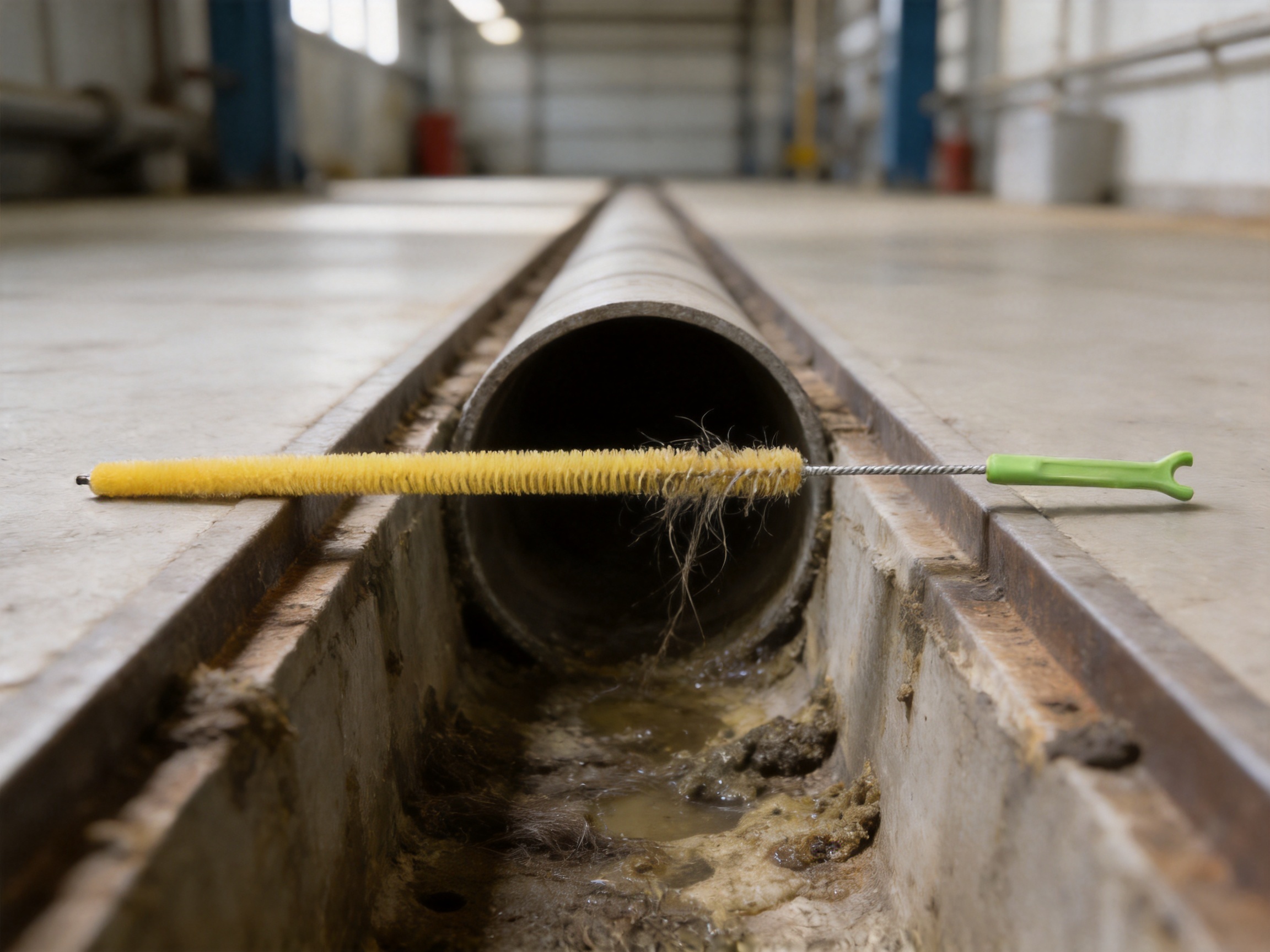
Drainage pipes can collect hair, lint, soap residue, and sediment over time. A long pipe brush can be used as part of a routine maintenance program before a partial obstruction becomes a major blockage. The bristle section can reach into the pipe, loosen deposits, and bring material back toward the opening for removal.
When cleaning a drain, the user should first remove accessible debris and standing water where possible. The brush can then be inserted gradually rather than forced. Slow rotation combined with controlled back-and-forth movement may help the bristles engage with buildup. After brushing, the pipe and the tool should be rinsed according to the requirements of the application.
Water Features
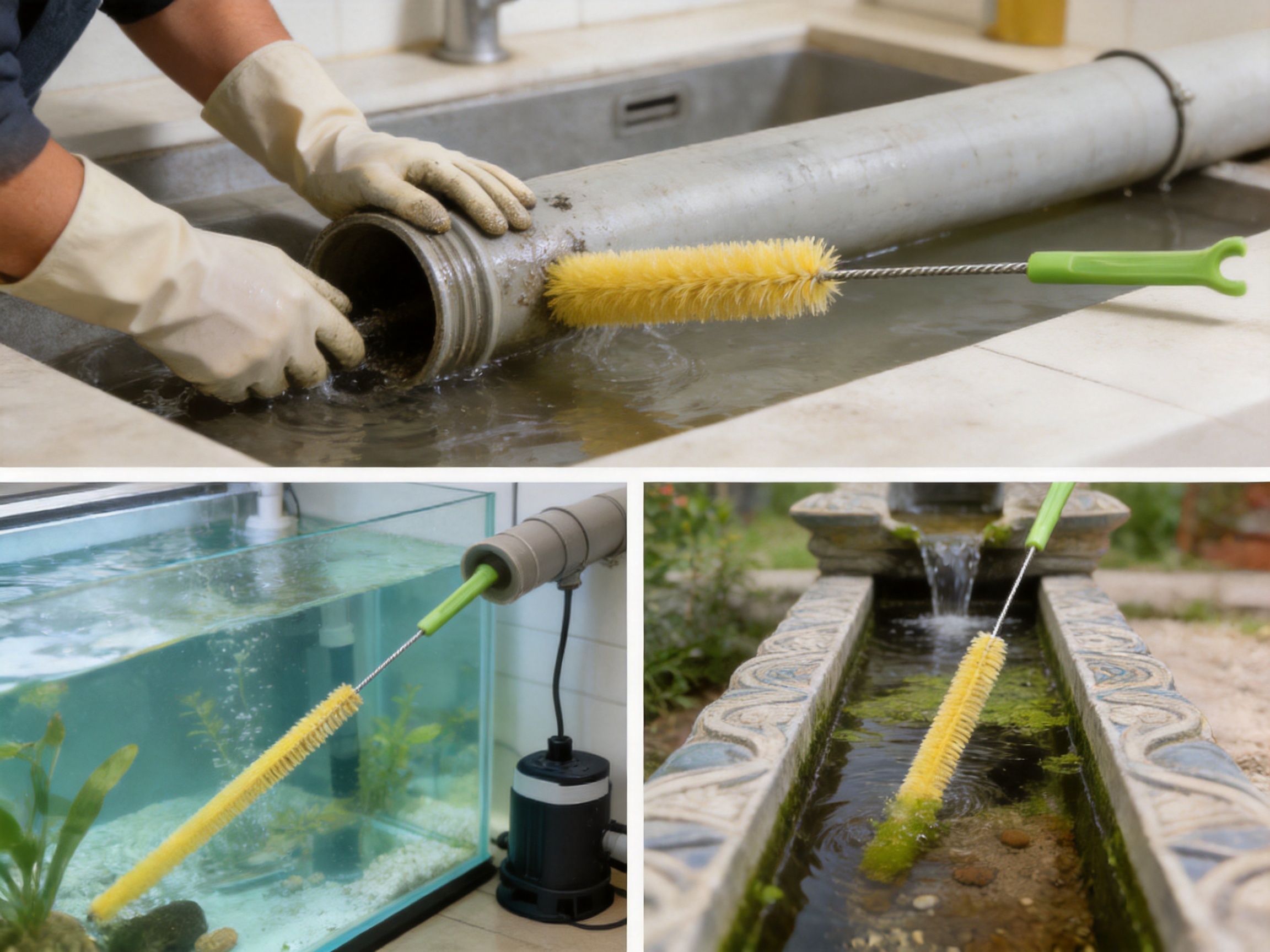
Water features often contain narrow circulation passages, outlets, and internal channels that are difficult to access with a cloth or sponge. Mineral deposits and organic residue can affect water movement and appearance. The long handle helps operators reach these areas while keeping the grip outside the feature.
Because water features may include plastic, ceramic, stone, coated metal, or decorative surfaces, users should test the brush in an inconspicuous area when the surface sensitivity is unknown. Nylon is generally suitable for many routine cleaning tasks, but the correct pressure and cleaning method depend on the material and condition of the feature.
Large Aquariums
Large aquariums may use long pipes for circulation, filtration, or water return. These pipes can be difficult to clean without dismantling the system. A long brush can assist with scheduled maintenance by reaching through openings and removing organic buildup or mineral residue from internal surfaces.
For aquarium use, the brush should be reserved for aquatic equipment and should not be exposed to household chemicals, oils, or other contaminants. It should be thoroughly rinsed before use and after cleaning. Aquarium operators should also follow the equipment manufacturer’s instructions and avoid using excessive force on fragile connections.
Household Plumbing
In homes, the brush may be useful for shower drains, floor drains, overflow channels, discharge pipes, and other areas where buildup is difficult to reach. Its extended length can reduce the need to place hands near contaminated water. The brush can support regular cleaning in bathrooms, utility rooms, garages, and outdoor drainage areas.
Workshops and Facility Maintenance
Workshops and facilities may have drains, tubes, machine channels, and water circulation lines that require manual cleaning. The brush offers a straightforward tool for routine maintenance teams. Its long handle, resilient bristles, and quick-drying characteristics make it suitable for storage in a maintenance area when the brush is cleaned after use.
Manufacturing Strengths Behind the Product
The performance of a cleaning brush depends on more than its visible shape. Material selection, bristle placement, handle formation, assembly accuracy, inspection, and packing all influence the final product. Jinhua Jieqing Plastic Co., Ltd. specializes in the research, development, production, and sales of cleaning supplies, household brushes, industrial brushes, brooms, and related plastic products. This product focus provides an important manufacturing foundation for the CC-3263 pipe brush.
The company was founded in 2008 and operates as an industry and trade enterprise. Its own production base supports closer coordination between product development, manufacturing, quality control, and order fulfillment. Instead of treating the brush as an isolated trading item, the company can manage it within a broader cleaning product system that includes different brush forms and supporting plastic components.
A complete supply chain can help stabilize material sourcing and production scheduling. For bulk buyers, stable access to suitable nylon, handle components, packaging materials, and related parts is important. Supply continuity helps reduce unexpected changes between production batches and supports more reliable delivery planning.
Standardized production processes are also important for a long-handled brush. The handle must be formed with appropriate dimensions, the bristle section must be assembled securely, and the finished product must remain straight and usable. Standardization helps manufacturers repeat these steps across larger quantities while maintaining consistent product expectations.
Quality control is relevant at multiple stages. Incoming materials can be checked for suitability, production operations can be monitored for dimensional consistency, and finished brushes can be inspected for visible defects, assembly problems, bristle irregularities, or packaging issues. A structured inspection approach is especially valuable for buyers ordering hundreds or thousands of units.
Jinhua Jieqing Plastic Co., Ltd. also offers customization based on customer drawings and samples. This capability may benefit distributors and importers that require special colors, packaging arrangements, labels, handle designs, bristle configurations, or other product adjustments. Customization should be discussed according to production feasibility, order quantity, material requirements, and quality expectations.
Process Considerations in Brush Production
Although exact internal production parameters may vary by order, the manufacture of a long-handle nylon pipe brush generally involves several important stages. Product development begins with defining the intended use, overall length, bristle characteristics, handle form, and connection structure. For a deep pipe brush, these decisions must balance reach, control, strength, storage, and packaging efficiency.
Material preparation follows product planning. Nylon bristles must be selected for the required flexibility, resilience, and resistance to moisture. Handle materials must provide a practical grip and sufficient structural stability. Colored components may also be coordinated with a customer’s product range or tool identification system.
Forming and assembly are central to product consistency. The handle and bristle section must be joined in a way that supports repeated insertion, rotation, and withdrawal. A secure connection helps prevent movement between components during use. The bristle section should remain aligned with the handle so that the operator can guide the brush accurately through a pipe.
Finishing and inspection help prepare the brush for shipment. Excess material, irregular edges, loose bristles, or visible marks can affect customer perception and product performance. Packaging protects the brushes during handling and transportation while allowing the carton quantity to be managed efficiently. The listed carton quantity for CC-3263 is 300 pieces, making the product suitable for wholesale, distribution, institutional procurement, and private-label supply discussions.
The company’s experience with both manufacturing and trade supports coordination beyond the factory floor. Export customers may require documentation, packaging specifications, shipping schedules, product photographs, carton details, or sample approval. An industry-and-trade structure can help connect these commercial requirements with the production process.
Bulk Procurement and Distribution Benefits
The product is suitable for multiple sales and procurement channels. Household cleaning suppliers can offer it as a specialized drain and pipe maintenance tool. Industrial cleaning suppliers can include it in maintenance catalogs. Aquarium and water-feature suppliers may present it as a long-reach equipment cleaning brush. Supermarkets, hardware retailers, facility supply companies, and cross-border e-commerce sellers may also find a market for the product.
The carton quantity of 300 pieces supports organized bulk distribution. Buyers can divide shipments among retail stores, regional warehouses, online fulfillment centers, or service teams. For distributors, the product’s clear use case and visible long-handle design can make it easy to explain to customers who need a solution for deep cleaning access.
Bulk buyers should evaluate several factors before ordering. These include target market, preferred packaging, color requirements, labeling, expected monthly demand, shipping method, carton dimensions, sample approval, and any applicable compliance requirements. Buyers should also confirm the final specifications for customized versions, because changes to materials, dimensions, or packaging may affect cost and lead time.
For private-label programs, the manufacturer’s customization capabilities may support branded packaging or customer-specific presentation. The product itself should remain clearly identified as a pipe brush, with use instructions that explain appropriate applications and basic maintenance. Clear product communication can reduce misuse and improve customer satisfaction.
How to Use the Long-Handle Pipe Brush Effectively
Before use, inspect the handle, connection area, and bristles. Make sure the brush is clean and that there are no visible loose parts. Remove any large debris from the pipe opening if possible. If the pipe contains standing water or chemical residue, use suitable protective equipment and follow the relevant safety procedures.
Insert the bristle section gradually. Avoid forcing the brush into a pipe that is too narrow for the product or contains a sharp obstruction. Once the bristles reach the intended area, use slow pushing, pulling, and rotational movements. Controlled motion allows the nylon bristles to contact the inner surface and loosen deposits without applying unnecessary stress to the handle or pipe.
If the brush meets strong resistance, withdraw it slightly and change the angle or direction. Repeatedly forcing the brush may damage the pipe, the tool, or a connection inside the system. For severe blockages, users may need a specialized drain tool or professional plumbing service.
After cleaning, remove the brush carefully and rinse away residue. If the application requires sanitation, use an appropriate cleaning method that is compatible with nylon and the handle material. Allow the brush to dry in a ventilated location before storage. Do not store it compressed under heavy objects, because prolonged pressure may affect bristle shape.
Where hygiene separation is important, assign individual brushes to specific areas. A color-based system can help distinguish tools used for drains, aquariums, bathrooms, workshops, or other applications. The brush should not be used with incompatible chemicals or in environments outside the intended material and temperature range without first confirming suitability.
Care, Storage, and Service Life
Proper care can help preserve both cleaning performance and appearance. The bristles should be rinsed after each use to remove hair, sludge, sediment, and mineral particles. Leaving debris trapped in the bristle section can make later cleaning more difficult and may contribute to unpleasant odors.
Drying is especially important for tools used in wet environments. The product is described as quick-drying and mold-resistant, but these features work best when the brush is not left submerged or sealed in a damp container. Hanging or standing the brush in a ventilated area allows residual moisture to escape.
Users should inspect the bristles periodically. Some wear is normal, especially when the brush is used against abrasive deposits. If the bristles become excessively bent, missing, or unable to make effective contact with the pipe surface, the brush should be replaced. The correct replacement schedule depends on frequency of use, deposit type, cleaning pressure, and storage conditions.
The handle should also be checked for cracks, deformation, or separation at the connection point. A damaged handle may reduce control and create a risk of breakage during use. Regular inspection is particularly important for commercial teams that use the brush repeatedly across multiple facilities.
Environmental and Operational Considerations
A reusable cleaning brush can support a practical reduction in dependence on disposable cleaning tools. Because the pipe brush is intended for repeated use, organizations can build it into a maintenance program rather than replacing a disposable item after every task. Longer service life depends on proper use, cleaning, drying, and storage.
Nylon bristles also provide an alternative to metal bristles in applications where surface protection is important. Avoiding unnecessary scratches or damage can reduce the need to replace pipes, fittings, aquarium components, or decorative water-feature parts. The correct material should always be selected according to the surface and deposit involved.
Operational efficiency is another consideration. A tool that reaches deep areas without additional extensions can reduce preparation time and simplify the cleaning process. The long handle may also reduce awkward bending or close contact with dirty water. These benefits can be useful for facility teams seeking straightforward improvements to routine maintenance.
At the end of the product’s service life, disposal should follow local requirements for plastic and mixed-material products. Commercial buyers may wish to include product care and replacement guidance in their internal cleaning procedures. Clear instructions can help users obtain better performance and avoid unnecessary damage.
Quality, Customization, and Supply Reliability
For professional buyers, quality is closely connected to consistency. A brush that performs well in one shipment but varies significantly in another can create customer complaints and operational uncertainty. A manufacturer with standardized processes, established quality control, and experience in cleaning products is better positioned to support repeat orders.
Jinhua Jieqing Plastic Co., Ltd. emphasizes stable quality control, a complete supply chain, export experience, flexible customization, and a broad product range. These capabilities are relevant to importers and distributors that need more than a single sample. They support the development of a repeatable supply relationship for cleaning brushes and related household or industrial products.
Customization may involve product appearance, packaging, labeling, or selected structural details. Buyers can provide drawings, samples, or technical requirements for evaluation. The manufacturer can then assess material availability, tooling, production conditions, inspection standards, and minimum order expectations.
Customization should be managed through clear approval procedures. A buyer should confirm the final drawing, color, dimensions, bristle specifications, packaging artwork, carton marking, and inspection criteria before mass production. Sample approval can provide an additional opportunity to verify grip, reach, bristle behavior, appearance, and packaging suitability.
Export experience can also help with communication across different markets. International buyers may require specific carton information, product descriptions, packing lists, commercial documents, or shipping coordination. A company familiar with overseas sales can help align production and trade requirements more efficiently.
Comparison of Key Performance Factors
| Performance Factor | Short Household Brush | Metal Pipe Brush | Long-Handle Nylon Pipe Brush |
| Reach into deep pipes | Limited | Varies by model | Extended reach with a 71-centimeter handle and 50-centimeter bristle section |
| Surface protection | Usually gentle, but may lack cleaning strength | Can be aggressive on sensitive surfaces | Balanced nylon scrubbing with reduced risk of metal scratching |
| Resistance to bristle flattening | Depends on construction | Often strong but may be too abrasive | Designed to maintain shape and resist flattening |
| Wet-area suitability | Depends on material and drying performance | May be vulnerable to corrosion depending on metal | Mold-resistant and quick-drying nylon design |
| Control during rotation | Often limited by short handle | Depends on handle design | Colored ergonomic handle supports controlled rotation |
| Bulk supply suitability | Available in many forms | Varies by supplier | 300-piece carton quantity and customization support |
Frequently Asked Questions
What is the total length of the brush?
The listed specification is 71+2+50 centimeters. This indicates a 71-centimeter handle, a 2-centimeter connecting or structural section, and a 50-centimeter bristle section, for an approximate total of 123 centimeters.
What types of deposits can the brush remove?
The brush is designed for common pipe and drainage deposits such as hair, sludge, mineral buildup, sediment, and similar residue. Cleaning results depend on the severity and hardness of the deposit, the pipe material, and the user’s cleaning technique.
Can it be used in an aquarium?
It is described as suitable for large aquariums and water features. Before aquarium use, the brush should be clean and free from household chemicals, oils, and other contaminants. Rinse it thoroughly and follow the aquarium equipment manufacturer’s maintenance instructions.
Why are nylon bristles used instead of metal bristles?
Nylon provides a useful balance between flexibility, scrubbing strength, and surface protection. It can be more suitable for plastic, coated, decorative, or other surfaces that may be scratched by metal bristles. Metal brushes may still be appropriate for specialized heavy-duty tasks, but they are not ideal for every pipe or water-related application.
Do the bristles flatten easily?
The product is designed so that the nylon bristles maintain their shape and resist flattening. Actual service life depends on the cleaning surface, pressure, frequency of use, deposit type, and storage conditions.
Is the handle suitable for rotation?
Yes. The colored ergonomic handle is intended to provide control during rotation, as well as during pushing and pulling. Rotational movement can help the bristles contact more of the internal pipe surface.
How should the brush be cleaned after use?
Rinse away hair, sludge, sediment, and other residue. If necessary, use a compatible cleaning or sanitation method. Allow the brush to dry in a ventilated location before storage, and avoid leaving it sealed in a damp container.
What is the carton quantity?
The listed carton quantity is 300 pieces. Buyers should confirm final packing details, carton dimensions, labeling, and shipping arrangements when placing a bulk order.
Can the product be customized?
The manufacturer offers customization based on customer drawings and samples. Potential customization may include selected colors, packaging, labels, or product details, subject to technical review, order quantity, material availability, and production feasibility.
Who may benefit from this product?
Households, plumbers, facility maintenance teams, aquarium operators, water-feature contractors, workshops, cleaning suppliers, hardware retailers, industrial procurement departments, supermarkets, and e-commerce distributors may find the brush useful.
What should buyers confirm before placing a large order?
Buyers should confirm the final dimensions, bristle material, handle design, color, packaging, carton quantity, labeling, sample approval process, inspection requirements, delivery schedule, and any customization conditions.
Conclusion
The Two-Tone Nylon Long-Handle Pipe Cleaning Brush is designed for cleaning situations where depth, control, and repeated performance matter. Its 71-centimeter handle and 50-centimeter bristle section provide access to long internal areas, while the nylon bristles offer effective cleaning with a balanced approach to surface protection. The bristles are designed to maintain shape, resist flattening, dry quickly, and resist mold, making the brush practical for wet and demanding environments.
The colored ergonomic handle supports controlled rotation and helps users guide the brush through drainage pipes, water features, aquarium systems, and other narrow internal spaces. Compared with short household brushes, the product provides greater reach. Compared with metal pipe brushes, nylon offers a gentler option for many surfaces. Compared with improvised extensions, the integrated long-handle structure provides a more stable and professional cleaning solution.
Behind the product is a manufacturer with experience in cleaning supplies, plastic products, household brushes, and industrial brushes. Jinhua Jieqing Plastic Co., Ltd. combines its own production base, standardized manufacturing, quality control, supply-chain coordination, export experience, and customization services. These capabilities make the product suitable for both individual use and organized bulk procurement.
For buyers seeking a practical long-reach brush for household, commercial, aquarium, facility, or industrial maintenance, this pipe cleaning brush offers a useful combination of reach, bristle resilience, ergonomic control, wet-area suitability, and supply flexibility.
References
1. Product specification sheet for the Two-Tone Nylon Long-Handle Pipe Cleaning Brush, Item No. CC-3263.
2. Manufacturer-provided product description concerning handle length, bristle section, nylon material, applications, and maintenance characteristics.
3. Manufacturer company information concerning cleaning supplies, household and industrial brushes, plastic products, customization, production facilities, and export services.
4. General principles of manual pipe, drain, aquarium, and water-feature maintenance.
5. General brush design considerations relating to nylon bristle flexibility, shape retention, moisture exposure, and surface protection.
Product: Two-Tone Nylon Long-Handle Pipe Cleaning Brush

 CONTACT US
- CONTACT DETAILS
- Address : No. 1388 Cuntong Road, Jinhua City
- Tel: +86-0579-81534043
- Email:wangjinhua1@zjjqsj.com
- PRODUCTS
- Kitchen Cleaning Supplies
- Household Cleaning Supplies
- Indoor & Outdoor Cleaning Supplies
- Baby Products & Cleaning Supplies
- Home Storage Containers
- QUICK LINK
- Company Profile
- Plant equipment
- Certifications
- FAQ
- NEWS CENTER
- Company News
- Industry News
- MOBILE TERMINAL

