

 English
  русский
  Español
  عربى
عربى 
Nylon-Bristled Pipe Cleaning Brush with Slender Handle: A Practical Solution for Hygienic Drain Maintenance
Date:Oct 03, 2026
Keeping narrow pipes, sink drains, shower traps, and bidet outlets clean requires more than a general-purpose household brush. These areas are often difficult to reach, yet they collect hair, soap residue, grease, mineral deposits, and other debris that can gradually restrict water flow and create unpleasant odors. A suitable pipe cleaning brush must be slim enough to enter confined openings, flexible enough to follow internal curves, and firm enough to loosen buildup without damaging common plumbing surfaces.
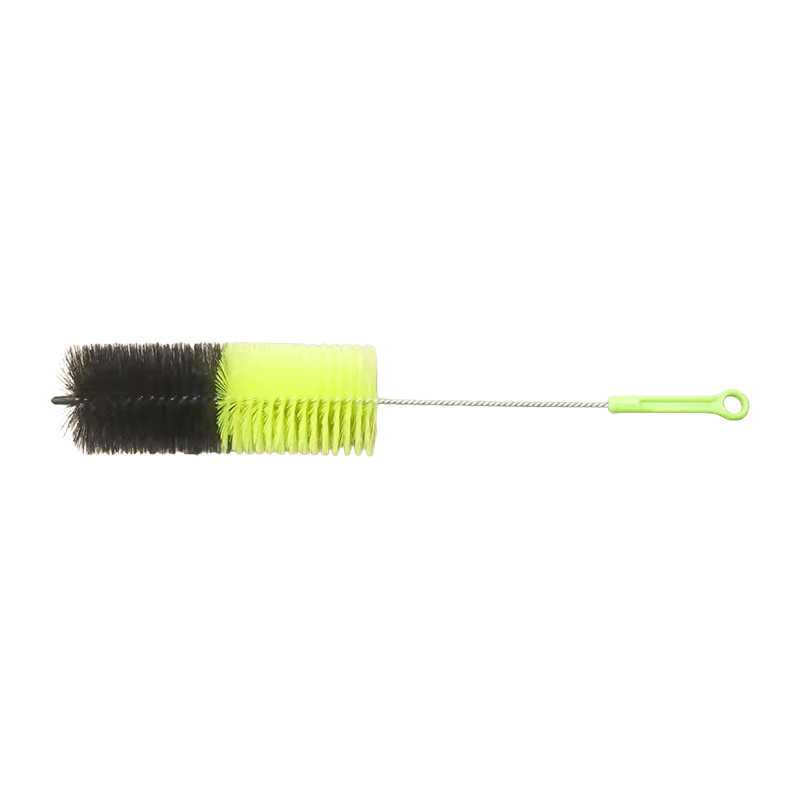
The Nylon-Bristled Pipe Cleaning Brush with Slender Handle is designed for this specific purpose. It combines a long, narrow handle with a dedicated section of two-tone nylon bristles, creating a practical tool for routine drain and pipe maintenance. Its 50-centimeter handle and 21-centimeter bristle section provide extended reach, while the dual-color nylon structure balances cleaning power with surface-friendly contact. The result is a compact cleaning implement suitable for homes, hospitality facilities, property maintenance teams, retailers, and professional cleaning supply programs.
Unlike bulky brushes that are difficult to position inside small openings, this pipe brush is built around controlled insertion and rotation. The slender structure allows users to guide the bristles through tight grates and narrow access points. Once inside, the brush can be turned to collect hair and dislodge residue. Its ergonomic colored handle is intended to remain comfortable and secure during use, including conditions in which water or soap makes ordinary smooth handles slippery.
The product is manufactured by Jinhua Jieqing Plastic Co., Ltd., an industry and trade enterprise specializing in cleaning supplies, household brushes, industrial brushes, brooms, and supporting plastic products. The company’s production capabilities, standardized procedures, supply-chain organization, export experience, and customization services support the development of practical cleaning tools for both domestic and commercial markets.
Why Narrow Pipe Cleaning Requires a Specialized Brush
Drains and small pipes are not cleaned effectively by surface wiping alone. A large proportion of the dirt that causes slow drainage is located below the visible opening. Hair may become entangled around internal grates, soap scum may adhere to pipe walls, and fine particles may settle in traps or bends. In kitchens, grease and food particles can also combine with other debris to form a sticky layer. Bathrooms and bidet systems present additional challenges because their pipes are narrow and often difficult to access without disassembly.
A specialized pipe brush addresses these problems by bringing mechanical cleaning action directly into the passage. The bristles enter areas that cloths, sponges, and flat cleaning pads cannot reach. When the user pushes, pulls, or rotates the brush, the bristles separate deposits from internal surfaces and capture loose material. This physical action can be especially useful for preventive maintenance, when the buildup is still manageable and before a complete blockage develops.
The geometry of the tool is essential. A brush that is too wide may not pass through a grate. A handle that is too short may fail to reach a trap or internal section. Bristles that are excessively soft may bend without moving debris, while bristles that are too rigid may be uncomfortable to use or unsuitable for delicate surfaces. The product’s slender handle, extended bristle zone, and two-tone nylon construction are intended to create a balanced solution for these everyday cleaning requirements.
Routine pipe cleaning also contributes to better household hygiene. Organic matter trapped inside a drain can retain moisture and support unpleasant smells. Hair and residue may remain wet for long periods, especially in bathroom environments. Regular brushing helps remove material before it accumulates into a larger mass. Although no cleaning tool replaces appropriate sanitation procedures or professional plumbing service when a serious blockage exists, a dedicated pipe brush is a useful first-line maintenance product.
Product Design and Functional Structure
Extended 50-Centimeter Handle
The product uses a slender handle with a stated length structure of 50+8+21 centimeters. The principal handle section measures 50 centimeters, providing useful reach into deep or recessed openings. The additional dimensions correspond to the connecting and bristle portions, resulting in a long cleaning tool that can reach beyond the immediate surface of a drain.
Extended reach offers several practical advantages. Users can maintain a more comfortable position instead of placing their hands close to contaminated water or residue. The brush can also reach shower traps, long drain channels, and other openings where a short-handled tool would leave debris untouched. For cleaning staff, the longer format may reduce the need to bend repeatedly or search for improvised tools.
The narrow profile of the handle is equally important. Reach alone is not sufficient if the tool cannot pass through a grate or opening. A slender shaft allows the brush to be guided with precision, helping users work around internal edges and enter spaces that are inaccessible to standard household scrubbers.
Twenty-One Centimeters of Two-Tone Nylon Bristles
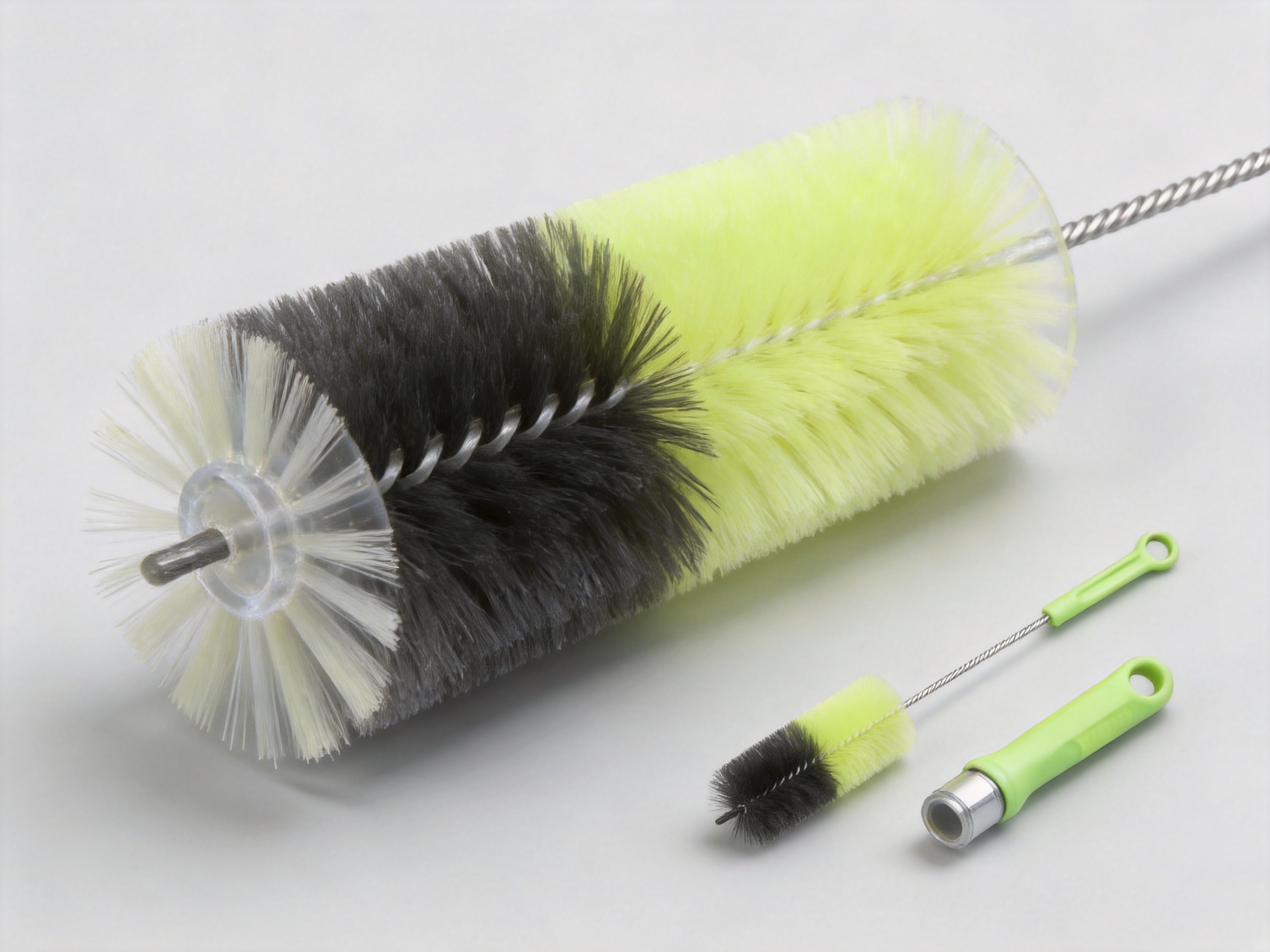
The brush head contains 21 centimeters of two-tone nylon bristles. This extended bristle area creates a larger active cleaning zone than a short tufted brush. As the tool is inserted and rotated, more bristles can contact the inner walls of a pipe, increasing the likelihood of catching hair and loosening residue in a single pass.
The two-tone arrangement is not merely decorative. It gives the brush a recognizable visual identity and helps users inspect the condition of the bristle section over time. A contrasting color combination can make it easier to see trapped debris during cleaning and may support product differentiation on retail shelves or in online product listings.
Nylon is commonly selected for cleaning brush applications because it offers a useful combination of flexibility, resilience, and resistance to moisture. Compared with natural fibers, nylon is less likely to absorb water and is generally easier to rinse after use. Its synthetic structure also supports consistent filament production and reliable brush performance across repeated cleaning cycles.
Soft Tips and Firm Cores
The dual-color bristles are described as combining soft tips with firm cores. This construction is designed to balance comfort and cleaning efficiency. Softer outer tips can enter irregular spaces and make contact with surfaces without producing an excessively harsh feel. Firmer internal portions provide support when the brush is pushed against compacted residue.
This balance is valuable in household plumbing applications. A brush that is too soft may collapse when it encounters a blockage, reducing its ability to gather material. A brush that is too stiff may be difficult to turn inside a narrow pipe and may create unnecessary friction. The combination of compliant tips and supported cores allows the tool to flex while still delivering useful mechanical action.
The bristle configuration also supports multiple cleaning motions. Users may insert the brush slowly, rotate it to wrap hair around the bristles, move it back and forth to release deposits, or pull it out while maintaining contact with the pipe wall. The same head can therefore support preventive cleaning, debris removal, and light scrubbing.
Ergonomic Non-Slip Handle
Pipe cleaning often involves water, soap, and damp surfaces. A smooth handle can become difficult to control under these conditions, especially when users need to apply a twisting motion. The product’s ergonomic handle is designed to provide a non-slip grip when soapy, allowing the user to maintain better control during insertion, rotation, and withdrawal.
Grip design affects both cleaning effectiveness and user comfort. If the handle slips, the bristles may not reach the intended location or may be pulled out before the cleaning action is complete. A stable grip helps users apply consistent force without excessive squeezing. This can reduce hand fatigue during repeated cleaning tasks in homes, hotels, public facilities, and maintenance operations.
The colored handle also improves visual recognition. Retailers can present the product as a purpose-built pipe brush rather than an interchangeable generic tool. For professional cleaning teams, a distinctive handle can help separate drain-cleaning tools from brushes assigned to other areas, supporting basic equipment organization and color-management practices.
Nylon-Bristled Pipe Cleaning Brush with Slender Handle
Key Advantages Compared with Ordinary Cleaning Tools
Better Access to Tight Openings
One of the most important advantages of this product is its ability to enter confined spaces. Ordinary sponges, cloths, and wide scrub brushes are designed for exposed surfaces. They may clean the visible area around a drain but cannot travel deeply into the passage. The slender structure of this pipe brush is specifically intended for grates, small openings, narrow traps, and internal pipe sections.
Compared with a short bottle brush, the 50-centimeter handle offers greater working distance. Compared with a wire tool, the nylon bristle section provides a more controlled and surface-friendly cleaning interface. Compared with improvised objects such as sticks or bent plastic strips, the purpose-built brush offers a defined cleaning head, improved handling, and a more repeatable cleaning process.
Effective Hair and Residue Removal
Hair is one of the most common causes of bathroom drain restrictions. Once hair catches on an internal grate or combines with soap residue, it can become difficult to remove with water flow alone. The brush’s bristle arrangement is suited to gathering loose hair during a pulling or twisting motion. Its long bristle section can also contact a broader internal area than a small single-tuft brush.
In addition to hair, the brush can help loosen light soap deposits, dust, small particles, and general organic residue. It is intended for routine maintenance rather than heavy mechanical blockage removal. Regular use can reduce the quantity of material available to form a larger obstruction, helping maintain drainage performance between more intensive cleaning procedures.
Controlled Cleaning Without Complex Equipment
A pipe brush is a simple manual tool. It does not require batteries, electrical power, compressed air, or special plumbing equipment. This makes it convenient for household users and useful for maintenance personnel who need a quick solution at the point of use. The brush can be stored with other cleaning supplies and used whenever a drain begins to show signs of slow flow or odor.
Manual operation also gives users direct feedback. Resistance can be felt through the handle, helping the user identify whether the brush has encountered hair, residue, or a bend in the pipe. This level of control is difficult to achieve with some powered tools, particularly in small residential drains where excessive force could be counterproductive.
Moisture and Hygiene Considerations
The product is described as resistant to rust and mildew. This is an important benefit for a tool repeatedly exposed to damp bathroom and utility environments. Unlike metal brush components that may corrode when left wet, a predominantly plastic and nylon construction is better suited to routine contact with water. Resistance to mildew helps support more hygienic storage, although the brush should still be rinsed and dried after use.
Good tool hygiene depends on both material selection and maintenance practices. Nylon bristles can be flushed with clean water after debris removal. The handle can be wiped or washed, and the tool can be stored in a ventilated location. These simple steps help prevent residue from remaining on the brush and reduce the possibility of transferring contamination between different cleaning areas.
Practicality for Frequent Use
The brush is designed around a repeatable cleaning routine. Its reach, grip, and bristle length make it suitable for frequent preventive maintenance rather than occasional emergency use only. A tool that is easy to insert, rotate, rinse, and store is more likely to be used regularly. This is important because consistent light cleaning is often more convenient than waiting until a drain becomes severely restricted.
For commercial facilities, practicality also affects labor efficiency. Cleaning staff can use a dedicated pipe brush without dismantling every drain or locating specialized equipment. The straightforward design reduces training requirements and makes the product suitable for routine cleaning schedules in bathrooms, guest facilities, staff areas, and service rooms.
Recommended Applications
Bathroom Sink Drains
Bathroom sinks commonly collect hair, toothpaste residue, soap deposits, and small particles from daily use. The brush can be guided through the drain opening to reach the upper section of the pipe and remove material that is not visible from the surface. Regular cleaning may help reduce slow drainage and unpleasant smells.
Users should remove any accessible stopper or grate where appropriate and insert the brush gently. Rotating the handle while advancing can help the bristles engage with residue. After withdrawal, the brush should be rinsed thoroughly and the removed debris should be disposed of hygienically.
Shower Traps
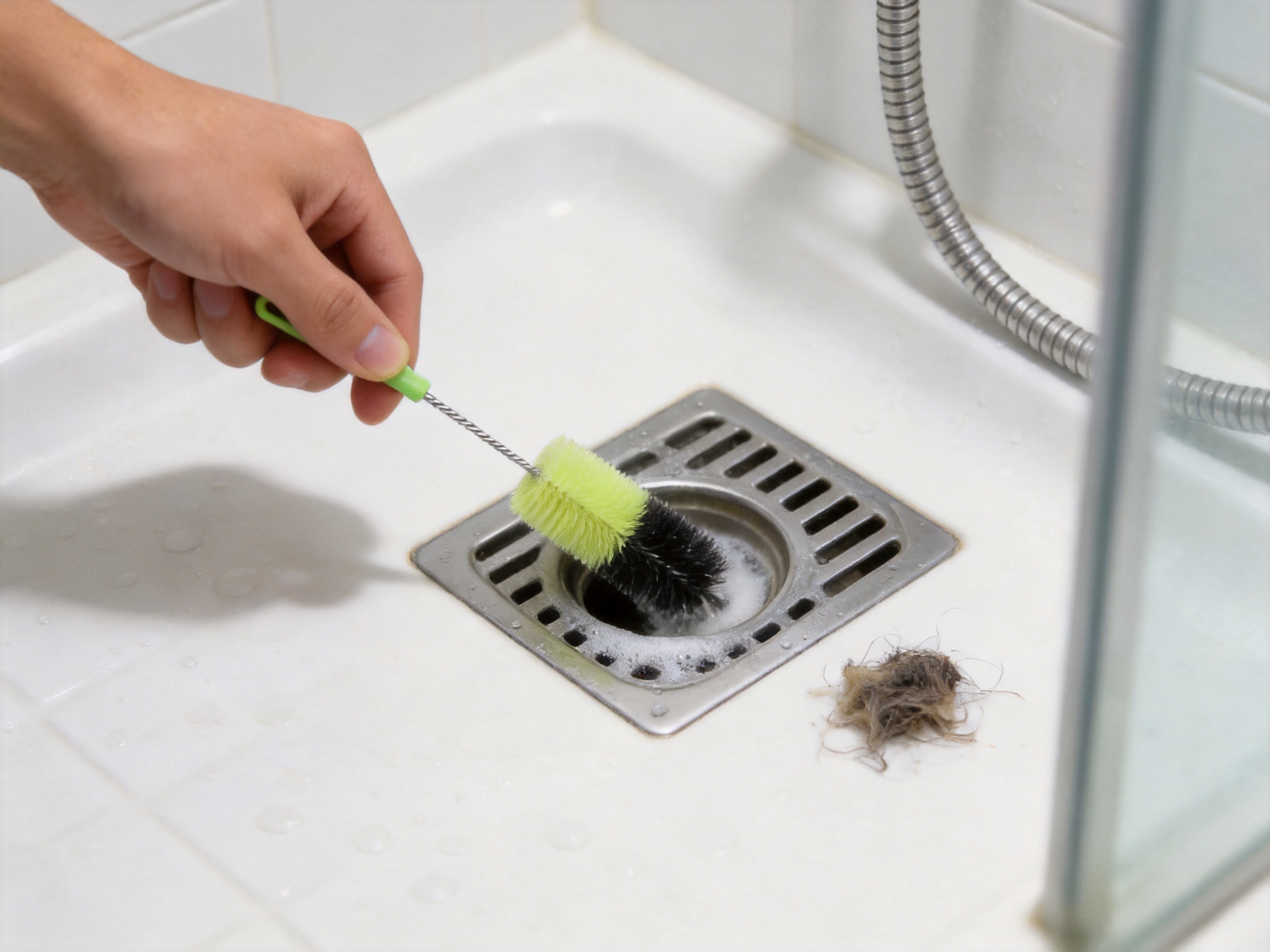
Shower areas are especially prone to hair accumulation because hair is washed directly toward the drain. Soap scum and body-care products may cause hair to adhere to internal surfaces. The extended handle allows the brush to reach into a shower drain or trap while keeping the user’s hand away from the immediate opening.
For best results, the brush can be used as part of a regular maintenance routine rather than only after water begins pooling. Light brushing at suitable intervals can remove hair before it becomes densely compacted. Where a shower system includes a removable cover or trap component, cleaning those parts separately can complement the use of the brush.
Bidet Pipes and Small Sanitary Outlets
Bidet outlets and other small sanitary openings can be challenging to clean because their dimensions may not accommodate a standard household brush. The slender handle and narrow nylon head are intended for controlled access to these areas. The soft outer bristle tips can help clean around internal surfaces while the firmer cores provide support during movement.
Because sanitary fixtures may have sensitive finishes or complex internal structures, users should avoid excessive force. The purpose of the brush is to loosen ordinary residue and remove hair or particles, not to force through a solid obstruction. If resistance remains high, the fitting should be inspected or serviced using an appropriate plumbing procedure.
Kitchen and Utility Drains
Although the product is particularly suitable for bathroom applications, it can also support maintenance in selected kitchen and utility drains. Light debris, food particles, and residue may collect around strainers and narrow drain passages. The brush can be used to clean accessible sections after larger particles have been removed.
Users should consider the type of contamination before cleaning. Grease-heavy buildup may require a suitable degreasing method in addition to mechanical brushing. The brush should be washed thoroughly after use, and tools used in kitchen drains should be kept separate from those used for toilets or other sanitary areas.
Hospitality, Property Management, and Facility Maintenance
Hotels, serviced apartments, dormitories, office buildings, schools, restaurants, and public facilities often manage many drains across multiple rooms. A dedicated pipe brush can be included in maintenance carts or cleaning kits to support routine inspection and preventive care.
For these users, standardized equipment is valuable. Staff members can be trained to use the same basic procedure in each room: inspect the drain, remove visible debris, insert the brush, rotate or move it gently, withdraw it, rinse it, and record any continuing drainage issue. The product’s compact form also makes it easier to store in maintenance cabinets and transport between locations.
Product Specifications
The following table summarizes the available product information for purchasing, cataloging, and supply planning.
| Specification | Product Information |
|---|---|
| Product name | Nylon-Bristled Pipe Cleaning Brush with Slender Handle |
| Product category | Pipe Brush |
| Item number | CC-3266 |
| Material | Colored handle with two-tone nylon bristles |
| Handle length | 50 centimeters |
| Additional length specification | 8 centimeters connecting section and 21 centimeters bristle section |
| Total stated length structure | 50+8+21 centimeters |
| Bristle type | Two-tone nylon bristles with soft tips and firm cores |
| Grip feature | Ergonomic non-slip handle |
| Intended uses | Bathroom sink drains, shower traps, bidet pipes, and other narrow openings |
| Environmental performance | Designed for resistance to rust and mildew |
| Carton quantity | 200 pieces |
The dimensional format of 50+8+21 centimeters should be confirmed against the buyer’s packaging, technical, and labeling requirements before mass procurement. Product dimensions may need to be represented differently depending on whether a catalog lists the handle, connector, bristle section, or complete assembled length. Clear specification management helps prevent misunderstandings between suppliers, distributors, and end users.
Manufacturing Strengths and Production Capabilities
Industry and Trade Integration
Jinhua Jieqing Plastic Co., Ltd. operates as an industry and trade enterprise. This structure combines manufacturing activity with commercial and export capabilities. For buyers, an integrated supplier can simplify communication between product development, production, quality control, packaging, and order fulfillment.
Cleaning tools often appear simple, but reliable production requires coordination across multiple stages. Plastic components must be formed consistently, bristle materials must be prepared and secured, assemblies must meet dimensional expectations, and finished goods must be packed for transport. An industry-and-trade model can help connect these stages under a unified supply process.
Experience in Cleaning Supplies
The company was founded in 2008 and specializes in the research, development, production, and sales of cleaning supplies. Its product range includes brooms, cleaning brushes, household brushes, industrial brushes, and supporting plastic products. This category experience is relevant to the pipe brush because brush performance depends on practical knowledge of fiber selection, handle structure, assembly methods, and end-use conditions.
Experience across multiple cleaning product categories can also support product comparison and improvement. A supplier familiar with household and industrial brushes is better positioned to evaluate different bristle stiffnesses, handle lengths, grip patterns, and plastic component designs. These capabilities may be applied to standard products as well as customer-specific projects.
Research, Development, and Product Customization
The company offers customization based on customer drawings and samples. This is valuable for distributors and brand owners who require a particular handle color, packaging format, bristle arrangement, length, label, or carton configuration. A standard pipe brush can serve as a starting point, while the manufacturing process may be adapted to meet market-specific needs.
Customization is especially relevant in cleaning supply markets because different channels have different requirements. A supermarket may request retail-ready packaging and barcode placement. A hospitality distributor may prefer bulk cartons. An industrial buyer may need a specific handle length or a color-coded tool system. A cross-border e-commerce seller may require compact packaging and detailed product labeling.
Successful customization depends on technical communication. Buyers should provide drawings, reference samples, target quantities, material expectations, packaging instructions, and quality standards. The supplier can then review the feasibility of the proposed changes and establish an appropriate sample-confirmation process before full production.
Production Base and Supply-Chain Coordination
The company reports having its own production base, a complete supply chain, and standardized production processes. These strengths are important for maintaining continuity when fulfilling bulk orders. A stable production base can provide better control over scheduling, material coordination, assembly, and inspection than a purely trading-based arrangement.
A complete supply chain also supports broader product sourcing. Since the company offers several types of cleaning tools and supporting plastic products, buyers may be able to consolidate related purchases. This can simplify supplier management and help distributors create a more consistent product range across household, commercial, and industrial cleaning categories.
For importers, supply reliability is closely connected with communication and order planning. Clear specifications, confirmed samples, production schedules, carton quantities, and inspection arrangements help reduce avoidable delays. The stated carton quantity of 200 pieces for this item provides an initial reference for wholesale planning, although final packing details should be confirmed for each order.
Standardized Production and Quality Control
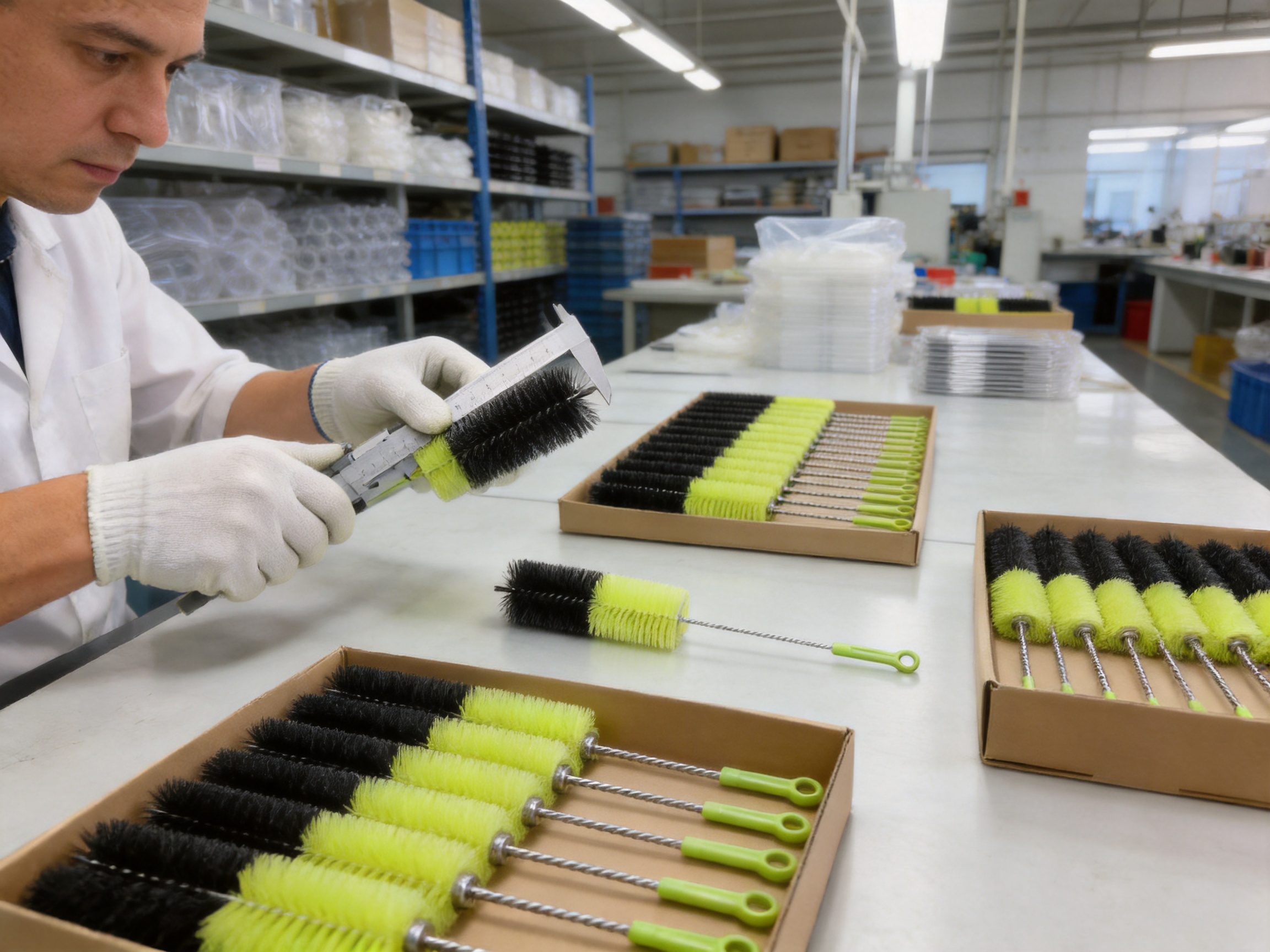
Standardized production processes help make each unit more consistent. In a pipe cleaning brush, consistency may involve handle dimensions, bristle length, bristle density, connection strength, surface finish, color, and overall assembly. When these factors are controlled, users are more likely to receive a predictable cleaning experience across repeated purchases.
Quality control can be applied at several stages. Incoming materials may be checked for conformity. Plastic handles and components can be reviewed for appearance and dimensional accuracy. Bristle assemblies can be checked for attachment and distribution. Finished brushes can be inspected for loose parts, excessive flash, sharp edges, and packaging condition.
The company’s stated emphasis on stable quality control supports the needs of bulk buyers who cannot rely only on an individual sample. A sample demonstrates the intended design, but production controls help ensure that the shipped quantity remains aligned with that approved standard. Buyers may also establish inspection criteria for color, dimensions, bristle retention, cleanliness, and carton packing.
Export Experience
Extensive export experience can benefit international buyers in several ways. Export-oriented suppliers are familiar with commercial documentation, carton planning, product communication, shipping coordination, and the practical requirements of overseas markets. They are also more accustomed to working with buyers who need specifications and correspondence in an international business context.
Cleaning tools are distributed through supermarkets, importers, online marketplaces, professional supply companies, and facility-management channels. Each channel may require different packaging and documentation. A supplier with export experience can help buyers review these requirements during order preparation, while the buyer remains responsible for confirming the regulations and labeling standards applicable in the destination market.
How the Brush Supports Preventive Maintenance
Establishing a Cleaning Schedule
Preventive maintenance is more efficient when it is scheduled. Homes may use the brush every few weeks or whenever a drain shows early signs of reduced flow. Commercial facilities may include drain cleaning in daily, weekly, or monthly inspection programs depending on traffic and usage. High-use showers and shared bathrooms generally require more frequent attention than lightly used utility sinks.
The correct interval depends on the amount of hair, soap, grease, and other material entering the drain. A schedule should be adjusted when users notice water pooling, gurgling, slow drainage, or recurring odor. The brush is most effective when used before buildup becomes dense and difficult to remove.
Basic Operating Procedure
Before using the brush, remove any visible debris from the drain opening and prepare a container or disposable material for collected residue. If the drain cover or stopper is designed for easy removal, follow the fixture manufacturer’s instructions. Do not force components that are not intended to be removed.
Insert the bristle end slowly into the opening. Guide the brush rather than pushing aggressively. When the bristles meet resistance, rotate the handle gently and continue with short forward-and-back movements. This action allows the nylon fibers to contact the inner surface and engage loose debris.
Withdraw the brush gradually while maintaining a light rotating motion. Hair and residue may remain attached to the bristles. Place the removed material into a waste container instead of rinsing it back into the drain. Repeat the process as necessary, then rinse the brush thoroughly with clean water.
After cleaning, inspect the drain for continued restriction. If water still drains slowly, the problem may be deeper in the plumbing system or may require a different method. Avoid applying excessive force, as this could push debris farther into the pipe or damage a removable component.
Cleaning and Storage of the Tool
After each use, rinse the bristles from the handle end toward the tip or under flowing water so that trapped debris is removed. Where appropriate, a mild household cleaning solution can be used, followed by thorough rinsing. The handle should also be wiped clean, particularly if it has contacted contaminated water or heavy residue.
Allow the brush to dry in a ventilated area before storage. Avoid sealing a wet brush in an airtight container, as retained moisture can create an unpleasant environment even when the materials are designed to resist rust and mildew. For professional use, designate separate brushes for kitchens, bathrooms, and other areas to support hygienic tool management.
Purchasing Considerations for Wholesale Buyers
Evaluating the Product for a Target Market
Before placing a bulk order, buyers should identify the intended sales or use environment. Retail consumers may value compact packaging, clear instructions, and an attractive handle color. Janitorial suppliers may prioritize carton efficiency, durability, and repeat availability. Facility managers may focus on cleaning reach, ease of storage, and compatibility with existing maintenance procedures.
The product’s narrow format makes it particularly suitable for markets where bathroom and sanitary maintenance is a common concern. It can be included in household cleaning collections, drain-care assortments, hotel maintenance kits, or multipurpose cleaning tool catalogs. Buyers should present the brush accurately as a manual maintenance tool for narrow drains and pipes rather than as a replacement for professional blockage-removal equipment.
Packaging and Retail Presentation
Packaging should communicate the product’s principal benefits: slender reach, nylon bristles, non-slip grip, and suitability for small openings. Images and diagrams can show the handle length, bristle section, and suggested applications. Clear instructions can explain how to insert, rotate, withdraw, rinse, and store the brush.
For online sales, product listings should include accurate dimensions and material information. The stated 50+8+21 centimeter structure should be presented in a way that ordinary consumers can understand. If the total assembled length is listed, the listing should clarify how each measurement is calculated. This reduces confusion and helps customers compare the item with competing pipe brushes.
Bulk Order Planning
The listed carton quantity is 200 pieces. This provides a useful starting point for wholesale calculation, but buyers should confirm the number of inner packs, carton dimensions, gross weight, net weight, and packaging method before shipment. These details affect storage, freight planning, warehouse handling, and retail allocation.
Buyers seeking customized colors, packaging, labels, or dimensions should discuss minimum order quantities and sample approval procedures in advance. A pre-production sample or confirmed production sample can help verify the final appearance and function. Large orders should also include agreed tolerances for dimensions, color variation, bristle placement, and packaging condition.
Quality Inspection Points
A practical inspection plan may include the following checks:
First, verify the product identity, item number, and quantity. Second, measure representative samples to confirm the handle and bristle dimensions. Third, inspect the handle for cracks, sharp edges, deformation, or unacceptable surface marks. Fourth, examine the bristles for even distribution, secure attachment, appropriate flexibility, and excessive shedding. Fifth, review the connection between the handle and brush head for stability. Finally, confirm carton labeling and packaging condition.
Functional testing can include inserting sample brushes into a representative narrow opening, rotating the handle, and applying normal manual pressure. The purpose is to identify obvious assembly issues or uncomfortable grip conditions. Testing should reflect the intended use without applying unrealistic force that the product was not designed to withstand.
Advantages for Different Customer Groups
Household Consumers
Home users benefit from a tool that is easy to understand and does not require specialized knowledge. The brush can be stored with other household cleaning supplies and used for common bathroom maintenance. Its long handle helps users avoid direct contact with drain residue, while its narrow bristle section reaches areas that are otherwise difficult to clean.
Professional Cleaners
Professional cleaners need tools that can be used repeatedly across multiple locations. The non-slip handle supports controlled movement, and the rust- and mildew-resistant design is appropriate for damp environments. A dedicated pipe brush also allows cleaning staff to avoid using general-purpose tools in sanitary applications.
Hotels and Property Managers
Hotels and property managers can use the product as part of room-turnover and preventive-maintenance programs. Cleaning a drain during routine service may help identify problems before guests report slow drainage or odor. The brush can be supplied to maintenance teams, housekeeping departments, or service contractors depending on the facility’s workflow.
Industrial and Commercial Buyers
Workshops, factories, food-service operations, and commercial buildings may have narrow outlets and utility drains that require regular attention. The product is not intended for every industrial pipe or heavy blockage, but it can provide a convenient manual option for light residue and preventive cleaning. Industrial buyers can also discuss customized lengths, colors, and packaging when a standard tool does not match their operating system.
Distributors and Retailers
Distributors can add the product to a broader cleaning-tool portfolio. Its focused application makes it easy to position alongside sink brushes, bottle brushes, toilet brushes, brooms, floor squeegees, and household storage or maintenance products. The distinctive two-tone bristle design and colored handle can help create visual variety within a retail assortment.
Responsible Use and Limitations
The pipe brush is designed for routine manual cleaning, hair removal, and light residue management. It should not be treated as a guaranteed solution for every type of blockage. Solid objects, severe mineral buildup, deeply located obstructions, damaged pipes, and structural plumbing problems may require professional inspection or specialized equipment.
Users should avoid forcing the brush into an opening that is smaller than the brush head or that contains a delicate mechanism. Strong chemical drain cleaners may affect certain materials and should be handled according to their own instructions. If chemical products have recently been poured into a drain, users should follow appropriate safety procedures before inserting any tool.
The product should also be used in accordance with the design of the fixture. Some drains contain screens, valves, or removable components that can be damaged by inappropriate pressure. Gentle insertion, controlled rotation, and proper withdrawal are generally preferable to forceful pushing.
These limitations do not reduce the value of the product; they clarify its intended role. A well-designed manual pipe brush is a preventive and maintenance tool. Its greatest benefit comes from regular use, appropriate application, and integration into a wider cleaning routine.
Why Manufacturing Reliability Matters in a Simple Cleaning Tool
Consumers may regard a pipe brush as a basic product, but small differences in construction can affect its usefulness. A handle that bends excessively may make insertion difficult. Uneven bristles may leave sections of the pipe untouched. A weak connection may separate during withdrawal. A rough plastic surface may feel uncomfortable, while inconsistent coloring can affect the appearance of retail goods.
Manufacturing control addresses these details. Material selection, mold design, assembly, bristle securing, trimming, surface inspection, and packing all influence the final product. When these processes are standardized, the brush is more likely to provide the same basic performance from one unit to the next.
The company’s focus on cleaning supplies, in-house production, supply-chain coordination, standardized processes, quality control, customization, and export service creates a strong foundation for supplying this product to different markets. Buyers can work with the supplier not only for a single pipe brush but also for related household and industrial cleaning programs.
This broader capability is useful when a customer wants to build a complete cleaning range. A single supplier may be able to coordinate several brush types, plastic accessories, handle colors, package formats, and order schedules. Consolidation can reduce administrative complexity while allowing the buyer to maintain consistent communication and quality expectations.
Q&A: Nylon-Bristled Pipe Cleaning Brush with Slender Handle
What is the primary purpose of this pipe brush?
The brush is designed to clean narrow drains, pipes, grates, shower traps, bathroom sink drains, bidet pipes, and other small openings. Its purpose is to loosen and remove hair, soap residue, light organic buildup, and small particles through manual brushing and rotation.
How long is the brush?
The listed dimensional structure is 50+8+21 centimeters. This includes a 50-centimeter handle, an 8-centimeter connecting section, and a 21-centimeter bristle section. Buyers should confirm how the complete length is represented in final packaging and technical documents.
What are the bristles made of?
The bristles are made of two-tone nylon. They are described as having soft tips and firm cores, providing a balance between flexible surface contact and supported cleaning action.
Can the brush remove hair from a shower drain?
Yes. The long nylon bristle section is suitable for engaging hair in shower drains and traps. Rotating the brush during withdrawal can help gather hair and bring it out of the opening. Heavily compacted or deep blockages may require additional plumbing equipment.
Is the handle comfortable to use when wet?
The handle is designed with an ergonomic non-slip grip intended to remain easier to control when exposed to water or soap. Users should still hold the tool securely and avoid applying excessive force.
Is the brush suitable for kitchen drains?
It may be used for accessible kitchen and utility drain maintenance, particularly for light residue and small particles. Kitchen users should clean and disinfect the brush appropriately after use and should keep tools used in different hygiene areas separate.
Does the brush resist rust and mildew?
The product is described as resistant to rust and mildew. Even so, it should be rinsed after use and stored in a ventilated area. Material resistance supports hygiene but does not eliminate the need for proper cleaning and drying.
Can the product be customized?
The manufacturer offers customization based on customer drawings and samples. Potential customization may include colors, dimensions, packaging, labels, or other product details, subject to technical review, sample approval, minimum quantities, and production feasibility.
What is the carton quantity?
The listed carton quantity is 200 pieces. Buyers should confirm final carton dimensions, packing configuration, gross weight, and shipping information before placing an order.
Who can purchase this product in bulk?
Potential bulk buyers include importers, distributors, supermarkets, household goods retailers, professional cleaning suppliers, hotel procurement departments, property managers, facility-maintenance companies, and industrial purchasing teams.
How should the brush be cleaned after use?
Rinse the bristles and handle with clean water, remove trapped debris, and allow the brush to dry in a ventilated location. If needed, use a suitable mild cleaning solution and rinse thoroughly afterward. Separate tools should be used for different hygiene zones.
Can the brush replace a plumber’s drain-cleaning equipment?
No. It is intended for routine maintenance and light residue removal. Serious blockages, damaged pipes, solid objects, and difficult plumbing faults may require professional inspection or specialized equipment.
Conclusion
The Nylon-Bristled Pipe Cleaning Brush with Slender Handle provides a focused answer to a common cleaning problem: how to reach and maintain narrow drains and pipe openings without dismantling the plumbing or relying on improvised tools. Its 50-centimeter slender handle supports extended reach, while the 21-centimeter two-tone nylon bristle section provides a practical cleaning area for hair, light residue, and small particles. Soft tips and firm cores help balance flexibility and cleaning support, and the ergonomic non-slip handle improves control in wet, soapy conditions.
Compared with ordinary sponges, cloths, short brushes, and unstructured cleaning tools, this product is purpose-built for internal access. Its resistance to rust and mildew is appropriate for damp environments, while its manual operation makes it economical, portable, and simple to include in household or commercial maintenance routines.
The manufacturing capabilities of Jinhua Jieqing Plastic Co., Ltd. further support the product’s wholesale potential. The company brings experience in cleaning supplies, an established production base, standardized processes, quality-control practices, export experience, a broad supply chain, and customization based on drawings and samples. These strengths make the product suitable not only for individual household use but also for organized procurement, retail distribution, facility maintenance, hospitality supply, and industrial cleaning programs.
For buyers seeking a practical, compact, and easily managed solution for narrow-pipe maintenance, this pipe brush offers a useful combination of reach, bristle performance, grip security, material suitability, and supply flexibility.
References
1. Product specification sheet for Item CC-3266, Nylon-Bristled Pipe Cleaning Brush with Slender Handle.
2. Manufacturer-provided company profile for Jinhua Jieqing Plastic Co., Ltd.
3. General principles of household drain maintenance and preventive cleaning practice.
4. General material information concerning nylon fibers used in cleaning brush applications.
5. General guidance on hygiene-oriented cleaning tool care, rinsing, drying, and storage.
Product: Nylon-Bristled Pipe Cleaning Brush with Slender Handle

 CONTACT US
- CONTACT DETAILS
- Address : No. 1388 Cuntong Road, Jinhua City
- Tel: +86-0579-81534043
- Email:wangjinhua1@zjjqsj.com
- PRODUCTS
- Kitchen Cleaning Supplies
- Household Cleaning Supplies
- Indoor & Outdoor Cleaning Supplies
- Baby Products & Cleaning Supplies
- Home Storage Containers
- QUICK LINK
- Company Profile
- Plant equipment
- Certifications
- FAQ
- NEWS CENTER
- Company News
- Industry News
- MOBILE TERMINAL

