

 English
  русский
  Español
  عربى
عربى 
Professional TPR Plunger for High-Performance Commercial Toilet Cleaning
Date:Oct 07, 2026
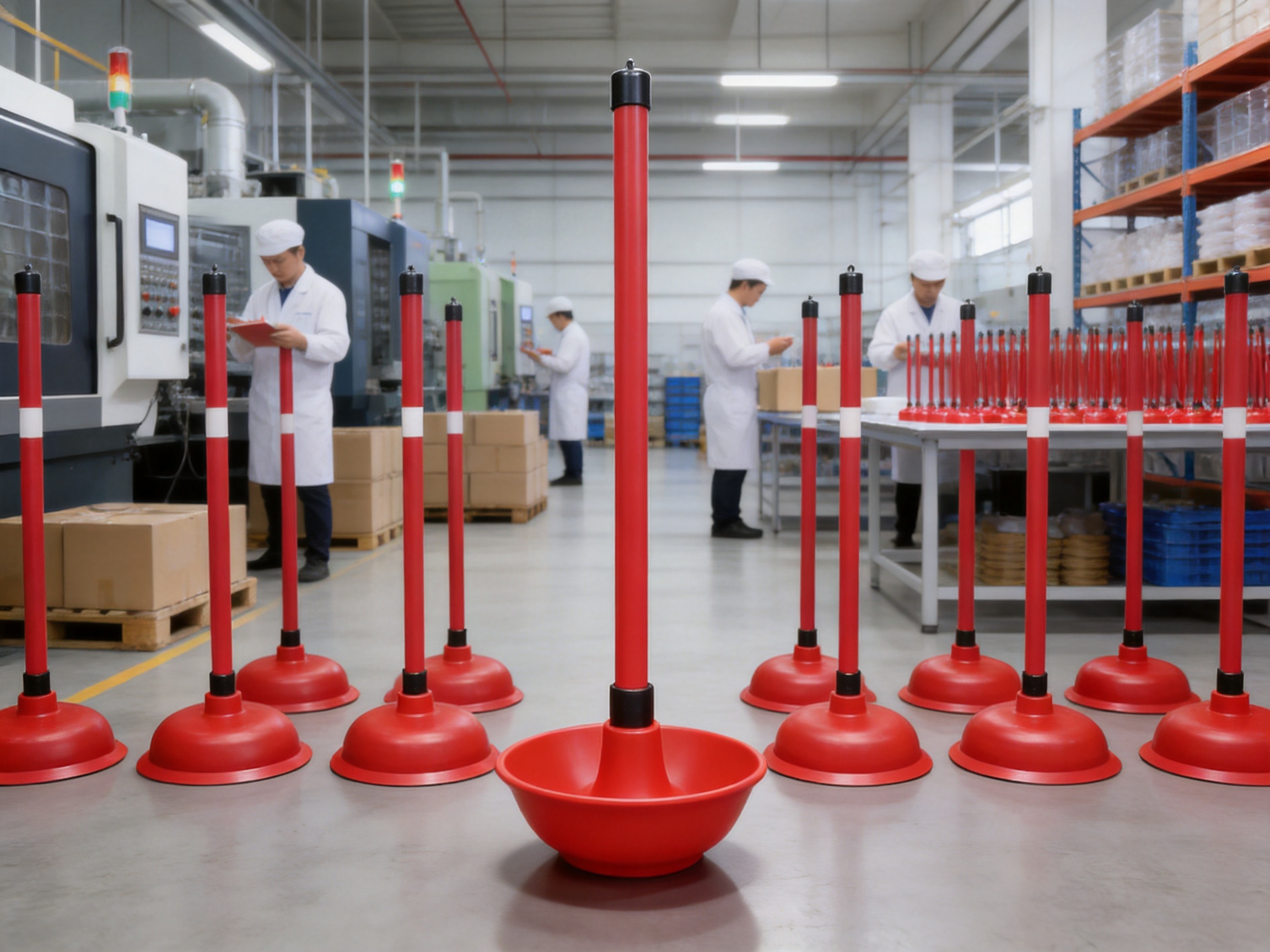
In busy commercial facilities, a blocked toilet is more than a minor inconvenience. It can interrupt operations, create unpleasant conditions, increase maintenance costs, and affect the confidence of employees, guests, patients, and customers. For janitors, building service contractors, hotel maintenance teams, and facility managers, dependable equipment is essential. A professional plunger must create a strong seal, withstand repeated use, remain comfortable during demanding tasks, and support hygienic cleaning procedures.
The Professional TPR Plunger, measuring 51 × 33 × 43 cm and featuring a 17.2 cm TPR cup, is designed for exactly these working conditions. It combines a large sealing surface, extended leverage, durable thermoplastic rubber construction, balanced handling, and easy sanitation in one practical cleaning tool. Unlike many basic household plungers, it is intended for high-traffic restrooms and professional maintenance environments where performance and durability matter every day.
Manufactured by Jinhua Jieqing Plastic Co., Ltd., a company established in 2008 and focused on cleaning supplies and supporting plastic products, this plunger reflects an industrial approach to product development. The company operates its own production base, maintains a complete supply chain, uses standardized production processes, and provides quality control for domestic and export markets. Its ability to develop practical cleaning products and support customized solutions based on drawings and samples gives procurement teams additional flexibility.
This article examines the Professional TPR Plunger in detail, including its construction, hydraulic working principle, workplace advantages, sanitation characteristics, manufacturing strengths, purchasing considerations, and suitable applications.
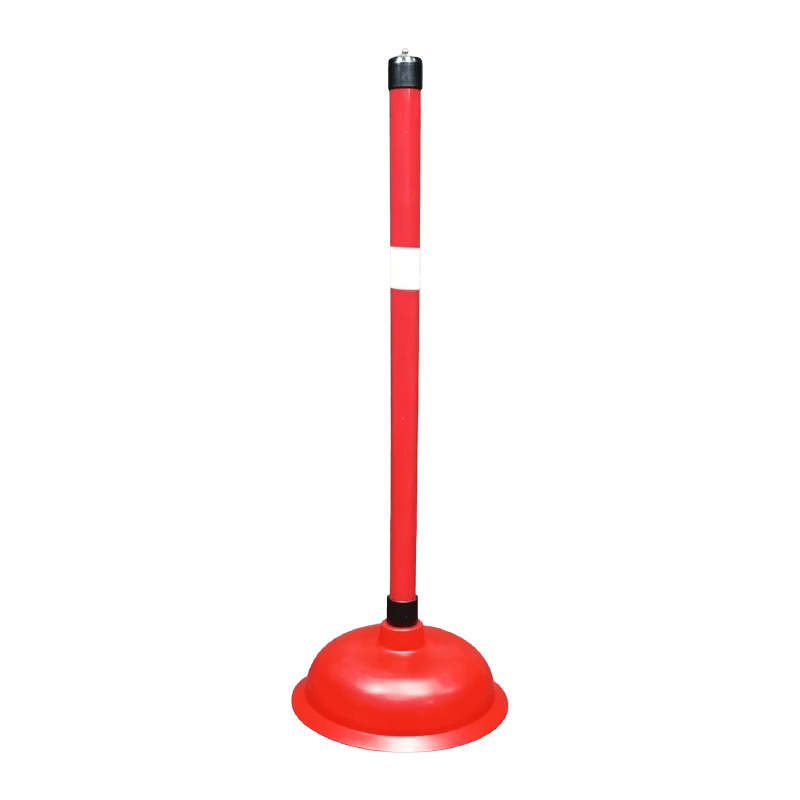
Professional TPR Plunger(51x33x43cm)
1. Why Professional Plungers Matter in Commercial Maintenance
Toilet blockages are among the most common service issues in public and commercial buildings. They may be caused by excessive paper, unsuitable materials, low-flow flushing systems, accumulated waste, or objects accidentally dropped into the bowl. In a home, a blockage may affect only a few people. In a hotel, hospital, office building, shopping center, school, or transportation facility, the same issue can affect many users within a short period.
A professional cleaning team needs a tool that can be stored conveniently, deployed quickly, and used repeatedly without losing effectiveness. A low-quality plunger may have a shallow cup, a weak handle, poor flexibility, or an unstable connection between the handle and rubber head. These weaknesses can lead to air leakage, insufficient pressure, user fatigue, and premature replacement.
The Professional TPR Plunger is designed around the central requirement of reliable hydraulic action. The cup must press firmly against the toilet outlet and surrounding surface. Once a seal is formed, downward and upward movements transfer pressure through the water and obstruction. This pressure-and-release action can help loosen and move blockages without requiring aggressive chemicals or specialized machinery for ordinary stoppages.
The product’s professional dimensions also support more effective operation. Its overall size of 51 × 33 × 43 cm provides a substantial working profile and extended leverage. A larger, well-balanced tool can help maintenance workers apply controlled force while maintaining a more upright posture. This is particularly valuable when a team is responsible for many restrooms during a shift.
1.1 The cost of unreliable cleaning tools
Choosing an inexpensive but poorly designed plunger can create hidden costs. A tool that fails to form a seal may require repeated attempts, increasing labor time. A handle that bends or becomes uncomfortable can reduce productivity and increase physical strain. A cup that cracks or hardens quickly may need frequent replacement. In a commercial environment, the cost of these interruptions can exceed the initial purchase price of a more durable professional model.
There are also hygiene and service-quality considerations. A plunger that is difficult to sanitize can retain residue and unpleasant odors. If it is used in multiple restrooms without proper cleaning, it may create an avoidable sanitation concern. For this reason, commercial buyers should assess not only whether a plunger can clear a blockage, but also whether it can be cleaned, stored, inspected, and replaced according to a consistent maintenance procedure.
2. Product Overview and Key Specifications
The Professional TPR Plunger is categorized as a toilet cleaning supply and is suitable for professional janitorial, facility management, hospitality, healthcare, and institutional use. Its construction centers on a TPR cup, a material selected for flexibility, resilience, and resistance to repeated handling.
| Specification | Product Information |
|---|---|
| Product name | Professional TPR Plunger |
| Product category | Toilet Cleaning Supplies |
| Overall dimensions | 51 × 33 × 43 cm |
| Calibre or cup diameter | 17.2 cm |
| Main material | TPR, or thermoplastic rubber |
| Item number | 30 |
| Listed quantity | 60 units |
| Listed net weight | 13 kg |
| Primary application | Toilet and drain maintenance |
| Recommended users | Janitors, maintenance crews, facility operators, and cleaning contractors |
The listed dimensions and commercial packing information should be confirmed with the supplier before placing a large order, especially when buyers require exact carton measurements, unit weight, pallet configuration, or container-loading calculations. Nevertheless, the specifications clearly present the item as a large, professional-grade plunger rather than a compact household accessory.
The 17.2 cm cup is an important performance feature. A cup of this size can cover a broad area around many toilet outlets, helping create an airtight or water-tight working seal when positioned correctly. The larger cup also distributes contact pressure over a wider surface than a small, shallow plunger. This can improve stability during repeated pumping and reduce the tendency of the tool to slip away from the outlet.
The 51 cm overall length supports leverage and working comfort. Users can operate the plunger while standing or bending less deeply, depending on the toilet design and blockage location. For teams handling repeated service calls, even a modest improvement in posture and reach can contribute to reduced fatigue over the course of a workday.
3. TPR Construction and Material Advantages
TPR is a thermoplastic rubber material that combines certain characteristics of rubber and thermoplastic plastics. It can provide flexibility and elastic recovery while also being suitable for controlled industrial processing. In a plunger cup, these properties are valuable because the cup must deform enough to follow the surface of a toilet outlet and then recover its shape after use.
A rigid plastic cup may fail to conform to uneven surfaces, while a weak or low-quality rubber cup may tear, flatten, or become less resilient after repeated compression. TPR offers a practical balance. It can remain flexible during normal use while providing the structural strength needed for repeated pumping and storage.
The material is also described as resistant to wear from repeated use and harsh chemicals. This does not mean that every chemical is appropriate for the product or that chemical exposure should replace proper cleaning procedures. It means the material is selected for demanding maintenance conditions in which the tool may encounter cleaning agents, moisture, and frequent mechanical stress.
3.1 Flexibility for improved sealing
The primary task of the cup is to form a seal. If air or water escapes around the edge, the user loses pressure and the hydraulic action becomes weaker. TPR’s flexible edge can conform more effectively to the curved and varied surfaces found in toilet bowls. Correct positioning remains important, but the material helps the user achieve a reliable seal across a wider range of toilet designs.
This adaptability is especially useful in commercial facilities, where a maintenance team may encounter multiple toilet models in one building or across several customer sites. A tool that can work with different bowl shapes reduces the need to carry several specialized plungers.
3.2 Resistance to repeated compression
Plunging involves repeated compression, release, and repositioning. The cup must withstand these movements without quickly splitting or losing its shape. A resilient TPR component can maintain useful elasticity over many operating cycles when it is used and stored correctly.
For facility managers, this supports a longer service life and more predictable replacement planning. Instead of treating the plunger as a disposable emergency item, a professional team can include it in an organized equipment program. Tools can be assigned to zones, inspected regularly, sanitized after use, and replaced based on condition rather than sudden failure.
3.3 Compatibility with professional sanitation routines
Cleaning tools used in toilets should be easy to rinse and disinfect. The smooth, resilient surface of a TPR cup can support straightforward sanitation after use. A recommended routine may include removing visible residue, rinsing with water, applying a suitable disinfectant according to the chemical manufacturer’s instructions, rinsing if required, and allowing the tool to dry before storage.
Users should always verify chemical compatibility and follow workplace safety procedures. Strong chemicals should not be mixed, and a plunger should not be used immediately after hazardous drain chemicals without appropriate precautions. The tool’s material resistance is an advantage, but safe operating practice remains essential.
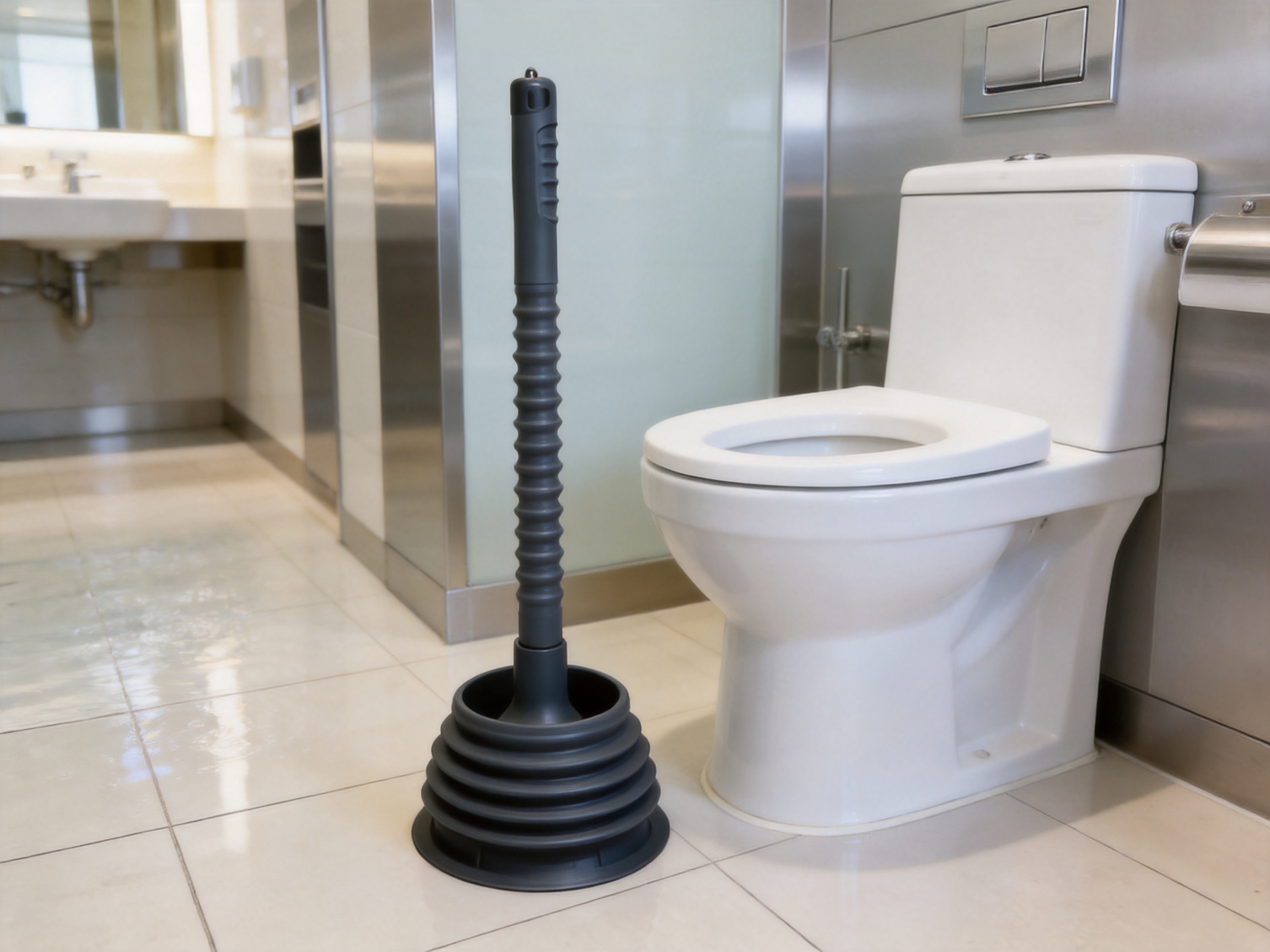
4. Hydraulic Action and Practical Performance
A plunger works by moving water rather than relying solely on direct physical contact with the blockage. When the cup forms a seal over the outlet, pushing the handle downward compresses the water trapped below the cup. Pulling upward then creates a suction effect. Repeated cycles can loosen accumulated material and encourage it to move through the drain.
The Professional TPR Plunger is designed to maximize this basic principle through a relatively large cup and a substantial handle length. The cup helps maintain the seal, while the long profile gives the operator leverage to generate controlled pressure. The objective is not simply to apply the greatest possible force. Effective plunging depends on a stable seal, an appropriate amount of water in the bowl, controlled strokes, and patience.
4.1 Steps for effective use
First, assess the situation. If the toilet contains a chemical drain cleaner, the operator should follow the relevant safety instructions before attempting to plunge. Protective gloves, eye protection, and appropriate workplace procedures should be used in commercial settings.
Second, ensure that enough water is present to cover the cup. Water transmits pressure more effectively than air. If the bowl is nearly empty, add a suitable amount of water, provided that doing so will not cause an overflow.
Third, place the TPR cup directly over the outlet. Press gently at first to expel trapped air and establish a seal. The cup should remain centered as much as possible.
Fourth, use firm, controlled strokes. The first movements may be shorter while the seal is being established. Once the cup is secure, the operator can use a repeated push-and-pull motion. Excessive force is not always beneficial and may splash water or damage weak fixtures.
Finally, test the flush carefully. If the water drains normally, clean and disinfect the plunger before returning it to storage. If the blockage remains, the operator should stop before causing an overflow and escalate the issue to a trained maintenance professional or use appropriate specialized equipment.
4.2 Performance across toilet models
Commercial buildings rarely use only one toilet design. Bowl curvature, outlet position, water level, and flushing mechanisms can vary. The large TPR cup is intended to provide broad compatibility with a variety of toilet models. Its flexibility allows the edge to adapt to common surface variations while its size supports coverage around the outlet.
No plunger can guarantee success on every blockage. Deep obstructions, solid objects, collapsed pipes, tree roots, structural drain problems, or severe buildup may require an auger, inspection camera, hydro-jetting equipment, or professional plumbing intervention. The strength of this product is its role as a first-response tool for common toilet blockages and routine maintenance situations.
5. Ergonomics, Leverage, and Worker Comfort
Cleaning work is physically demanding. Janitors and maintenance crews may bend, kneel, lift, push, pull, and carry equipment for many hours. A tool that is technically effective but uncomfortable to use can reduce productivity and contribute to avoidable strain.
The Professional TPR Plunger’s 51 cm size provides extended reach and leverage. The user can often maintain a more upright position than with a short household plunger. This may help reduce excessive bending of the back, particularly when the toilet is positioned in a confined stall or when the blockage requires several pumping cycles.
The product is also described as having a balanced weight and ergonomic handle. Balance helps the operator guide the cup without constantly correcting the tool’s angle. An ergonomic handle can make repeated strokes more comfortable and support a secure grip when gloves are worn.
5.1 Benefits for high-frequency work
In a hotel or large office building, a maintenance worker may respond to several restroom issues in one shift. In a hospital or public facility, response time and hygiene are especially important. A tool that can be used repeatedly without excessive fatigue supports faster service and more consistent performance.
Ergonomics also benefits organizations that employ diverse teams. A well-designed handle and balanced form can make the tool easier to control for users with different heights, hand sizes, and levels of physical strength. This does not eliminate the need for training, but it makes correct operation more accessible.
5.2 Reduced reliance on excessive force
When a plunger has a poor seal, users often compensate by pushing harder. This can create splashing, fatigue, or damage to the fixture. A properly designed TPR cup helps transfer force more efficiently, allowing the user to focus on seal quality and controlled movement instead of brute strength.
This is an important advantage over basic plungers with narrow, rigid, or poorly shaped cups. The goal is not simply to make the product larger. The goal is to combine the right cup flexibility, contact area, handle length, and balance so that the operator can produce useful hydraulic action with less wasted effort.
6. Advantages Over Basic or Low-Cost Alternatives
Many low-cost plungers are intended for occasional household use. They may be acceptable for light service, but commercial buyers require a higher level of reliability. The Professional TPR Plunger offers several advantages in comparison with basic alternatives.
6.1 Larger professional working profile
A small cup may be difficult to position over some toilet outlets and can lose its seal during use. The 17.2 cm cup provides a broader working surface. This can improve stability and make the product more adaptable to different toilet configurations.
6.2 More effective material selection
TPR offers a combination of flexibility, resilience, and wear resistance that is well suited to a reusable plunger. Very thin rubber or brittle plastic may deform permanently or fail after repeated use. A professional TPR component is intended to retain useful performance under regular maintenance conditions.
6.3 Extended leverage
Short plungers may force the operator to bend deeply and use awkward arm positions. The 51 cm size provides greater reach and leverage. This can make repeated operation more manageable, especially in facilities with many service calls.
6.4 Better suitability for institutional procurement
Commercial buyers often need consistent products in volume. The listed quantity of 60 units indicates suitability for bulk purchasing, distribution across multiple facilities, or inclusion in a broader cleaning-supply order. A standardized product simplifies training, inventory management, and replacement planning.
6.5 Easier integration into hygiene programs
A professional plunger should be treated as part of a sanitation system, not as an item hidden in a utility closet. Its durable TPR surface and practical form support established cleaning, disinfection, drying, and storage procedures. This can improve accountability and reduce the risk of tools being returned to service without adequate sanitation.
7. Applications in Commercial and Institutional Environments
The product is suitable for hotels, office buildings, hospitals, schools, shopping centers, restaurants, factories, public facilities, property-management operations, and professional cleaning contractors.
7.1 Hotels and hospitality facilities
Guestroom and public restrooms must remain operational and presentable. A blockage can lead to complaints, room downtime, and emergency service costs. Housekeeping and engineering teams can use the plunger as a first-response tool for ordinary toilet stoppages. Its professional size and easy sanitation are suitable for repeated use across guest floors and service areas.
7.2 Office buildings
Office facilities often have restrooms distributed across several floors. Maintenance teams need equipment that is easy to transport, quick to deploy, and reliable enough for routine service. The plunger can be assigned to janitorial carts, maintenance closets, or floor service stations.
7.3 Hospitals and healthcare facilities
Healthcare environments place strong emphasis on hygiene, procedure, and rapid response. A plunger should be clearly assigned, cleaned after use, and stored in a controlled location. The TPR construction and cleanable form support these requirements, although each institution should establish its own approved disinfectant and handling procedures.
7.4 Schools and public buildings
Schools, libraries, sports centers, and public offices experience changing levels of restroom use. A durable plunger can help maintenance staff respond to blockages without waiting for external service personnel. Its robust construction is suitable for environments in which equipment may be used frequently by different members of a facilities team.
7.5 Cleaning contractors
Contract cleaning companies need tools that can travel between customer locations and withstand repeated deployment. A standardized TPR plunger can be included in restroom service kits, emergency-response kits, and facility-specific equipment packages.
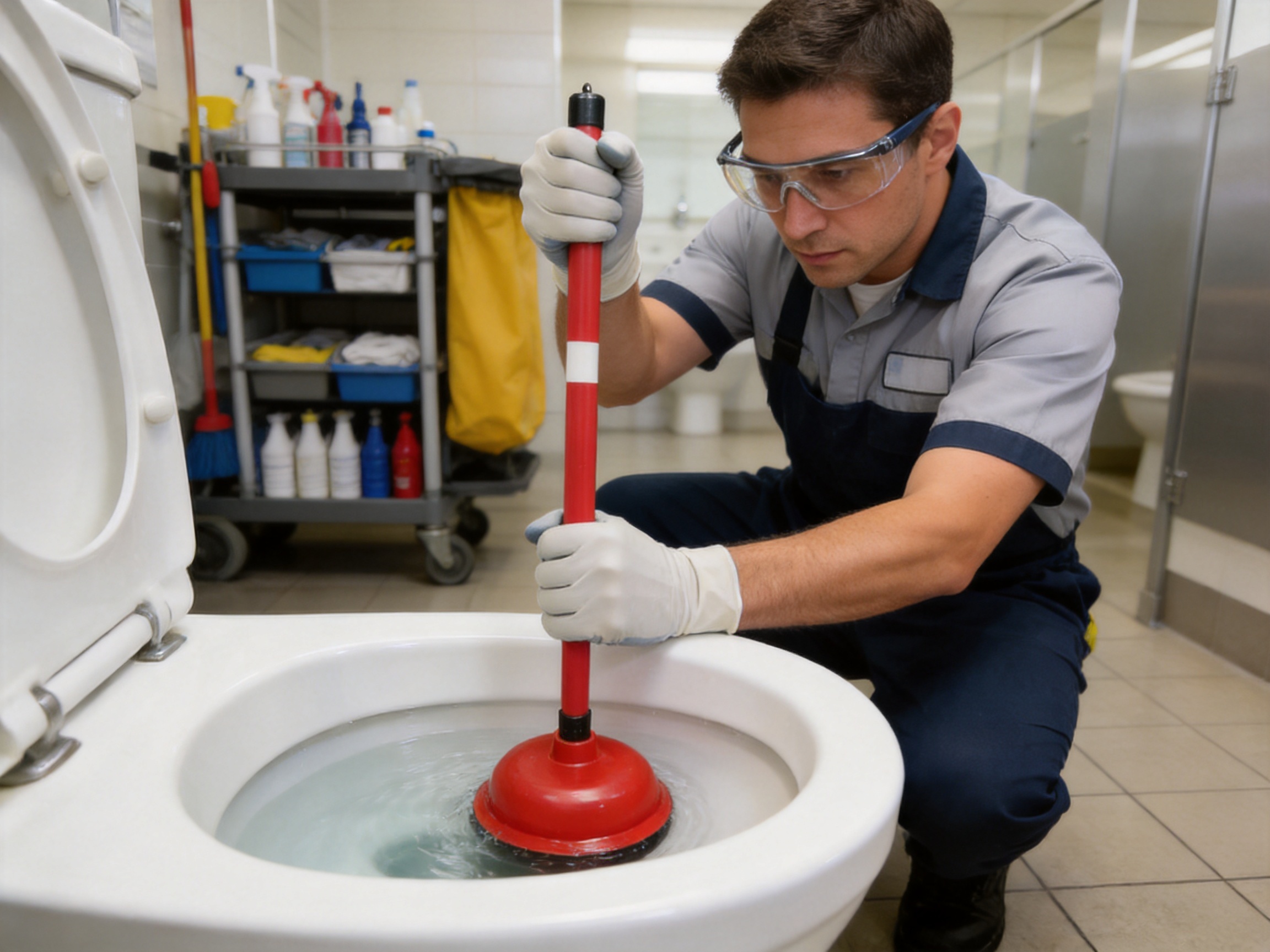
8. Manufacturing Strengths and Production Capabilities
The product is supplied by Jinhua Jieqing Plastic Co., Ltd., founded in 2008. The company specializes in the research, development, production, and sales of cleaning supplies. Its product range includes brooms, cleaning brushes, household and industrial brushes, supporting plastic products, and related cleaning tools.
The company’s background as an industry and trade enterprise is significant for buyers seeking more than a single product. It combines product development, manufacturing, sales, export experience, and customer-service capabilities. This structure can simplify communication for importers, distributors, supermarkets, cross-border e-commerce businesses, industrial procurement departments, and professional cleaning-supply companies.
8.1 Research and development orientation
Cleaning tools may appear simple, but their performance depends on many practical details: material selection, shape, sealing behavior, handle comfort, durability, packaging, and compatibility with different use environments. A company engaged in research and development can evaluate these factors systematically rather than treating the product as a basic commodity.
The company also offers customization based on customer drawings and samples. This can be useful when a buyer needs a different color, packaging format, labeling method, handle configuration, cup design, or private procurement specification. Any customized version should be confirmed through technical drawings, samples, testing, and written approval before mass production.
8.2 Own production base
An own production base can provide greater control over manufacturing schedules, process coordination, and quality monitoring. It may also make communication more direct when customers require product adjustments or need clarification about materials and packaging.
For professional buyers, production control is especially important because cleaning tools are often purchased in repeat quantities. Consistency between batches affects user acceptance, inventory planning, and brand reputation. A stable manufacturing base supports more predictable supply when orders are placed regularly.
8.3 Standardized production processes
Standardized processes help ensure that product dimensions, material use, assembly, finishing, and packaging are handled consistently. For a TPR plunger, process control may include checking the cup’s shape, flexibility, surface condition, connection strength, handle alignment, and overall appearance.
Standardization is not limited to the production floor. It can also cover incoming material inspection, mold or tooling management, in-process checks, final inspection, warehouse handling, and shipment preparation. A coordinated process reduces variation and helps identify problems before goods leave the facility.
8.4 Quality-control focus
The company describes stable quality control and a complete supply chain as part of its strengths. These capabilities are valuable for buyers who need reliable, repeatable supply rather than occasional spot purchases. Quality control should be understood as an ongoing system that includes material selection, production monitoring, finished-product checks, and customer feedback.
For this plunger, relevant inspection points may include the 17.2 cm cup calibre, overall dimensions, TPR appearance, flexibility, resistance to deformation, handle comfort, and packaging quantity. Buyers with specific standards may request pre-production samples, inspection criteria, or batch documentation as part of the purchasing agreement.
8.5 Export and one-stop supply experience
Extensive export experience can help a supplier understand the practical requirements of international orders, including communication across time zones, documentation, packaging coordination, shipping schedules, and market-specific expectations. A broad product range also enables buyers to combine toilet cleaning tools with brushes, brooms, household cleaning products, and supporting plastic items in one supply relationship.
This one-stop approach can reduce the number of suppliers a distributor or procurement department must manage. It may also help create a coordinated product assortment for supermarkets, online marketplaces, janitorial suppliers, and institutional clients.
9. Procurement, Packaging, and Supply Planning
When purchasing professional plungers in bulk, buyers should evaluate more than unit price. Product reliability, carton efficiency, replacement availability, inspection procedures, delivery performance, and customization support can all influence the total cost of ownership.
The supplied information lists a quantity of 60 and a net weight of 13 kg. These figures should be clarified in a formal quotation to determine whether they refer to a carton quantity, a shipment batch, or another packing configuration. Buyers should also request gross weight, carton dimensions, packaging materials, units per carton, pallet details, and loading quantity when planning international transportation.
9.1 Questions for product confirmation
Before ordering, procurement teams may confirm the exact cup diameter, overall product dimensions, handle material, individual unit weight, color options, packaging style, carton quantity, and available customization. They may also request a physical sample for testing in their own facility.
If the product will be sold through retail or e-commerce channels, packaging should be reviewed for protection, labeling, barcode requirements, language requirements, and customer handling. If it will be used internally by a cleaning contractor or institution, bulk packaging may be more economical.
9.2 Inventory strategy
Because toilet blockages can happen without warning, organizations should keep replacement plungers in accessible locations. A practical inventory program may include one or more units in each maintenance area, additional stock in a central warehouse, and a small emergency reserve for high-traffic buildings.
Tools should be inspected periodically. A plunger showing cracks, permanent deformation, loose connections, damaged surfaces, or severe contamination should be removed from service. Regular inspection prevents a minor equipment issue from becoming a delayed maintenance response.
10. Storage, Cleaning, and Maintenance Recommendations
Proper storage helps extend the service life of the Professional TPR Plunger. After use, the cup should be rinsed to remove residue and disinfected according to the facility’s approved procedure. The plunger should then be allowed to dry before being placed in a ventilated storage area.
Long-term exposure to direct sunlight, extreme heat, incompatible chemicals, or sharp objects may reduce the useful life of flexible materials. The product should not be stored under heavy items that could permanently deform the cup. If possible, it should be stored upright or in a holder that protects the TPR edge.
Separate tools may be appropriate for different zones, especially in healthcare, food-service, or other sensitive environments. Color coding or clear labeling can help prevent a toilet plunger from being mistaken for another cleaning tool. Written procedures should identify who is responsible for cleaning, inspection, storage, and replacement.
10.1 Training considerations
Workers should be trained to establish a seal, use controlled strokes, avoid unnecessary splashing, recognize when a blockage requires escalation, and sanitize the tool after use. Training should also cover the risks associated with chemical drain cleaners and the correct use of personal protective equipment.
A short training session can significantly improve the product’s effectiveness. Even a high-quality plunger may appear ineffective if it is not centered correctly or if there is insufficient water to transmit hydraulic pressure.
11. Sustainability and Total Value
A durable reusable tool can offer sustainability benefits when compared with repeated replacement of low-quality products. Longer service life reduces material consumption, packaging waste, transportation associated with replacement orders, and labor spent sourcing emergency equipment.
The environmental value of a product depends on how it is manufactured, used, cleaned, and disposed of. Buyers should use the plunger for as long as it remains safe and effective, maintain it properly, and follow local requirements for disposal at the end of its service life.
Durability also contributes to operational sustainability. When maintenance workers have reliable tools immediately available, they can resolve routine problems more efficiently. Faster response may reduce water waste from repeated flushing attempts and limit the time a restroom must remain closed.
12. Why This Product Is a Strong Professional Choice
The Professional TPR Plunger combines several features that are important in commercial cleaning: a large 17.2 cm TPR cup, a 51 × 33 × 43 cm professional size, strong hydraulic potential, extended leverage, comfortable handling, resistance to repeated use, and straightforward sanitation.
Its main advantage over basic plungers is not one isolated feature. It is the way the features work together. The flexible cup supports sealing. The large contact area supports stability. The extended length supports leverage. The balanced and ergonomic design supports repeated operation. TPR construction supports durability. The professional format supports facility-wide maintenance programs.
The supplier’s manufacturing strengths further improve the product’s value for wholesale and institutional buyers. Since 2008, the company has developed experience in cleaning supplies, plastic products, export operations, standardized production, quality control, and customization. Customers can therefore approach the product as part of a broader supply relationship rather than as an isolated purchase.
For hotels, offices, hospitals, schools, public buildings, factories, cleaning contractors, supermarkets, and online distributors, this plunger offers a practical combination of performance and supply reliability. It is built for the everyday reality of high-traffic restrooms, where equipment must work promptly, withstand frequent use, and support hygienic maintenance.
13. Frequently Asked Questions
Q1: What is the main application of this plunger?
The main application is clearing common toilet blockages in commercial, institutional, and household environments. It is particularly suitable for janitors, facility maintenance crews, hotel engineering teams, hospitals, office buildings, and professional cleaning contractors.
Q2: What does TPR mean?
TPR means thermoplastic rubber. It is a material that combines rubber-like flexibility with thermoplastic processing characteristics. In this plunger, TPR is used for the cup because it can flex to form a seal while resisting repeated wear.
Q3: What is the cup calibre?
The listed cup calibre is 17.2 cm. This relatively large cup is designed to provide broad coverage and support an airtight or water-tight seal on a variety of toilet models.
Q4: What are the overall product dimensions?
The listed dimensions are 51 × 33 × 43 cm. Buyers should confirm the exact dimensional definition with the supplier, especially if they require precise shipping, packaging, or storage calculations.
Q5: Is this plunger suitable for hotels and hospitals?
Yes. Its professional size, durable TPR cup, comfortable handling, and cleanable surface make it suitable for high-traffic facilities such as hotels and hospitals. Each facility should apply its own sanitation, storage, and personal-protective-equipment procedures.
Q6: Can the plunger clear every type of blockage?
No. It is intended for many ordinary toilet blockages, but solid objects, deep obstructions, damaged pipes, collapsed drains, tree roots, and severe buildup may require an auger, inspection, or professional plumbing service.
Q7: How should the plunger be used effectively?
Ensure that sufficient water covers the cup, center the cup over the outlet, press gently to create a seal, and use controlled push-and-pull strokes. Avoid excessive force and stop if the bowl begins to overflow.
Q8: How should it be cleaned after use?
Remove visible residue, rinse the cup, disinfect it with an approved product according to the chemical manufacturer’s instructions, rinse again if required, and allow it to dry before storage. Chemical products should never be mixed.
Q9: Can the supplier support customized orders?
The company states that customization is available according to customer drawings and samples. Buyers should discuss the desired changes, approve samples, confirm technical specifications, and agree on packaging and quality requirements before mass production.
Q10: Is bulk purchasing available?
The supplied information lists a quantity of 60 units, indicating suitability for bulk orders. Buyers should confirm the exact packing configuration, unit quantity, net and gross weights, carton dimensions, and shipping details in the quotation.
Q11: What types of organizations can purchase this product?
Potential buyers include cleaning-supply wholesalers, supermarkets, facility-management companies, hotels, hospitals, schools, factories, property managers, cross-border e-commerce sellers, and industrial procurement departments.
Q12: Why is a longer handle useful?
A longer handle can provide greater leverage and reach, allowing the user to apply controlled hydraulic action while reducing the need to bend deeply. This is especially helpful during repeated maintenance work.
Q13: What should be checked during quality inspection?
Inspectors may check the cup diameter, overall dimensions, TPR surface, flexibility, shape recovery, handle condition, connection strength, balance, appearance, and packaging. Buyers may establish additional inspection criteria based on their market or facility requirements.
Q14: Can this product be part of a larger cleaning-supply order?
Yes. The supplier offers a broader range of cleaning products, including brooms, cleaning brushes, household and industrial brushes, and supporting plastic products. This may allow buyers to consolidate sourcing across several cleaning categories.
14. Conclusion
The Professional TPR Plunger is a purpose-built solution for toilet maintenance where reliability, leverage, durability, and hygiene are essential. Its 17.2 cm TPR cup is designed to form a strong seal, while the 51 × 33 × 43 cm professional profile supports effective hydraulic action and more comfortable operation. The material is suited to repeated compression, routine sanitation, and demanding commercial environments.
Compared with basic household plungers, this model offers a larger working surface, a more professional form, better leverage, and stronger suitability for high-frequency use. It can help janitors and maintenance crews respond quickly to common blockages in hotels, offices, hospitals, schools, factories, public buildings, and cleaning-service operations.
The product is also supported by the manufacturing and supply capabilities of Jinhua Jieqing Plastic Co., Ltd. With experience dating from 2008, an own production base, standardized processes, quality-control systems, export experience, a broad product portfolio, and customization support, the company can serve both individual product requirements and wider procurement programs.
For buyers seeking a dependable toilet cleaning tool and a capable cleaning-supply manufacturing partner, the Professional TPR Plunger provides a practical balance of performance, durability, worker comfort, sanitation support, and supply flexibility.
References
1. Product specification information supplied for the Professional TPR Plunger, including dimensions, cup calibre, material, quantity, and listed net weight.
2. Manufacturer company information supplied for Jinhua Jieqing Plastic Co., Ltd., including company history, product categories, customization capabilities, production base, supply-chain resources, and export experience.
3. General principles of manual toilet plunging, including seal formation, water displacement, pressure cycling, sanitation, and safe maintenance practice.
4. General thermoplastic rubber material characteristics, including flexibility, elastic recovery, wear resistance, and suitability for molded cleaning-tool components.
5. General commercial cleaning and facility-maintenance practices relating to equipment inspection, disinfection, storage, worker ergonomics, and inventory control.
Product: Professional TPR Plunger(51x33x43cm)

 CONTACT US
- CONTACT DETAILS
- Address : No. 1388 Cuntong Road, Jinhua City
- Tel: +86-0579-81534043
- Email:wangjinhua1@zjjqsj.com
- PRODUCTS
- Kitchen Cleaning Supplies
- Household Cleaning Supplies
- Indoor & Outdoor Cleaning Supplies
- Baby Products & Cleaning Supplies
- Home Storage Containers
- QUICK LINK
- Company Profile
- Plant equipment
- Certifications
- FAQ
- NEWS CENTER
- Company News
- Industry News
- MOBILE TERMINAL

