

 English
  русский
  Español
  عربى
عربى 
Dual-Section Pipe Cleaner Brush for Variable-Diameter Cleaning
Date:Sep 09, 2026
Keeping pipes, drains, tubes, and narrow channels clean often requires more than a standard household brush. Openings may change in diameter, internal surfaces may contain stubborn residue, and the most difficult areas are often located beyond the reach of ordinary cleaning tools. A brush that works well in a wide drain may be too large for a constricted section, while a thin brush may lack the coverage and scrubbing power needed for a larger opening. The Pipe Cleaner Brush with Two Color Nylon Fibers addresses this practical problem with a flexible, dual-section design that combines different brush widths, two-tone nylon fibers, and a colored handle in one adaptable cleaning tool.
With a listed length of 50+9+26 cm, the brush is designed to serve variable-diameter plumbing and tubular cleaning applications. Its wider bristle section helps clean larger openings and broader internal surfaces. Its narrower section is intended for constrictions, smaller channels, and areas where a conventional wide brush cannot pass easily. Instead of requiring several brushes for different sections of the same pipe, users can select the appropriate part of one tool as they work.
This layout makes the product suitable for household cleaning, kitchen maintenance, bathroom care, utility-room work, facility maintenance, and selected industrial or workshop applications. The brush is especially useful in older buildings, where plumbing systems may include mixed pipe sizes, irregular connections, accumulated deposits, and transitions between wider and narrower passages.
Manufactured by Jinhua Jieqing Plastic Co., Ltd., the product reflects a broader cleaning-supply manufacturing capability that includes household brushes, industrial brushes, brooms, supporting plastic products, and customized cleaning solutions. The company combines product development, production, sales, supply-chain coordination, and export experience to support customers seeking practical cleaning tools for retail, wholesale, procurement, and private-label programs.
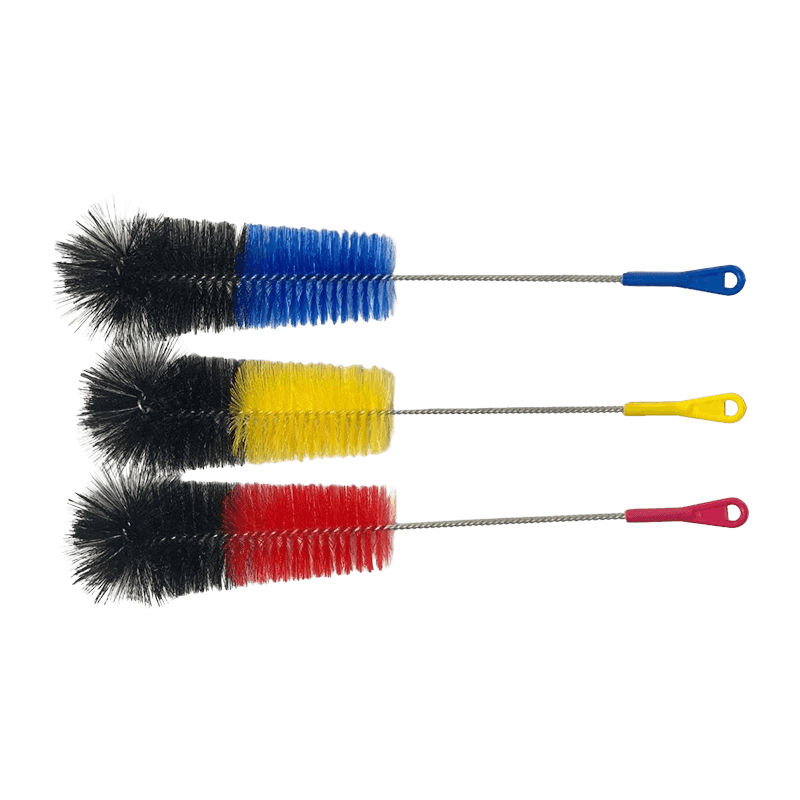
Pipe Cleaner Brush with Two Color Nylon Fibers
Understanding the Dual-Section Design
The most important feature of this pipe cleaner is its dual-section structure. A traditional pipe brush usually has one consistent diameter along its working length. That format is effective when the entire pipe or channel has a uniform internal size. However, many real cleaning tasks do not involve a perfectly uniform passage. Plumbing connections, bends, joints, traps, extensions, and older installations can create different internal dimensions within a single cleaning route.
The dual-section design responds to this variation by placing broader and narrower working areas on the same brush. The broader bristles can cover more surface area when the tool enters a larger opening. This helps users clean efficiently without repeatedly moving a very thin brush across a wide surface. The narrower section can then reach a tighter passage or constricted point where a larger brush might become difficult to insert or maneuver.
The listed length of 50+9+26 cm indicates a structured brush arrangement rather than a simple uniform shaft. The 50 cm and 26 cm sections provide extended reach, while the 9 cm section forms part of the transition between working areas. This arrangement gives the tool a useful combination of access and adaptability. It can be positioned according to the opening being cleaned and the length of the internal passage.
For users, the practical benefit is straightforward: one brush can perform multiple related jobs. A household may use it for a kitchen drain, a bathroom pipe, a narrow tube, or an outdoor channel. A maintenance team may use it for different pipe fittings without carrying a separate brush for every size. A distributor can offer a more versatile product that solves a broader range of cleaning problems than a basic single-diameter brush.
Why Variable-Diameter Cleaning Matters
Residue rarely accumulates in a perfectly predictable pattern. Grease, food particles, soap deposits, hair, lint, dust, mineral residue, and organic matter can gather at joints, transitions, and sections where water flow slows down. These points may be wider or narrower than the adjacent pipe. A fixed-width brush may either fail to contact the walls or become difficult to move through the passage.
A multi-section brush provides more options during cleaning. The user can begin with the broader section to loosen residue in an accessible opening, then guide the narrower section toward a deeper or tighter area. The brush can also be repositioned when a blockage or deposit changes the resistance inside the pipe. This adaptability reduces the need to change tools in the middle of a task.
Variable-diameter cleaning is also relevant to older homes and renovated properties. Plumbing systems may have been repaired or extended over time using different fittings and pipe sizes. A flexible brush with more than one working diameter is better suited to these imperfect, mixed configurations than a tool designed only for new, uniform installations.
Two-Tone Nylon Fibers for Flexible Scrubbing
The brush uses two-tone nylon bristles designed to provide two levels of visual distinction and functional stiffness. The contrasting colors help users identify the brush sections quickly, while the dual-fiber arrangement supports different cleaning requirements. One type of nylon fiber can provide a firmer scrubbing action for deposits and residue, while the other can offer a more flexible action for reaching contours and narrow spaces.
Using two fiber characteristics in one tool can improve control. A brush that is too soft may bend away from residue instead of removing it. A brush that is too stiff may be difficult to guide through a constricted passage or could be unsuitable for more delicate surfaces. A balanced combination gives the user greater flexibility when dealing with different pipe conditions.
The two-tone appearance also provides a practical product-identification advantage. In a maintenance cabinet, cleaning cart, or retail display, the contrasting fibers make the product visually distinctive. Users can recognize the brush quickly among other tools. For distributors, the color combination can contribute to shelf appeal and help distinguish the product from ordinary single-color pipe brushes.
Nylon is widely used in cleaning-brush applications because it offers a useful balance of flexibility, resilience, and resistance to routine moisture exposure. The fibers can bend during use and recover their general shape after cleaning. They are also easy to rinse, helping the user remove loosened material after a task. As with any cleaning tool, the appropriate pressure and method should be selected according to the surface being cleaned.
Balancing Firmness and Flexibility
Effective pipe cleaning depends on contact. The bristles must reach the internal wall, maintain sufficient pressure, and move across the residue. At the same time, the brush must remain flexible enough to follow a bend or pass through a narrower section. The two-tone nylon configuration is intended to balance these requirements rather than relying on one uniform bristle behavior.
For heavier deposits, the firmer portion can help generate mechanical scrubbing action. For narrow or irregular sections, the more flexible portion can help maintain access. This is especially useful when the passage cannot be viewed directly. The user can feel changes in resistance through the handle and adjust the pushing, pulling, or rotating motion accordingly.
This design is not limited to one type of contamination. It can be used for routine removal of loose dirt, accumulated household residue, light organic buildup, and other material that can be addressed through mechanical brushing. Cleaning chemicals, hot water, or sanitizing solutions may be used separately when appropriate for the application and the material being cleaned. Users should always follow the instructions for any chemical product used with the brush.
Extended Reach and Practical Dimensions
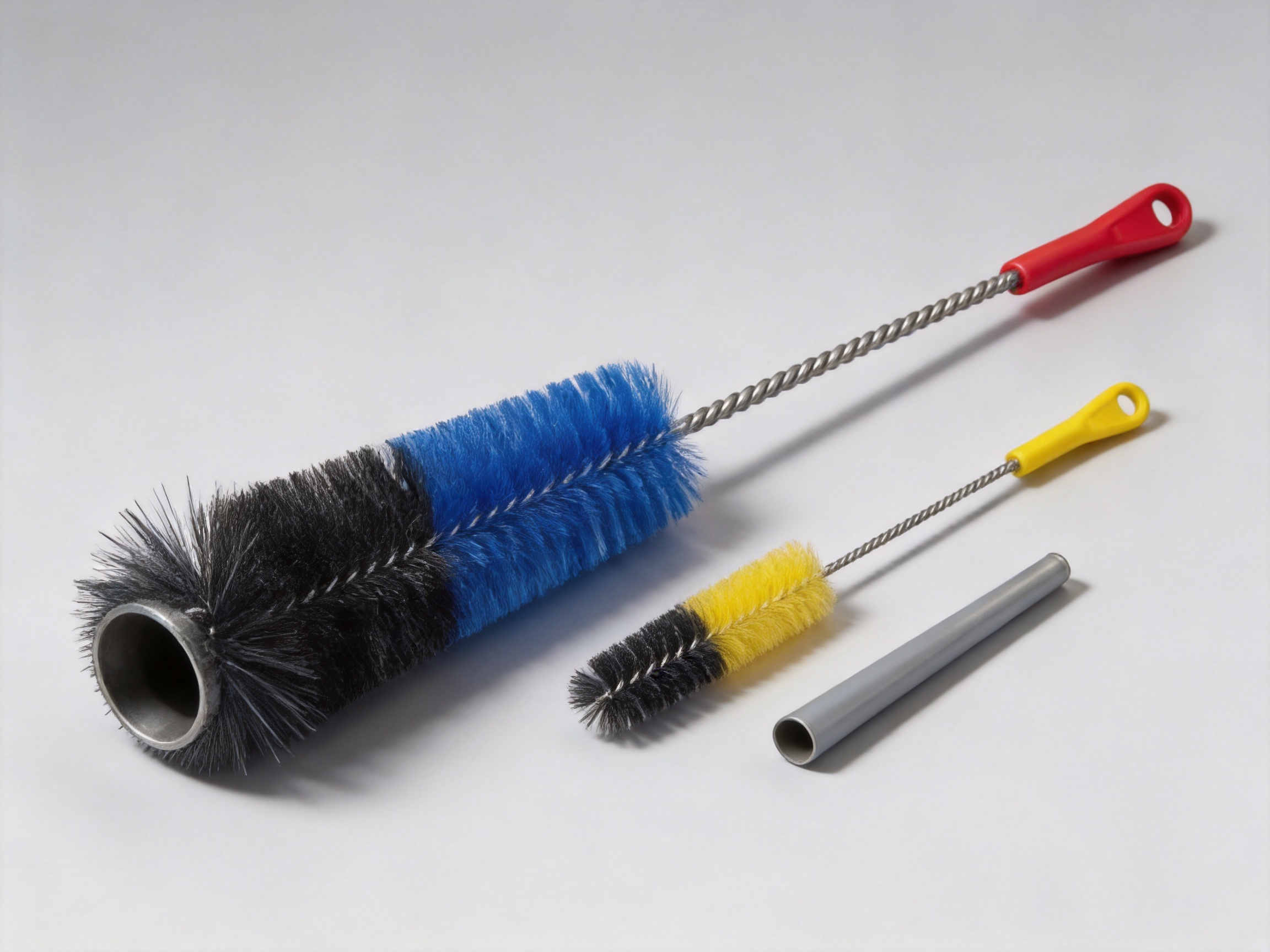
Access is one of the main challenges in pipe maintenance. A short brush may not reach far enough into a drain or tube, while an excessively long tool may be difficult to control. The 50+9+26 cm configuration provides an extended working length while preserving a structured, multi-section format.
The longer section supports access into deeper openings and helps users clean areas that are not immediately visible. The additional section provides another working zone for different pipe sizes. The central transition area connects the parts into one tool, allowing the user to move between wider and narrower cleaning functions without carrying multiple brushes.
For domestic users, this reach can be helpful when cleaning sink drains, floor drains, utility pipes, bathroom channels, and other tubular openings. For professional users, a longer reach can reduce the frequency of disassembly during maintenance. It may also help workers address deposits in areas where a hand cannot safely or conveniently enter.
Although the brush provides useful reach, proper handling remains important. The tool should be inserted gradually, especially into a curved or unfamiliar pipe. Excessive force should be avoided if the brush meets strong resistance. Pulling the brush back slightly, rotating it, or flushing the area with a suitable amount of water may help loosen material without placing unnecessary stress on the tool or the pipe.
Colored Handle for Grip and Identification
The colored handle is another functional part of the product. A secure grip allows the user to apply controlled pushing, pulling, and rotating movements. Pipe cleaning can involve wet conditions, residue, and limited visibility, so a handle that is easy to locate and hold is valuable in both household and professional environments.
The handle color improves visibility in a cleaning area. A small brush can be overlooked when placed near a sink, inside a maintenance bucket, or among other tools. A noticeable handle helps users find it quickly and may reduce the chance of leaving the brush in an unsuitable location after use.
A colored handle also supports product organization for commercial users. Cleaning teams can assign particular colors to different tools, rooms, applications, or departments. Retailers can display the product clearly, while wholesalers can use the color combination as part of an assortment strategy.
The handle works together with the flexible brush structure to provide a direct connection between the user and the working end. This control is particularly useful when cleaning a pipe that changes direction. Instead of relying only on force, the user can guide the brush through gradual movements and respond to the resistance felt at the handle.
Flexible, Rustproof, and Easy to Rinse
Cleaning tools often operate in damp environments. A pipe brush may be exposed to water, cleaning solutions, residue, and repeated rinsing. The product is designed to be flexible, rustproof, and easy to rinse, which supports its use in wet household, facility, and maintenance settings.
Rust resistance is important because corrosion can affect a tool’s appearance, cleanliness, and serviceability. A rustproof structure helps the brush remain suitable for repeated exposure to moisture during normal cleaning work. It also reduces concerns about rust particles being transferred to the area being cleaned.
Flexibility enables the brush to follow bends and adapt to changes in internal diameter. It can help the user reach areas that would be difficult to access with a rigid tool. The brush should still be handled according to the pipe configuration. A flexible tool is most effective when guided with measured pressure rather than forced into a blocked or sharply angled passage.
Easy rinsing supports better hygiene and storage. After use, the bristles can be flushed with clean water to remove loosened debris. The brush should then be allowed to dry as appropriate before storage. For commercial cleaning teams, easy rinsing can simplify the transition between tasks and help maintain a more consistent tool-care routine.
These features also improve the product’s suitability for distribution. Retail buyers, importers, and institutional purchasers generally look for tools that are practical, reusable, and easy to maintain. A brush that is difficult to clean or prone to corrosion may create dissatisfaction even if its initial cleaning performance is acceptable. The combination of nylon fibers, a colored handle, and a rust-resistant construction is intended to support a more dependable user experience.
Advantages Over Conventional Single-Section Brushes
A conventional pipe brush with one uniform working diameter may be adequate for a single, predictable application. However, its limitations become apparent when users encounter pipes with different sizes or restricted points. The dual-section pipe cleaner offers several advantages in these situations.
One Tool for More Than One Opening Size
The most direct advantage is versatility. Users do not need to select a separate brush every time the internal diameter changes. The wider section can address larger openings, while the narrower section can work within tighter areas. This simplifies tool selection and can reduce the number of cleaning accessories required for routine maintenance.
Better Access to Constricted Areas
A wider brush may stop at a narrow connection or fail to enter a smaller tube. The narrower section is intended to overcome this limitation. It can help users reach constrictions, joints, and internal sections that would otherwise require a different tool.
More Efficient Surface Coverage
A thin brush may enter a large pipe but leave substantial portions of the internal wall untouched. The wider section can provide broader contact, helping users cover more surface with each movement. This may reduce the time required for routine scrubbing and improve the efficiency of manual cleaning.
Reduced Need for Multiple Tools
Carrying several brushes can increase cost, storage requirements, and preparation time. A dual-section design consolidates related functions into one product. This is particularly useful for homeowners with limited storage, professional cleaners who carry equipment between sites, and maintenance departments managing shared tool inventories.
Improved Recognition and Handling
The two-tone fibers and colored handle make the brush easier to identify than a plain, single-color tool. Clear visual differentiation can help reduce selection errors and make it easier to organize a group of cleaning tools.
Greater Suitability for Older Plumbing
Older homes often contain mixed materials, replacement sections, irregular fittings, and accumulated deposits. Their plumbing may not conform to one consistent internal diameter. The flexible, multi-section design is well suited to these changing conditions, offering an adaptable option for maintenance work.
| Feature | Dual-Section Pipe Cleaner Brush | Conventional Single-Section Brush |
| Working diameter | Includes wider and narrower cleaning sections | Usually one consistent diameter |
| Access to constrictions | Narrow section helps reach smaller passages | Depends on the fixed brush size |
| Coverage in larger openings | Wider bristles provide broader contact | May leave gaps when the brush is too narrow |
| Tool consolidation | Can address multiple related applications | May require several sizes |
| Visual identification | Two-tone nylon and colored handle | Often a uniform appearance |
| Suitability for variable plumbing | Designed for changing diameters and transitions | Best suited to consistent openings |
Applications in Household Cleaning
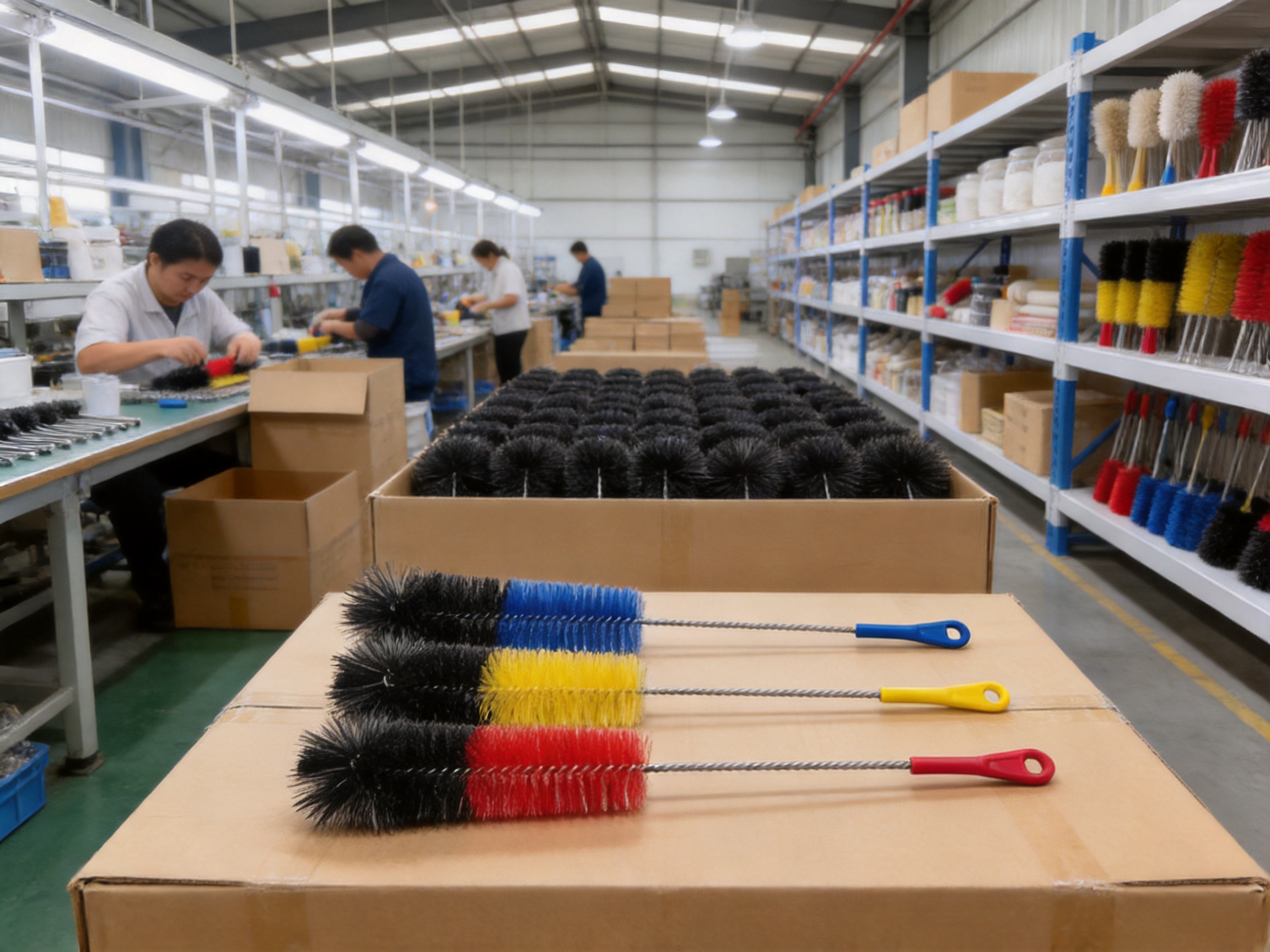
The Pipe Cleaner Brush with Two Color Nylon Fibers is suitable for a broad range of household cleaning tasks. In the kitchen, it can help clean tubular drain sections where food residue, grease, and particles may accumulate. The wider area can address accessible openings, while the narrow section can be guided into smaller connections.
In bathrooms, the brush may be used for drain channels, tubular fittings, and hard-to-reach areas where soap residue, hair, and general buildup collect. Its extended length can help users reach beyond the immediate opening. The brush is also useful for utility rooms, laundry areas, and other locations where water lines or drains require occasional mechanical cleaning.
Outdoor household applications may include cleaning narrow tubes, drainage components, garden-related channels, and selected equipment passages. Outdoor dirt can include soil, organic matter, and small debris. The brush’s flexible construction allows it to be used in areas where a rigid cleaning rod may not follow the internal path effectively.
Because the product is reusable and easy to rinse, it can become part of a regular household maintenance routine. Rather than waiting until a passage is severely restricted, users can periodically inspect and brush accessible sections. Regular light maintenance may help limit the accumulation of residue, although the brush is not a replacement for professional plumbing service when there is a serious blockage, leak, or structural problem.
Applications in Commercial and Industrial Environments
Professional cleaners, property managers, hospitality facilities, workshops, and maintenance departments often need simple tools that can handle different tasks. The dual-section design is useful when workers move between rooms, buildings, or equipment and cannot predict every pipe dimension in advance.
In restaurants and food-service areas, tubular drains and service passages may require frequent attention. The brush can assist with mechanical removal of accessible residue, provided that workplace hygiene procedures and applicable sanitation requirements are followed. It should be cleaned and stored appropriately after use and should not be used interchangeably between controlled hygiene zones without suitable procedures.
In hotels, schools, offices, and public facilities, maintenance workers may encounter many types of drainage and tubular openings. A versatile brush can simplify equipment preparation and reduce the number of individual tools stored in service closets. Its noticeable handle also makes it easier to identify in a shared cleaning kit.
Workshops and light industrial facilities may use pipe brushes for equipment maintenance, tube cleaning, dust removal, and general housekeeping. The product can be considered for applications where nylon bristles and manual brushing are appropriate. The exact suitability depends on the material, temperature, chemical exposure, and internal geometry of the component being cleaned.
For industrial procurement teams, the brush’s value extends beyond its individual performance. A product that combines several functions may help simplify purchasing, inventory control, and distribution. The listed carton quantity of 200 units supports bulk ordering for wholesalers, retailers, facility suppliers, and other buyers planning regular stock.
Manufacturing Strengths Behind the Product
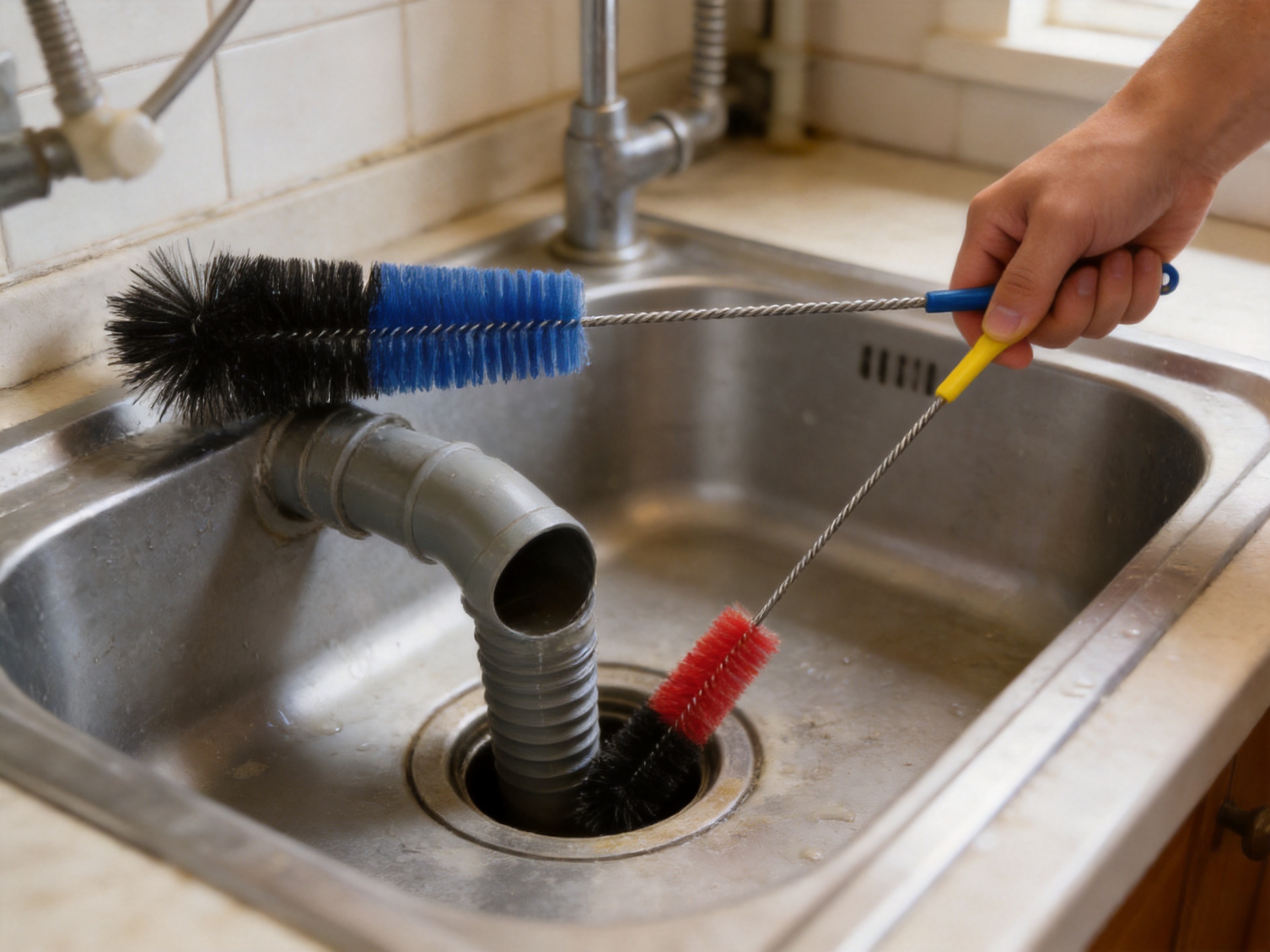
The performance of a cleaning brush depends not only on its visible design but also on the consistency of its manufacturing. A brush must maintain the relationship between its handle, working sections, fibers, and flexible structure. Variations in bristle placement, attachment, length, or material can affect how the product performs during use.
Jinhua Jieqing Plastic Co., Ltd. was founded in 2008 and operates as an industry and trade enterprise specializing in the research, development, production, and sales of cleaning supplies. The company’s product range includes brooms, cleaning brushes, household brushes, industrial brushes, and supporting plastic products. This broad category experience provides a practical foundation for developing and producing tools for different cleaning environments.
The company has its own production base and a complete supply chain. This structure can support closer coordination between product development, material sourcing, production scheduling, quality control, packaging, and delivery. For buyers, integrated coordination may improve communication and make it easier to address product specifications, order quantities, packaging requirements, and customization requests.
Standardized Production Processes
Standardized processes are important when a product includes multiple brush sections. The wider and narrower areas must be positioned correctly, and the two-tone nylon fibers must be arranged consistently. The handle must be securely connected to the brush structure, while the overall length should correspond to the product specification.
A standardized production approach can help control these details across larger quantities. It also supports repeatability for distributors and customers who reorder the same item. Consistent manufacturing is especially important for private-label or retail programs, where variations between shipments can create packaging, merchandising, or customer-service challenges.
Quality-Control Coordination
The company describes stable quality control as one of its strengths. For a pipe brush, quality checks may focus on visual finish, handle connection, bristle placement, fiber condition, length, section arrangement, and overall usability. Packaging and carton preparation are also relevant for bulk shipments because products must remain organized and protected during transportation.
Quality control for cleaning brushes should be practical and application-focused. The objective is not merely to produce an attractive tool but to ensure that the brush can be handled, inserted, moved, rinsed, and stored as intended. Attention to both materials and assembly helps support dependable performance in everyday use.
Research, Development, and Customization
The company offers customization based on customer drawings and samples. This capability can benefit buyers seeking a specific brush size, handle style, fiber configuration, color combination, packaging format, or product assortment. A customer may require a different working length for a specialized pipe, a private-label color scheme, or a modified pack quantity for a particular sales channel.
Customization is more effective when supported by manufacturing experience. Product changes must be evaluated for feasibility, material availability, assembly requirements, packaging, and production efficiency. An established production base and supply chain can help coordinate these factors from initial concept through bulk delivery.
For importers and brand owners, customization can provide a way to develop a product that fits a defined market rather than relying only on generic stock. The standard dual-section pipe cleaner can serve as a practical starting point for discussions about dimensions, fibers, colors, handles, packaging, and order planning.
Supply Capability for Different Customer Groups
The product is appropriate for several types of buyers. Supermarkets and home-improvement retailers can present it as a versatile household maintenance tool. Cleaning-supply distributors can include it in a broader assortment of brushes and brooms. Industrial procurement teams can evaluate it for workshops, property maintenance, and facility operations. Cross-border e-commerce sellers can use its multi-function design as a clear product benefit for online customers.
For supermarkets, visual recognition and simple product communication are important. The two-tone fibers and colored handle help create a distinctive appearance. The product can be positioned as a practical brush for pipes, drains, tubes, and narrow channels rather than as a single-purpose tool.
For distributors, the carton quantity of 200 supports volume planning. Buyers can decide whether to sell individual units, multipacks, or bundled cleaning assortments. The company’s broad product range may also support mixed procurement, allowing customers to source pipe brushes together with other household and industrial cleaning items.
For cross-border e-commerce, the product’s main advantages can be communicated through clear specifications: dual-section design, 50+9+26 cm listed length, two-tone nylon fibers, colored handle, flexible construction, rust resistance, and easy rinsing. Accurate product information helps reduce misunderstandings and supports better customer expectations.
For industrial procurement, the key considerations may include repeatability, packaging, supply stability, customization, and communication. The manufacturer’s experience in export markets and its one-stop approach can help buyers coordinate these requirements with a single supplier.
Product Specification
The following information summarizes the available product data for the standard item.
| Item number | CC-3275 |
| Product name | Pipe Cleaner Brush with Two Color Nylon Fibers |
| Product category | Pipe Brush |
| Material | Colored handle with two-tone nylon bristles |
| Listed length | 50+9+26 cm |
| Primary design | Dual-section brush for wider openings and constricted passages |
| Key functional properties | Flexible, rustproof, easy to rinse |
| Carton quantity | 200 units |
| Potential markets | Households, retailers, facility maintenance, workshops, industrial procurement, and cleaning-supply distribution |
How to Use the Brush Effectively
Before using the brush, identify the opening and consider whether the passage changes diameter. Select the section that appears most suitable for the first part of the task. If the opening is large, begin with the wider bristle area. If the passage is narrow, use the smaller section to improve access.
Insert the brush gradually and avoid sudden force. Push, pull, or rotate the brush with controlled movements. Rotation can help the bristles contact more of the internal wall, while a back-and-forth movement can loosen residue. If resistance increases sharply, withdraw the brush slightly and assess whether the passage is blocked or sharply angled.
For a long or variable passage, use both sections as appropriate. The wider area can clean an accessible opening or larger chamber, while the narrower area can be directed toward a constriction. This approach takes advantage of the brush’s intended versatility and may reduce the need to stop and change tools.
After use, rinse the brush thoroughly to remove loosened material. Inspect the bristles and handle for retained debris. Allow the brush to dry as appropriate before storage. If the tool is used in a commercial or hygiene-sensitive environment, follow the facility’s cleaning, disinfection, segregation, and replacement procedures.
The brush should not be used as a substitute for professional diagnosis when a pipe has a persistent blockage, leak, structural defect, or suspected hazardous contamination. It is a manual cleaning aid designed to help remove accessible residue and buildup through brushing.
Care, Storage, and Service Life Considerations
Proper care can help preserve the brush’s useful condition. Rinsing is important because residue left between the nylon fibers may harden or create unpleasant odors. A clean brush is also easier to inspect before the next task.
Storage should protect the brush from unnecessary crushing, sharp objects, and excessive heat. The flexible structure is designed to adapt during cleaning, but long-term deformation caused by improper storage may affect handling. Hanging or placing the brush where the bristles can remain relatively straight may help preserve its shape.
Users should inspect the tool periodically. If the handle becomes loose, the working sections are severely worn, or the bristles no longer provide sufficient contact, the brush should be replaced. The replacement interval depends on the frequency of use, the type of residue, the force applied, and the environment.
For organizations, a simple tool-management routine can improve consistency. Brushes can be labeled by department, assigned to specific areas, or stored in dedicated cleaning kits. The colored handle and two-tone fibers support quick identification and can help distinguish this pipe brush from other cleaning equipment.
Why This Product Supports Efficient Purchasing
Purchasing decisions involve more than the initial unit price. Buyers also consider how many applications a product can cover, how easy it is to store, whether it can be reordered consistently, and whether the supplier can support future changes. The dual-section pipe cleaner addresses these considerations through functional consolidation and a clear specification.
One brush that can work in both wider and narrower passages may reduce the number of product types required in an assortment. This can simplify inventory and make it easier for retailers to explain the product’s purpose. For maintenance departments, it may reduce the number of tools workers need to carry from one location to another.
The product also fits into a broader cleaning-supply portfolio. Buyers can source related household and industrial brushes from a manufacturer with experience across multiple categories. This may improve purchasing coordination, especially when a customer requires mixed products, custom packaging, or consolidated export shipments.
Jinhua Jieqing Plastic Co., Ltd. provides customization based on drawings and samples, which gives buyers an opportunity to discuss modifications instead of accepting a fixed design for every market. Combined with its own production base, supply-chain resources, standardized processes, quality-control approach, and export experience, this supports a practical one-stop sourcing model.
Q&A
What is the main purpose of this pipe cleaner brush?
The brush is designed to clean pipes, drains, tubes, and narrow channels that may contain residue or debris. Its dual-section structure allows it to work in both wider openings and narrower passages.
What does the 50+9+26 cm specification mean?
The specification identifies the product’s listed multi-section length arrangement. It indicates that the brush includes working and transition sections totaling a structured length of 50+9+26 cm, suitable for extended access and variable-diameter cleaning.
Why does the brush use two colors of nylon fibers?
The two-tone nylon fibers help distinguish the brush visually and are intended to provide two fiber characteristics or levels of stiffness. This gives users more flexibility when handling different residue and pipe conditions.
Can the brush clean both large and small pipes?
It is designed for variable-diameter applications. The wider section is intended for larger openings, while the narrower section can reach constrictions and smaller passages. Users should still confirm that the brush is appropriate for the specific pipe size and material.
Is the brush suitable for older homes?
Yes. Older homes may contain mixed pipe sizes, irregular connections, and transitions created by previous repairs. The flexible dual-section structure is intended to provide adaptability in these conditions.
Is the brush rustproof?
The product is described as rustproof and is intended for use in damp cleaning environments. It should still be rinsed and stored properly after use to maintain its condition.
How should the brush be cleaned after use?
Rinse the bristles and working sections with clean water to remove loosened debris. Inspect the brush, allow it to dry as appropriate, and store it in a clean location. Commercial users should follow their facility’s hygiene procedures.
Can the brush be customized?
Jinhua Jieqing Plastic Co., Ltd. offers customization based on customer drawings and samples. Buyers can discuss possible changes to dimensions, colors, materials, packaging, and other requirements according to production feasibility and order conditions.
What is the carton quantity?
The listed carton quantity is 200 units.
Who may purchase this product?
Potential customers include households, supermarkets, cleaning-supply distributors, facility-maintenance teams, workshops, industrial procurement departments, cross-border e-commerce sellers, and importers.
Can it replace professional plumbing equipment?
The brush is a manual cleaning tool for accessible residue and buildup. It is not intended to replace professional equipment or service when a pipe has a serious blockage, leak, structural defect, or hazardous contamination.
What makes this brush different from a basic pipe brush?
Its main differences are the dual-section working layout, two-tone nylon fibers, extended listed length, colored handle, flexible construction, and ability to address both wider openings and constricted passages with one tool.
Conclusion
The Pipe Cleaner Brush with Two Color Nylon Fibers is designed around a common limitation in pipe maintenance: one cleaning route may contain several different internal diameters. Its dual-section structure brings wider and narrower cleaning functions together, allowing users to move between larger openings and constricted passages without immediately changing tools.
Two-tone nylon fibers provide visual distinction and support varied scrubbing behavior, while the colored handle improves grip and identification. The flexible, rustproof, easy-to-rinse construction makes the brush suitable for damp household environments, facility maintenance, workshops, and selected industrial applications. Its extended 50+9+26 cm configuration provides useful reach for deeper or less accessible sections.
From a sourcing perspective, the product is supported by Jinhua Jieqing Plastic Co., Ltd.’s experience in cleaning-supply research, development, production, and sales. The company offers a broad product range, its own production base, standardized processes, quality-control coordination, a complete supply chain, export experience, and customization based on customer drawings and samples. These strengths make the brush suitable not only as a standalone retail item but also as part of a wider household or industrial cleaning program.
For buyers seeking a practical, adaptable, and commercially versatile pipe brush, this product offers a balanced solution. It reduces the need for multiple brush sizes, supports maintenance in variable plumbing, and provides a clear path toward bulk supply or customized cleaning-tool programs.
References
1. Product specification for Pipe Cleaner Brush with Two Color Nylon Fibers, Item No. CC-3275.
2. Manufacturer-provided product description covering the dual-section layout, two-tone nylon fibers, colored handle, flexibility, rust resistance, and rinsing convenience.
3. Manufacturer-provided company information for Jinhua Jieqing Plastic Co., Ltd., including founding year, product categories, production capabilities, customization services, supply-chain resources, and export experience.
4. General principles of manual brush cleaning, tool maintenance, household drainage care, and facility-cleaning equipment management.
5. General material considerations for nylon bristles used in wet-environment cleaning applications.
Product: Pipe Cleaner Brush with Two Color Nylon Fibers

 CONTACT US
- CONTACT DETAILS
- Address : No. 1388 Cuntong Road, Jinhua City
- Tel: +86-0579-81534043
- Email:wangjinhua1@zjjqsj.com
- PRODUCTS
- Kitchen Cleaning Supplies
- Household Cleaning Supplies
- Indoor & Outdoor Cleaning Supplies
- Baby Products & Cleaning Supplies
- Home Storage Containers
- QUICK LINK
- Company Profile
- Plant equipment
- Certifications
- FAQ
- NEWS CENTER
- Company News
- Industry News
- MOBILE TERMINAL

