

 English
  русский
  Español
  عربى
عربى 
Color Handle Pipe Brush for Daily Kitchen Cleaning and Stain Removal
Date:Sep 11, 2026
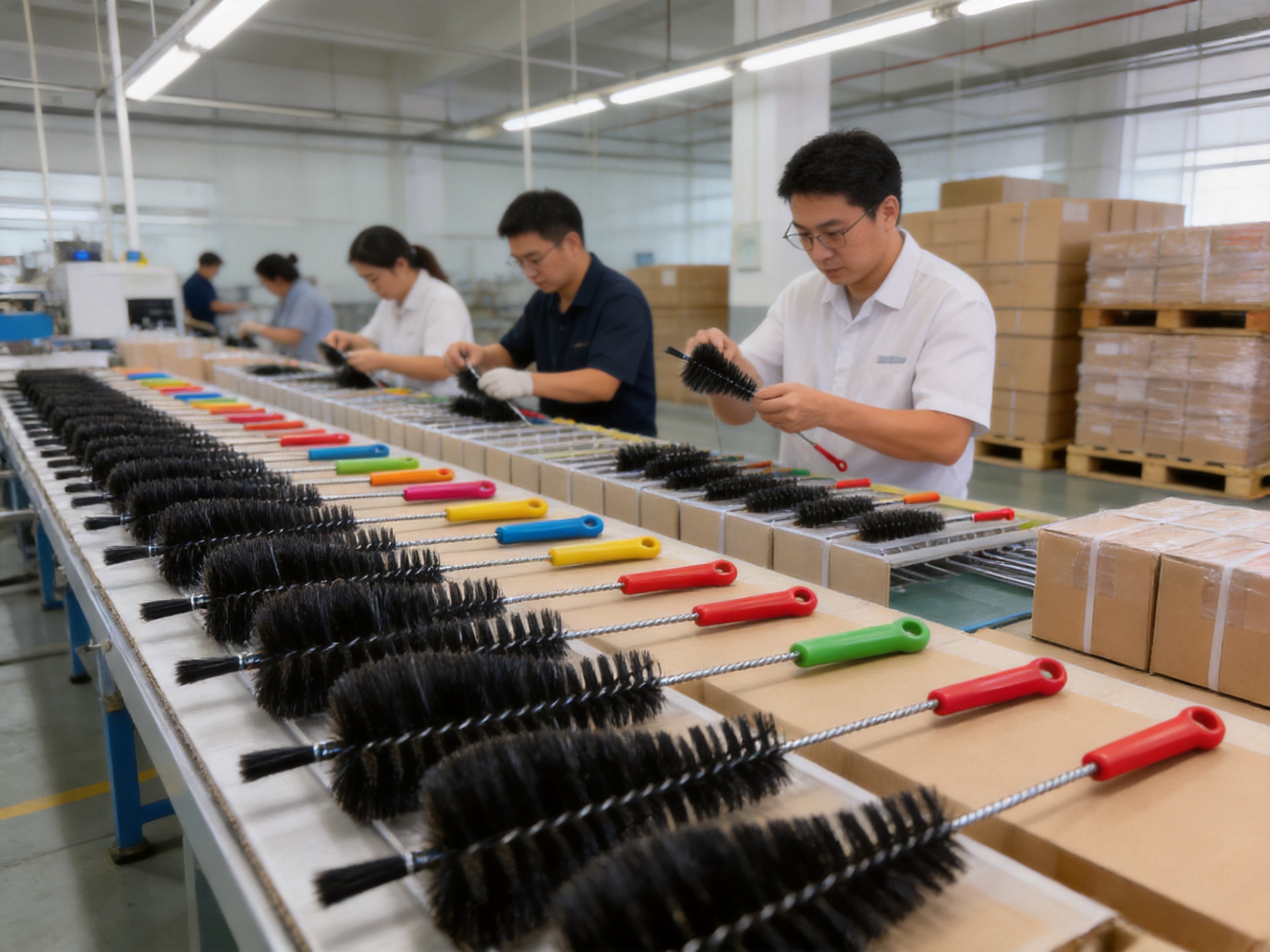
A clean kitchen depends on more than wiping visible surfaces. Areas around drain baskets, disposer guards, sink outlets, and connecting pipes can collect food particles, grease, soap residue, mineral deposits, and moisture. These concealed or semi-concealed spaces are difficult to reach with a cloth or a standard flat cleaning brush. Over time, residue can contribute to unpleasant odors, slow drainage, visible staining, and an unhygienic working environment. A purpose-designed pipe brush provides a simple solution by combining a narrow cleaning head with a long, manageable handle.
The Color Handle Pipe Brush for Daily Kitchen Cleaning and Stain Removal is designed for routine maintenance in kitchens and other household areas. It features a handle measuring approximately 50 centimeters and flexible nylon bristles arranged to reach narrow channels and curved spaces. The brush is suitable for drain baskets, disposer guards, connecting pipes, sink edges, and other hard-to-access areas where ordinary cleaning tools cannot work effectively.
Its practical design supports a quick daily sweep rather than occasional intensive scrubbing. This makes it useful for households, property maintenance teams, cleaning-service providers, hospitality businesses, supermarkets, and distributors looking for a functional brush with broad application potential. The colored handle also makes the product easy to identify in a cleaning cupboard, commercial kitchen, workshop, or janitorial storage area.
Why Narrow Drain and Pipe Areas Need Dedicated Cleaning Tools
Kitchen drainage areas are exposed to a combination of water, food debris, oils, detergents, and organic matter. Even when a sink appears clean, residue may remain beneath a drain basket, inside a pipe connection, or around the guard of a disposer. These areas are frequently damp and have limited airflow, creating conditions in which odor-causing residue and biofilm may develop.
A conventional sponge can clean the top surface of a drain but usually cannot enter a narrow pipe opening. A cloth may lose fibers, become trapped, or fail to follow the inner contour of a connector. A short-handled brush may provide better contact but not enough reach. A pipe brush addresses these limitations with a slim bristle section and an extended handle that enables the user to clean deeper while keeping hands away from dirty water and confined spaces.
Regular brushing is especially valuable in busy kitchens. Restaurants, cafeterias, hotels, food-preparation areas, and institutional kitchens may use sinks many times each day. Even domestic kitchens can accumulate residue quickly when cooking involves oils, sauces, vegetables, meat, or coffee grounds. A short daily cleaning routine can help reduce the buildup that later requires aggressive chemicals, disassembly, or extended labor.
The purpose of this brush is not to replace proper drainage maintenance or safe plumbing procedures. Instead, it is a convenient tool for preventive cleaning. By reaching areas that are easily overlooked, it helps users maintain a fresher and more orderly sink environment with minimal effort.
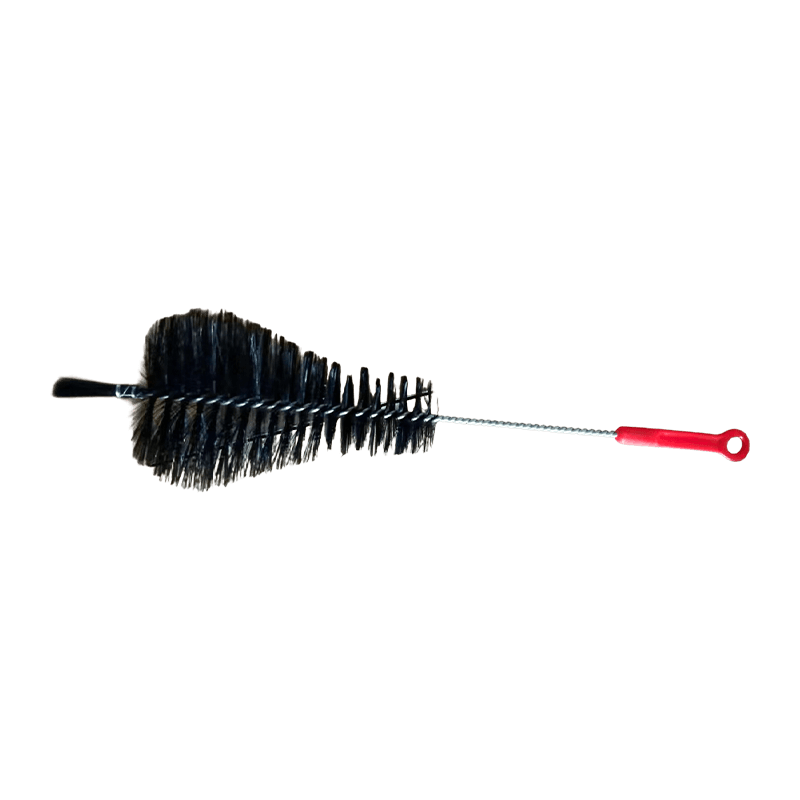
Color Handle Pipe Brush for Daily Kitchen Cleaning and Stain Removal
Product Overview
The brush is built around a simple combination of a durable handle and nylon bristles. The approximate 50-centimeter length provides a useful balance between reach and control. It is long enough to navigate under-sink plumbing and narrow sink openings, while remaining manageable for ordinary household users and professional cleaners.
The handle is designed to be easy to hold during repeated brushing. A secure grip is important because pipe cleaning often involves short back-and-forth movements, circular strokes, or twisting motions. A handle that is too short may force the user to place a hand close to residue. A handle that is excessively long may be awkward in a small kitchen or difficult to control inside a curved pipe. The moderate length of this model is intended to offer practical access without unnecessary bulk.
The colored handle gives the product immediate visual recognition. In a busy facility where several types of cleaning tools are stored together, color can help workers locate the correct brush quickly. It can also support simple tool allocation, such as assigning one color to kitchen drains and another tool to general floor or surface cleaning. The color feature is therefore both an appearance element and a practical organizational benefit.
Nylon bristles form the working part of the brush. Nylon is widely used in cleaning tools because it offers flexibility, resilience, and relatively fast drying. The bristles can bend around small corners and contact uneven surfaces while retaining enough firmness for routine removal of residue. They are appropriate for daily cleaning of common kitchen drainage components when used with suitable pressure and normal cleaning methods.
The bristle density is optimized for contact with stain-causing residue and biofilm. This does not mean that every stain can be removed without detergent or repeated treatment. It means that the brush provides a concentrated cleaning surface capable of reaching deposits that a bare stream of water may leave behind. The user can guide the bristles along the inside of a drain basket, around a guard, or through a connecting pipe to loosen material before rinsing.
Key Specifications
| Item No. | CC-3279 |
| Product Type | Pipe Brush |
| Main Material | Handle and nylon bristles |
| Approximate Length | 50 centimeters |
| Recommended Applications | Drain baskets, disposer guards, connecting pipes, sink maintenance, and narrow household cleaning areas |
| Carton Quantity | 100 pieces |
The compact specification makes the product easy for buyers to evaluate and distribute. The carton quantity of 100 pieces is suitable for wholesale purchasing, retail replenishment, cleaning-supply programs, and private-label or customized procurement discussions. Buyers can use the item number to organize quotations, purchase orders, inventory records, and product catalogs.
Functional Advantages Over Ordinary Cleaning Brushes
Extended Reach Without Excessive Bulk
One of the most important advantages of a dedicated pipe brush is reach. At approximately 50 centimeters, the handle can extend into a sink outlet or connecting pipe while allowing the user to remain in a more comfortable position. The length is also useful for under-sink areas where pipes may be difficult to approach directly.
Many general-purpose brushes are designed for countertops, tiles, shoes, or larger surfaces. Their heads may be too wide for drain openings, and their handles may not provide sufficient access. A pipe brush is shaped around the needs of narrow spaces. This specialization gives it a clear functional advantage when the cleaning task involves depth, limited visibility, and curved plumbing components.
Flexible Nylon Bristles for Curved Spaces
Rigid tools may scratch surfaces, fail to follow bends, or become difficult to move inside a pipe. Nylon bristles provide a degree of flexibility that allows them to adapt to curved and irregular areas. When the brush is pushed gently into a connecting pipe, the bristles can make contact with the inner wall instead of moving only through the center.
The bristles are also useful around drain baskets and disposer guards, where small openings and uneven edges can trap residue. Their flexibility helps the brush reach spaces between openings without requiring a large, aggressive cleaning head. This supports a more controlled cleaning method and can reduce the need for excessive force.
Designed for Routine Stain and Residue Removal
The product is intended for daily or frequent cleaning, not only emergency use. A quick sweep after food preparation or at the end of a work shift can remove fresh residue before it hardens. Fresh deposits are generally easier to dislodge than old, dried buildup. Regular use can therefore reduce the time and effort required for deeper cleaning later.
For stains that have accumulated over a longer period, the user may combine the brush with a suitable household cleaning solution, warm water, or a short soaking process. The brush then provides mechanical action to loosen the softened material. Users should always follow the instructions of any cleaning chemical and avoid mixing incompatible substances.
Fast-Drying Nylon for Improved Tool Hygiene
A cleaning tool that remains wet for long periods may develop an unpleasant smell or become a source of contamination. Nylon bristles dry relatively quickly when the brush is rinsed and stored in a ventilated position. This feature supports better tool hygiene, particularly in humid kitchens, utility rooms, janitorial closets, and commercial washing areas.
Fast drying does not eliminate the need for proper care. After use, the brush should be rinsed to remove loosened debris and detergent residue. It should then be shaken or drained and stored where air can circulate. These simple steps help maintain the bristles and extend the practical service life of the tool.
Easy Identification in Shared Work Areas
The color handle helps users distinguish the pipe brush from other cleaning equipment. This is useful in homes with several cleaning tools and even more valuable in facilities where many workers share supplies. Color coding can support cleaning-zone management by helping staff recognize which brush is intended for drains and which tools are reserved for other surfaces.
Clear tool identification may also improve training and workflow. A supervisor can assign the colored pipe brush to a specific maintenance step, reducing confusion during end-of-shift cleaning. Distributors can present the product as a practical and visually distinctive addition to a household cleaning range.
Recommended Applications
Kitchen Sink Drains
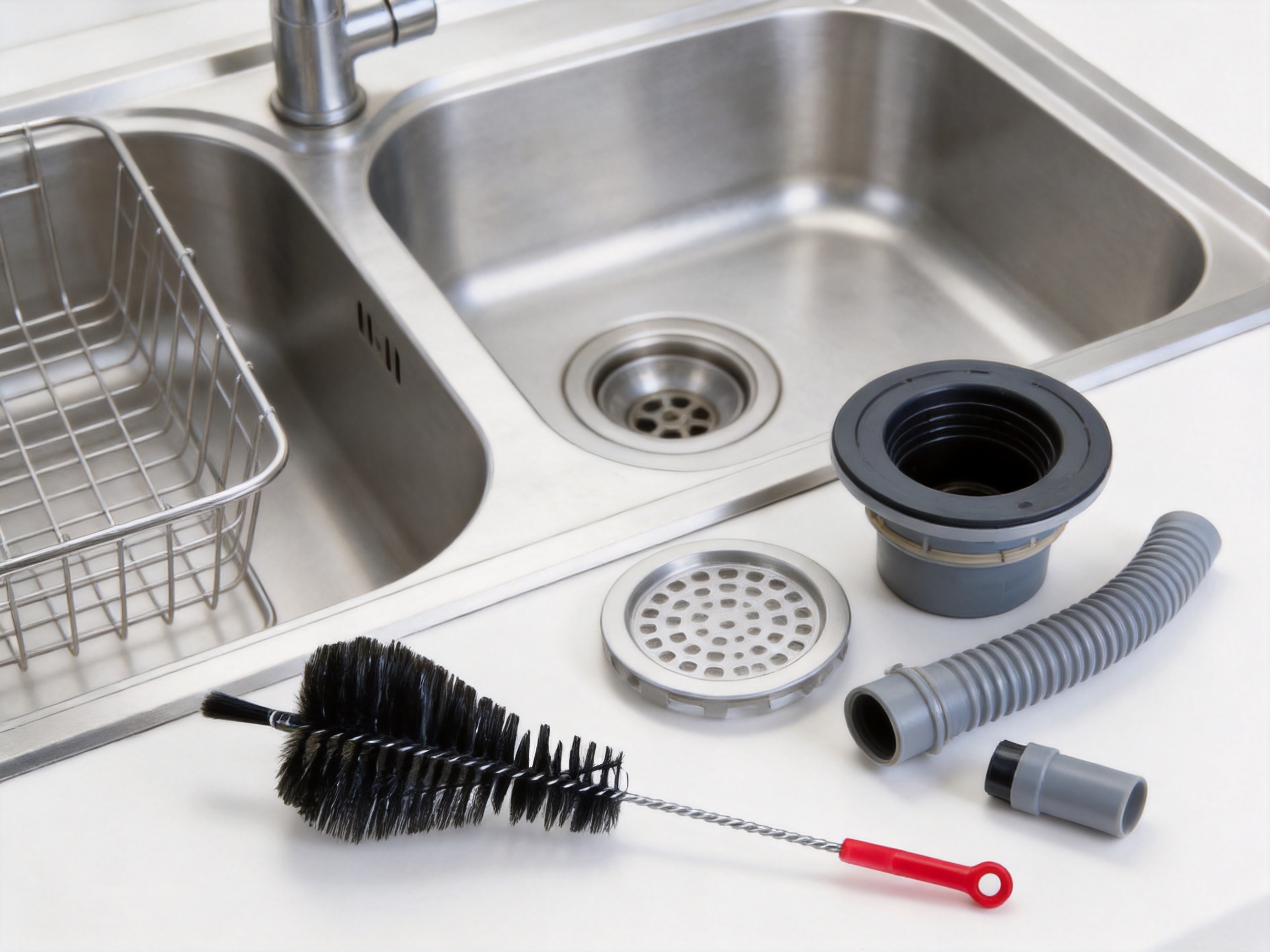
The most direct application is cleaning around the kitchen sink drain. Food particles and grease may collect below the drain basket, especially when the basket is not removed regularly. The brush can be inserted around the basket and moved along the surrounding surfaces to loosen residue. After brushing, the area can be rinsed with water and wiped dry where accessible.
When cleaning a removable drain basket, users can take it out first and brush both the upper and lower surfaces. The narrow bristle arrangement can enter openings and contact edges that are difficult to clean with a sponge. This process may help reduce the residue that contributes to unpleasant smells.
Disposer Guards and Sink Accessories
Disposer guards, splash guards, and similar sink accessories often contain ridges, slots, and flexible sections. These components can retain small particles even after the sink has been rinsed. The pipe brush can be used carefully around these areas to remove material from grooves and narrow openings.
Users should turn off and disconnect any appliance according to the manufacturer’s safety instructions before cleaning around moving components. The brush is a manual cleaning tool and should not be inserted into an operating disposer or any mechanism that could start unexpectedly.
Connecting Pipes and Under-Sink Plumbing
The moderate handle length is well suited to accessible portions of connecting pipes beneath or near a sink. It can help clean the inner walls of removable or open pipe sections when appropriate. The brush may also be used around pipe entrances, fittings, and connection points where residue has accumulated.
Plumbing components should be handled carefully. If a pipe must be removed, users should understand the connection system or seek assistance from a qualified professional. The brush is best used for routine surface and entrance cleaning rather than forcing blockages through the plumbing system.
Bathroom and Utility Areas
Although developed with kitchen maintenance in mind, the product may also be useful in bathroom drains, utility sinks, laundry areas, floor-drain covers, and narrow cleaning spaces. Soap residue, hair, mineral deposits, and other material can collect around drain openings. The nylon bristles can assist with routine removal when the area is suitable for manual brushing.
For hygiene control, organizations may assign separate brushes to kitchen, bathroom, industrial, and outdoor zones. The colored handle makes this type of separation easier to implement. Businesses should establish their own sanitation procedures and should not use one brush across incompatible cleaning zones without appropriate cleaning and disinfection.
Household and Facility Maintenance
Property managers, guesthouses, restaurants, schools, offices, and cleaning contractors may use pipe brushes as part of scheduled maintenance kits. Their low-complexity design makes them easy to issue to staff and simple to replace when necessary. A carton quantity of 100 pieces can support multi-site purchasing or long-term stock planning.
For supermarkets and e-commerce sellers, the brush can be positioned as a practical accessory within a broader household cleaning category. It complements drain covers, sink organizers, gloves, sponges, storage products, and other maintenance supplies. Its specialized purpose can help retailers serve customers who need a solution for narrow and difficult-to-reach areas.
How to Use the Brush Effectively
Before cleaning, remove visible objects from the sink or drain area. If the drain basket or guard is removable, take it out according to the component manufacturer’s instructions. This creates better access and prevents large debris from being pushed farther into the plumbing.
Rinse the brush if necessary, then place the bristle end into the area to be cleaned. Use short back-and-forth strokes, gentle twisting movements, or small circular motions depending on the shape of the surface. Avoid forcing the brush into a space that is too narrow. Controlled movement allows the bristles to contact residue while reducing the risk of bending the handle or damaging a component.
For fresh kitchen residue, warm water may be sufficient. For heavier grease or dried deposits, use a compatible cleaning product according to its label. Allowing a suitable solution to work for the recommended period may make brushing easier. Never combine cleaning chemicals unless the product instructions specifically permit it.
After brushing, rinse the cleaned area thoroughly. Rinse the brush itself under running water and inspect the bristles for trapped particles. Shake off excess water and place the brush in a ventilated location. Do not store it in a sealed, wet container immediately after use.
For commercial settings, cleaning staff can include the pipe brush in a daily closing checklist. A typical routine may include removing and rinsing the drain basket, brushing the accessible drain area, cleaning the brush, and returning it to a designated storage location. The exact process should match the facility’s sanitation plan and local requirements.
Care and Handling Recommendations
Use moderate pressure during cleaning. Nylon bristles are designed to flex and contact surfaces, but excessive force is unnecessary for routine maintenance. Do not use the brush as a lever, unclogging rod, or tool for breaking hard objects.
Inspect the handle and bristles periodically. If the bristles become severely worn, detached, or contaminated beyond cleaning, replace the brush. Establishments with strict hygiene requirements may also set replacement intervals based on frequency of use and their internal procedures.
Store the brush away from direct heat, open flames, and incompatible chemicals. Keep it in a place where the handle will not create a trip or snag hazard. Proper storage helps preserve the product and supports a cleaner working environment.
Manufacturing Strengths and Production Capability
The product is supplied by Jinhua Jieqing Plastic Co., Ltd., an industry and trade enterprise founded in 2008 and focused on cleaning supplies. Its product scope includes brooms, cleaning brushes, household brushes, industrial brushes, and supporting plastic products. This specialization provides an important advantage for buyers seeking a supplier with experience across multiple cleaning-tool categories.
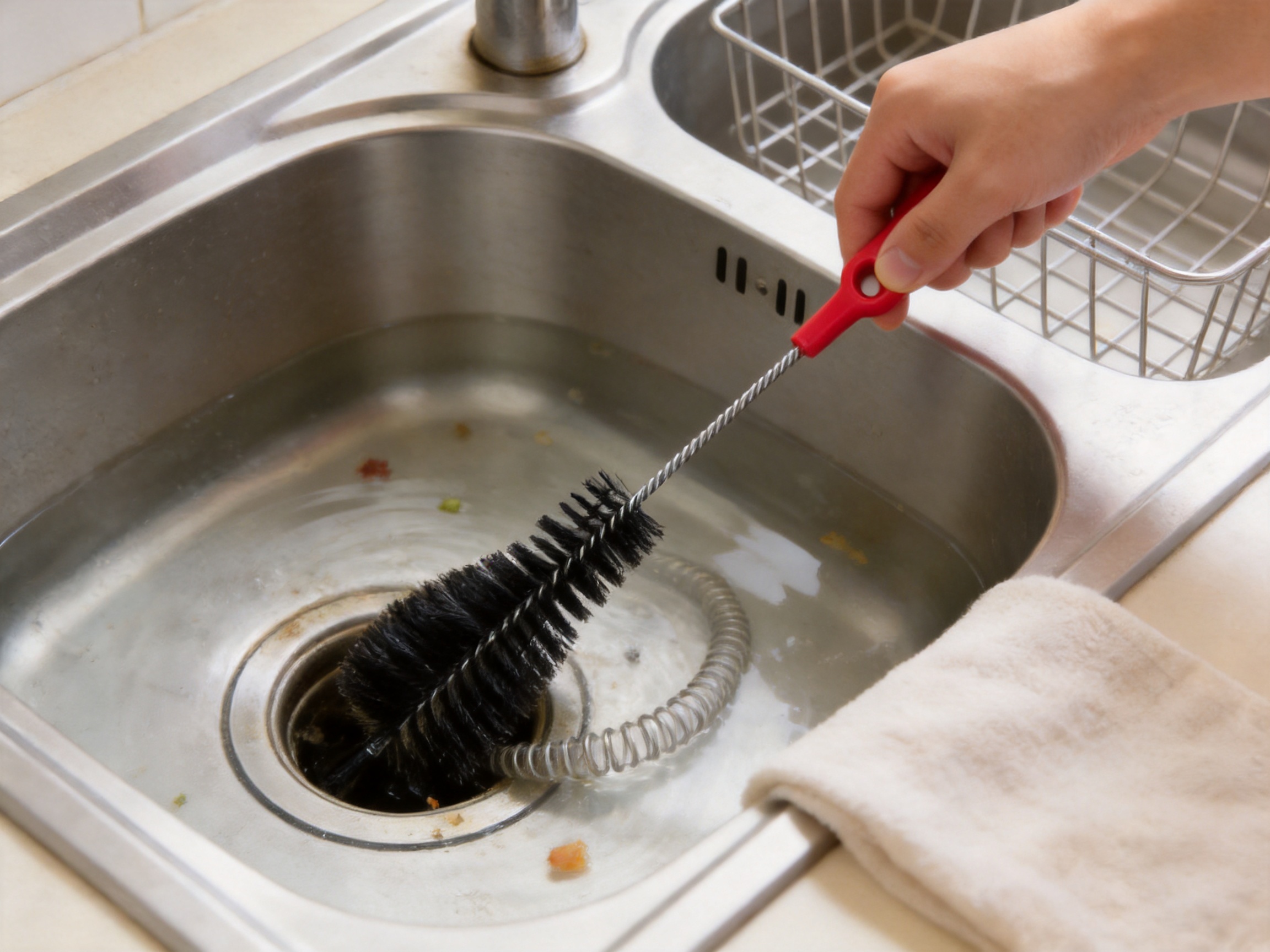
The company operates its own production base and maintains a complete supply chain. For a brush product, supply-chain coordination affects many stages, including raw-material preparation, handle production, bristle selection, brush assembly, inspection, packaging, and shipment. Managing these stages through an organized production system can improve consistency and make order planning more predictable.
Standardized production processes are another strength. A standardized approach helps define how materials are received, how components are assembled, how products are checked, and how finished cartons are prepared. For buyers ordering in bulk, process consistency is important because the appearance, dimensions, bristle performance, and packaging should remain stable from one shipment to the next.
Quality control is integrated into the company’s manufacturing approach. The supplied product information identifies the material combination as handle plus nylon bristles and gives an approximate length of 50 centimeters. These specifications provide a basic reference for production and purchasing. Additional inspection criteria may be agreed upon for particular orders, including appearance, color, bristle attachment, handle condition, packaging, and carton quantity.
The company’s research and development capability supports the creation and improvement of cleaning products for different use conditions. Pipe brushes require attention to practical details such as handle length, bristle flexibility, density, user comfort, storage, and application range. Product development experience in household and industrial brushes can help balance these requirements rather than focusing on only one feature.
Customization is available based on customer drawings and samples. This is valuable for importers, distributors, retailers, and institutional buyers who require a particular handle color, packaging format, product dimension, label arrangement, or design feature. Customization discussions should confirm technical drawings, sample approval, material requirements, order quantities, packaging specifications, and inspection standards before mass production.
The company also has extensive export experience and serves multiple market channels, including supermarkets, cross-border e-commerce, industrial procurement, and other distribution models. Export experience involves more than manufacturing. It may require accurate documentation, carton planning, product presentation, communication across time zones, shipping coordination, and attention to destination-market expectations.
Why Supplier Capability Matters for This Product
A pipe brush is a straightforward product, but reliable mass production still requires attention to detail. If the bristles are unevenly fixed, the brush may lose cleaning effectiveness. If the handle is uncomfortable or inconsistent in length, users may have difficulty reaching target areas. If packaging is weak, products may arrive scratched, bent, or mixed during transportation.
An experienced cleaning-supply manufacturer can address these issues through repeatable production controls. The ability to manufacture related products also allows the supplier to understand how different brush constructions perform in different settings. This knowledge is useful when adapting a standard pipe brush for household, commercial, industrial, or promotional use.
For bulk buyers, a one-stop supply model can reduce the need to coordinate several factories. A customer may source multiple cleaning categories, supporting plastic products, and customized items through one established supplier. This can simplify communication, consolidate shipments, support more consistent quality expectations, and reduce administrative work.
Product range is another commercial advantage. Buyers often need complementary items rather than a single brush. A supplier able to provide brooms, general cleaning brushes, household tools, industrial brushes, and plastic accessories can help distributors build a more complete product line. The pipe brush can therefore function as one item within a broader cleaning-supply program.
Advantages for Different Buyer Groups
For Household Retailers
Retailers can offer the brush as a specialized solution for customers who have already tried sponges and ordinary brushes without reaching narrow drain areas. Its clear use case is easy to communicate: long reach, narrow bristles, daily sink maintenance, and residue removal. The colored handle also creates shelf visibility and makes the item easy to recognize in product images.
The brush can be sold individually, in multipacks, or as part of a kitchen cleaning set. Retail packaging can emphasize the approximate 50-centimeter length, nylon bristles, and suitable applications. Retailers should present the product information accurately and avoid claiming that it replaces professional plumbing service or guarantees complete odor elimination.
For Cleaning-Service Companies
Cleaning contractors need tools that are easy to distribute, use, rinse, and replace. The pipe brush can be included in kitchen, bathroom, hospitality, and property-maintenance kits. Its extended handle allows workers to clean narrow spaces without direct hand contact, while the visible handle supports quick identification in shared equipment areas.
With a carton quantity of 100 pieces, companies can purchase enough units for multiple teams or locations. They can establish separate tools for different zones and replace worn brushes according to their own hygiene schedules.
For Restaurants and Commercial Kitchens
Commercial kitchens often require frequent cleaning of sinks and drainage components. A compact pipe brush can be assigned to closing procedures or periodic maintenance. Its daily-use design supports quick cleaning between more comprehensive sanitation tasks.
Managers can combine the brush with written procedures covering rinsing, chemical use, drying, storage, and replacement. The tool can help staff reach neglected areas, but the facility should continue to follow food-safety practices, equipment instructions, and applicable regulations.
For Industrial and Institutional Buyers
Workshops, factories, schools, hospitals, offices, and public facilities may have utility sinks, drains, channels, or narrow equipment openings requiring routine brushing. The product’s general construction and moderate length can be suitable for selected non-specialized cleaning tasks.
Industrial buyers should evaluate the compatibility of nylon bristles with the surfaces, temperatures, chemicals, and residue types in their facilities. If a specific application requires chemical resistance, high-temperature performance, antistatic properties, or a special bristle stiffness, these requirements should be discussed during product selection or customization.
Quality and Procurement Considerations
When evaluating a pipe brush for bulk purchase, buyers should confirm the dimensions, materials, handle color, bristle density, bristle length, and packaging method. The approximate length is listed as 50 centimeters, so buyers requiring a precise tolerance should request a technical specification or approved sample.
Material confirmation is also important. This model is identified as having a handle with nylon bristles. Buyers may request information about the handle material, bristle diameter, attachment method, and any available packaging options. These details can affect durability, flexibility, appearance, and suitability for different cleaning environments.
Sampling before mass production is recommended for customized orders. A sample allows the buyer to check grip comfort, access, bristle performance, color, labeling, and overall appearance. Once approved, the sample can serve as a reference for production and inspection.
Carton planning should consider the customer’s storage capacity, shipping method, and sales channel. The listed carton quantity is 100 pieces. Buyers should confirm carton dimensions, gross weight, net weight, inner packaging, and loading quantity when arranging international shipment or warehouse replenishment.
Clear communication reduces delays. A purchase inquiry should include the item number, desired quantity, target market, packaging requirements, color preferences, delivery expectations, and any compliance documentation needed for the destination. When customization is requested, drawings, samples, artwork, and approval procedures should be identified at the beginning of the project.
Positioning in the Cleaning-Supply Market
The pipe brush occupies a useful position between ordinary household brushes and specialized plumbing tools. It is more targeted than a general scrub brush but simpler and more accessible than professional drain-maintenance equipment. This makes it suitable for customers who want to perform regular cleaning themselves without investing in complex tools.
Its strongest selling point is practical access. Many cleaning products focus on visible surfaces, while this brush addresses the narrow spaces that are commonly missed. The product can therefore be positioned around preventive maintenance, odor reduction support, improved sink hygiene, and convenient reach.
Compared with very short brushes, the approximately 50-centimeter handle offers greater distance from dirty areas. Compared with very rigid rods, nylon bristles offer a gentler and more adaptable cleaning action. Compared with bulky brushes, the narrow design is better suited to drain openings and pipe connections. These advantages make the brush distinct within a broad household cleaning assortment.
The product should be marketed responsibly. It can help remove residue and support fresher drains, but results depend on the condition of the plumbing, the type of residue, cleaning frequency, and the user’s method. It should not be promoted as a guaranteed cure for blocked pipes, structural plumbing defects, or serious sanitation problems.
Environmental and Practical Considerations
Using a durable, reusable brush for routine maintenance can reduce reliance on disposable wipes and single-use cleaning accessories. The brush can be rinsed and used repeatedly, provided that it remains in suitable condition and is cleaned according to the user’s hygiene requirements.
Its simple construction also supports straightforward handling at the end of its service life. Buyers concerned about waste management should review the materials and local disposal rules applicable to the handle and nylon bristles. For large institutional orders, packaging optimization may help reduce unnecessary material use during transport.
Durability is influenced by cleaning pressure, chemical exposure, temperature, storage, and frequency of use. A brush designed for ordinary household and facility cleaning should not be subjected to conditions beyond its intended application. Choosing the right tool for the right environment is one of the most effective ways to extend product life.
Frequently Asked Questions
What is the main purpose of this pipe brush?
The main purpose is to clean narrow and difficult-to-reach areas around kitchen drains, drain baskets, disposer guards, connecting pipes, and sink components. It is intended for regular removal of food residue, grease-related deposits, stains, and biofilm-supporting material.
How long is the handle?
The handle is approximately 50 centimeters long. This moderate length provides useful reach while remaining practical for household sinks, under-sink plumbing, utility areas, and commercial cleaning tasks.
What are the bristles made of?
The bristles are made of nylon. Nylon provides flexibility and resilience for routine brushing, and it dries relatively quickly after rinsing when stored in a ventilated location.
Can the brush be used every day?
Yes. The product is designed for daily kitchen cleaning and preventive maintenance. Frequent light cleaning can help remove fresh residue before it becomes more difficult to remove. The brush should be rinsed and dried after each use.
Can it remove a serious blockage?
The brush is intended for cleaning residue from accessible surfaces, not for clearing serious blockages or repairing plumbing. If water does not drain normally, if there is a leak, or if an object is lodged in the pipe, users should follow appropriate plumbing procedures or contact a qualified professional.
Is it suitable for bathroom drains?
It may be suitable for selected bathroom, laundry, and utility drains, provided that the bristles and handle are compatible with the application. For hygiene reasons, it is recommended to assign separate brushes to different cleaning zones.
Does the colored handle affect performance?
The color does not replace the brush’s cleaning function, but it improves visibility and identification. It can help users locate the tool quickly and support color-coded cleaning systems in homes, businesses, and institutions.
How should the brush be cleaned after use?
Rinse the bristles thoroughly to remove loosened debris and cleaning-product residue. Shake off excess water and store the brush in a ventilated area. Avoid placing it immediately into a closed container while it is still wet.
What is the item number?
The item number is CC-3279. Buyers can use this number when requesting quotations, samples, purchase orders, or product information.
How many pieces are packed in one carton?
The listed carton quantity is 100 pieces. Buyers should confirm carton dimensions, weight, and packaging details for their specific order before shipment.
Can the product be customized?
Customization is available based on customer drawings and samples. Possible discussions may include handle color, packaging, labeling, dimensions, and other production details. Final options depend on the order requirements and technical evaluation.
Why choose a specialized cleaning-supply manufacturer?
A specialized manufacturer can provide relevant experience in brush design, material selection, assembly, quality control, packaging, and export coordination. A broader product range and in-house production base may also simplify sourcing for buyers who need several categories of cleaning supplies.
Conclusion
The Color Handle Pipe Brush is a practical solution for a cleaning problem that ordinary tools often overlook. Its approximately 50-centimeter handle provides useful reach, while flexible nylon bristles help contact residue inside and around narrow drainage components. The colored handle improves visibility, and the fast-drying nylon supports more hygienic storage when the tool is rinsed and ventilated after use.
Its advantages are especially clear in daily kitchen maintenance. A quick brushing routine can help remove fresh residue from drain baskets, disposer guards, connecting pipes, and sink openings before deposits become more difficult to manage. The product can also serve selected bathroom, utility, household, commercial, and institutional applications when used appropriately.
For wholesale and customized procurement, the product benefits from the manufacturing capabilities of Jinhua Jieqing Plastic Co., Ltd. The company’s experience since 2008, own production base, standardized processes, quality-control approach, broad cleaning-supply range, export experience, and customization services provide a strong foundation for reliable supply. These capabilities allow the pipe brush to be considered not only as an individual household tool but also as part of a larger cleaning-products program.
With item number CC-3279 and a standard carton quantity of 100 pieces, the brush is suitable for distributors, retailers, cleaning contractors, supermarkets, commercial kitchens, and industrial procurement teams. Buyers can select the standard product for immediate sourcing or discuss customized specifications based on drawings, samples, and market requirements.
References
1. Product specification sheet for Item CC-3279, including material, approximate length, and carton quantity.
2. Manufacturer company information concerning cleaning-supply production, product development, customization, quality control, and export experience.
3. General household cleaning and preventive maintenance principles for kitchen sinks, drainage components, and narrow plumbing areas.
4. General material information regarding nylon bristles, flexibility, drying behavior, and common applications in cleaning tools.
5. General procurement practices for cleaning-tool sampling, packaging confirmation, bulk ordering, and quality inspection.
Product: Color Handle Pipe Brush for Daily Kitchen Cleaning and Stain Removal

 CONTACT US
- CONTACT DETAILS
- Address : No. 1388 Cuntong Road, Jinhua City
- Tel: +86-0579-81534043
- Email:wangjinhua1@zjjqsj.com
- PRODUCTS
- Kitchen Cleaning Supplies
- Household Cleaning Supplies
- Indoor & Outdoor Cleaning Supplies
- Baby Products & Cleaning Supplies
- Home Storage Containers
- QUICK LINK
- Company Profile
- Plant equipment
- Certifications
- FAQ
- NEWS CENTER
- Company News
- Industry News
- MOBILE TERMINAL

