

 English
  русский
  Español
  عربى
عربى 
Commercial Heavy TPR Plunger 7818: A Professional Solution for Demanding Drainage Maintenance
Date:Sep 21, 2026
Commercial and public drainage systems require tools that can withstand repeated use, high pressure, and challenging blockage conditions. A household plunger may be suitable for occasional light maintenance, but it can lose effectiveness when used in hotels, factories, schools, commercial buildings, public restrooms, or other facilities with heavy daily traffic. The Commercial Heavy TPR Plunger 7818 15cm is designed for professional cleaning environments where durability, operating force, and dependable performance are essential.
This plunger combines a thick thermoplastic rubber cup with a substantial net weight of 18 kilograms. Its heavy construction gives operators greater downward force and stability during use, while the TPR material is designed to resist collapse under pressure. With a 15-centimeter calibre and overall dimensions of 61 × 45 × 38 centimeters, the product is developed for demanding applications rather than occasional domestic use.
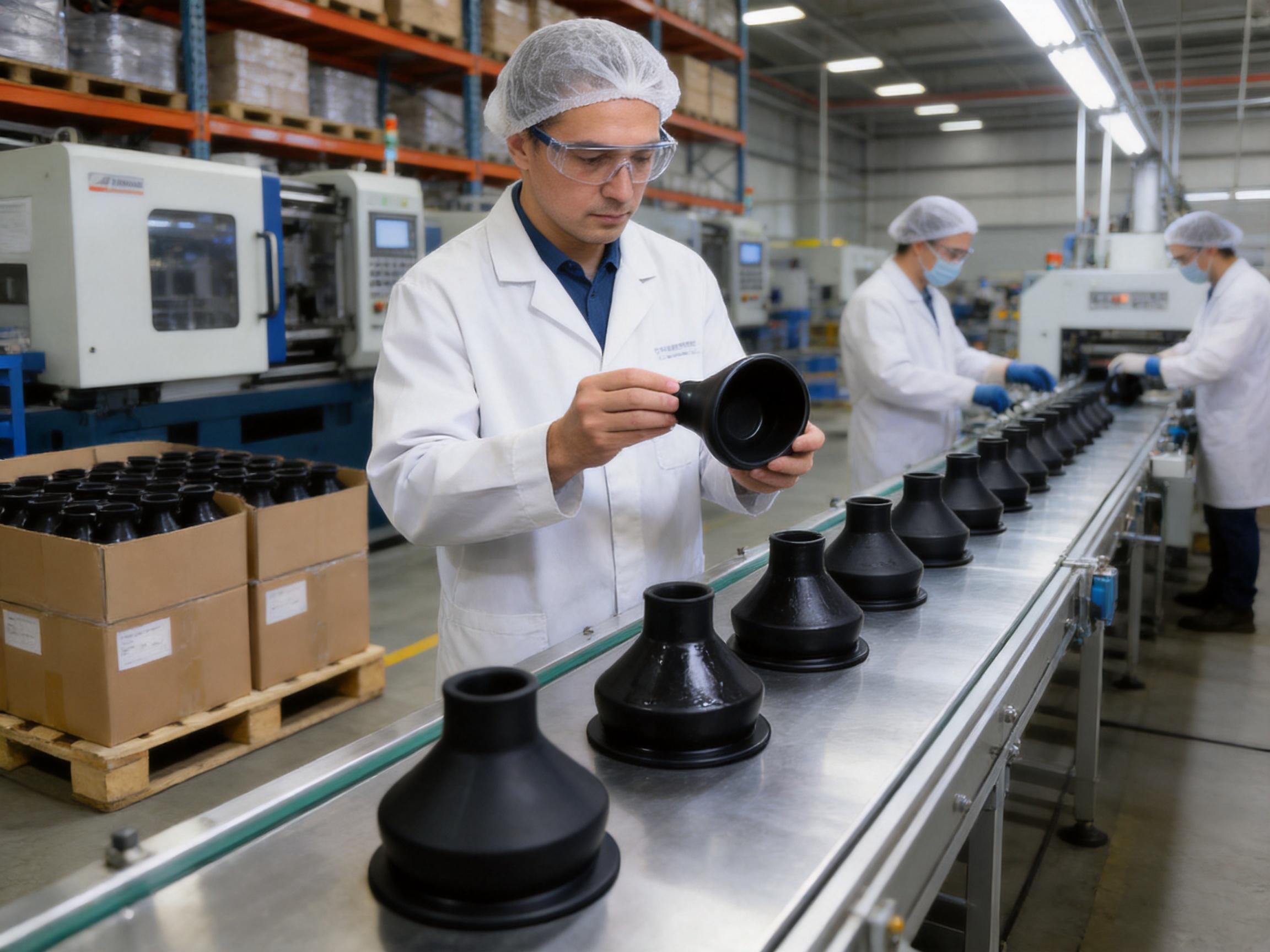
The product is manufactured and supplied by Jinhua Jieqing Plastic Co., Ltd., an industry and trade enterprise founded in 2008 and focused on cleaning supplies, household products, industrial brushes, brooms, and supporting plastic products. The company combines product development, production, sales, quality control, export experience, and customization services to support commercial buyers and distributors.
For procurement teams, wholesalers, facility managers, and professional cleaning suppliers, the 7818 offers a practical combination of robust materials, high operating mass, repeat-use suitability, and supply flexibility. It is especially suitable for customers seeking a commercial-grade plunger that can perform more consistently than lightweight residential alternatives.
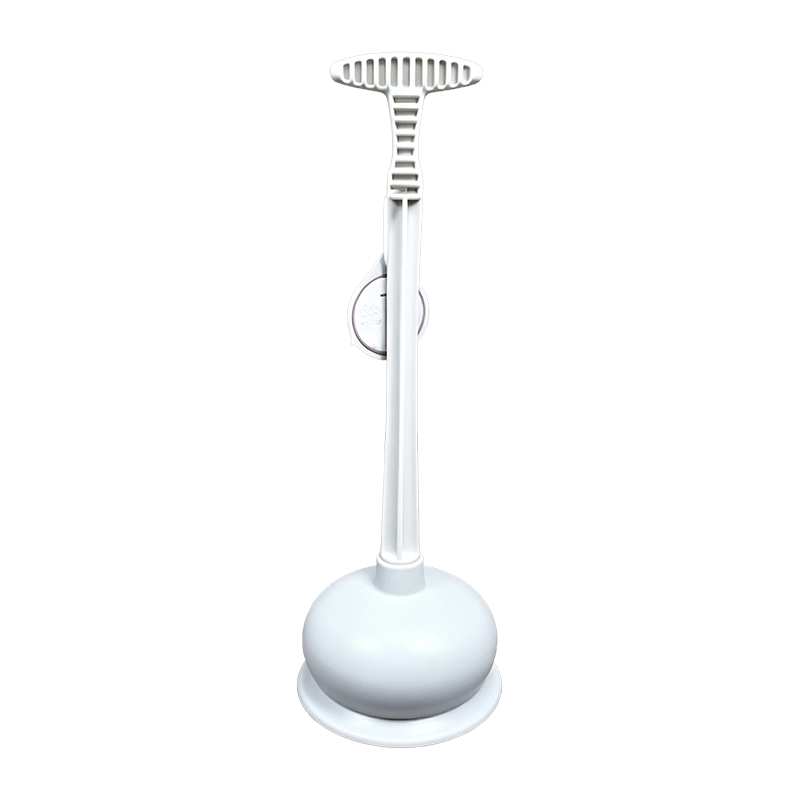
Commercial Heavy TPR Plunger 7818 15cm (61x45x38cm)
1. Product Overview
The Commercial Heavy TPR Plunger 7818 is a professional drainage and toilet-cleaning tool intended for use in environments where clogs must be cleared quickly and repeatedly. Its principal working component is a TPR cup with a 15-centimeter calibre. TPR, or thermoplastic rubber, is valued for combining rubber-like flexibility with the processing advantages of thermoplastic materials.
The plunger cup must create a temporary seal over or around a drain opening. Once a seal is established, the operator applies controlled downward and upward pressure to generate changes in pressure within the pipe. These pressure changes can loosen, move, or break apart obstructions. The quality of the cup is therefore central to the performance of the entire tool.
In a commercial model, the cup must remain stable while subjected to stronger and more frequent operating force. If the cup collapses, folds excessively, or loses contact with the surface, pressure transfer becomes less efficient. The 7818 is designed with a thicker TPR cup to help maintain its shape during demanding plunging operations.
The heavy construction also provides an important operational advantage. A net weight of 18 kilograms gives the tool substantial mass before the user applies additional force. This mass can help the plunger remain in position, support more forceful pressure cycles, and reduce the need for the operator to compensate for a lightweight body.
| Specification | Provided Detail |
|---|---|
| Product name | Commercial Heavy TPR Plunger 7818 |
| Item number | 7818 |
| Calibre | 15 cm |
| Primary material | TPR |
| Listed dimensions | 61 × 45 × 38 cm |
| Net weight | 18 kg |
| Listed quantity | 60 units |
| Recommended application | Commercial toilets, public restrooms, hotels, factories, and facility maintenance |
| Product category | Toilet Cleaning Supplies |
The listed dimensions are presented as 61 × 45 × 38 centimeters in the supplied product information. Buyers should confirm whether these measurements refer to the individual product, a packing configuration, or a logistics unit before finalizing transportation and warehouse plans. This confirmation is particularly important for high-volume orders.
2. Why Commercial Facilities Need Heavy-Duty Plungers
Drainage problems in commercial facilities can create more than a minor inconvenience. A blocked toilet or floor drain may interrupt operations, affect hygiene standards, generate unpleasant odors, and lead to complaints from employees, customers, guests, or residents. In high-traffic buildings, the same drainage fixtures may be used dozens or hundreds of times each day, increasing the likelihood of paper accumulation, organic matter, and other obstructions.
Commercial maintenance personnel also work under time pressure. A tool that requires repeated unsuccessful attempts can increase labor costs and extend downtime. In contrast, a more substantial plunger can provide a stronger first response before maintenance staff need to escalate to mechanical snakes, pressure equipment, or professional drainage services.
Residential plungers are generally designed for occasional use and moderate blockages. They are often lighter, thinner, and easier to store in a small bathroom cabinet. Those features may be convenient for a home, but they can become limitations in a factory, hotel, public restroom, or institutional setting. Frequent commercial use can accelerate deformation, cracking, material fatigue, or loss of sealing performance in lighter products.
The 7818 addresses these operating conditions through three key characteristics: a thick TPR cup, a commercial-scale structure, and an 18-kilogram net weight. Together, these features are intended to support stronger pressure cycles and more stable positioning during maintenance work.
Heavy equipment is not automatically superior for every situation. The user must still select a tool that matches the drain opening, surface geometry, blockage type, and available working space. However, when a facility needs a robust tool for dense clogs and repeated use, a heavy commercial plunger can offer a meaningful advantage over low-cost household models.
3. The Performance Role of TPR Material
Thermoplastic rubber is an important part of the 7818 design. Traditional rubber and thermoplastic rubber may have different processing characteristics, but TPR is commonly selected for products that require flexibility, resilience, and a practical manufacturing process. In a plunger cup, the material needs to flex sufficiently to make contact with a surface while retaining enough structural strength to transmit pressure.
A cup that is too rigid may struggle to form a seal on a slightly uneven surface. A cup that is too soft or thin may fold inward when force is applied. The product description emphasizes that the 7818 uses a thicker TPR cup than residential models. This construction is intended to reduce collapse under extreme pressure and support a more reliable working shape.
Material thickness affects how the cup reacts during both the compression and release phases of plunging. During compression, the cup must withstand downward force without deforming excessively. During release, it must recover sufficiently to help create a pressure change in the drain. A stable and resilient cup can make the operator’s motion more efficient.
TPR can also be suitable for a range of cleaning environments because it is manufactured as a durable flexible material rather than as a fragile rigid plastic. Nevertheless, users should follow appropriate cleaning and storage practices. The plunger should be rinsed after use when necessary, allowed to dry, and stored away from sharp edges, excessive heat, and chemicals that are not compatible with the material.
The use of TPR does not eliminate the need for proper operation. Operators should not use excessive force in a way that could damage the fixture or the pipe. Instead, the plunger should be positioned carefully, a seal should be formed, and pressure should be applied in controlled cycles. The heavy design provides capacity, but safe technique remains essential.
4. Heavy Mass and Pressure Transfer
The 18-kilogram net weight is one of the most distinctive specifications of the 7818. Many basic plungers are light enough to be lifted with one hand and stored easily, but their low mass can limit stability during difficult tasks. When an operator pushes downward, part of the force may be lost if the tool moves, shifts, or fails to maintain contact with the surface.
A heavier plunger can remain more firmly positioned during use. Its mass may help the cup stay in place while the operator creates a pressure cycle. This can be valuable when a blockage is dense or when the drain requires multiple cycles before the obstruction begins to move.
Heavy mass can also reduce the amount of manual effort needed to keep the tool grounded. The operator still controls the motion, but the tool’s weight contributes to the downward force. In commercial environments, this characteristic may help improve consistency among different maintenance workers with varying levels of physical strength and experience.
The weight also communicates the intended use of the product. An 18-kilogram plunger is not designed primarily as a compact household accessory. It is a facility-maintenance tool built around strength, stability, and repeated use. Buyers should plan appropriate handling procedures, storage locations, and staff training before deploying it.
Because the product is heavy, it should be moved carefully. Personnel should use correct lifting techniques, avoid dropping the unit, and ensure that storage racks or cleaning closets can support its weight. If the plunger is used in a public restroom, facility managers should also consider whether it should remain accessible to trained staff rather than being left unattended.
5. Advantages Over Lightweight Residential Alternatives
5.1 Stronger structural support
The thick TPR cup is designed for conditions in which a thin residential cup may deform. A stronger cup can maintain a more consistent profile when the operator applies greater pressure. This helps direct force toward the blockage rather than allowing the cup to fold or flatten.
5.2 Greater stability during operation
The 18-kilogram net weight gives the 7818 a stability advantage over lightweight plungers. The tool is less likely to move unexpectedly during a pressure cycle, provided it is used on a suitable surface and positioned correctly. Greater stability can make the operation more predictable and may reduce repeated repositioning.
5.3 Better suitability for dense clogs
Some blockages are more resistant than the soft, loose obstructions commonly encountered in homes. Commercial restrooms and industrial facilities may experience dense accumulations of paper, waste material, or other debris. The 7818 is designed for heavy commercial use and provides a more substantial pressure tool for these situations.
5.4 Reduced dependence on repeated light strokes
A light plunger may require many rapid or forceful strokes to produce a noticeable effect. The heavier structure of the 7818 supports deliberate pressure cycles. Although the final result depends on the blockage and drain configuration, the product’s construction is intended to help users work with greater force and control.
5.5 Professional positioning
For hotels, factories, schools, service contractors, and cleaning-supply distributors, professional equipment can support a more organized maintenance program. A commercial plunger communicates that the facility is prepared for routine drainage problems rather than relying on improvised tools or low-cost consumer products.
These advantages should be considered alongside the product’s size and weight. The 7818 may not be the most convenient choice for a small apartment or a compact residential bathroom. Its value is greatest where durability, strength, and commercial serviceability are more important than minimal storage requirements.
6. Practical Applications
Hotels and hospitality facilities
Hotels must respond rapidly to plumbing problems because a blocked toilet can affect guest satisfaction and room availability. Housekeeping or maintenance teams can keep heavy-duty plungers in service areas, maintenance closets, or selected floors. The 7818 is suitable for facilities that experience frequent restroom use and need equipment capable of handling urgent blockages.
Factories and workshops
Factories and workshops may have staff restrooms, washrooms, utility areas, and drainage points exposed to more demanding operating conditions than a standard home. The 7818 can form part of a broader facility-maintenance toolkit. Its heavy design may be particularly useful where maintenance staff need a strong manual option before using powered equipment.
Public restrooms
Public toilets are subject to continuous use by many different users. Maintenance personnel may need to respond to blockages several times over the life of the facility. A commercial plunger can help reduce dependence on disposable or low-durability products and provide a designated tool for trained cleaning teams.
Schools and institutional buildings
Schools, hospitals, government buildings, sports centers, and other institutions often operate large numbers of washrooms. A standardized maintenance program can place suitable plungers in designated areas and reduce response time. The 7818 may be purchased in larger quantities for central facility management or distributed to regional maintenance teams.
Cleaning contractors
Professional cleaning companies need equipment that can move between customer sites without failing after a few jobs. A heavy commercial plunger can complement brushes, brooms, squeegees, buckets, and other cleaning tools. Contractors should consider transport requirements because the 7818’s 18-kilogram weight may affect vehicle organization and worker handling procedures.
Industrial and commercial procurement
Distributors and industrial buyers may use the product as part of a broader toilet-cleaning or facility-maintenance product line. The item number, material, calibre, dimensions, net weight, and listed quantity provide a foundation for product catalogues, purchase orders, and warehouse records.
7. Correct Operating Method
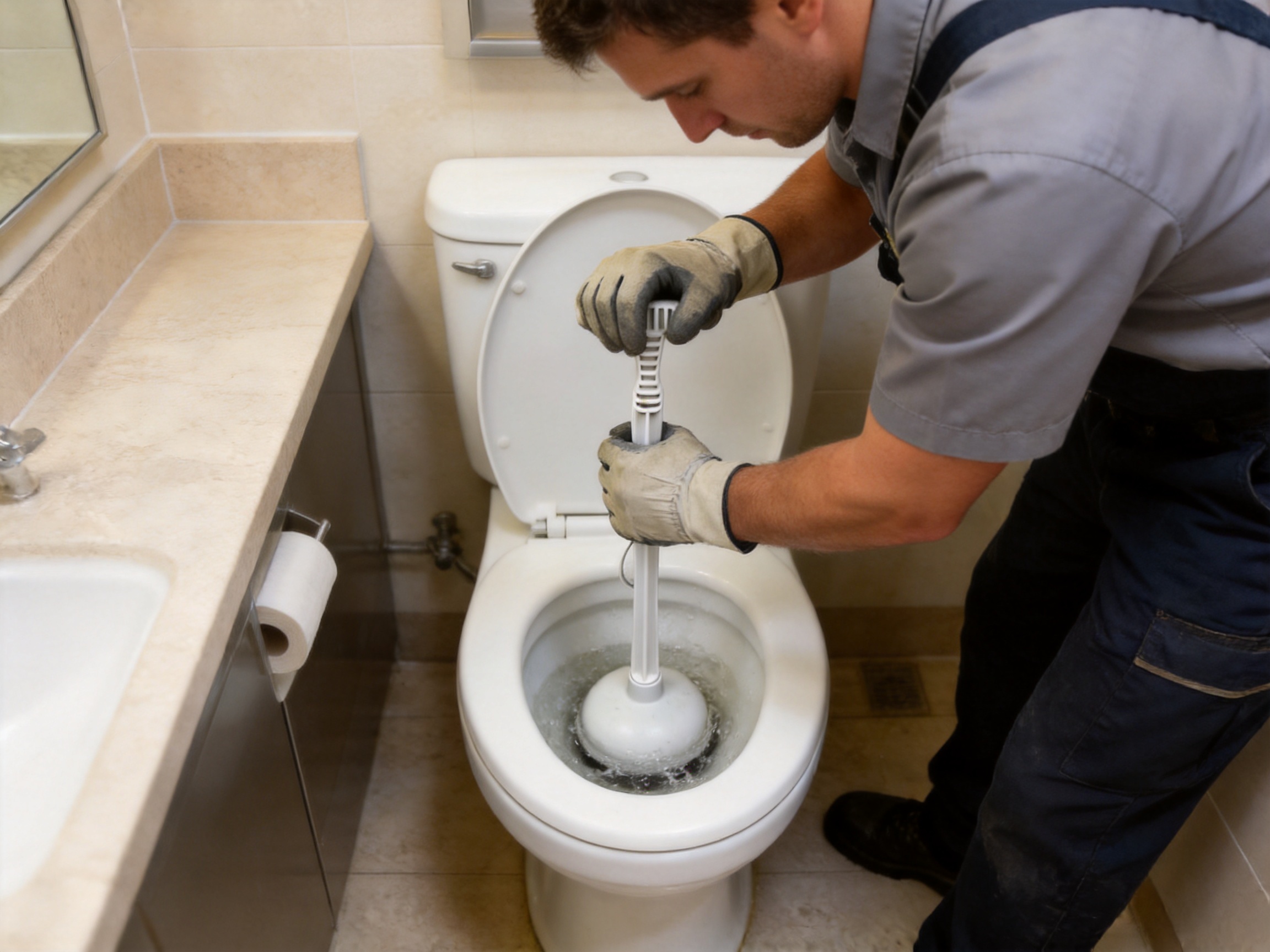
Effective plunging begins with preparation. The operator should inspect the fixture, identify the drain opening, and remove visible debris only when it can be done safely. If there is standing water, enough water should generally remain to cover the working edge of the cup, because water transmits pressure more effectively than air.
The cup should be placed centrally over the opening. The operator should aim to form a continuous seal around the drain area. If the fixture has an unusual shape, the user may need to adjust the angle or position of the plunger. A poor seal can make even a heavy tool appear ineffective.
Once positioned, the operator should begin with controlled downward pressure rather than immediately applying a violent movement. The first compression helps establish the seal and determine how the cup responds. The user can then follow with controlled push-and-pull cycles, maintaining contact with the surface.
If the obstruction begins to move, the operator should continue carefully until drainage improves. The fixture should then be flushed or rinsed according to the facility’s procedures. If several controlled attempts produce no improvement, the issue may involve a deeper blockage, an unsuitable tool-to-opening relationship, or a structural plumbing problem.
Operators should not use the plunger with incompatible chemical drain cleaners unless the facility’s safety procedures specifically permit it. Chemical residue may splash during plunging and create a serious hazard. Personal protective equipment, including suitable gloves and eye protection where appropriate, should be selected according to the work environment.
After use, the plunger should be cleaned and stored in a designated location. A clean, dry tool is easier to inspect and more appropriate for repeated service. Facility teams should check the TPR cup periodically for cuts, permanent deformation, surface deterioration, or other signs that could affect sealing performance.
8. Manufacturing Strengths and Production Capabilities
Jinhua Jieqing Plastic Co., Ltd. was founded in 2008 and operates as an industry and trade enterprise specializing in the research, development, production, and sales of cleaning supplies. Its product range includes brooms, cleaning brushes, household brushes, industrial brushes, and supporting plastic products. This broader product experience is relevant to the manufacture and supply of commercial cleaning tools such as the 7818.
The company reports that it has its own production base, a complete supply chain, standardized production processes, and stable quality control. These capabilities can support more consistent manufacturing from material preparation through production, inspection, packing, and shipment.
For a product such as a heavy TPR plunger, production control is important because the cup must achieve an appropriate balance of flexibility, thickness, shape, and structural stability. Variations in material condition, moulding, trimming, or finishing may influence how the cup contacts a drain and responds to pressure. Standardized processes can help reduce unnecessary variation between production batches.
A company with in-house production resources can also coordinate product development more efficiently. When customers require adjustments based on drawings, samples, packaging specifications, or market requirements, communication between product development and manufacturing teams may be more direct than in a purely trading-based supply model.
The company’s experience with household and industrial cleaning products also provides a useful understanding of different user environments. Residential users may prioritize compact storage and low weight, while industrial customers may focus on material strength, service life, order consistency, and supply reliability. A manufacturer serving both markets can organize its product portfolio around these distinct requirements.
Stable quality control is especially valuable for wholesale customers. A distributor needs products that remain consistent in dimensions, material appearance, packing configuration, and item identification. Consistency supports fewer receiving disputes, more reliable inventory planning, and greater confidence when reselling to commercial users.
9. Product Development and Customization
The company provides customization based on customer drawings and samples. This capability may be valuable for importers, distributors, supermarket suppliers, private-label buyers, and commercial cleaning brands that require product adjustments. Customization may involve product structure, colour, packaging, labelling, or other agreed specifications, subject to production feasibility.
For the 7818, buyers may wish to discuss packaging requirements because the unit is heavy and has substantial listed dimensions. Packaging must protect the TPR cup from deformation and prevent avoidable damage during loading, transportation, and storage. The exact packing method, carton quantity, pallet arrangement, and shipping measurements should be confirmed during quotation and order review.
Customization is most efficient when buyers provide complete information. Drawings should include important dimensions and tolerances where necessary. Samples should be accompanied by written requirements explaining which features must remain unchanged and which features may be modified. Buyers should also define their target market, expected order quantity, labelling needs, and compliance requirements.
A structured development process can include sample review, material confirmation, production feasibility assessment, pre-production approval, mass production, inspection, and shipment documentation. This process helps align the buyer’s expectations with the actual product before a larger order is released.
Customization does not mean that every requested modification is automatically possible. Heavy products may require changes to moulds, handling procedures, packing materials, or transportation plans. Buyers should therefore confirm technical and commercial details early, especially when requesting a different calibre, material formulation, shape, or packaging unit.
10. Quality Control Considerations
Quality control for a commercial TPR plunger should consider more than visual appearance. The cup should be examined for uniformity, obvious surface defects, cracks, cuts, incomplete forming, excessive flash, and permanent deformation. The product should also be checked against the agreed dimensions and material requirements.
Weight verification can help identify major variation in the finished product. Since the 7818 is specified with an 18-kilogram net weight, buyers may establish a reasonable inspection tolerance during order confirmation. The exact acceptable range should be agreed between the buyer and supplier because production and weighing conditions can affect recorded values.
Packaging inspections are also important. A heavy product can place stress on cartons, pallets, straps, and handling equipment. The packing design should be strong enough for the intended shipping method and should protect the cup from pressure that could permanently change its shape.
For repeated procurement, buyers may establish a product specification sheet containing the item number, calibre, material, dimensions, net weight, quantity, packaging method, and approved visual reference. This document can simplify communication between purchasing, quality-control, logistics, and warehouse teams.
Samples should be evaluated in realistic conditions whenever possible. A facility manager may test the plunger on the types of toilet or drain openings found at the target site. This helps confirm that the 15-centimeter calibre and cup shape are suitable for the intended application.
Testing should be performed responsibly. The goal is to evaluate sealing, stability, ease of handling, and resistance to ordinary operating pressure rather than to subject the product to unsafe or destructive force. A practical field trial can provide more useful information than a purely visual inspection.
11. Procurement and Logistics Planning
The listed quantity for the 7818 is 60 units. Buyers should confirm whether this quantity represents a carton quantity, order quantity, or another packing reference. Understanding the unit configuration is essential for warehouse planning and freight calculations.
Because each unit has a stated net weight of 18 kilograms, an order of 60 units represents significant total product weight before packaging and shipping materials are added. Procurement teams should therefore assess container utilization, pallet loading, unloading equipment, warehouse floor capacity, and worker safety procedures.
Transport planning should account for both weight and dimensions. The listed 61 × 45 × 38 centimeter measurement should be verified with the supplier in relation to the actual packed product. If the measurement applies to a packing unit rather than an individual item, the difference can significantly affect freight quotations and storage calculations.
Importers should request commercial invoices, packing lists, product specifications, and any other documentation required for their market. They should also clarify the agreed trade terms, lead time, inspection arrangements, and responsibility for transport damage before placing an order.
Warehouses should store the product in a clean and dry area. The TPR cup should not be placed under excessive continuous pressure or against sharp objects. Heavy units should be stacked only when the supplier has confirmed that the packaging and product structure are suitable for stacking.
Distributors can improve inventory management by retaining the item number 7818 in internal systems and separating it from lighter residential plungers. This helps sales teams recommend the correct product based on application rather than treating all plungers as interchangeable.
12. Sustainability and Service-Life Considerations
A durable commercial tool can support more responsible purchasing when it remains useful over many maintenance cycles. Replacing a weak plunger repeatedly may create higher material consumption and additional procurement activity. A heavy-duty model designed for commercial use can help facilities focus on longer service life rather than short-term purchase price alone.
TPR products should be managed responsibly at the end of their useful life. Recycling options depend on local facilities, material formulation, and contamination conditions. Buyers should consult local waste-management requirements rather than assuming that every TPR item can enter a standard plastic recycling stream.
Service life depends on several factors, including frequency of use, blockage severity, exposure to chemicals, cleaning methods, storage conditions, and handling. The 7818 is designed for heavy commercial use, but no material is immune to damage. Regular inspection and proper handling can help extend useful service.
Facility managers may also reduce waste by assigning the plunger to suitable tasks, cleaning it after use, and replacing it only when the cup no longer forms an effective seal or shows damage that could create a safety issue. Maintenance records can help identify whether failures are related to product wear, improper use, or plumbing conditions.
13. Advantages for Different Buyer Groups
For facility managers
The 7818 offers a dedicated tool for urgent toilet and drainage maintenance. Its heavy construction can support response teams working in high-use buildings, while the clear item specification makes it easier to standardize equipment across multiple locations.
For wholesalers
Wholesalers can position the 7818 as a commercial-grade product rather than a basic household accessory. Its thick TPR cup, 18-kilogram net weight, and industrial application profile provide clear selling points for professional cleaning and maintenance customers.
For cleaning-equipment distributors
The product can complement a broader range of brooms, brushes, buckets, squeegees, and facility-care supplies. A distributor can use the item’s application-focused design to serve customers who need specialized tools for toilets and public restrooms.
For private-label buyers
Customization based on drawings and samples may support private-label programs where the buyer wants specific packaging or market presentation. The buyer should confirm minimum quantities, development charges, production lead times, labelling, and inspection requirements before approval.
For export customers
The company’s export experience and supply-chain capabilities can support international procurement. Export buyers should still verify destination-market requirements, packaging standards, documentation, and shipping details for the intended country or region.
14. Comparison with Other Plunger Designs
Plunger designs differ in cup shape, material, diameter, handle structure, total weight, and intended application. A small household cup is generally optimized for convenience and simple storage. A flange-style toilet plunger may be designed to improve contact with particular toilet outlets. Large industrial plungers may be intended for floor drains or specialized maintenance systems.
The 7818 is distinguished primarily by its heavy commercial construction and thick TPR cup. Its 15-centimeter calibre should be evaluated against the dimensions of the intended drain opening. A proper match between cup and fixture is important because a product that is too small or too large may not create the required seal.
Compared with a lightweight model, the 7818 provides more mass and a more substantial structure. Compared with powered drain equipment, it is manually operated and does not require electrical power or a motor. This makes it a useful first-response tool, although it cannot replace specialized equipment for every type of blockage.
Compared with improvised methods, a purpose-built commercial plunger offers a more controlled contact surface and a design intended for pressure-based clearing. Improvised tools may damage fixtures, fail to seal, or expose workers to unnecessary risk.
No single plunger design is ideal for every facility. The best selection depends on the drain geometry, blockage type, frequency of use, operator capability, storage arrangements, and maintenance budget. The 7818 is most appropriate when commercial strength and repeated-use capacity are leading priorities.
15. Maintenance and Storage Recommendations
After each use, personnel should remove visible residue using an appropriate cleaning procedure. The product should be rinsed when necessary and allowed to dry before storage. If disinfectants are used, they should be selected according to facility policy and material compatibility.
The TPR cup should be inspected for punctures, cuts, hardened areas, excessive softness, deformation, or chemical deterioration. A damaged cup may not create a reliable seal and may cause the operator to apply unnecessary force.
The tool should be stored upright or in another position that does not place continuous stress on the cup. It should not be left in direct sunlight, near high-temperature equipment, or in contact with sharp metal edges. Storage areas should be accessible to trained maintenance staff and clearly separated from unrelated cleaning chemicals or consumables.
Because the unit is heavy, storage shelves and racks must be rated for the load. Staff should avoid dropping or dragging the product across surfaces that could damage the cup. If the plunger is transported between locations, it should be secured to prevent movement inside a vehicle.
Maintenance managers should consider replacing a plunger when it cannot maintain a seal, when the TPR has suffered serious damage, or when the product has been contaminated in a way that cannot be safely cleaned. A clear replacement policy helps maintain hygiene and operational readiness.
16. Safety Guidance
Only trained personnel should operate the 7818 in commercial facilities. The 18-kilogram weight requires careful lifting and positioning. Workers should assess their physical ability, use safe handling methods, and request assistance when moving the product over long distances or into difficult locations.
Protective gloves should be worn when working around contaminated water or waste material. Eye protection may be appropriate where splashing is possible. The work area should be controlled to prevent guests, children, or untrained personnel from approaching during the operation.
Operators should not use the product on a fixture if doing so could damage fragile components or concealed plumbing. Excessive force should be avoided, particularly when the blockage may be caused by a solid object. If the blockage does not respond to controlled plunging, the issue should be referred to qualified maintenance personnel.
Chemical products require special caution. Plunging after the application of a corrosive or hazardous drain cleaner can create splash risks. Facility procedures should identify whether chemical treatment has been used and should require appropriate neutralization, ventilation, or professional intervention where necessary.
17. Buying Checklist
Before purchasing the Commercial Heavy TPR Plunger 7818, buyers should confirm the following points:
- Whether the 15-centimeter calibre fits the intended toilet or drain opening.
- Whether the listed 61 × 45 × 38 centimeter dimensions refer to the individual product or its packing configuration.
- Whether the 18-kilogram figure is the net weight per unit.
- Whether the listed quantity of 60 units refers to a carton, order, or logistics quantity.
- Whether the packaging is suitable for international transport and warehouse handling.
- Whether customized labels, colours, drawings, or packaging are required.
- Whether pre-production samples or inspection reports are needed.
- Whether the destination market has specific documentation or material requirements.
- Whether staff have appropriate storage and lifting arrangements.
- Whether the supplier’s production schedule meets the required delivery date.
A complete purchasing discussion reduces misunderstandings and helps both parties prepare an accurate quotation. Buyers should provide their expected annual demand where possible, because this can support better production planning and more appropriate packaging arrangements.
18. Frequently Asked Questions
What is the Commercial Heavy TPR Plunger 7818 used for?
The product is designed for heavy commercial toilet and drainage maintenance. It is suitable for hotels, factories, public restrooms, institutional buildings, professional cleaning contractors, and other facilities that experience frequent or demanding blockage problems.
What material is used for the plunger cup?
The listed material is TPR, or thermoplastic rubber. The product description states that the cup is thicker than residential models and is designed to resist collapse under extreme pressure.
What is the calibre of the plunger?
The listed calibre is 15 centimeters. Buyers should compare this measurement with the opening and surface geometry of the intended toilet or drain before placing an order.
How much does the product weigh?
The supplied specification lists a net weight of 18 kilograms. Because this is a substantial weight, users should plan safe lifting, transport, and storage procedures.
What are the listed dimensions?
The listed dimensions are 61 × 45 × 38 centimeters. Buyers should confirm with the supplier whether these dimensions describe the individual item, its packaging, or another logistics configuration.
Is this plunger suitable for residential use?
It may be used in a residential setting where a heavy commercial tool is appropriate, but its size and 18-kilogram weight may be excessive for many homes. Its primary purpose is commercial and facility maintenance.
Why is a heavy plunger better for commercial use?
The greater mass can improve stability and contribute to downward force during operation. The thick TPR cup is also designed to maintain its shape under stronger pressure than many lightweight residential plungers.
Can the product clear every type of blockage?
No. The product is intended for pressure-responsive blockages, but some obstructions may be too deep, too solid, or located in plumbing configurations that require specialized equipment. If controlled plunging does not work, qualified maintenance personnel should investigate the problem.
Is customization available?
Jinhua Jieqing Plastic Co., Ltd. reports that customization can be provided based on customer drawings and samples. Buyers should discuss technical feasibility, minimum order quantities, packaging, labelling, and lead time before approval.
What quantity is listed for the product?
The supplied information lists a quantity of 60 units. The meaning of this quantity should be confirmed with the supplier, particularly whether it refers to carton packing, an order quantity, or another logistics reference.
How should the plunger be stored?
It should be kept in a clean, dry area away from sharp edges, excessive heat, prolonged direct sunlight, and incompatible chemicals. Storage shelves and handling equipment must be suitable for an 18-kilogram product.
What should buyers verify before importing the product?
Buyers should verify product dimensions, packed dimensions, net and gross weight, quantity per carton, pallet configuration, shipping terms, documentation, inspection requirements, delivery schedule, and any destination-market regulations.
19. Supplier and Company Capabilities
Jinhua Jieqing Plastic Co., Ltd. has operated since 2008 and specializes in cleaning supplies and supporting plastic products. Its product range includes brooms, cleaning brushes, household brushes, industrial brushes, and related items. This combination of manufacturing and trading experience allows the company to serve both routine catalogue orders and customized procurement programs.
The company describes its capabilities as including research and development, production, sales, stable quality control, a complete supply chain, standardized production processes, and export experience. These strengths are relevant to international buyers who need more than a single product shipment. Reliable sourcing also involves communication, documentation, production coordination, inspection, packing, and after-sales support.
The company’s own production base can support closer coordination between product requirements and manufacturing execution. Its stated customization service allows buyers to submit drawings and samples for assessment. This may be useful for customers developing private-label cleaning products or adapting commercial tools to regional market expectations.
For commercial purchasers, supplier evaluation should include product quality, production capacity, communication speed, documentation, inspection practices, packing standards, and delivery performance. Buyers can discuss these points directly with the supplier before placing an order and can request samples or formal specifications when necessary.
20. Conclusion
The Commercial Heavy TPR Plunger 7818 15cm is designed for maintenance environments where a lightweight household plunger may not provide enough stability, durability, or pressure capacity. Its thick TPR cup is intended to resist collapse under demanding force, while its 18-kilogram net weight provides substantial mass for commercial plunging operations.
The product is suitable for hotels, factories, public restrooms, schools, institutional buildings, cleaning contractors, and other facilities that need a reliable manual response to dense toilet and drainage blockages. Its 15-centimeter calibre, listed dimensions of 61 × 45 × 38 centimeters, TPR material, and commercial-use positioning give buyers clear criteria for evaluating application fit.
Its principal advantages over residential alternatives are structural strength, operating stability, greater mass, and suitability for repeated professional use. At the same time, buyers should recognize that the product requires safe handling, suitable storage, and proper matching with the intended drain opening.
Supported by Jinhua Jieqing Plastic Co., Ltd.’s experience in cleaning supplies, plastic products, standardized production, quality control, supply-chain management, export service, and customization, the 7818 can serve as part of a broader commercial cleaning-equipment program. For buyers seeking a heavy-duty plunger for demanding facilities, it provides a practical combination of robust TPR construction and professional-use capability.
References
1. Product specification for Commercial Heavy TPR Plunger 7818, including item number, calibre, material, dimensions, quantity, and net weight.
2. Supplier company profile for Jinhua Jieqing Plastic Co., Ltd., including company history, product range, production base, customization service, quality control, and export capabilities.
3. General principles of manual plunger operation, pressure transfer, drain sealing, and commercial restroom maintenance.
4. General thermoplastic rubber material considerations for flexible cleaning-tool components.
5. General workplace guidance concerning safe lifting, storage, sanitation, protective equipment, and handling of commercial cleaning tools.
Product: Commercial Heavy TPR Plunger 7818 15cm (61x45x38cm)

 CONTACT US
- CONTACT DETAILS
- Address : No. 1388 Cuntong Road, Jinhua City
- Tel: +86-0579-81534043
- Email:wangjinhua1@zjjqsj.com
- PRODUCTS
- Kitchen Cleaning Supplies
- Household Cleaning Supplies
- Indoor & Outdoor Cleaning Supplies
- Baby Products & Cleaning Supplies
- Home Storage Containers
- QUICK LINK
- Company Profile
- Plant equipment
- Certifications
- FAQ
- NEWS CENTER
- Company News
- Industry News
- MOBILE TERMINAL

