

 English
  русский
  Español
  عربى
عربى 
Multi-Purpose Screen Window Cleaning Floor Brush: A Practical Solution for Delicate Mesh Surfaces
Date:Oct 13, 2026

Cleaning window screens, ventilation mesh, and other fine-grid surfaces can be more difficult than cleaning ordinary floors, walls, or countertops. Dust settles between the openings, airborne particles attach to the mesh, and accumulated dirt can reduce the appearance and performance of a screen. A conventional cloth may push debris into the material, while a stiff or poorly shaped brush can distort the mesh, loosen the frame, or leave fibers behind. The Multi-Purpose Screen Window Cleaning Floor Brush is designed to address these challenges with a controlled cleaning structure, a practical pole configuration, and materials selected for routine household and facility use.
This floor brush is intended for window screens, ventilation screens, mesh panels, and similar surfaces that require regular dust removal without aggressive handling. Its purpose is not simply to sweep across a surface. It is designed to provide more controlled contact with delicate mesh while helping users reach areas that may otherwise be difficult to clean. The extended pole arrangement supports cleaning at a greater distance, reducing the need for excessive bending, stretching, or repeated repositioning.
For distributors, wholesalers, supermarkets, cleaning-supply retailers, property-maintenance providers, and institutional buyers, this product represents a practical addition to a broader cleaning range. It can complement brooms, dusters, floor brushes, window tools, and household storage products. Its neutral grayish-white appearance, compact packing format, and 50-piece carton quantity also make it suitable for organized bulk procurement.
The brush is manufactured from PP and TPR, two material categories commonly used in practical household tools. Polypropylene provides a lightweight and durable structural base, while thermoplastic rubber can contribute a more comfortable or controlled contact area depending on the component design. Together, these materials support a product that is convenient to handle and appropriate for repeated cleaning tasks.
More than a simple brush, this model reflects the importance of matching cleaning-tool design to the surface being cleaned. Fine mesh requires controlled pressure, an appropriate brush profile, and a handle system that allows the user to work steadily. The product combines these considerations in a format intended for homes, offices, apartments, commercial properties, and routine maintenance operations.
Why Screen and Mesh Cleaning Requires a Specialized Brush
Window screens and ventilation mesh serve a useful purpose by allowing airflow while helping limit the entry of insects, leaves, and larger particles. Over time, however, dust, pollen, lint, and fine outdoor debris can accumulate on the mesh. If the screen is not cleaned periodically, the layer of dirt can become more noticeable and may interfere with the clean appearance of windows and ventilation openings.
Although some screens can be removed and washed, removal is not always convenient. Screens may be installed on upper floors, positioned behind furniture, or fitted into frames that are difficult to access. In other situations, the screen is part of a ventilation structure that should not be frequently dismantled. A suitable brush allows users to carry out maintenance in place or with minimal preparation.
The openings in a mesh surface create a different cleaning problem from that of a flat solid surface. Dirt may sit on both the front and rear sides, and pressure applied in the wrong direction can deform the material. A cleaning tool that is too rigid may create unnecessary stress. A cloth may snag on the mesh or fail to reach particles lodged around the openings. A brush with suitable contact characteristics can help loosen dust through repeated, controlled movement.
Cleaning technique is also important. Users should generally begin with light pressure, work from the upper area downward, and remove loose debris before applying moisture if wet cleaning is appropriate for the specific screen. The Multi-Purpose Screen Window Cleaning Floor Brush supports this type of controlled movement. Its purpose is to help users maintain mesh areas through regular, manageable cleaning rather than waiting until heavy deposits require more aggressive treatment.
Product Overview
The Multi-Purpose Screen Window Cleaning Floor Brush is categorized as a floor brush, but its application extends beyond ordinary floor cleaning. It is designed for window screens, ventilation screens, mesh surfaces, and similar areas where a longer reach and controlled brush contact are useful.
| Product Attribute | Specification |
| Product Name | Multi-Purpose Screen Window Cleaning Floor Brush |
| Item Number | 907 |
| Primary Material | PP + TPR |
| Color | Grayish-white |
| Product Category | Floor Brush |
| Pole Configuration | Three-section pole, 23 × 124 cm; long pole, 90 cm |
| Carton Quantity | 50 pieces |
| Carton Size | 84 × 35 × 32 cm |
The product specifications provide buyers with the information needed for assortment planning, storage evaluation, shipping preparation, and customer communication. The listed PP and TPR construction indicates a plastic-based cleaning tool intended to balance practical weight, handling convenience, and everyday durability. The grayish-white color gives the product a restrained household appearance that can fit different retail environments.
The three-section pole is listed at 23 × 124 cm, while the long pole is listed at 90 cm. These specifications indicate that the product is supplied with a pole system intended to support extended reach and flexible use. Buyers should confirm assembly details, packaging configuration, and final measurements during the purchasing process if their sales channel requires exact dimensional information.
Key Advantages of the Cleaning Brush
Designed for Delicate Mesh Applications
The primary advantage of this brush is its focus on screens and mesh rather than treating every surface as if it were a hard floor. Window screens and ventilation panels need a tool that can move across the surface without unnecessary force. The product is positioned for controlled cleaning, helping users remove dust and fine particles while respecting the structure of the screen.
This specialization gives the brush a meaningful advantage over generic stiff brooms. A conventional floor broom is often designed to move heavier debris across broad, solid surfaces. It may not provide the appropriate control for fine mesh, especially when the user is working around a window frame or attempting to clean a screen without removal. A brush intended for screen maintenance can be easier to position and more appropriate for the task.
Extended Reach for Convenient Maintenance
Reach is a practical concern in household and facility cleaning. Window screens may be installed above ground level, behind fixed furniture, or across large openings. A longer handle enables the user to access more of the surface while standing in a stable position. This can reduce awkward stretching and make routine maintenance more manageable.
The pole system also supports a broader range of applications. A shorter tool may be useful for lower screens, interior panels, and easily accessible areas. An extended configuration can help reach higher or wider surfaces. This versatility allows one product to serve more than one cleaning situation, which is valuable for households and professional users seeking to limit the number of specialized tools they must store.
Controlled Movement Across Fine Surfaces
When cleaning mesh, control is often more important than force. A user should be able to guide the brush along the screen in horizontal, vertical, or gentle overlapping strokes. The product is designed to support this approach, helping the user work across the surface in a systematic way.
Controlled movement also helps users identify areas that need additional attention. Instead of applying excessive pressure across the entire screen, the operator can make a first pass to remove loose dust and then repeat selected areas where particles remain. This method is suitable for regular maintenance and can help reduce the need for harsh scrubbing.
Multi-Purpose Household Use
Although the brush is particularly suitable for window and ventilation screens, its practical design may support other compatible mesh or lightly textured surfaces. Possible applications include certain partitions, protective mesh panels, balcony screens, appliance vents, and other areas where the surface manufacturer permits brushing.
Users should evaluate each surface before cleaning. The brush should be tested on a small, inconspicuous area, especially when the material is old, weakened, coated, painted, or unusually delicate. The term “multi-purpose” indicates application flexibility, not that every material can be cleaned with identical pressure or moisture.
Lightweight Plastic-Based Construction
PP is widely used in household products because it can provide a lightweight structural material with good practical resistance for routine use. A lighter tool is easier to lift, carry, and maneuver, particularly when the brush is used on vertical window screens or overhead ventilation areas. Reduced weight can also be beneficial for older users, cleaning staff, and workers who handle tools for extended periods.
TPR is a thermoplastic rubber material often selected for improved grip, flexibility, cushioning, or surface contact in consumer products. In a cleaning brush, the use of PP and TPR can support a combination of structural stability and user-oriented handling. Exact component placement and performance should be confirmed through product samples and technical documentation, but the material pairing is well suited to practical cleaning-tool production.
Neutral Appearance for Broad Retail Appeal
The grayish-white color is suitable for many household and commercial settings. It presents a clean, understated appearance and can fit assortments that emphasize neutral colors. For distributors, a neutral design may be easier to market across different regions because it is less dependent on seasonal color preferences or specialized visual branding.
Color consistency is also important for wholesale presentation. Retailers can display multiple units together without creating a visually complicated assortment. Property managers and facility purchasers may also prefer neutral cleaning equipment that looks organized in storage rooms and service areas.
Bulk-Friendly Packaging
The listed quantity is 50 pieces per carton, with a carton size of 84 × 35 × 32 cm. This configuration provides useful information for wholesale buyers planning warehouse space, pallet loading, freight arrangements, and distribution schedules. A defined carton quantity also simplifies purchase-order preparation and inventory control.
Bulk packaging may benefit retailers that sell cleaning supplies through physical stores, online channels, institutional contracts, or regional distribution networks. Buyers can estimate unit allocation by carton and establish replenishment schedules based on expected sales. The carton dimensions also help logistics teams compare transportation requirements with other products in the same category.
As with all bulk products, buyers should confirm final packing details, inner packaging, labeling, and loading specifications before shipment. Packaging requirements may vary according to destination-market regulations, retail presentation standards, and transportation conditions.
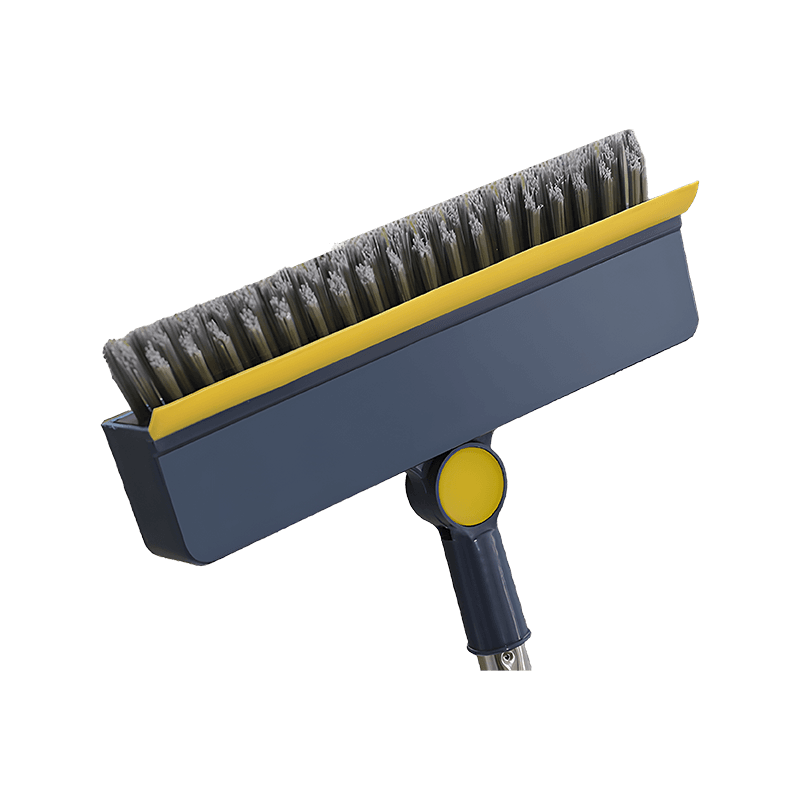
Multi-Purpose Screen Window Cleaning Floor Brush
How the Brush Compares with Common Alternatives
Compared with Ordinary Floor Brooms
Ordinary floor brooms are generally intended for sweeping dust, crumbs, leaves, and other loose debris from hard floors or outdoor surfaces. Their bristles and head shapes are selected for broad sweeping rather than fine screen maintenance. Using them on window screens may be inconvenient because the head can be too large, the bristles may be too rigid, and the handle may not provide the desired level of control.
The Multi-Purpose Screen Window Cleaning Floor Brush has a more focused application. Its value lies in its suitability for mesh surfaces and its ability to support controlled movement across areas that are not normally treated like floors. For buyers building a cleaning assortment, it can fill a specific gap between a general broom and a small handheld duster.
Compared with Cloths and Towels
Cloths are convenient for wiping flat, solid areas, but they may not be ideal for mesh. A cloth can catch on protruding edges, collect around openings, or push loose dust from one section to another. Reaching the back side of a screen may also be difficult without removing the screen from its frame.
A brush can move across the surface with less dependence on direct hand pressure. With an extended pole, it can also provide reach that a handheld cloth cannot easily match. This does not make a brush a replacement for all cloth-based cleaning. Instead, it offers a better-suited first step for removing loose particles from fine-grid surfaces before any additional wiping or washing.
Compared with Short-Handle Dusting Tools
Short-handle dusters can be useful for small areas, but they may require the user to stand close to the screen. This can be inconvenient for tall windows, large ventilation openings, or surfaces positioned behind furniture. A pole-supported brush can provide more working distance and make it easier to cover a larger area from a stable position.
The pole configuration is therefore one of the product’s practical differentiators. It allows the same basic cleaning head to be used in situations where a handheld tool may not offer sufficient reach. For professional cleaning teams, this can help reduce the need to carry multiple handle lengths for routine assignments.
Compared with Improvised Cleaning Methods
Some users clean screens with vacuum attachments, makeshift cloths, or household brushes not intended for mesh. These methods may work in limited situations, but they do not always provide consistent control. Improvised tools can also create uncertainty about pressure, contact area, and reach.
A purpose-oriented brush gives retailers and users a clearer product story. It is designed for a defined maintenance task, has documented materials and dimensions, and can be included in a planned cleaning system. This clarity is valuable for product selection, staff training, and consumer instructions.
Recommended Use and Cleaning Method
Step One: Inspect the Screen
Before cleaning, inspect the screen, frame, joints, and surrounding structure. Look for tears, loose edges, corrosion, brittle material, or areas that have already separated from the frame. A brush can remove dirt, but it should not be used to repair a damaged screen. Identifying weak points first helps prevent accidental pressure on vulnerable areas.
Step Two: Remove Loose Debris
Begin with a dry cleaning pass if the surface and surrounding environment permit it. Move the brush gently from the upper part of the screen downward. This allows loose dust to fall away from areas that have already been cleaned. Use overlapping strokes and avoid pressing heavily into the mesh.
For large screens, divide the surface into sections. Work across one section at a time so that the operator can observe the result and maintain consistent movement. This organized method is especially useful in commercial or institutional cleaning, where consistent procedures are important.
Step Three: Address Remaining Particles
If fine particles remain, repeat the brushing motion with slightly adjusted direction. Horizontal strokes may loosen particles held by vertical frame lines, while vertical strokes can address areas that were not fully reached in the first pass. The objective is controlled agitation rather than forceful scrubbing.
When moisture or cleaning solution is considered, users should follow the screen manufacturer’s care instructions. Some materials tolerate gentle damp cleaning, while others may require dry cleaning only. Any solution should be tested in a small area, and excessive water should be avoided around electrical ventilation equipment or sensitive frames.
Step Four: Clean the Brush
After use, remove accumulated dust from the brush before storage. Depending on the cleaning method used, the brush may be shaken outdoors, wiped, or rinsed if the product and application allow it. Allow any wet components to dry before storing the tool in a closed space.
Keeping the brush clean supports more hygienic use and reduces the chance of transferring debris from an outdoor screen to an indoor surface. For professional users, a basic cleaning and storage procedure can also extend the practical service life of the tool.
Step Five: Store the Pole Properly
Store the pole in a position that avoids unnecessary bending or impact. If the product is separated into sections, keep the components together so that the complete tool is ready for the next task. Retailers and facility managers may also wish to label cleaning tools by area to reduce cross-use between bathrooms, kitchens, windows, and outdoor maintenance zones.
Applications in Different Environments
Residential Homes and Apartments
In homes and apartments, the brush can support regular cleaning of window screens, balcony screens, and ventilation openings. Its extended reach can be useful for windows that are difficult to access from the exterior. Residents may use it during seasonal cleaning, after periods of high pollen, or whenever visible dust has accumulated.
Apartment residents may also benefit from a tool that reduces the need to remove screens. In multi-story buildings, exterior access can be limited, and a pole-based cleaning method may offer a more convenient alternative for routine surface maintenance. Users should always prioritize safe positioning and avoid leaning out of windows or working from unstable furniture.
Kitchens and Utility Areas
Kitchen ventilation areas and utility spaces can collect fine particles over time. Where a compatible mesh panel is present, the brush may help remove loose dust before deeper cleaning. It can also be included in a household cleaning set alongside floor brushes, sink tools, microfiber products, and storage organizers.
Because kitchen environments may contain grease, the brush should be used according to the condition of the surface. Dry dust removal may be appropriate for loose particles, while greasy deposits may require a manufacturer-approved cleaning process. The brush should be rinsed or cleaned after use when necessary to prevent residue buildup.
Offices and Commercial Buildings
Offices, retail stores, hotels, and commercial buildings often have many windows and ventilation points that require periodic maintenance. A pole-supported brush can help cleaning teams reach screens in corridors, reception areas, meeting rooms, and service spaces. Its neutral color and straightforward design are suitable for professional cleaning equipment storage.
For facility managers, the product can be included in a preventive maintenance schedule. Rather than waiting for screens to become visibly dirty, staff can conduct light cleaning at planned intervals. Regular maintenance can support a cleaner appearance and may reduce the effort required during occasional deep-cleaning operations.
Industrial and Workshop Settings
Workshops and light industrial facilities may have mesh guards, ventilation screens, partitions, or protective panels that collect dust. The brush can be considered for compatible surfaces where gentle brushing is suitable. It should not be used on machinery that is operating, energized, hot, or otherwise unsafe to approach.
Industrial buyers should evaluate the chemical and mechanical conditions of each application. If the screen is exposed to oils, solvents, abrasive particles, or corrosive substances, the cleaning procedure should follow site safety requirements and the component manufacturer’s recommendations. The product is best positioned as a practical general-purpose brush for suitable cleaning situations, not as a substitute for specialized hazardous-environment equipment.
Property Management and Maintenance Services
Property managers and maintenance contractors often need tools that are easy to transport and useful across many locations. A multi-purpose screen brush can support service calls involving apartments, offices, retail units, and common areas. The combination of an extended pole and a focused cleaning head may reduce the number of separate tools required for light screen maintenance.
Because the product is supplied in a bulk-friendly carton quantity, distributors can also provide it to maintenance companies as part of recurring supply programs. It may be sold individually, included in janitorial equipment packages, or bundled with related cleaning products.
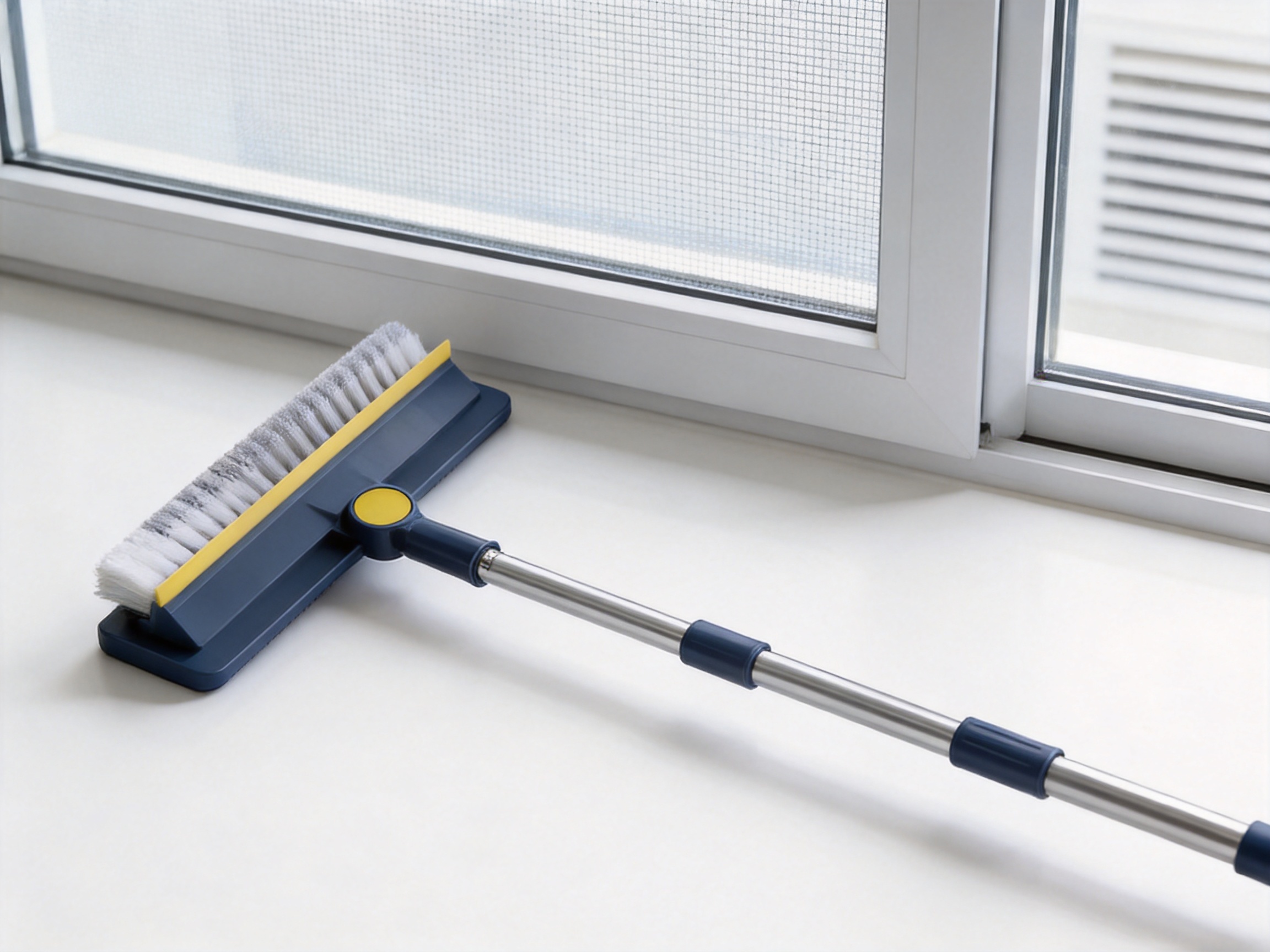
Material and Manufacturing Considerations
The product uses PP and TPR, a material combination that reflects the requirements of practical household-tool manufacturing. Material selection affects weight, stiffness, tactile handling, appearance, durability, and production consistency. For a cleaning brush, these factors influence how comfortably the product can be used and how reliably it can be produced at scale.
Polypropylene Components
Polypropylene is commonly used in plastic household products because it supports efficient molding and can create lightweight parts with consistent dimensions. Its use may be suitable for handles, structural supports, connectors, or other components requiring a balance of rigidity and manageable weight.
For manufacturers and wholesale buyers, molded PP parts can offer repeatable production when the tooling, material preparation, and process controls are properly managed. Consistent dimensions are particularly important for pole sections and connection points, where fit and assembly influence the user experience.
Thermoplastic Rubber Components
TPR can provide a different physical characteristic from rigid PP. Depending on the design, it may be used for grip areas, protective features, contact surfaces, or flexible elements. Its inclusion indicates attention to the handling and surface-interaction requirements of the product.
A well-designed combination of rigid and flexible materials can make a cleaning tool feel more controlled in use. The rigid structure helps maintain the product’s form, while the rubber-like component can improve comfort or contact behavior. Final performance depends on the specific geometry, hardness, bonding, and assembly method.
Injection Molding and Repeatability
Plastic cleaning tools are commonly produced through molding processes that transform prepared polymer material into shaped components. Effective manufacturing requires suitable mold design, accurate temperature control, consistent filling, appropriate cooling, and careful removal of finished parts. These factors influence surface finish, dimensional stability, and the consistency of repeated production runs.
A company with its own production base and standardized processes can coordinate these stages more efficiently. According to the supplied company information, the manufacturer has a production base, a complete supply chain, standardized production processes, and stable quality control. These capabilities are relevant to buyers seeking regular supply rather than isolated sample quantities.
Manufacturing consistency is especially important for multi-section poles. If sections vary in size or connection fit, assembly can become inconvenient and the completed tool may not feel stable. Controlled production helps support uniformity across batches, allowing distributors to present a more reliable product to their customers.
Assembly and Quality Inspection
After molding, components may require trimming, inspection, assembly, packing, and labeling. Each stage presents an opportunity to confirm that the product meets the intended specification. Inspection may include visual checks, dimensional checks, pole connection checks, color review, and packaging verification.
For this brush, quality attention should include the brush head, handle connections, section fit, surface finish, and overall assembly. The product should arrive ready for its intended use, with components properly packed and protected against avoidable damage during transport.
Supply-Chain Coordination
The company describes itself as an industry and trade enterprise specializing in the research, development, production, and sales of cleaning supplies. This combined structure can help connect product development, manufacturing, export coordination, and customer service. For international buyers, a coordinated supply chain may simplify communication about specifications, samples, packaging, and order planning.
A complete product range can also support mixed purchasing. Buyers may source this screen brush together with brooms, cleaning brushes, household tools, industrial brushes, and supporting plastic products. Such coordination can help distributors develop a more complete cleaning category rather than relying on a single item.
Supplier Strengths and Customization Potential
Jinhua Jieqing Plastic Co., Ltd. was founded in 2008 and specializes in cleaning supplies and related plastic products. The company’s product scope includes brooms, cleaning brushes, household and industrial brushes, and supporting plastic items. This category experience is relevant to buyers seeking a supplier familiar with both everyday consumer products and broader procurement requirements.
The company states that it provides customization based on customer drawings and samples. This capability may be useful when a buyer needs a different color, handle configuration, packaging format, label arrangement, or product variation. Custom projects should be assessed through technical discussion, sample approval, tooling review, minimum order requirements, and production scheduling.
Customization is particularly valuable for distributors that serve private-label markets or region-specific retail programs. A buyer may wish to create a coordinated cleaning range using similar colors, packaging language, or handle styles. The existing product can serve as a reference point for discussing such requirements, while final feasibility depends on engineering and commercial evaluation.
The company also reports extensive export experience, flexible customization services, and a comprehensive product range. These strengths can support international buyers that need more than a factory price. Export-oriented cooperation often requires attention to carton marking, documentation, shipping coordination, destination-market requirements, and communication across different time zones and business practices.
Stable quality control is another important supplier consideration. Cleaning tools are often purchased in repeat quantities, and buyers need confidence that later shipments will remain consistent with approved samples. A supplier with standardized production processes can help reduce variation, although purchasers should still establish inspection criteria, approved specifications, and quality agreements for each order.
Advantages for Wholesale Buyers
Wholesale customers can position the product in several ways. It may be sold as a window-screen cleaning tool, included in a household maintenance assortment, marketed to property-service companies, or offered as part of a professional cleaning kit. Its multi-purpose positioning can help retailers reach customers who want one tool for several related tasks.
The 50-piece carton quantity provides a clear basis for purchasing calculations. Buyers can plan trial orders, compare sales velocity, and establish replenishment quantities. If demand is strong, the same supplier may be able to support related products, helping the buyer increase order efficiency over time.
Advantages for Private-Label Programs
Private-label customers may value the product’s simple form and broad application. A neutral grayish-white color can serve as a base for a clean, professional product identity. Packaging can communicate suitable use cases, care instructions, pole information, and safety reminders.
Before launching a private-label version, buyers should verify whether the design, packaging, and product claims meet the regulations of the target market. They should also ensure that translated instructions accurately explain appropriate use on screens and mesh surfaces. Clear communication can help prevent customers from applying excessive pressure or using the product on incompatible materials.
Retail Positioning and Marketing Opportunities
The product can be promoted around several practical benefits: screen-focused cleaning, extended reach, multi-purpose household use, lightweight construction, and suitability for routine maintenance. These benefits are easy for consumers to understand because they relate directly to common cleaning difficulties.
Retailers may display the brush in the household cleaning section, alongside window tools, brooms, dusters, floor-care products, and ventilation-maintenance items. It can also be placed in seasonal cleaning promotions, spring-cleaning assortments, home-maintenance campaigns, or apartment-care collections.
Online product descriptions should explain the intended surfaces clearly. Customers should understand that the brush is designed for window screens and similar mesh materials, not necessarily for every floor type or every industrial application. Product pages can include dimensions, material information, carton details for business buyers, and guidance on gentle cleaning technique.
Professional buyers may respond to different messaging. Property managers and cleaning contractors are likely to focus on reach, repeat use, storage, transport, and compatibility with routine service procedures. Industrial purchasers may require more information about material resistance, cleaning agents, and operating conditions before approving the product for a particular facility.
Care, Safety, and Responsible Use
The brush should be used with reasonable pressure. A screen that is already damaged or weakened may require replacement rather than cleaning. Users should avoid forcing the head into the mesh, twisting the pole sharply, or using the tool as a lever.
When cleaning elevated screens, users should maintain stable footing and avoid standing on chairs, loose boxes, or unstable furniture. The extended pole should not be used near exposed electrical wiring or energized equipment. In commercial and industrial environments, operators should follow site-specific safety procedures.
Cleaning solutions should be selected according to the screen manufacturer’s instructions. Some chemicals may discolor plastic, weaken coatings, or damage seals. If a damp method is used, avoid saturating ventilation components or allowing water to enter electrical systems. After cleaning, the tool should be dried as appropriate and stored away from excessive heat or direct conditions that may affect plastic components.
These recommendations do not reduce the product’s usefulness. They help ensure that the brush is used for the type of maintenance task it is designed to support. Proper use protects both the screen and the tool while improving the consistency of cleaning results.

Purchasing and Specification Checklist
Buyers evaluating the Multi-Purpose Screen Window Cleaning Floor Brush should review several points before placing a bulk order. First, confirm the product dimensions and pole configuration required for the intended market. The listed specification includes a three-section pole measuring 23 × 124 cm and a long pole measuring 90 cm. Because product descriptions and packing formats can be interpreted differently, final measurements should be confirmed with the supplier.
Second, request a sample for practical evaluation. A sample allows the buyer to assess the brush head, pole connection, handling comfort, surface finish, color, and packaging. It is also an opportunity to test the product on representative screens and mesh materials under normal cleaning conditions.
Third, clarify the carton quantity and packing method. The stated quantity is 50 pieces per carton, and the listed carton size is 84 × 35 × 32 cm. Buyers should confirm whether the units are individually packed, bundled, or packed in another internal arrangement. This information affects shelf presentation, warehouse handling, and shipping calculations.
Fourth, discuss quality standards and inspection procedures. Buyers may define acceptable limits for color variation, molding marks, assembly fit, scratches, missing components, and packaging damage. Written criteria can make production and inspection expectations clearer for both parties.
Fifth, discuss customization needs early. If the buyer requires a special color, logo, barcode, instruction sheet, carton design, or retail package, these details may affect tooling, minimum quantities, lead times, and cost. Early confirmation helps prevent delays after the order has entered production.
Finally, confirm export documentation, delivery terms, payment arrangements, production schedule, and after-sales communication. A well-defined purchasing process supports smoother cooperation and helps the buyer plan inventory with greater confidence.
Q&A: Frequently Asked Questions
What surfaces is this brush designed to clean?
The brush is designed primarily for window screens, ventilation screens, mesh surfaces, and similar materials. It may also be suitable for other compatible lightly textured or fine-grid surfaces. Users should test unfamiliar materials in a small area and follow the surface manufacturer’s care instructions.
Can it be used on ordinary floors?
The product is categorized as a floor brush, but its main described application is screen and mesh cleaning. It may not be the best choice for heavy floor debris, rough outdoor sweeping, or surfaces that require very stiff bristles. Buyers should select the brush according to the intended cleaning surface.
What materials are used?
The listed materials are PP and TPR. Polypropylene can provide a lightweight molded structure, while thermoplastic rubber may support grip, flexibility, cushioning, or controlled contact depending on the component design.
What color is available?
The listed color is grayish-white. Buyers requiring other colors should discuss customization possibilities with the supplier before ordering.
Does the product include a long pole?
The product information lists a three-section pole measuring 23 × 124 cm and a long pole measuring 90 cm. Buyers should confirm the exact assembly arrangement, included components, and final packed dimensions with the supplier before placing an order.
How many pieces are packed in one carton?
The listed carton quantity is 50 pieces. The carton size is listed as 84 × 35 × 32 cm. Final packing details should be confirmed for each order, particularly when customized packaging is requested.
Is the brush suitable for professional cleaning companies?
It can be considered for professional cleaning companies, property managers, offices, retail facilities, and other organizations that maintain compatible screens and mesh panels. Professional users should evaluate the product through samples and establish procedures for safe use, cleaning, storage, and inspection.
Can the product be customized?
The supplier states that customization is available based on customer drawings and samples. Potential customization may include product features, color, packaging, labeling, or related details, subject to technical feasibility, order quantity, tooling, and commercial agreement.
How should the brush be used on delicate mesh?
Use light, controlled strokes and avoid forcing the brush into the mesh. Begin with loose dust removal, work in sections, and inspect the screen for damage before cleaning. If moisture or cleaning agents are used, follow the screen manufacturer’s recommendations.
What makes this product different from a general duster?
The product is positioned specifically for screen and mesh cleaning and includes a pole configuration intended to provide greater reach. This combination can offer more controlled access to screens than a short-handle duster or a general floor broom.
Who manufactures the product?
The product is supplied by Jinhua Jieqing Plastic Co., Ltd., an industry and trade enterprise founded in 2008 and focused on cleaning supplies, household and industrial brushes, brooms, and supporting plastic products.
Where is the supplier located?
The company address is No. 1388 Cuntong Road, Jinhua City. Buyers can contact the supplier through the business communication details provided for product discussions, samples, customization, and orders.
Conclusion
The Multi-Purpose Screen Window Cleaning Floor Brush is a practical tool for maintaining window screens, ventilation mesh, and similar surfaces. Its main value comes from combining a screen-focused cleaning purpose with an extended pole structure, PP and TPR materials, controlled handling, and a neutral grayish-white appearance. These characteristics help distinguish it from ordinary floor brooms, short-handle dusters, cloths, and improvised cleaning methods.
For households, the brush can make routine screen maintenance more convenient. For offices, property managers, cleaning contractors, and facilities, it offers a useful option for reaching compatible mesh surfaces without relying exclusively on screen removal. For distributors and wholesale buyers, the 50-piece carton quantity and defined carton dimensions support inventory planning and bulk purchasing.
The supplier’s experience in cleaning-supply production, plastic-product manufacturing, export coordination, product development, customization, and quality control provides additional value for commercial buyers. Its production base and standardized processes can support repeat orders, while the stated ability to work from customer drawings and samples creates opportunities for private-label and market-specific programs.
As with any cleaning tool, performance depends on proper application. Users should inspect screens before cleaning, apply controlled pressure, follow surface-care instructions, and store the brush appropriately. When matched with the right surface and cleaning method, this product can become a useful part of a modern household, commercial, or industrial cleaning assortment.
References
1. Product specification sheet for Multi-Purpose Screen Window Cleaning Floor Brush, Item No. 907.
2. Manufacturer-provided company information for Jinhua Jieqing Plastic Co., Ltd.
3. Manufacturer-provided material information identifying PP and TPR construction.
4. Manufacturer-provided packaging information identifying a 50-piece carton and carton size of 84 × 35 × 32 cm.
5. General principles of household screen, mesh, and ventilation-surface maintenance.
6. General considerations for polypropylene and thermoplastic rubber use in molded household products.
Product: Multi-Purpose Screen Window Cleaning Floor Brush

 CONTACT US
- CONTACT DETAILS
- Address : No. 1388 Cuntong Road, Jinhua City
- Tel: +86-0579-81534043
- Email:wangjinhua1@zjjqsj.com
- PRODUCTS
- Kitchen Cleaning Supplies
- Household Cleaning Supplies
- Indoor & Outdoor Cleaning Supplies
- Baby Products & Cleaning Supplies
- Home Storage Containers
- QUICK LINK
- Company Profile
- Plant equipment
- Certifications
- FAQ
- NEWS CENTER
- Company News
- Industry News
- MOBILE TERMINAL

