

 English
  русский
  Español
  عربى
عربى 
Compact Plastic Travel Brush: A Practical Solution for Clothing Care, Retail Distribution, and Everyday Cleaning
Date:Aug 18, 2026
Keeping clothing presentable while traveling, commuting, working, or managing a busy household does not always require a large cleaning tool. In many situations, the most useful solution is a small, dependable brush that can remove lint, dust, crumbs, and loose surface debris without taking up valuable space. The Compact Plastic Travel Brush is designed for precisely this purpose. Its lightweight construction, practical shape, firm plastic bristles, and easy-clean back make it a convenient clothing-care accessory for homes, hotels, offices, retail programs, travel kits, and institutional supply channels.
Although the product is categorized as a clothing brush, its value extends beyond a single cleaning task. It supports quick garment maintenance before meetings, school, travel, dining, interviews, or social events. It can be stored in a handbag, suitcase, carry-on, desk drawer, wardrobe, vehicle, or hospitality amenity kit. For distributors and importers, its small footprint, simple material structure, and efficient carton quantity create favorable conditions for bulk purchasing, shelf placement, online sales, and promotional bundling.
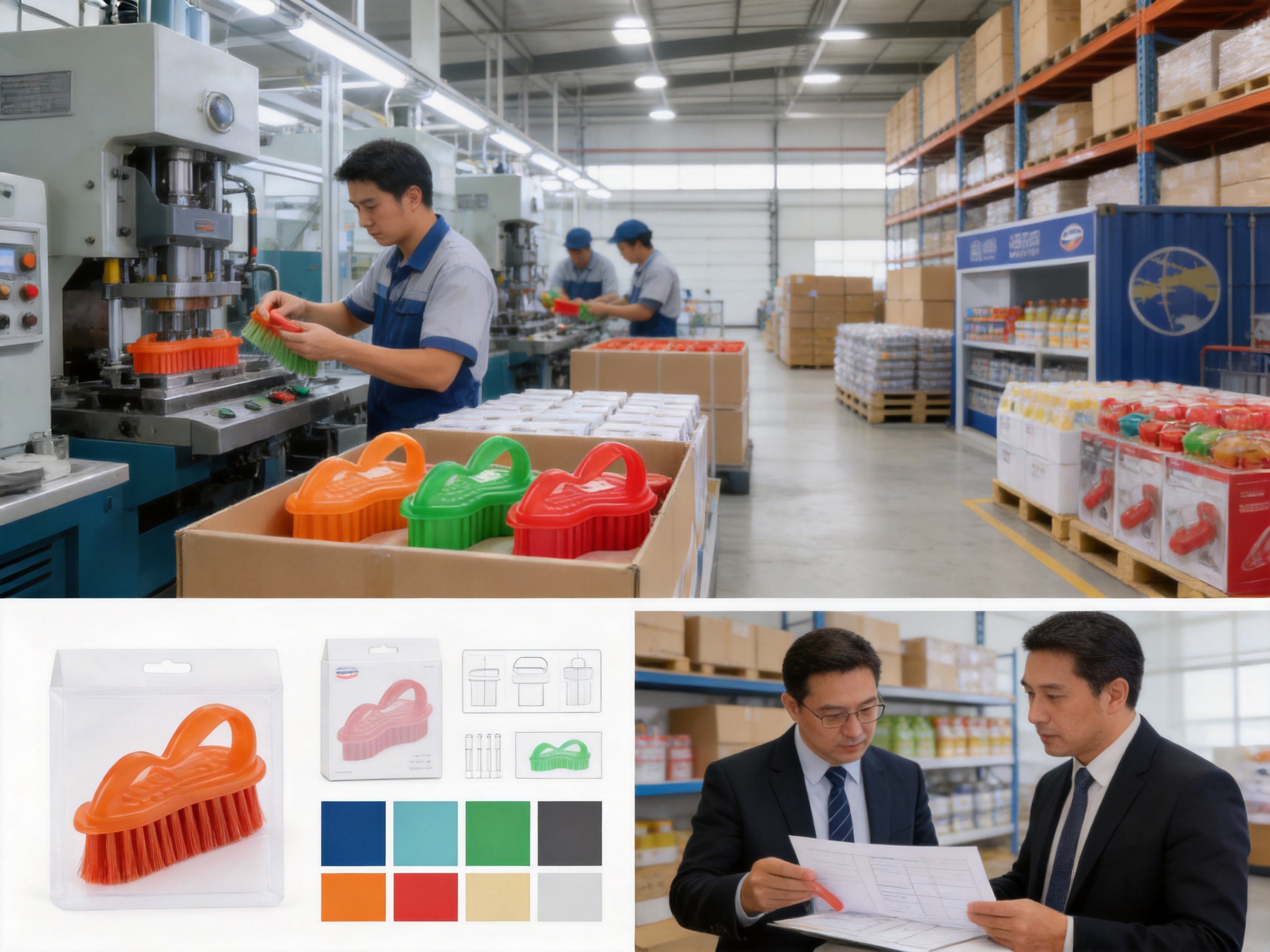
Manufactured by Jinhua Jieqing Plastic Co., Ltd., a company founded in 2008 and focused on cleaning supplies and supporting plastic products, the brush reflects a practical product-development philosophy: create a useful household article that is straightforward to produce, easy to use, economical to distribute, and suitable for different market channels. The manufacturer combines product research and development, production, sales, quality control, export experience, and customization services to support customers requiring both standard products and solutions based on drawings or samples.
Why Compact Clothing Care Matters
Clothing accumulates surface debris throughout the day. Fibers from furniture, lint from other garments, dust from public spaces, crumbs from meals, and loose particles from bags or storage areas can quickly make a clean garment look neglected. Washing an entire garment is often unnecessary and may even cause avoidable wear. A clothing brush provides a fast alternative by lifting or sweeping away visible debris from the surface.
The need becomes more noticeable when people are away from home. Travelers may not have access to a full laundry room or a large wardrobe-care tool. Business professionals often need to refresh a jacket before an appointment. Students may want to clean a uniform before class. Hospitality staff may need a small garment-care accessory for guest rooms. Retailers and e-commerce sellers may also seek low-cost practical products that solve a recognizable everyday problem.
A compact brush is especially valuable because it can remain close at hand. Large household cleaning tools are useful in their intended environment, but they are not convenient for a suitcase, purse, drawer, or work bag. The Compact Plastic Travel Brush is designed around portability without removing the essential cleaning function. It provides a dedicated surface for brushing clothing while remaining small enough for mobile use.
Product Overview
The Compact Plastic Travel Brush is molded from sturdy plastic and fitted with firm plastic bristles. Its compact head is intended to sweep lint, dust, crumbs, and similar surface debris from shirts, dresses, jackets, uniforms, trousers, coats, and other garments. A smooth plastic back allows users to tap out collected debris after use, helping the brush remain ready for repeated cleaning.
The product’s construction is intentionally uncomplicated. Instead of relying on batteries, electrical components, fabric rollers, adhesive sheets, or complicated moving parts, it uses a molded plastic body and bristle surface. This simple configuration reduces operating requirements and allows the product to be used immediately wherever it is needed.
Its basic product information is summarized below.
| Product Category | Clothing Brush |
| Product Name | Compact Plastic Travel Brush |
| Item Number | 26004 |
| Main Material | Plastic |
| Cleaning Surface | Firm plastic bristles |
| Primary Uses | Removing lint, dust, crumbs, and loose surface debris from clothing |
| Design Feature | Smooth plastic back for tapping out collected debris |
| Carton Quantity | 240 pieces |
| Carton Length | 55 |
| Carton Width | 40 |
| Carton Height | 35 |
| Gross Weight | 13.3 |
| Carton Volume | 0.077 |
The carton measurements, gross weight, and volume are presented according to the supplied product information. Buyers should confirm measurement units, packing configuration, labeling requirements, and shipping details with the supplier before placing an order.
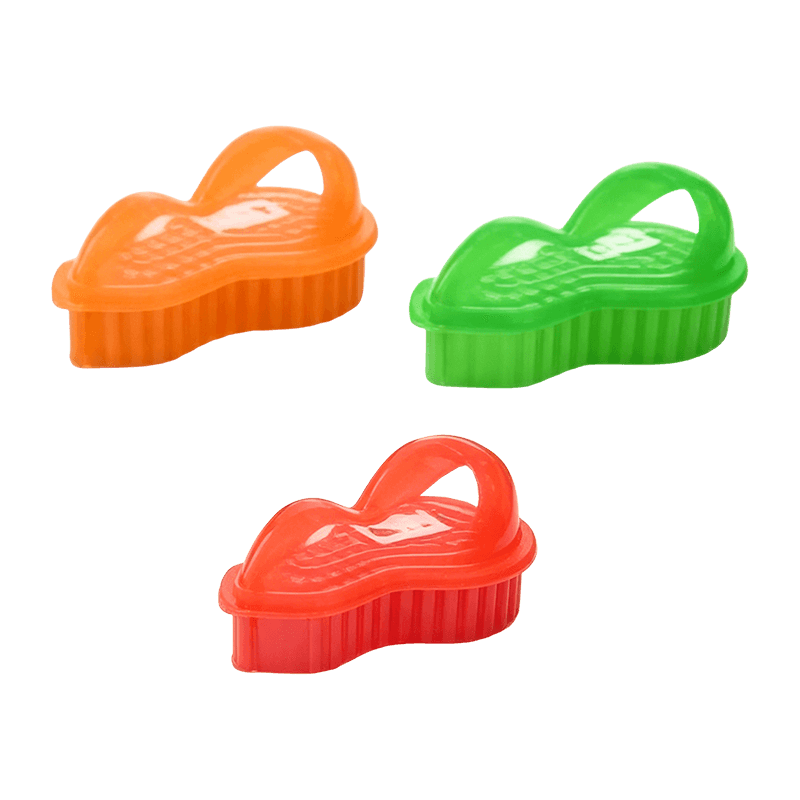
Compact Plastic Travel Brush
Key Advantages of the Compact Design
Portability Without Losing Function
The strongest advantage of the product is the balance between useful cleaning performance and a travel-friendly form. A brush that is too large may perform well in a wardrobe or laundry room but become inconvenient outside the home. A brush that is too small may be difficult to hold or may provide insufficient bristle coverage. This product is positioned between those extremes, offering a compact head that can be carried easily while maintaining a practical cleaning surface.
Portability improves the likelihood that the product will actually be used. When a cleaning tool is always available in a handbag, luggage compartment, desk, or vehicle, users can respond to small clothing problems immediately. This is important because lint and crumbs are often most noticeable just before an event or appointment. A portable product turns garment care from a planned household chore into a quick daily habit.
Sturdy Plastic Construction
The brush is molded from sturdy plastic, providing a solid base for regular handling. Plastic is well suited to this kind of product because it can be formed into a compact shape, cleaned easily, and produced consistently in volume. Compared with fragile materials, a sturdy molded body is less likely to be affected by ordinary handling in luggage, drawers, shelves, and retail packaging.
The plastic structure also supports a clean, practical appearance. It does not require a separate wooden handle, fabric housing, or complex attachment system. A straightforward molded body can reduce assembly requirements and help maintain consistent dimensions across production batches.
Firm Plastic Bristles
The bristles are designed to sweep away common surface debris from garments. Firm bristles can provide the contact needed to move lint, dust, crumbs, and other loose particles. They are particularly useful on everyday fabrics such as shirts, jackets, uniforms, dresses, trousers, and outerwear, provided the user applies appropriate pressure for the material.
Firmness is an important differentiator in comparison with very soft fabric surfaces that may merely move debris around. A bristle-based cleaning surface creates a more defined brushing action. At the same time, users should follow normal garment-care practices and avoid excessive pressure on delicate, loosely woven, embellished, or highly sensitive fabrics.
Easy Debris Removal
Many cleaning tools become inconvenient when the collected debris is difficult to remove. The smooth plastic back of this brush provides a simple way to tap out accumulated lint and dust. This feature supports repeated use without requiring adhesive refills, replacement sheets, or a separate cleaning accessory.
The easy-clean design is beneficial in travel situations. Users can brush a garment, tap the tool over a wastebasket or suitable surface, and return it to a bag or drawer. This reduces maintenance steps and helps the product remain ready for the next use.
No Power Source or Consumable Refill
The brush operates manually and does not require batteries, charging, electricity, or replacement adhesive. This gives it an advantage over powered garment-care tools in situations where simplicity and reliability matter. It can be used in hotel rooms, vehicles, outdoor areas, offices, classrooms, changing rooms, and other locations where an electrical outlet may not be available.
The absence of consumable refills can also improve long-term convenience. Adhesive rollers may require replacement sheets, while powered devices may eventually need batteries or charging. The plastic brush is designed as a reusable article, which may appeal to buyers seeking a low-maintenance household accessory.
Advantages Over Competing Clothing-Care Options
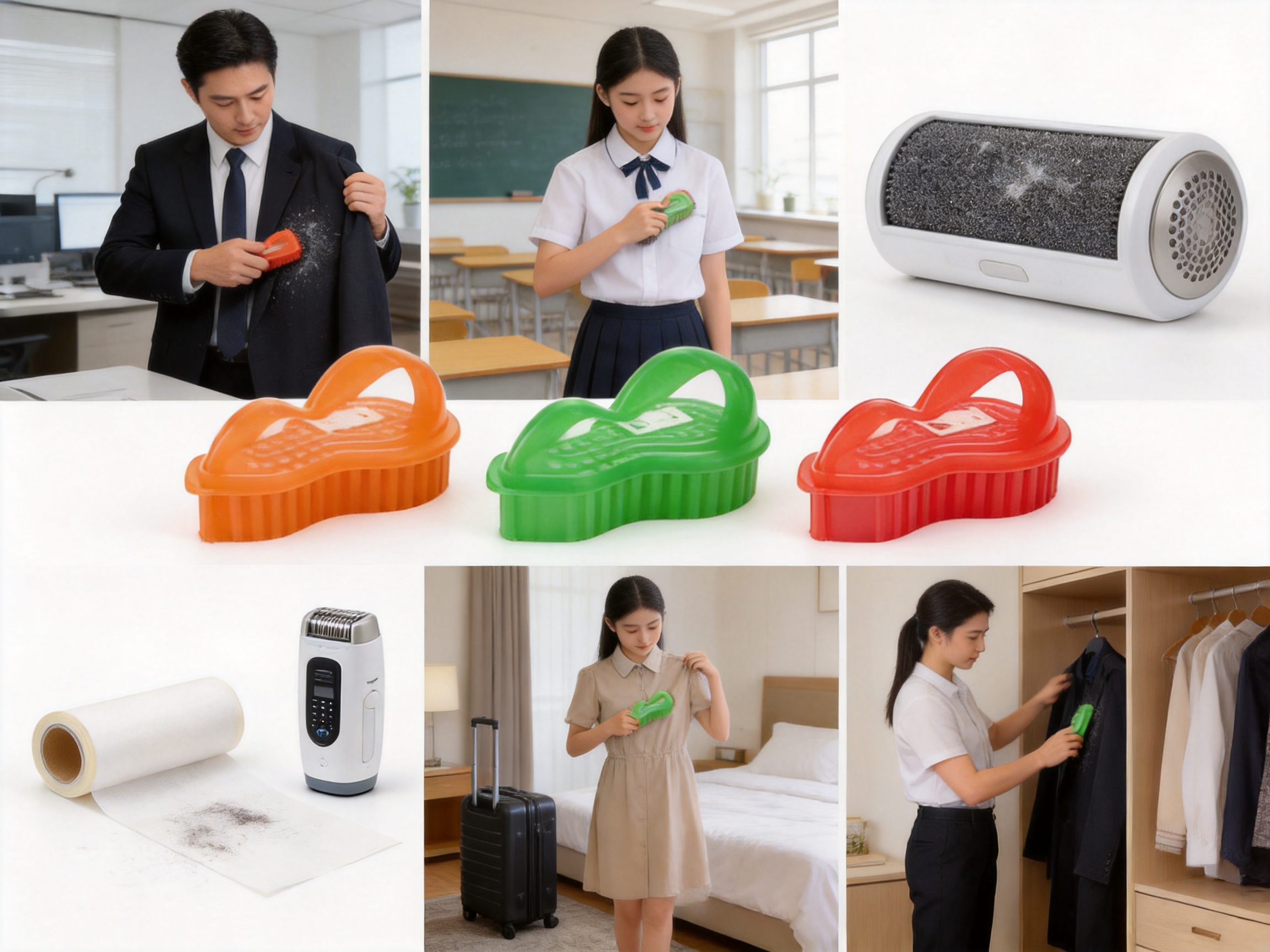
The clothing-care market includes adhesive lint rollers, electric fabric shavers, large household brushes, disposable cleaning sheets, and improvised methods such as shaking or wiping garments by hand. Each option has a suitable application, but the Compact Plastic Travel Brush offers a specific combination of portability, reusability, simplicity, and cost efficiency.
Compared With Adhesive Lint Rollers
Adhesive rollers are effective for picking up certain types of lint and loose fibers, but their adhesive sheets become covered with debris and must be torn off or replaced. This creates an ongoing consumable requirement. A reusable bristle brush avoids that replacement cycle. The user can remove collected debris by tapping the smooth back, allowing the same tool to remain available over an extended period.
The brush is also less dependent on the condition of an adhesive surface. Adhesive performance may vary with dust, moisture, storage conditions, and the type of material being cleaned. A mechanical bristle surface provides a consistent manual cleaning method without relying on a sticky coating.
Compared With Electric Fabric Shavers
Electric fabric shavers are intended to remove pills or raised fibers and may be useful for specific garment-maintenance tasks. However, they are more complex, generally require batteries or charging, and may need careful handling to avoid damaging delicate materials. The Compact Plastic Travel Brush addresses a different need: removing loose surface debris quickly and simply.
For travelers, the manual brush offers a lower-maintenance option. There is no motor to protect, no charging cable to pack, and no battery compartment to inspect. It can be used immediately and stored without special preparation.
Compared With Full-Size Household Brushes
Full-size clothing brushes may provide a large cleaning area and comfortable use in a wardrobe or laundry room. Their disadvantage is portability. They can take up more room in luggage, drawers, and retail displays. The compact model is more suitable when storage space is limited or when the product is intended to accompany the user throughout the day.
For distributors, the smaller form may also support more flexible merchandising. It can be placed near travel accessories, laundry products, wardrobe organizers, hotel supplies, gift sets, or checkout displays. Its compact packaging and carton quantity can help retailers manage storage and replenishment.
Compared With Disposable Cleaning Products
Disposable wipes and cleaning sheets may be useful for temporary cleaning, but they create regular waste and require continued purchasing. A reusable plastic brush is a durable alternative for routine dry surface cleaning. While it does not replace every cleaning product, it can reduce dependence on disposable solutions for common lint and dust problems.
Compared With Improvised Cleaning Methods
People sometimes use their hands, tissue, tape, or damp cloths to remove debris from clothing. These methods may be inconvenient, leave residue, transfer moisture, or fail to reach the entire affected area. A dedicated clothing brush provides a more controlled contact surface and gives the user a repeatable method for garment care.
Practical Applications Across Daily Life
Travel and Commuting
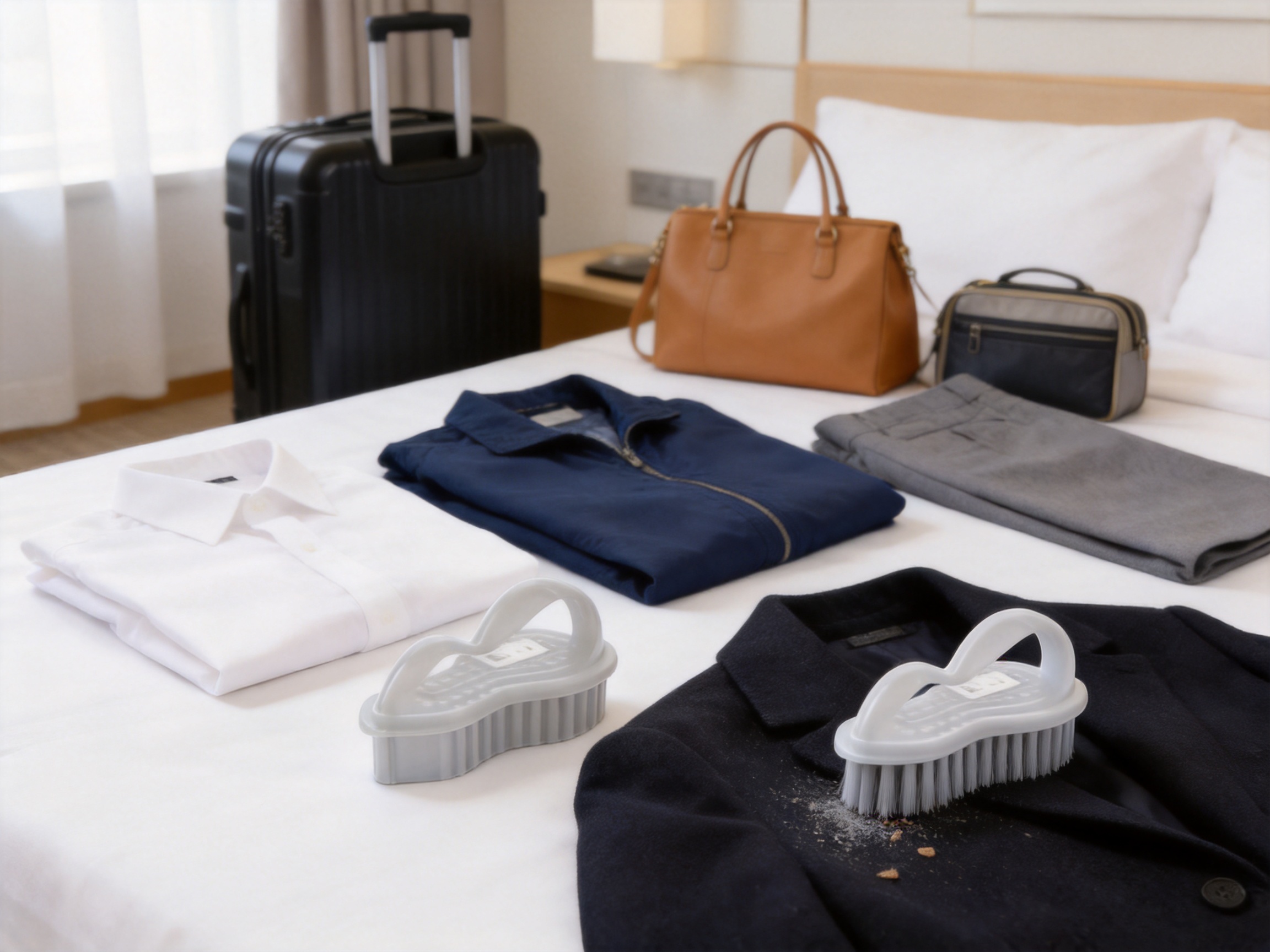
The brush is naturally suited to travel. It can be packed in a carry-on, suitcase, purse, backpack, or toiletry organizer. Before leaving a hotel, users can quickly brush a jacket or shirt after dressing. On a business trip, the tool can help refresh clothing between meetings. On vacation, it can remove crumbs or dust after meals, transportation, outdoor activities, or contact with hotel furniture.
Daily commuters can keep the brush in a desk drawer, locker, vehicle, or work bag. This makes it practical for people who move between public transportation, offices, restaurants, schools, and other shared environments. Its small size helps it fit into routines where a larger garment-care tool would be impractical.
Home Wardrobe Maintenance
At home, the brush can be stored beside a wardrobe, mirror, dressing table, laundry area, or entryway. It is useful for last-minute appearance checks before leaving the house. Parents may use it on school uniforms, workwear, and children’s clothing. It can also support regular care for jackets, formalwear, and garments that do not need to be washed after every wearing.
Using a brush between washes can help users remove superficial debris before storing clothing. This does not replace laundering or professional care, but it can support a more organized garment-maintenance routine.
Hospitality and Guest Services
Hotels, serviced apartments, guesthouses, dormitories, and travel accommodation providers may include compact clothing brushes in guest rooms, welcome kits, or amenity packages. The product is easy for guests to understand and does not require instructions involving power, settings, or replacement parts.
Hospitality buyers often value products that are clean-looking, easy to store, simple to replenish, and suitable for a broad range of guests. The compact design can support placement in drawers, closets, luggage stands, or personal-care kits.
Retail and E-Commerce
For retailers, the product has a clear use case that can be communicated through a short product description or demonstration image. It may be sold in household cleaning sections, travel-accessory areas, laundry-care displays, clothing-care collections, or seasonal organization campaigns.
Online sellers can position the brush around convenience, portability, reusability, and everyday garment maintenance. It may also be included in bundled offerings with travel organizers, wardrobe storage products, laundry bags, shoe-care items, or household cleaning tools.
Workplaces and Institutions
Offices, schools, theaters, uniformed workplaces, restaurants, retail stores, and event venues may use compact clothing brushes for staff or visitor needs. Employees who wear uniforms or formal clothing can keep the brush in lockers or changing areas. Event organizers may provide it in preparation rooms or hospitality spaces.
Because the tool is manual and compact, it can be distributed in quantity without requiring special installation, training, or maintenance infrastructure.
Manufacturing Strengths and Production Capability
The manufacturer, Jinhua Jieqing Plastic Co., Ltd., was founded in 2008 and operates as an industry and trade enterprise specializing in the research, development, production, and sales of cleaning supplies. Its product scope includes brooms, cleaning brushes, household and industrial brushes, and supporting plastic products.
This combination of industrial production and trade support is important for international buyers. A customer may need more than a single finished product. They may require product selection, packaging coordination, export communication, documentation, customization, and stable replenishment. An integrated supplier can help connect these stages rather than treating manufacturing and commercial service as separate activities.
Research and Development Orientation
The company’s focus on research and development supports the creation and refinement of practical cleaning products. For a brush such as this, product development may involve balancing bristle firmness, body shape, size, handling, durability, cleaning effectiveness, material use, and production efficiency.
Good product development does not necessarily mean adding complexity. In many household products, the most effective improvement is a better balance between essential function and ease of use. A compact brush that is easy to hold, easy to clean, easy to pack, and economical to produce can be more valuable than a complicated product with features that customers rarely use.
Own Production Base
The company has its own production base, which strengthens control over manufacturing coordination and supply planning. Direct production capability can help buyers communicate more efficiently about product specifications, order quantities, quality expectations, packaging, and possible modifications.
An owned production base may also support more consistent scheduling than a purely trading-based model that depends entirely on external factories. For distributors, consistency is important because product availability, repeat orders, and seasonal promotions depend on dependable supply planning.
Complete Supply Chain
The company describes a complete supply chain supporting its cleaning-supply business. In practical terms, a coordinated supply chain can help connect raw-material preparation, molding or forming, bristle-related production, assembly, inspection, packing, warehousing, and shipment arrangements.
Supply-chain coordination is especially valuable for products sold in bulk. Small delays or inconsistencies can affect retail launch dates, promotional campaigns, and replenishment schedules. A supplier with broad internal and partner coordination can help reduce communication gaps throughout the order process.
Standardized Production Processes
Standardized production processes are essential for maintaining repeatability. A molded plastic brush must maintain an appropriate body shape, stable bristle placement, clean finishing, and consistent packaging. Standardization helps reduce variation between units and supports predictable performance for importers and end users.
For customers purchasing item number 26004 in repeated quantities, process consistency helps ensure that new shipments remain aligned with earlier orders. This is important for retailers whose product listings, shelf displays, customer reviews, and promotional materials depend on a stable product specification.
Quality Control
The company emphasizes stable quality control. For this product category, quality control can include checks related to the molded body, bristle condition, attachment or integration, surface finish, cleanliness, packaging, quantity, and carton condition. Buyers should define their specific inspection requirements with the supplier, but a structured quality approach provides a foundation for dependable bulk procurement.
Stable quality is not limited to whether a brush looks acceptable. It also concerns whether the product performs its intended function, remains practical during handling, and arrives in a condition suitable for retail or distribution. Quality control therefore supports both consumer satisfaction and the buyer’s operational efficiency.
Export Experience
Extensive export experience can help a supplier understand the needs of international customers, including communication across time zones, commercial documentation, packaging expectations, shipment coordination, and market-specific requirements. Export-ready cooperation is particularly useful for wholesalers, supermarkets, cross-border e-commerce businesses, and industrial procurement teams.
International buyers should still confirm destination-country regulations, material requirements, labeling, packaging language, and testing obligations before ordering. However, an experienced export supplier can make the process more organized and transparent.
Customization and Private-Label Opportunities
The company provides customization based on customer drawings and samples. This creates opportunities for buyers who need a modified product rather than a standard catalog item. Potential discussion areas may include color, packaging, logo presentation, product dimensions, bristle characteristics, carton markings, retail configuration, and bundled sales formats.
Customization should be approached systematically. The buyer can provide a drawing, physical sample, reference image, target market information, expected order volume, packaging requirements, and performance expectations. The supplier can then evaluate feasibility, tooling implications, material considerations, sampling, production timing, and minimum order quantities.
For private-label programs, the compact brush may be suitable for travel brands, hotel-supply companies, household-product distributors, supermarket ranges, promotional merchandise programs, and online store collections. A simple product can gain additional market value when its packaging and presentation are aligned with a specific customer group.
Customization may also help buyers differentiate the product from generic alternatives. In a crowded household-goods market, a buyer can use coordinated colors, branded packaging, multilingual instructions, or a carefully designed bundle to create a clearer retail identity. The underlying brush remains practical, while the presentation gives the product a stronger position within a particular sales channel.
Packaging, Logistics, and Bulk Procurement
The supplied carton quantity is 240 pieces, making the product suitable for wholesale and distribution programs. A high unit count can support supermarket replenishment, regional distribution, hospitality supply, online order fulfillment, and promotional campaigns. It may also help buyers calculate inventory requirements more easily.
The listed carton dimensions are 55 by 40 by 35, with a gross weight of 13.3 and volume of 0.077. These figures provide a starting point for freight planning, warehouse allocation, and container-loading discussions. Since the source information does not specify measurement units, buyers should verify them before final logistics calculations.
Compact products can offer logistical advantages because many units may be grouped into a manageable carton. The product’s small format may help reduce shelf-space pressure and simplify warehouse picking. It can also support mixed-container or mixed-carton purchasing alongside other cleaning supplies, subject to the supplier’s packing and order policies.
Buyers should confirm the following details before placing a bulk order:
1. Individual product dimensions and net weight.
2. Carton measurement units and internal packing arrangement.
3. Number of inner boxes, bags, or retail packs per carton.
4. Carton gross weight and volume after final packaging.
5. Packaging materials, carton markings, and barcode requirements.
6. Sample approval procedures and production lead time.
7. Minimum order quantity and payment terms.
8. Inspection standards and acceptable quality limits.
9. Shipping port, documentation, and delivery arrangements.
10. Destination-market labeling and compliance requirements.
Recommended Use and Care
To use the brush, place the bristles against the garment surface and move the brush in controlled strokes in a suitable direction for the fabric. Begin with light pressure, especially on delicate materials, and increase pressure only when appropriate. Work over areas where lint, dust, crumbs, or loose particles are visible.
After brushing, tap the smooth plastic back over a wastebasket or other suitable disposal area to release collected debris. If necessary, inspect the bristles and remove remaining material by hand. Store the brush in a dry, clean location such as a drawer, luggage compartment, wardrobe shelf, or travel pouch.
The brush is intended for surface cleaning rather than stain removal, washing, disinfection, or fabric repair. Users should follow the care instructions for the garment and test an unfamiliar fabric in an inconspicuous area before extensive use. Avoid forceful brushing on delicate decorations, loose threads, fragile knits, or materials that require specialized care.
Value for Different Buyer Groups
For Importers
Importers can evaluate the product as a low-complexity, broadly useful household accessory with applications in travel, garment care, hospitality, and general retail. Its simple design may make it easier to explain to customers and easier to include in established cleaning-supply portfolios.
For Supermarkets
Supermarkets can position the brush near laundry products, clothing-care products, travel goods, seasonal organization displays, or household cleaning shelves. The product addresses a visible everyday need and can be offered as an affordable add-on purchase.
For Cross-Border E-Commerce Sellers
Online sellers can emphasize portability, reusable operation, compact storage, and the absence of batteries or refills. Product photography, concise demonstrations, and clear fabric-care guidance can help customers understand its intended use.
For Hospitality Procurement
Hotels and accommodation providers may use the brush in rooms, guest-care kits, staff areas, or welcome packages. Bulk carton packing and a straightforward user experience can support centralized procurement and regular replenishment.
For Industrial and Institutional Buyers
Industrial workplaces, uniforms departments, schools, theaters, and event organizations may purchase the brush for staff garment maintenance. Its low operating complexity makes it practical for shared spaces where users need a quick cleaning tool without training or powered equipment.
How to Assess the Product Against Competitors
Buyers comparing clothing brushes should not evaluate price alone. A useful comparison should examine the complete value proposition, including material quality, bristle performance, body durability, portability, ease of cleaning, packaging efficiency, order support, quality consistency, and customization capability.
Sample testing can focus on common fabrics and debris types. Buyers may test the brush on cotton shirts, synthetic uniforms, jackets, dresses, trousers, and outerwear. They can observe how effectively the bristles move lint and dust, how comfortable the brush is to hold, whether debris can be removed easily, and whether the product remains intact after repeated use.
Commercial evaluation should also include the supplier’s responsiveness, sampling process, production communication, documentation, carton accuracy, and ability to support repeat orders. These factors may have a greater effect on long-term profitability than a small difference in the initial unit price.
The product’s main competitive position can be summarized as a combination of:
| Evaluation Area | Product Advantage | Buyer Benefit |
| Portability | Compact travel-friendly format | Easy storage, carrying, and merchandising |
| Operation | Manual use without batteries or charging | Immediate use and low maintenance |
| Cleaning surface | Firm plastic bristles | Practical removal of common surface debris |
| Maintenance | Smooth plastic back for tapping out debris | Reusable operation without adhesive refills |
| Construction | Sturdy molded plastic body | Suitable for regular handling and bulk distribution |
| Supply support | Own production base and export experience | More coordinated procurement and order management |
| Customization | Options based on drawings and samples | Support for private-label and tailored programs |
Quality, Responsibility, and Long-Term Use
A reusable brush can support more responsible consumption by reducing reliance on disposable lint-removal sheets for routine cleaning. Its value is strongest when users keep it available and use it repeatedly rather than treating it as a short-term disposable item.
Durability also has an operational dimension. A product that remains useful through repeated handling can reduce the frequency of replacement and simplify procurement. For commercial users, this may reduce the need to manage multiple small replenishment orders. For households, it can provide a dependable accessory that remains in a wardrobe or travel kit for an extended period.
Responsible use still depends on proper material handling, packaging decisions, and end-of-life practices. Buyers should discuss packaging reduction, recyclable packaging options, and applicable material requirements with the supplier where these issues are important to their market. Any environmental claim should be based on verified specifications rather than assumptions.
Why the Manufacturer Is a Suitable Supply Partner
The product is supported by a manufacturer with a defined specialization in cleaning supplies and plastic products. Since 2008, Jinhua Jieqing Plastic Co., Ltd. has developed experience across research and development, production, sales, quality control, customization, and export service.
Its broad product range can be useful for buyers seeking a coordinated household-cleaning portfolio. A customer interested in clothing brushes may also need brooms, cleaning brushes, household brushes, industrial brushes, or supporting plastic products. Working with a supplier that covers related categories can simplify vendor management and create opportunities for mixed product programs.
The company’s stated strengths include its own production base, complete supply chain, standardized production processes, stable quality control, extensive export experience, flexible customization services, and comprehensive product range. Together, these capabilities support one-stop solutions for supermarkets, cross-border e-commerce businesses, industrial procurement departments, and other markets.
For a buyer, the main practical benefit is coordination. Product design, manufacturing, quality discussions, packaging, export communication, and repeat-order planning can be handled through a supplier familiar with the cleaning-supply sector. This does not eliminate the need for buyer-side verification, but it can create a stronger foundation for a reliable commercial relationship.
Q&A
What is the Compact Plastic Travel Brush designed to clean?
It is designed to sweep lint, dust, crumbs, and other loose surface debris from shirts, dresses, jackets, uniforms, trousers, coats, and similar garments.
Is the brush suitable for travel?
Yes. Its lightweight, compact design is intended for carry-on luggage, purses, backpacks, desk drawers, suitcases, and other limited-storage locations.
Does the product require batteries or electricity?
No. It is a manually operated brush and does not require batteries, charging, or an electrical outlet.
What material is used for the brush?
The brush is molded from sturdy plastic and uses firm plastic bristles for the cleaning surface.
How is collected debris removed?
The smooth plastic back can be tapped over a suitable disposal area to release collected lint, dust, and crumbs.
Can the brush replace a washing machine or dry-cleaning service?
No. It is intended for quick surface cleaning and garment maintenance. It does not replace laundering, stain treatment, disinfection, or professional cleaning.
Can it be used on delicate fabrics?
Users should apply light pressure and follow the garment-care instructions. Testing on an inconspicuous area is recommended for unfamiliar or delicate materials.
What is the item number?
The item number supplied for this product is 26004.
What is the carton quantity?
The listed carton quantity is 240 pieces.
What are the listed carton specifications?
The supplied information lists a carton length of 55, width of 40, height of 35, gross weight of 13.3, and volume of 0.077. Measurement units should be confirmed with the supplier.
Can the product be customized?
The manufacturer offers customization based on customer drawings and samples. Buyers should discuss dimensions, colors, packaging, branding, bristle specifications, order quantities, and tooling requirements directly with the supplier.
Who manufactures the brush?
The product is manufactured by Jinhua Jieqing Plastic Co., Ltd., an industry and trade enterprise specializing in cleaning supplies and supporting plastic products.
What types of buyers may be interested in this product?
Potential buyers include importers, wholesalers, supermarkets, household-goods distributors, hotels, cross-border e-commerce sellers, industrial procurement teams, uniform departments, and promotional-product businesses.
Why choose a reusable brush over disposable lint-removal sheets?
A reusable brush does not require adhesive refills for routine use. Its bristle surface can be used repeatedly, and collected debris can be tapped out through the smooth plastic back.
What should buyers confirm before ordering?
Buyers should confirm samples, final dimensions, material details, packaging, measurement units, carton configuration, quality standards, minimum order quantity, lead time, labeling, compliance requirements, payment terms, and shipping arrangements.
Conclusion
The Compact Plastic Travel Brush is a practical garment-care tool built around a clear everyday need. It combines a lightweight molded plastic body, firm plastic bristles, compact storage, manual operation, and an easy-clean back. These features make it suitable for removing lint, dust, crumbs, and loose debris from clothing at home, during travel, at work, in hospitality settings, and across institutional environments.
Compared with adhesive rollers, powered fabric shavers, full-size brushes, and disposable cleaning products, it offers a useful balance of portability, reusability, simplicity, and low-maintenance operation. Its compact format can also support retail presentation, e-commerce fulfillment, hospitality distribution, and bulk procurement.
Behind the product is a manufacturer with experience in cleaning supplies, plastic products, research and development, production, quality control, export service, and customization. Its own production base, standardized processes, supply-chain coordination, and broad product range provide a foundation for customers seeking dependable supply and tailored commercial solutions.
For buyers evaluating a clothing brush for retail, wholesale, travel, hospitality, or institutional use, this product represents a straightforward and adaptable option. Its strongest value is not unnecessary complexity, but the efficient delivery of a useful function in a durable, compact, and easy-to-distribute form.
References
1. Product information supplied for Compact Plastic Travel Brush, Item No. 26004.
2. Manufacturer information supplied for Jinhua Jieqing Plastic Co., Ltd.
3. General principles of household garment care and surface-debris removal.
4. General considerations for product quality control, packaging, and bulk procurement.
5. General guidance on evaluating reusable household cleaning tools and travel accessories.
Product: Compact Plastic Travel Brush

 CONTACT US
- CONTACT DETAILS
- Address : No. 1388 Cuntong Road, Jinhua City
- Tel: +86-0579-81534043
- Email:wangjinhua1@zjjqsj.com
- PRODUCTS
- Kitchen Cleaning Supplies
- Household Cleaning Supplies
- Indoor & Outdoor Cleaning Supplies
- Baby Products & Cleaning Supplies
- Home Storage Containers
- QUICK LINK
- Company Profile
- Plant equipment
- Certifications
- FAQ
- NEWS CENTER
- Company News
- Industry News
- MOBILE TERMINAL

