

 English
  русский
  Español
  عربى
عربى 
Compact Carrying Case Clothing Brush for Practical Manual Garment Cleaning
Date:Sep 15, 2026

Manual garment cleaning remains useful in homes, laundries, dormitories, hotels, travel settings, and workplaces where a full washing machine is not always available or appropriate. A small, purpose-designed clothing brush can help users work on visible marks, accumulated dust, and common fabric problem areas before washing or when a quick local clean is needed. The Compact Carrying Case Clothing Brush is designed for this practical role. Its compact format, manual operation, and focused bristle action make it suitable for cleaning clothing in sinks, basins, utility rooms, and other small washing areas.
This product belongs to the clothing brush category and is included within a wider selection of kitchen cleaning supplies, household cleaning supplies, indoor and outdoor cleaning supplies, baby products and cleaning supplies, and home storage containers. Although its primary application is garment care, its straightforward design reflects a broader approach to everyday cleaning: provide a functional tool that is easy to store, simple to use, convenient to transport, and suitable for repeated household tasks.
The brush is intended to assist with manual scrubbing. When used with water and a suitable laundry detergent, its bristles help loosen and break down stains on frequently affected areas such as cuffs and collars. These areas often collect body oils, dust, food residue, and other marks because they come into regular contact with skin and surrounding surfaces. A focused brush can help users apply mechanical action precisely rather than treating an entire garment with unnecessary force.
For retailers, importers, distributors, and institutional buyers, the product offers a practical addition to a cleaning and laundry assortment. Its compact carrying-case style gives it a distinct presentation compared with larger household brushes, while its simple construction supports broad market positioning. It can be offered through supermarkets, household-goods stores, online marketplaces, cleaning-supply distributors, and procurement programs that require economical manual cleaning tools.
Product Overview
The Compact Carrying Case Clothing Brush is a washing brush developed for manual clothing cleaning in sinks or basins. The product is not dependent on electricity, batteries, complicated mechanisms, or special equipment. The user supplies water, applies detergent when necessary, places the garment on an appropriate washable surface, and uses the bristles to work on the selected area.
The brush is especially relevant for spot cleaning and pre-wash treatment. Before placing a garment into a washing machine, users may want to address a collar, sleeve cuff, pocket edge, or another localized area. The brush supports this process by concentrating scrubbing action where it is needed. It may also be used when only a small item or a single area requires attention and a complete machine cycle would be inconvenient.
The compact carrying-case format is one of the product’s most practical characteristics. A small brush is easier to keep in a laundry cabinet, bathroom drawer, travel bag, utility basket, or storage container than a large cleaning implement. This helps reduce clutter and supports organized household maintenance. For consumers living in apartments, dormitories, or compact homes, storage efficiency can be as important as cleaning performance.
Its design also supports portability. Travelers may need to wash clothing in hotel sinks, guest bathrooms, temporary accommodations, or outdoor facilities. Students and workers living away from home may prefer a lightweight manual solution for small laundry tasks. The brush can be positioned as a useful companion for hand washing, emergency stain treatment, and routine garment care.
| Product Attribute | Available Information |
| Product title | Compact Carrying Case Clothing Brush |
| Product category | Clothing Brush |
| Primary application | Manual cleaning of clothing in sinks or basins |
| Cleaning action | Bristle-assisted scrubbing for localized garment areas |
| Common target areas | Cuffs, collars, and other frequently used fabric areas |
| Item number | 2616 |
| Carton quantity | 200 pieces |
| Carton dimensions | 59 × 39 × 36 |
| Gross weight | 16 |
| Carton volume | 0.083 |
The supplied logistics information identifies the item as No. 2616, with a carton quantity of 200 pieces. The listed carton dimensions are 59 by 39 by 36, while gross weight is listed as 16 and volume as 0.083. Buyers should confirm the applicable measurement units, packing configuration, and shipping details with the supplier before final order placement, particularly when preparing import documentation or calculating freight.
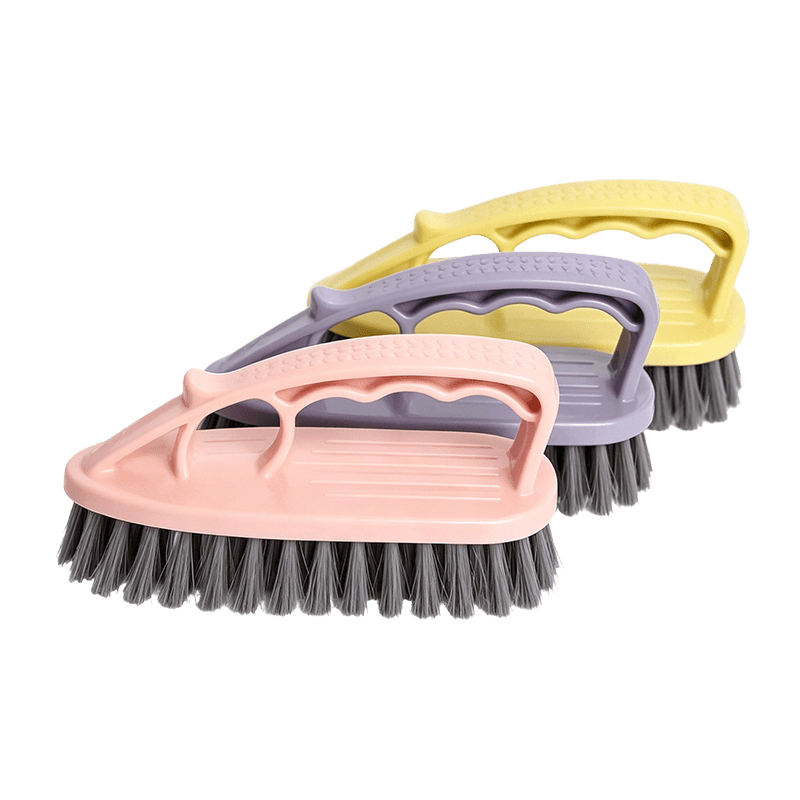
Compact Carrying Case Clothing Brush
How the Clothing Brush Supports Manual Cleaning
Manual cleaning depends on a combination of water, cleaning chemistry, friction, time, and controlled movement. Detergent can help separate soil from textile fibers, while the brush provides mechanical assistance. As the bristles move across the fabric, they help disturb particles and residue that may not be removed through soaking alone. The user can adjust pressure and movement according to the garment, the type of mark, and the care instructions for the textile.
The brush is particularly suitable for areas that receive repeated contact. Cuffs may collect dirt from desks, bags, door handles, and other surfaces. Collars may accumulate perspiration, skin oils, dust, and cosmetic residue. These areas can benefit from targeted attention before a full wash. Using a dedicated clothing brush gives the user a clear tool for this task and may be more convenient than using a general household scrubber that was not designed for garment care.
For best results, the garment should first be checked for its care requirements and colorfastness. A small, less visible section can be tested when the fabric or dye is unfamiliar. The user may then moisten the area, apply a suitable amount of detergent, and work the brush gently over the mark. After brushing, the area should be rinsed or washed according to the garment’s instructions.
The product is intended to assist cleaning rather than replace good laundry practice. It cannot guarantee removal of every stain, and the outcome will depend on the fabric, age of the stain, detergent, water temperature, brushing pressure, and laundering method. This practical positioning is valuable because it communicates the real function of the product without overstating performance.
Advantages of a Compact Carrying-Case Format
Efficient Storage
Many cleaning tools are difficult to store because they have long handles, wide heads, or irregular shapes. A compact clothing brush can be placed in a drawer, basket, cabinet, or small storage box. This is useful in kitchens, bathrooms, laundry rooms, dormitories, caravans, hotel rooms, and small apartments where available storage space is limited.
The carrying-case style also creates a more orderly product experience. Instead of leaving a wet brush exposed on a sink edge, users may have a defined item that is easier to put away after use. Organized storage can help reduce misplaced household tools and makes the product easier to include in cleaning kits or travel sets.
Convenient Portability
A portable clothing brush can serve users who do not have access to a washing machine. It is suitable for small-scale washing in a basin and may be included in luggage, student supplies, temporary housing kits, or emergency household products. Its compact design supports the idea of garment care wherever basic washing facilities are available.
Portability is also an advantage for professional settings. Hospitality staff, uniform managers, care facilities, and cleaning teams may need a small tool for localized garment maintenance. A brush that is easy to distribute, store, and retrieve can be more convenient than a larger cleaning tool intended for general-purpose use.
Focused Scrubbing
The product is designed around a specific task rather than broad floor, dish, or surface cleaning. Its bristles are intended to assist with clothing scrubbing, giving users a focused tool for areas such as collars and cuffs. Compared with using a rough household brush, a clothing brush may help users approach the task with greater control and purpose.
Focused scrubbing can reduce the need to apply force to an entire garment. The user can work only on the affected area and stop once the desired level of cleaning has been achieved. This supports a more measured routine, especially when handling everyday clothing that requires regular care.
Simple Operation
There are no stated electrical or electronic components associated with this manual washing brush. Its operation is easy to understand: add water and detergent as appropriate, position the garment, and scrub the selected area. This simplicity lowers the learning barrier for many users and makes the item suitable for a broad retail audience.
Simple operation can also support reliability in distribution. Products with fewer operating steps are generally easier to explain in product listings, shelf packaging, user instructions, and promotional content. Retailers can present the brush as an affordable practical tool rather than a complex appliance requiring extensive customer education.
Comparison with Common Alternative Cleaning Methods
Consumers have several ways to address marks on clothing. They may use only their hands, a sponge, a general-purpose brush, a washing machine, or a chemical pre-treatment product. The Compact Carrying Case Clothing Brush occupies a useful middle position between these options. It offers more mechanical assistance than hand washing alone while remaining smaller and less resource-intensive than a complete machine wash.
| Cleaning Option | Typical Strength | Potential Limitation | Role of the Clothing Brush |
| Hand rubbing | Direct control and gentle contact | Can require more effort and may not loosen stubborn residue efficiently | Provides bristles to assist controlled scrubbing |
| General-purpose brush | Broad household availability | May be too coarse, large, or unsuitable for clothing | Offers a product positioned specifically for garment care |
| Sponge or cloth | Soft contact and easy handling | May provide less targeted mechanical action | Supports more active brushing on selected areas |
| Washing machine | Convenient full-garment washing | May be unnecessary for a localized mark or small item | Helps with quick manual treatment before or instead of a full cycle |
| Chemical pre-treatment alone | Can soften or target certain stains | May require additional rubbing and careful product selection | Provides physical action to complement suitable detergent |
Compared with hand rubbing, the brush gives the user a dedicated contact surface. This can make repeated cleaning more comfortable and consistent. Compared with a general-purpose brush, its category positioning gives buyers a clearer reason to select it for clothing. Compared with machine washing, it is useful for small areas, quick jobs, and situations without appliance access.
These advantages should be presented responsibly. The brush is not a substitute for every laundry method, and it should not be promoted as suitable for all fabrics without testing. Its competitive value comes from convenience, portability, task specialization, and simple manual control. These are meaningful benefits for consumers who want a low-complexity cleaning accessory.
Fabric Care and Responsible Use
Different textiles respond differently to moisture, friction, detergent, and pressure. Before using the brush, the garment label should be consulted. Delicate fabrics, loosely woven materials, coated textiles, decorative surfaces, and garments with fragile finishes may require special care. When there is uncertainty, testing on an inconspicuous area is a prudent step.
Users should avoid excessive pressure. The aim is to assist the detergent and loosen residue, not to force the bristles aggressively through the fabric. Short, controlled movements are generally more appropriate than vigorous scrubbing across a large surface. Particular attention should be given to printed areas, embroidery, raised decorations, and weak seams.
The brush should be rinsed after use so that detergent and loosened soil do not remain in the bristles. It should then be stored in a clean, ventilated location where excess moisture can evaporate. Appropriate care can help maintain the brush’s usefulness and keep it ready for the next cleaning task.
Because the item is a manual cleaning tool, users should also follow ordinary household safety practices. Cleaning solutions should be handled according to their labels, and incompatible chemicals should not be mixed. The brush should be kept away from very young children unless an adult is supervising its use. Product packaging and retail instructions can communicate these basic precautions clearly.
Retail and Commercial Positioning
The Compact Carrying Case Clothing Brush can be marketed as an everyday garment-care accessory. Its likely customer groups include households, students, travelers, renters, parents, hotel guests, uniform users, and people who prefer hand washing for small items. It may also complement laundry detergent, wash basins, storage baskets, drying racks, and other home-care products.
In supermarkets, the product can be placed in a laundry-care section or alongside compact household tools. In online stores, listings can emphasize the product title, clothing brush category, manual sink and basin use, compact format, and targeted cleaning of cuffs and collars. For institutional buyers, carton quantity and shipping information become important parts of the purchasing decision.
The item may be suitable for promotional bundles. A retailer could combine it with travel laundry accessories, household cleaning sets, dormitory starter kits, or compact home organization products. Since it is small and task-specific, it can also serve as an add-on item in e-commerce orders. Its carrying-case presentation may support gift sets and practical household packages.
For distributors, the product’s item number, carton quantity, and standardized packing information can support catalog management. The listed carton quantity of 200 pieces may be relevant to buyers seeking a larger-volume order for regional distribution, promotional campaigns, chain-store supply, or online fulfillment. Final packing details should be verified before production and shipment.
Manufacturing Capabilities of Jinhua Jieqing Plastic Co., Ltd.
Jinhua Jieqing Plastic Co., Ltd. was founded in 2008 and operates as an industry and trade enterprise specializing in the research, development, production, and sales of cleaning supplies. The company’s product scope includes brooms, cleaning brushes, household and industrial brushes, and supporting plastic products. This category experience is directly relevant to the Compact Carrying Case Clothing Brush.
The company states that it has its own production base, a complete supply chain, standardized production processes, and stable quality control. These capabilities are important for buyers who need more than a single product. A supplier with experience across related cleaning categories can provide a broader product program and may help customers coordinate multiple items within one purchasing relationship.
Its research and development capability supports the creation and adjustment of practical cleaning products. For a compact clothing brush, product development may involve decisions about shape, handle or case structure, bristle arrangement, usability, packaging, and storage convenience. Although the supplied information does not provide technical details about particular materials or production machines, the stated research and development focus indicates that the company approaches cleaning products as designed articles rather than undifferentiated commodities.
Standardized production processes are valuable for maintaining consistency across larger quantities. Buyers generally need products with repeatable dimensions, stable appearance, dependable assembly, and predictable packing. Process standardization can assist with production planning, inspection, replenishment, and private-label or customized programs.
The company also states that customization is available based on customer drawings and samples. This creates opportunities for buyers who need changes to appearance, structure, packaging, labeling, or other product details. Customization requirements should be reviewed technically and commercially before confirmation. Drawings, samples, tolerance expectations, packaging artwork, and quality criteria should be documented so that both parties share the same product definition.

Quality Control and Supply Reliability
Quality control is especially important for plastic cleaning products because customers expect a functional tool that can be handled repeatedly and cleaned after use. A suitable quality program should connect incoming materials, production steps, assembly, appearance inspection, functional checks, packing, and shipment review. The company describes its processes as standardized and its quality control as stable, which provides a useful basis for procurement discussions.
For the clothing brush, buyers may define inspection points such as product dimensions, visual finish, case or body integrity, bristle attachment, bristle uniformity, cleanliness, packaging condition, carton count, and labeling. The exact acceptance criteria should be agreed in advance. Clear specifications reduce uncertainty and help ensure that samples, mass production, and replenishment orders are evaluated consistently.
Supply reliability also depends on coordination beyond the factory floor. The company describes itself as having a complete supply chain and extensive export experience. These strengths can help support communication among production, packaging, warehousing, documentation, and shipment teams. For international buyers, export experience may be particularly relevant when arranging carton marks, commercial documents, shipping schedules, and product compliance information.
Jinhua Jieqing Plastic Co., Ltd. presents its combination of manufacturing and trade functions as a one-stop solution. This can simplify sourcing for customers that want several cleaning products from one supplier. Instead of managing separate contacts for product development, production, and export coordination, a buyer may be able to organize a wider cleaning-supply program through one established partner.
Customization Opportunities
Customization can help a clothing brush fit a particular market, retail channel, or brand system. Customers may begin with a product sample and discuss adjustments based on their sales strategy. For example, a distributor may require packaging that explains manual sink cleaning, while an online retailer may need a compact package optimized for parcel delivery.
Possible customization discussions may include color selection, packaging format, printed instructions, barcode placement, carton markings, quantity per inner box, and outer-carton configuration. Structural modifications may also be considered when supported by drawings, samples, and production feasibility review. Any requested change should be assessed for tooling requirements, minimum order quantity, lead time, cost, and quality implications.
The company’s willingness to work from customer drawings and samples is useful for buyers with an established product concept. A sample can communicate practical details that are difficult to express in words, including how the brush feels in the hand, how it opens or closes if a carrying case is involved, and how it fits into a retail package. Drawings can then help define dimensions and production expectations.
Customization should not compromise the product’s central advantages. A revised version should remain easy to store, convenient to carry, and suitable for manual clothing cleaning. Buyers should also consider whether changes affect bristle contact, user comfort, cleaning access, packing efficiency, or the product’s suitability for different customer groups.
Why Buyers May Prefer This Product Over Generic Brushes
A generic brush may be available at a low purchase price, but price alone does not define value. Buyers also consider whether the product has a clear use case, whether it can be presented effectively, whether it fits existing assortments, and whether the supplier can provide stable replenishment. The Compact Carrying Case Clothing Brush has a specific garment-care identity that can make it easier to position.
Its compact form distinguishes it from large floor brushes, dish brushes, shoe brushes, and industrial scrubbers. The clothing brush category gives retailers a direct merchandising message. Customers can understand that the product is intended for clothing and manual washing rather than general surface cleaning.
The product also combines portability with targeted function. A user does not need to choose between a full-size household brush and bare-hand scrubbing. The compact tool provides a dedicated bristled surface while remaining suitable for storage in a small space. This balance can be a meaningful competitive feature in markets where consumers value practical, space-saving products.
From a sourcing perspective, the supplier’s wider capabilities may provide advantages over a trader that offers only one isolated item. Jinhua Jieqing Plastic Co., Ltd. reports experience in research and development, production, sales, customization, quality control, supply-chain coordination, and export. These combined strengths may support more efficient product communication and a broader procurement relationship.
The product should therefore be evaluated on several levels: its cleaning purpose, compact presentation, logistical suitability, customization potential, and supplier support. This broader evaluation gives professional buyers a more complete basis for comparison than unit price alone.
Use in Household Cleaning Programs
Although the product is designed for clothing, it can fit naturally into a household cleaning program that includes several specialized tools. A home may use separate products for dishes, floors, bathrooms, shoes, vegetables, laundry, and storage maintenance. Specialization helps users select an appropriate tool for each task and may support better organization.
The clothing brush can be stored near laundry detergent, wash basins, clotheslines, or drying racks. In a small home, its compact format allows it to share space with other cleaning accessories without requiring a dedicated large cabinet. In larger homes, it can be placed in more than one location, such as a main laundry room and a guest bathroom.
For parents, the brush may be useful for localized marks on children’s everyday clothing, subject to appropriate fabric-care testing. For people who work in offices, workshops, kitchens, gardens, or outdoor environments, it may assist with regular attention to cuffs and collars. For travelers, it can become part of a compact personal-care or laundry kit.
These applications do not mean that every garment should be scrubbed in the same way. The product’s value lies in offering an accessible option for suitable situations. Retail descriptions should explain that users should consider fabric type, care labels, detergent compatibility, and cleaning pressure.
Environmental and Resource Considerations
A manual clothing brush does not require electrical power during use, which may appeal to consumers seeking simple cleaning methods. It can be used for a localized area rather than automatically initiating a complete wash cycle. In some situations, this may help users avoid running a machine for a small task, although actual water and energy savings depend on the user’s washing habits and the specific cleaning situation.
The compact product format may also reduce storage requirements and support longer-term use when properly maintained. A reusable manual tool can be part of a household’s ongoing cleaning equipment rather than a single-use accessory. Buyers may wish to ask the supplier about material specifications, packaging materials, durability expectations, and end-of-life considerations when developing sustainability claims.
Environmental claims should be based on verified product and lifecycle information. The supplied materials establish that the product is a manual washing brush and that the company manufactures plastic cleaning supplies, but they do not provide certified recycled content, biodegradability, life-cycle assessment, or specific environmental certifications. Such claims should not be added without supporting documentation.
Packaging, Carton Planning, and Distribution
The listed carton quantity is 200 pieces, with carton dimensions of 59 by 39 by 36, gross weight of 16, and volume of 0.083. This information can help buyers begin planning warehousing, palletization, container loading, and freight estimates. However, unit conventions should be confirmed because dimensions, weight, and volume are not explicitly labeled with measurement units in the supplied data.
For retail distribution, packaging should protect the compact brush from dust, deformation, moisture, and surface damage during handling. It should also communicate the product’s main purpose. Clear packaging language may identify the brush as a manual clothing-washing tool and mention common use areas such as cuffs and collars.
For e-commerce, packaging should be selected with parcel handling in mind. A compact product can be advantageous because it generally occupies less space than a long-handled brush, but the final package still needs sufficient protection. Buyers can discuss inner-pack quantities, barcode requirements, shipping labels, carton marks, and product photography during the order-planning stage.
For wholesale customers, the 200-piece carton quantity may support efficient stock management. A distributor can divide cartons into smaller retail quantities or supply multiple sales channels from one shipment. Inventory planning should take into account market size, seasonality, promotional activity, replenishment lead time, and storage capacity.
Suggested Product Listing Content
A professional product listing should begin with a clear name: Compact Carrying Case Clothing Brush. The description can state that it is designed for manual cleaning of clothing in sinks or basins and that its bristles assist in breaking down stains during scrubbing. Mentioning cuffs and collars helps shoppers understand the intended application immediately.
Additional listing points may include compact storage, portability, suitability for hand washing, and use as a pre-wash garment-care accessory. Retailers should avoid claims that are not supported by product testing, such as guaranteed stain removal, universal fabric compatibility, antimicrobial performance, or industrial-grade durability unless appropriate evidence is available.
For business buyers, the listing can include item number 2616, carton quantity 200 pieces, and the available shipping data. It can also identify Jinhua Jieqing Plastic Co., Ltd. as the manufacturer and note that customization based on customer drawings and samples is available for suitable projects.
Good product content should combine functional clarity with realistic expectations. Consumers need to know what the brush does, where to use it, and how to care for garments during scrubbing. Professional purchasers need to know how the item can fit their assortment, how it is packed, and what supplier services may be available.
Procurement Checklist for Wholesale Customers
Before placing a bulk order, buyers should confirm the exact product design, dimensions, materials, color, bristle characteristics, packaging, labeling, and carton configuration. The product title and item number should be matched against the approved sample or technical drawing to avoid confusion with related brush models.
Buyers should also confirm the intended quantity per carton and the units for carton dimensions, gross weight, and volume. If the product will be sold in a regulated market, the buyer should review applicable product-safety, labeling, packaging, and chemical requirements. The supplier can be asked to provide available documentation relevant to the destination market.
For customized orders, a written specification should cover artwork approval, sample confirmation, tooling status, production schedule, inspection method, acceptable tolerances, defect classification, and shipment terms. Establishing these details before production helps protect both the buyer and the manufacturer.
Communication is another important part of sourcing. Jinhua Jieqing Plastic Co., Ltd. provides a company address in Jinhua City and contact information for direct inquiries. Buyers can use the early communication stage to discuss product suitability, sample requests, order quantities, customization requirements, lead times, and export arrangements.
Company Strengths and One-Stop Service
Jinhua Jieqing Plastic Co., Ltd. combines industrial production with trade and sales activities. This structure can be beneficial to customers that need support from initial product selection through shipment. A supplier that understands both manufacturing and commercial distribution may be better positioned to discuss packaging, market presentation, order planning, and export coordination together.
The company’s stated product range includes brooms, cleaning brushes, household and industrial brushes, and related plastic products. This breadth can help buyers build coordinated product collections. A supermarket, cleaning-supply distributor, or cross-border e-commerce operator may be able to source several complementary categories through one supplier rather than assembling a collection from unrelated factories.
Its own production base is another stated strength. Direct production capability can support closer oversight of manufacturing schedules, product adjustments, quality control, and sample development. While specific equipment and certifications should be confirmed for each project, an established production base provides an important foundation for stable supply.
The company also highlights extensive export experience. International sourcing requires more than making a product. It includes commercial communication, packing standards, documentation, shipping coordination, and attention to destination-market expectations. Experience in these areas can help reduce avoidable delays and improve the efficiency of cross-border procurement.
Flexible customization services further strengthen the company’s position for buyers seeking differentiated products. Customer drawings and samples can provide a starting point for discussion, while the manufacturer’s research and development capability can help evaluate whether requested changes are technically practical.
Practical Cleaning Procedure
Prepare the Garment
Read the garment-care instructions and identify the affected area. Remove loose dust or particles if appropriate. If the garment has a delicate finish, an uncertain dye, or a decorative surface, test the cleaning method on a hidden area first.
Moisten and Apply Detergent
Use water and a suitable laundry detergent according to the garment and detergent instructions. Avoid applying more cleaning product than necessary. Excess detergent can make rinsing more difficult and may leave residue on the fabric.
Brush the Target Area
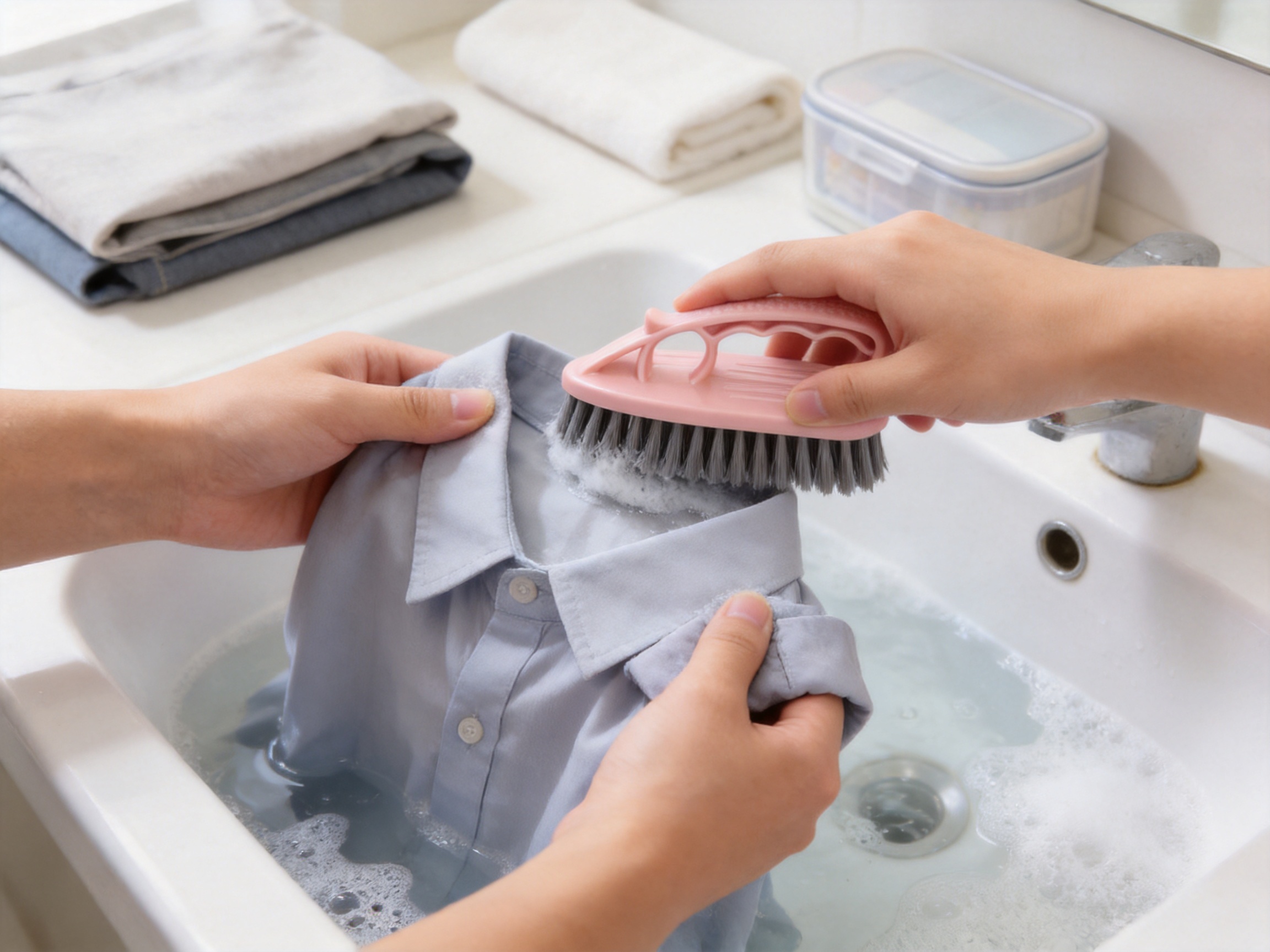
Place the garment in a sink or basin and use the bristles on the selected area. Work with controlled movements and moderate pressure, paying attention to cuffs, collars, seams, and other areas where marks commonly develop. Avoid aggressive scrubbing on delicate or decorated fabrics.
Rinse and Inspect
Rinse the treated area or wash the garment according to its care instructions. Inspect the result before drying if possible. Heat can make some stains more difficult to remove, so users should follow appropriate laundering practice for the specific garment.
Clean and Store the Brush
Rinse the brush after use and remove visible residue from the bristles. Allow it to dry in a suitable ventilated place before storing it in its carrying case or designated household location. Keeping the tool clean supports good hygiene and prepares it for future use.
Frequently Asked Questions
What is the Compact Carrying Case Clothing Brush designed for?
It is designed for manual cleaning of clothing in sinks or basins. The bristles assist with scrubbing and are especially relevant to commonly used garment areas such as cuffs and collars.
Can it be used as a general household cleaning brush?
The product is categorized as a clothing brush and is intended primarily for garment care. Buyers should not assume that it is suitable for every household surface. Its best positioning is manual clothing cleaning and localized pre-wash treatment.
Does the brush require electricity?
The supplied product information describes it as a manual washing brush. No electrical power, battery, or electronic operation is indicated.
Is it suitable for all fabrics?
No brush should automatically be considered suitable for every textile. Users should follow garment-care labels, test an inconspicuous area when needed, and adjust pressure according to the fabric. Delicate materials and decorated garments may require specialized care.
Which clothing areas can benefit from targeted brushing?
Cuffs and collars are specifically identified as common fabric areas for scrubbing. Other localized areas may also be treated when appropriate, provided the user follows the garment’s care instructions.
Can it replace a washing machine?
The brush is not a complete replacement for machine washing. It is useful for small items, localized marks, hand washing, and pre-wash treatment. The most suitable method depends on the garment, cleaning requirement, and available facilities.
What is the item number?
The item number provided for this product is 2616.
How many pieces are packed in one carton?
The listed carton quantity is 200 pieces. Buyers should confirm the final packing arrangement before ordering, especially for customized packaging or mixed-container shipments.
What carton information is available?
The supplied information lists carton dimensions of 59 by 39 by 36, gross weight of 16, and volume of 0.083. The applicable units should be confirmed with the supplier.
Does the manufacturer support customization?
Jinhua Jieqing Plastic Co., Ltd. states that customization is available based on customer drawings and samples. Buyers should discuss feasibility, tooling, minimum order quantities, packaging, lead times, and quality requirements for each customized project.
What types of products does the company manufacture?
The company specializes in cleaning supplies and offers brooms, cleaning brushes, household and industrial brushes, and supporting plastic products. Its broader range may help buyers source related products through one supplier.
Where is the company located?
The company address provided is No. 1388 Cuntong Road, Jinhua City. Buyers can contact the company directly for current product, sampling, quotation, and export information.
Conclusion
The Compact Carrying Case Clothing Brush is a practical tool for manual garment cleaning in sinks and basins. Its central benefits are its compact carrying-case format, portable size, simple operation, and focused bristle action for commonly affected areas such as cuffs and collars. It provides an accessible option between hand rubbing and full machine washing, making it relevant to households, travelers, students, hospitality users, and wholesale cleaning-product programs.
Compared with generic brushes, its clothing-specific positioning gives retailers and consumers a clearer purpose. Compared with larger tools, its compact format supports efficient storage and transport. Compared with appliance-based cleaning, its manual operation is useful for localized treatment and situations where a washing machine is unavailable or unnecessary.
For professional buyers, the supplier relationship is an important part of the product value. Jinhua Jieqing Plastic Co., Ltd. brings stated experience in cleaning-supply research and development, production, sales, customization, standardized processes, quality control, supply-chain coordination, and export. Its own production base and wider product range may support stable procurement and one-stop sourcing for related cleaning categories.
The strongest purchasing decision will combine product evaluation with clear communication. Buyers should confirm specifications, materials, packaging, carton units, inspection standards, customization details, and shipping information before placing an order. When accurately presented and responsibly used, this compact clothing brush can become a useful, affordable, and easy-to-merchandise addition to household and professional cleaning assortments.
References
1. Product specification provided for Compact Carrying Case Clothing Brush, Item No. 2616.
2. Product category information provided for Clothing Brush and household cleaning supply applications.
3. Company profile provided for Jinhua Jieqing Plastic Co., Ltd., including manufacturing, customization, supply-chain, and export capabilities.
4. General garment-care principles concerning fabric labels, localized stain treatment, detergent use, controlled brushing, rinsing, and drying.
5. General wholesale procurement principles concerning product specifications, carton planning, quality inspection, customization approval, and international shipment coordination.
Product: Compact Carrying Case Clothing Brush

 CONTACT US
- CONTACT DETAILS
- Address : No. 1388 Cuntong Road, Jinhua City
- Tel: +86-0579-81534043
- Email:wangjinhua1@zjjqsj.com
- PRODUCTS
- Kitchen Cleaning Supplies
- Household Cleaning Supplies
- Indoor & Outdoor Cleaning Supplies
- Baby Products & Cleaning Supplies
- Home Storage Containers
- QUICK LINK
- Company Profile
- Plant equipment
- Certifications
- FAQ
- NEWS CENTER
- Company News
- Industry News
- MOBILE TERMINAL

